In Contention

Tag: Reviews

  • ‘Warrior’ pulls its punches

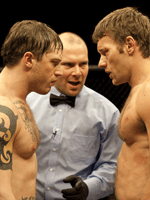
    I have to say, even though the pieces were there and I tend to respond overwhelmingly to father/son dramas, I was really surprised at how little I felt emotionally while watching Gavin O’Connor’s “Warrior.” And O’Connor really excels at this stuff, in general, for me. But it didn’t come together this time.

    I feel pretty much alone here because the film has been affecting a number of critics and press members for the past month or so now and the room I was in tonight was all energy and tears, right there with it. But I don’t know, there is something in the fabric of the writing that kept me at arm’s length.

    So Nick Nolte’s Paddy Conlon character was an asshole father to sons Tommy (Tom Hardy) and Brendan (Joel Edgerton). I know this because I’m being told over and over and over again. I know it, but I don’t feel it. Being presented with a thousand-day sober man looking to make amends really shoots that in the foot and you start wondering why his kids can’t just stop being pricks. Something, anything, that would have keyed us into their perspective would have gone a long way.
    (more…)

  • REVIEW: “One Day” (***)

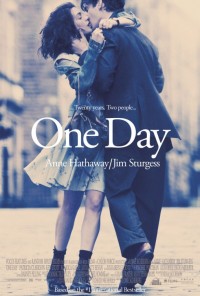
    “I love you, Dexter, I just don’t like you anymore,” a radiantly moist-eyed Anne Hathaway tells a radiantly plastered Jim Sturgess at a crucial emotional juncture in “One Day,” Lone Scherfig’s attractive, involving and curiously unmoving attempt to replicate the cosy, literate-but-not-too-literary British comforts of her 2009 “An Education.”
    Cribbed by screenwriter David Nicholls from his own mega-selling novel — the kind of fast-digesting doorstop that’s been a ubiquitous presence on London public transport for the past two years — the line is one of those reductively heart-on-sleeve sentiments that Richard Curtis sharpened to a blunt point in his 1990s heyday; when Hathaway drops it, you can hear the film straining for its own place in the pop culture quote bank, somewhere between “Is it still raining? I hadn’t noticed” and “I’m just a girl standing in front of a boy, asking him to love her” in the swoon-cringe stakes.

    If the film surrounding that moment seems unlikely to carry it to such relative heights, that’s because it’s at once less appealing and more adventurous than the bulk of the calculated Working Title charmers on which it is modelled. For starters, it’s one of the more neurotically male-minded films ever to be marketed as a lavender-scented chick flick.

    (more…)

  • ‘50/50’ draws laughs and tears, but Gordon-Levitt owns it

    It’s probably a bit ridiculous that I haven’t seen Jonathan Levine’s “The Wackness” yet. I have the screener somewhere around here and it’s just one of those films I keep forgetting to watch, despite constant encouragement to do so. Therefore, “50/50,” a dramedy from writer Will Reiser based on his own experience being diagnosed with cancer, is the extent of my knowledge of the director’s work. And it’s fantastic.
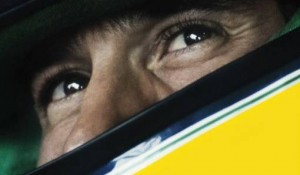
    Coming off “The Help,” I’m getting a little tired of crying like a baby in movies, but “50/50” earns those tears in more complex and special ways. It also finds the right pulse of comedy to balance the experience out and boasts a tight little ensemble with a natural vibe.

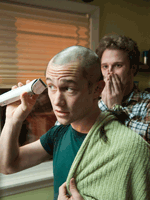
    Joseph Gordon-Levitt is front and center as Adam, a 27-year-old Seattleite smacked in the face with a cancer diagnosis. He has a girlfriend, Rachael (Bryce Dallas Howard), who isn’t totally up to the task of dealing with all this. He has a life-long friend, Kyle (Seth Rogen), who keeps pushing the illness as a chick-magnet (and follows an arc that is ultimately touching and surprising, yet believable and organic). And he has a mother (Anjelica Huston) who worries herself sick, naturally, and longs for connection that she can’t get from her own Alzheimer’s-afflicted husband.

    (more…)

  • SHORT TAKE: “Senna” (****)

    It seems perverse to begin a review of a documentary — one about a well-known, latter-day sports legend, at that — with something as mundanely cautious as a spoiler alert. Until recently, if general knowledge hadn’t already acquainted a viewer with the outcome of a non-fiction feature, or if the laws of real, unheightened life hadn’t made it patently obvious, the filmmakers would usually do the job for us anyway, working backwards from set facts to find the variables we don’t know, or didn’t know we knew.
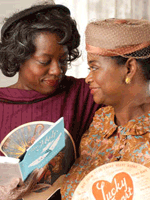
    With a new breed of documentarists getting ever more playfully shape-shifting in they ways they trade information and manipulate point of view — last year’s talking-point docs “Catfish” and “Exit Through the Gift Shop” both hinged on an abrupt turn not only in perspective, but in subject — Asif Kapadia’s dazzling biopic “Senna” instead subverts expectations by keeping its storytelling fiercely linear. Viewers unfamiliar with the story of Ayrton Senna, the reckless, beautiful Brazilian Formula 1 racing driver who rose to prominence in the 1980s and ended his career as arguably the greatest in the sport’s history, are offered no pat framing devices and wistful talking heads to say what became of him, beyond the unhappy use of the past tense.

    (more…)

  • ‘The Help’ and the year’s best ensemble performance…so far

    Now that I’m done crying my eyes out, a few words on Tate Taylor’s “The Help,” which I caught this afternoon.
    It’s a beautiful film, safe, sure, but it knows where to lay the emotional hammer down and where to let the rock keep skipping on the surface. Most striking is the ensemble, as there isn’t a single bad performance in the film. In fact, I’d say all of the them are comfortably above average, the highlights coming from Viola Davis and Octavia Spencer. But then Jessica Chastain was my personal favorite. Oh, and what about Sissy Spacek leaving you in the aisles?

    You see? It takes a real special touch to get this kind of across-the-board perfection out of a cast. Bryce Dallas Howard has pinpoint devilish precision. Allison Janney wiggles her way into your heart even after you don’t want her there. Ahna O’Reilly captures that locked-in submissive state wonderfully. Cicely Tyson punches you in the gut with just a few minutes of screen time. On and on. Oh, and Emma Stone…duh.

    (more…)

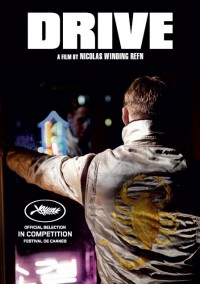
  • COMIC-CON: Refn’s ‘Drive’ is a bullet of vision

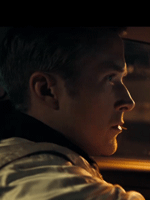
    I’ve had to sit on my feelings on Nicolas Winding Refn’s “Drive,” which had a special screening here Thursday night, because I haven’t found a window to write about it. That’s either good or bad, I don’t know, because the film has just continued to grow in my mind, but I don’t want to over-inflate expectations.

    In so many words, though, I think Refn is the most exciting filmmaker working today. And I haven’t even seen “Valhalla Rising” or his “Pusher” trilogy yet, but just to go by “Bronson” (a personal top 10er in 2009) and his latest, I feel an invigorating injection of originality in the cinema landscape.

    Guy reviewed and enthused about “Drive” at Cannes, so you’ve already digested one thorough assessment here (and one we share completely). So allow me to be a bit more abstract in my thoughts. I’ll just rattle them off as they come to me.

    (more…)

  • ‘Captain America’ keeps the summer sizzling

    So, “Captain America: The First Avenger” wraps up the summer’s superhero slate this week. Yes, we have “Cowboys & Aliens” on the way to keep the general comic book flow going, but Marvel’s other bookend to the summer hits Friday, and, well, I thought it was just (yankee doodle) dandy.

    “Robust” is the word that kept coming to mind while watching the film. You get a lot of bang for your buck here, with action set pieces galore, beefy production values (which might as well include Chris Evans’s physique) and a generous splash of pulp 40s fun to keep it unique throughout.

    I always thought Joe Johnston was the most interesting choice of Marvel’s stable of directors leading up to “The Avengers” next summer. He’s kept an even genre keel all of his career and “The Rocketeer” (20 years old and getting the anniversary treatment soon) is probably the nostalgia hook that really cinched it as a nice call.

    (more…)

  • My only friend, the end

    I’ll make this brief.

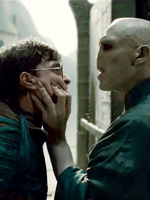
    “Harry Potter and the Deathly Hallows: Part 2” hits this weekend. It will be massive. The devoted will turn out and love it. The sense of grand closure will settle for many. But I’ll just have to cop here at the beginning to the fact that I cannot connect the dots on this series and likely never will.

    I suppose I’ll just focus on what I did enjoy about the latest film, which I saw last night, rather than wallow in the overall displeasure. Who wants to be a spoilsport? A party-pooper? A wet blanket? A kill-joy? A fuddy-duddy?

    Mercifully, the film clocks in at just over two hours, rather than blowing right on past the two-and-a-half-hour mark like most of the other films in the franchise. And since it’s largely built around action sequences and an overall vibe of suspense, it moved along nicely. I liked that.

    (more…)

  • ‘Green’ means go see it

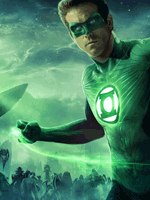
    It didn’t really hit me how excited I (still) was for “Green Lantern” until the lights dimmed and the green hit the screen. It can’t be understated how much of a long-time-coming type of thing this is, a theatrical version of such a vast cosmic comic book creation. And given the mechanics of the world, the amount of digital wizardry needed to conjure it, not to mention some dense continuity that never presented a clear-cut story for the screen, it’s understandable that it took so long.
    But things started to change in 2004. Geoff Johns, a long-time DC guy who had written on a number of the company’s books (and already had a nice film education under his wing from his time as a Richard Donner mentee), started re-tooling the DC universe, beginning with one of his favorite characters: Hal Jordan. The “Rebirth” storyline led into a revitalized line of books featuring the Green Lantern Corps, a more than 3,000-member strong organization of intergalactic peace keepers, with Jordan right in the center of things. The elements Johns began tinkering with and re-envisioning — which were themselves building toward the “Blackest Night” and “Brightest Day” comic events of the last two years — began to reveal a way into the material for the screen. And now, “Green Lantern.”

    (more…)

  • POST-CANNES: “Martha Marcy May Marlene” (****)

    [Apologies for leaving my Cannes coverage in limbo as I unwound in Paris before returning to London housekeeping. A handful of films from my festival viewing roster are still owed some discussion in grouped capsule form, and I’ll get to those this weekend — hey, the films aren’t going anywhere, so why stick to the parameters of the festival diary? I’ll begin, however, with the last of my individual reviews from this year’s Cannes, and the last of my three four-star finds of the fest.]
    Elizabeth Olsen’s face is an ellipsis, a perturbingly lovely marker of concerns unspoken and unresolved, in writer-director Sean Durkin’s “Martha Marcy May Marlene,” a sharp blackberry winter of a debut feature that perhaps invites a re-evaluation of how we define the modern horror film. Little happens in the course of Durkin’s curtly time-shifting narrative that is definably horrific, yet the constricting rhythms of the editing combine with the between-the-lines anxiousness of Olsen’s performance to instil a kind of objectless dread in the audience, playing their preconceptions of the film’s sensationalistic subject matter against its own craftier revelations. Watching it, in short, feels like being slowly strangled from behind.

    (more…)

  • REVIEW: “Drive” (****)

    Cannes Film Festival

    It’s not often that opening credits as hideous as the ones in “Drive” — hot-pink cursive squiggles of the kind favored these days only by nail bars in suburban strip malls — are a reassuring omen for the film to come. But Nicolas Winding Refn’s beautiful, bolt-from-the-blue genre trip is a kind of snazzily dressed, testosterone-enhanced bag lady of a movie, one that gathers all manner of tossed-out debris from the Hollywood scrapyard to demonstrate its continued usefulness.

    Accompanied by the irregular heartbeat of Cliff Martinez’s throbbing synth score, those lurid credits are the first clue that we’re in contemporary period piece territory: “Drive” may be set in modern-day Los Angeles, and its measured but grotesque bursts of violence may make use of our Tarantino-elasticated cinematic sensibilities, but in all other respects Winding Refn is partying like it’s 1985.

    Based on American pulp merchant James Sallis’ short, sharp 2005 novel of the same title, the laconic tone and clean structure of “Drive” nonetheless feel adapted more from cinema itself, and not merely from films that share its 80s-pop mood board. The Michael Mann of “Thief” and the William Friedkin of “To Live and Die in LA” may be obvious touchstones here, but so are 70s-era Walter Hall (most obviously the similarly titled and plotted “The Driver”) and even the hard 1960s strut of John Boorman’s “Point Blank.”

    (more…)

  • SHORT TAKE: “The Skin I Live In” (***)

    Cannes Film Festival

    Pedro Almodóvar’s new feature opens with a pause: a beautiful young woman holds a tricky yoga position, her already fine-lathed physique vacuumed into a nude body stocking, stretched across a couch like a pale side of meat hung out for curing. So so taut, so fragile, it seems a simple tap on the shoulder will splinter her perfect form into a chandelier’s worth of glass shards — and that’s an apt note of tension on which to begin “The Skin I Live In,” a coldly kinky thriller in which Almodóvar’s career-long concern with the manipulation and violation of the human body is bent back so far it has nothing left to do but break.

    The girl is actress Elena Anaya; who she’s playing is a question the film keeps in play for far longer than you’d think feasible in a narrative that deftly splits and reshapes identity across a pair of linked tragedies in the life of Antonio Banderas’ demented genius of a plastic surgeon. Adapted — rather liberally, I understand — from Thierry Jonquet’s novel “Tarantula,” the film’s dense structure plays Snakes and Ladders with chronology (a late-film title card that reads “back to the present” drew chuckles in the audience for its apparent self-exasperation), staggering major twists across its running time that makes it a challenge to discuss in any narrative capacity. (It hardly flatters the reviewer’s role to say this, but audiences are better off reading as little about the film as possible before entering the theater: ignorance really is bliss here.)

    (more…)

  • REVIEW: “Melancholia” (***1/2)

    Cannes Film Festival

    It’s the end of the world as we know it, and Lars von Trier feels fine. Well, not “fine,” exactly: he feels as despairing and sceptical and faithless as he usually does, but that’s clearly where he’s comfortable, and where his creative faculties thrive most actively.

    They’re certainly in rude health in “Melancholia,” a ravishing arthouse blockbuster that extends the self-therapy he began in 2009’s bracingly unhinged horror film “Antichrist,” but with more thematic cohesion and tonal restraint. The sensation-hungry, who label any new von Trier film ‘controversial’ before seeing a shred of footage, will likely be disappointed — that is, if they’re not appeased by some tame shots of Kirsten Dunst rutting on a golf course. (Luckily for them, as if realizing the deficit, the director compensated with some trademark shenanigans at the press conference.)

    For the rest of von Trier’s fans, however, the film’s lack of overt audience-baiting serves to place his formal gifts in starker relief. A subdued, even elegant, vision of the apocalypse that begins as a waking dream and continues in an actuality no less feverish, “Melancholia” represents the natural culmination of the depressive doubt in self and society that has needled most of von Trier’s features. As a statement on the spiritual bankruptcy of the human race, it may well prove unfurtherable: after destroying the world we live in — a spoiler only to the most tone-deaf of viewers, I assure you — where does the man have left to go?

    (more…)

  • CANNES: ‘The Kid With a Bike,’ ‘House of Tolerance,’ ‘Michael,’ ‘Footnote’

    Perhaps lulled by the twin effects of the Côte d’Azur sun and copious amounts of cheap rosé between screenings, I’ve fallen behind somewhat on the reviewing front — but lest you think I’ve only seen one film a day before heading back to the swimming pool at Villa Romance, it’s time for a bit of a Competition catch-up. (I’ll get round to a handful of Un Certain Regard and Critics’ Week titles — a couple of them very strong — as soon as I can.) Tomorrow brings another of my most anticipated titles of the festival, Lars von Trier’s “Melancholia,” which should steer Croisette conversation forward after a low-level day of screenings, over which talk of “The Tree of Life” has remained the dominant hum.

    “The Kid With a Bike” (***)

    “More of the same, but less,” I tweeted immediately after seeing the latest finely-honed study in urban realism from Belgium’s two-time Cannes champs, the Dardenne brothers. It’s a statement I stand by — it’s difficult not to think that after the muted acclaim for “Lorna’s Silence,” their 2008 flirtation with higher-concept storytelling, they’ve retreated to a safe space — even as I admit it doesn’t factor in some subtle novelties in the new film. “The Kid With a Bike” is literally their brightest film to date, for starters, shot mostly in crisp summer sunlight and poppy primary hues, which may also be why it feels like their most uncomplicatedly redemptive.

    (more…)

  • REVIEW: “The Tree of Life” (***)

    Cannes Film Festival

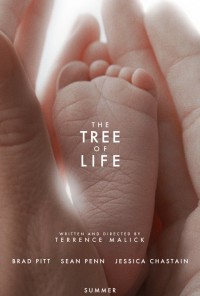
    Landscape has always been character in the films of Terrence Malick. The even, rolling fields of “Days of Heaven,” the sweatily green hill ladders of “The Thin Red Line,” even the dry-toast mesa of “Badlands”: all expansive, overwhelming environments that dictate the behavior of the films’ human occupants through sheer force of presence, for it’s often all they have to live in and live with. It’s an approach that, across 33 years of widely-spaced work, has drawn as many accusations of vacant pictorialism as it has rapt devotion — without the mystique Malick has accrued through his slow-loris work patterns, it’s difficult to say which camp might have emerged dominant — but it’s made for an oeuvre with a stylistic and textual throughline that belies its scattered production.

    Until, that is, “The Tree of Life,” Malick’s long, long delayed fifth feature that is at once his most interior work and his most grandiosely conceived. A fractured, impressionistic memory album documenting the roots of familial estrangement in a middle-class 1950s household in the director’s hometown of Waco, Texas, it arrives on the screen surrounded by bookends within bookends: scenes depicting the present-day social alienation of the family’s grown eldest son (Sean Penn), bracketed by vastly scaled sequences addressing more generalized concerns of theology, evolution and mortality.

    (more…)

  • SHORT TAKE: “The Artist” (***1/2)

    Cannes Film Festival

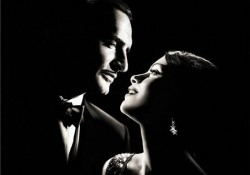
    “Please be silent behind the screen,” requests a sign in the cinema where silent movie star Georges Valentin’s latest work is screening, near the beginning of “The Artist,” Michel Hazanavicius’ semi-sweet paean to pre-talkie cinema.

    It’s a witty clue as to how Hazanavicius is going to run the ship in his own not-quite-silent movie: swooping strings accompany the film-within-a-film’s finale as Valentin (Jean Dujardin) waits confidently in the wings, only for sound to cut out just as the audience bursts into thunderous applause. It’s a neat trick, one the director pulls and reverses a few times in 100-odd minutes that follow, and one that cunningly aims to replicate in negative the disorientation 1920s picturegoers might have felt when films suddenly started speaking.

    If “The Artist” never quite becomes the ingeniously self-reflexive cinematic essay this scene promises, it succeeds on several warmer, more immediate levels: as an infectiously affectionate reminder of a lost art form’s joys, as a lushly imagined exercise in style, and most crucially, as a funny, emotionally connected entertainment in its own right. As in his pair of hit “OSS 117” films — droll spoofs of 1960s spy cinema, the casual pleasures of which his latest considerably builds upon — Hazanavicius’ approach to pastiche is exacting but not academic: story remains the top priority here, and he has settled on one that is snugly predicated on the film’s very own formal conceits.

    (more…)

  • CANNES: ‘Polisse,’ ‘Habemus Papam’

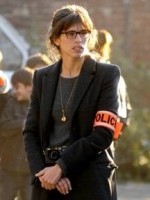
    “Polisse” (***) That the title for “Polisse” reportedly derives from writer-director-star Maïwenn’s misspelling of the word “police” aptly summarises both the charms and weaknesses of her third feature, a garrulous, chaotic, intermittently hot-wired ensemble soap braiding the personal and professional lives of officers in the Paris police department’s Child Protection Unit.No doubt the product of much earnest first-hand research into that environment — the numerous individual cases portrayed here are all rooted in fact — the film nonetheless feels creatively informed to a greater degree by the rhythms and structures of TV procedural drama.

    If that reads as a slight, it is and it isn’t: Maïwenn (the tearaway French star who had Luc Besson’s child at 17 and was allegedly the inspiration for Natalie Portman’s character in “The Professional,” so perhaps she knows more about CPU than most) gets what makes such shows propulsive, as she restlessly scurries between multiple crises rendered in cinematic shorthand, patly completing some strands and leaving others hovering for future episodes that will never get made. Casually bed-hopping and entering volcanic shouting matches at the drop of a hat, her characters don’t behave quite like human beings so much as the heightened reflections of them dictated by short-form storytelling; in some respects, Maïwenn’s writing is as phonetic and overheard as her spelling.

    (more…)

  • SHORT TAKE: “Restless” (*1/2)

    Cannes Film Festival
    Un Certain Regard

    “What can you say about a 25 year-old girl who died?” Written by Erich Segal before being plaintively voiced by Ryan O’Neal, this presumably rhetorical question is the opening gambit of “Love Story,” the simple but phenomenally successful weeper in which a young couple’s relationship is prematurely halted when the girl contracts leukemia — a bummer at any stage of life, but particularly so when you’re young and in love and have Ali MacGraw’s very nice hair.

    As it turned out, the film didn’t have an awful lot to say about the 25 year-old in question, beyond the indirect observations that love is sweet, death is sad and that neither one of those truths alters the other. Gus Van Sant’s new film “Restless,” meanwhile, asks the same question — just with a slightly lower number replacing the 25 — and, as laws of both algebra and Hollywood would have it, asks it to somewhat lower returns.

    (more…)