 Cannes Film Festival
Lionel Shriver’s 2003 bestseller “We Need to Talk About Kevin” is a rare pop novel indeed: a nippy, low-comfort social essay that lures readers into messily untied arguments on topical subject matter the talk-show circuit would have far less trouble resolving. It might have made for a cluttered, stentorian film about things, particularly as the novel’s candid, epistolary format — a series of unreturned letters from an emotionally paralyzed wife and mother to her absent husband — lends itself to reams of dense, subtext-securing voiceover.
That knowledge makes the already graceful cinematic language of Lynne Ramsay’s film adaptation (the Scottish director’s third feature, and her first in a regrettable period of nine years) all the more remarkable: altering not a jot of narrative detail, Ramsay and co-writer Rory Kinnear have ingeniously hollowed out Shriver’s wordy text into a largely tacit, imagistic memory collage that substitutes sound and vision for dialogue as extensively as possible. The woman who had a similarly unlikely literary hit, Alice Sebold’s “The Lovely Bones,” taken out of her hands by commercially-minded producers has exacted her revenge in the most rewarding of ways.
 Cannes Film Festival
 Cannes Film Festival
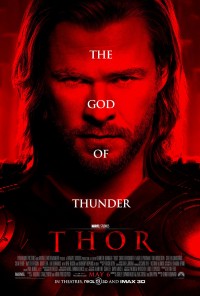 As superheroes go—and go they do, with alarming frequency, at the cape-wearers’ convention that the multiplex has become in recent years—Thor, or at least the Marvel-authored Artist Formerly Known As Norse God Thor, is more super than most. Where most beloved superheroes are humans (at least ostensibly so) who grow into their superhuman powers as a kind of parallel puberty, Thor needn’t waste time on any such learning curve.
 The Berlinale competition drew to a close this morning, with Joshua Marston’s
 Sorry there was no Berlinale dispatch yesterday. It was my birthday, and after “celebrating” it with a triple-bill of variously despairing Competition entries — finishing with
 Well, it didn’t take long for me to break my promise of daily festival reports. In the unlikely event that you were eagerly awaiting for my first Berlinale dispatch yesterday, I can only apologize: it’s hard to review films you haven’t seen.
 I’ve seen the Coen brothers’
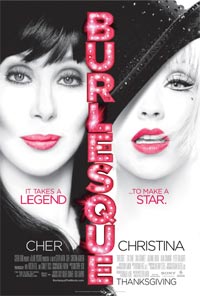 (We don’t usually post reviews after the US release, but this one got snarled up in my hard drive earlier this week and I didn’t want to waste it. I’ve noticed a number of readers posting thoughts on the film in yesterday’s Cinejabber post, so look on this as your “Tell us what you thought of Burlesque’” post into the bargain.)

 “I think the French have always enjoyed older women, and they’re right to do so,” Kristin Scott Thomas told me in an
 The success of the London Film Festival’s annual Surprise Film screening isn’t exactly dependent on the surprise element: more often than not, the film’s identity can be pinpointed in advance simply by asking yourself which title you most expected to find in the festival lineup, and then didn’t.
 Unlike, say, the Venice fest – where the jury’s failure to reward any of the (lousy) Italian films in competition is cause for a media strop — the London Film Festival has often seemed somewhat embarrassed by the homegrown portion of its programme, perhaps granting a big red-carpet date to the odd bit of tony Oscar bait while shoving newer and/or independent British filmmakers into shadowy side slots.
 Amid a fairly robust non-fiction slate in this year’s London Film Festival programme, there appears to be an informal sidebar of documentaries about the process of, well, documenting — whether via media avenues of art, film or journalism.
 Okay, so my weekend plans to catch up on my LFF review backlog didn’t entirely pan out — though the schedulers have, at least, kindly slowed the snowball effect by screening a number of films today that I had already seen. Strange as it sounds, given that it’s been on the festival track for five months now, Mike Leigh’s
 (Please note that one of the films reviewed here, “Aftershock,” was not screened as part of the London Film Festival programme — but since I saw it this week, it made sense to include it in this discussion.)
 “To get the challenge to play someone like this makes me a better person,” said a rather intense-looking Hilary Swank at yesterday’s London Film Festival press conference — the someone in question, single mom turned crusading lawyer Betty Ann Waters, sitting to her immediate left.
 In a year that has seen me give over more of my time than is strictly sensible to covering the Cannes, Venice, Berlin and Edinburgh programmes, there’s something oddly disconcerting about attending a festival in my home city.