In Contention

Tag: Interviews

  • INTERVIEW: Scott Cooper and Robert Duvall

    (from left) Robert Duvall and Scott Cooper at the Los Angeles premiere of Crazy HeartIn a quiet corner of the Four Seasons restaurant late one afternoon, Robert Duvall gives “Crazy Heart” writer/director Scott Cooper a little grief for singing his praises too loudly.

    “Oh, quit playing humble,” he says. “Come on, man!”

    Earlier, when Cooper tries to pass credit for his film’s financing on to Duvall, the six-time Oscar nominee offers more of the same.

    “I’m not so sure I believe that,” Duvall says. “Maybe.”

    It’s the standard back-and-forth between mentor and, for lack of a better term, protégé. Reverence and respect from the younger southern gentleman, sincere commendation and dismissed flattery from the older industry vet.

    But that’s their dynamic. Duvall, who never had children of his own, certainly seems to think of Cooper as a son. The director was married on Duvall’s 360-acre property in the plains of Virginia. The two met as actors on  “Gods and Generals,” worked together again on television’s “Broken Trail” and, most recently, Aaron Schneider’s “Get Low.” And the truth is, “Crazy Heart” would have had a bumpy road to the screen if it was just Cooper out there banging on doors.

    To his credit, Cooper knows it.

    (more…)

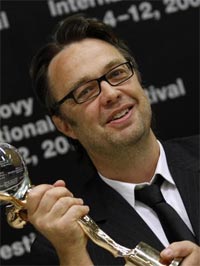
  • INTERVIEW: ‘Terribly Happy’ director Henrik Ruben Genz

    Henrik Ruben GenzTwo striking films in this year’s Best Foreign Language Film Oscar race probe the theme of moral drift, both individual and communal, bred in a rural European community – the very opposite of what Hillary Clinton meant by “It takes a village.”

    One of them, Michael Haneke’s “The White Ribbon,” you’ve probably heard of. The other you’ll hopefully hear much more about in the months to come: Danish entry “Terribly Happy” is a terrific thriller from Oscar-nominated writer-director Henrik Ruben Genz that has taken its homeland by storm and is ripe for a U.S. remake.

    A wickedly comic flipside to Haneke’s solemn social critique, Genz’s film trades in twisty suspense and coal-black humor as it follows the misadventures of Robert (Jakob Cedergren), a mysteriously disgraced Copenhagen cop reassigned to an unwelcoming one-horse town with its own share of nasty secrets.

    As Robert gets drawn into the void by a hesitant relationship with abused housewife Ingerlise (Lene Maria Christensen), the film has drawn comparisons to the Coen Brothers of “Blood Simple” and even the David Lynch of “Twin Peaks” in its cool unveiling of the macabre within the mundane.

    (more…)

  • INTERVIEW: Saoirse Ronan

    Saoirse RonanStill fully engaging at the end of a long day of interviews, actress Saoirse Ronan seems as eager to dive into the particulars of Peter Jackson’s latest film, “The Lovely Bones,” as she might have been before being asked every question in the book. Her energy is undeniable, as well as her poise, a young actress grounded but hungry for challenging work.

    Her performance in Jackson’s film is a considerable notch in the 15-year-old’s early career. As Susie Salmon, the ill-fated youth at the center of Alice Sebold’s best-selling novel, Ronan had to go places she certainly never has as a performer. But the working environment and relationship her director developed on the set deserves a great deal of the credit, she says.

    “I don’t think I could really label what I’ve learned from Pete,” Ronan says. “I was with him for about nine months and being with someone like that every day that gets the best performance out of you that I can give makes you work hard as an actor and therefore makes you grow as an actor, and hopefully makes you a better actor. So I suppose you could say he’s made me a better actor.”

    Ronan was particularly fond of Jackson’s upbeat, energetic approach to the work. And it is fair to say it was, as far as she is concerned, a non-traditional environment, but at the start of her career, she embraces the idea of eschewing the typical, just as Jackson has.

    (more…)

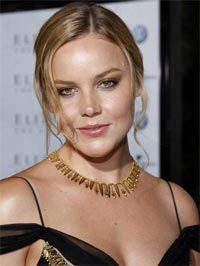
  • INTERVIEW: Abbie Cornish

    Abbie CornishTo call Abbie Cornish’s astute, china-delicate performance in “Bright Star” a “breakthrough,” as so many critics this year have done, is to do something of a disservice to her similarly remarkable work in a pair of underseen Australian titles.

    No informed viewer should be taken off-guard by the tart questioning and quiet sensuality she brings to the role of Fanny Brawne, the teenaged lover of famed Romantic poet John Keats, in Jane Campion’s period biopic.

    What’s surprising is that, after winning a bevy of Australian awards at the age of 22 for Cate Shortland’s 2004 coming-of-age drama “Somersault,” and following it up with a searing turn opposite the late Heath Ledger in Neil Armfield’s harrowing junkie romance “Candy,” it’s taken three years for another starring role to come her way.

    In that time, Cornish dipped her toe into international waters with supporting roles in ill-fated vehicles like “A Good Year,” “Elizabeth: The Golden Age” and “Stop-Loss” – though if those lean years were troubling to the Next Big Thing monitors, they weren’t to Cornish, who had “Bright Star” on her radar all along.

    “I was sent the script for the film about two-and-a-half years ago, and I fell in love then and there,” the 27 year-old actress tells me over the phone, gentle Australian twang very much intact. She’s in Los Angeles to pick up her younger sister, before returning to the Vancouver set of Zack Snyder’s “Sucker Punch.”

    (more…)

  • INTERVIEW: Bryce Dallas Howard

    Bryce Dallas HowardBryce Dallas Howard dominated M. Night Shyamalan’s “The Village” with a beautiful performance of intensity, ferocity, gentle sensitivity and vulnerability.  She made the audience fall almost instantly in love with her character, the blind, though all-seeing Ivy.

    With her flowing red locks, warm smile, and imposing gaze, the young actress appears to be to be an old soul in the body of a youth.  And she has fast made a name for herself as a major rising talent.

    Talking to an actress on the cusp of greatness is always interesting because in many ways the attitude she brings to interviews will define her to the media.  With Howard, there is no trace of ego at all.  There is, however, an excited young mother eager to discuss her role as a mom, the trials and tribulations of being a mom for the first year, etc.  And, of course, there is the work.

    Howard’s latest role comes in Jodi Markell’s “The Loss of the Teardrop Diamond,” from a lost screenplay written by legendary playwright Tennessee Williams. The film is the story of Fisher, a spirited young southern lady, vivacious, exciting to be around, fun loving, and perhaps in love with a young man she convinces to be her escort during the party season of the roaring 1920s.

    When an incident occurs that could forever alter their relationship, she is forced to make a decision that will decide which way her life goes, and the manner of woman she will become.

    (more…)

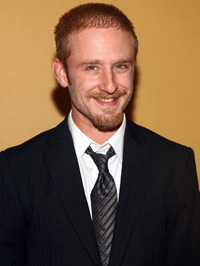
  • INTERVIEW: Ben Foster

    Ben FosterBen Foster became an actor I knew I would watch for a long time during an episode of the now canceled TV drama “Boston Public.”

    Foster was cast as a high school student dying of cancer and had an extraordinary monologue about wanting a Christmas with no crying, with no tears; he wanted his last Christmas to be about joy, so he kept the fact that the cancer was no longer in remission from his family.  He had what Pauline Kael called, “Bite you on the nose talent.”

    In the last few years Foster has slowly been building up a strong filmography that I believe has placed him as one of the most gifted and exciting young actors in American cinema.  Even a role on “My Name is Earl” was electrifying.  With major roles in “Alpha Dog,” “3:10 to Yuma” and now “The Messenger,” it’s a quick cross-section of a talent on the rise.

    Many times interviewing young actors on the way up is an exercise in tedium because they can be so full of themselves there is barely room in the same room for us both.  Not so with Foster, a thoroughly engaging, intelligent, brutally honest young man with his head firmly attached.

    Films dealing with the wars in Iraq and Afghanistan have not been popular with audiences or critics over the last few years. “In the Valley of Elah” was superb because of the haunting performance from Tommy Lee Jones, and this year Kathryn Bigelow gave us “The Hurt Locker,” which is easily among the best films of the year and could see her become the first women to win an Academy Award for Best Director.  So I waded right in: Why this film?

    (more…)

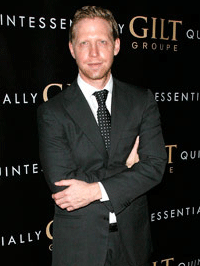
  • INTERVIEW: ‘Valentino: The Last Emperor’ director Matt Tyrnauer

    Matt TyrnauerFor 17 years, Matt Tyrnauer worked for Vanity Fair writing up profiles of major artists and pop culture figures such as architect Frank Gehry, producer Robert Evans, writer Bret Easton Ellis, actor Greg Kinnear, designer Tommy Hilfiger, Martha Stewart (her post-prison cover story) and legendary designer Valentino Garavani.

    That final name has made an impact on his life that will alter the course of his career as an artist, and may just land him an Academy Award nomination for Best Documentary.

    Having studied film in college, a life in the cinema was never out of the realm of possibility for Tyrnauer, though his work at Vanity Fair consumed a great deal of his life through the last two decades. When he decided to make a film about Garavani, he did so with an abandon that suggests a fierce passion for his subject and deep belief in what he was doing as an artist.  “Valentino: The Last Emperor” was the result.

    The director admits there were times he did not know what he was doing, in particular when it came to distribution, but that flying-by-the-seat-of-the-pants sensation seems to have served this likable young man very well. Confidence in his film, that it was a truthful representation of the inner world of Garavani, would also help him when his subject disliked the film upon first viewing. Garavani ultimately needed the reassurance of a standing ovation at the Venice Film Festival to convince him otherwise.

    (more…)

  • INTERVIEW: ‘Disgrace’ star Jessica Haines

    Jessica HainesWhen I begin my phone conversation with Jessica Haines by telling her how insistently I prodded her publicist to set up our interview – the reverse is so often the case – she responds with a bashful laugh. “I can believe that,” she says, in a warm South African drawl. “Not many journalists have bothered tracking me down to Tunis!”

    Haines sounds endearingly surprised that anyone might be interested in her away from the cinema screen, where she made such a startling arrival this year in Steve Jacobs’s “Disgrace” – which opens in the UK today, on the heels of an all-too-brief Stateside run in the fall.

    This speaks both to the 30 year-old newcomer’s natural humility – if she is aware of just how good she is, she certainly hides it well – and her relative unfamiliarity with the ropes of the industry.

    As if to literalize the point of just how far removed Haines is from Hollywood, I learn that she is in Tunisia not, as I had assumed, on some remote location shoot, but for a decidedly simpler reason: it’s where she lives, thanks to her husband’s banking career.

    “I don’t really know where to call home at the moment,” she says. “My family’s in Natal [the East Coast of South Africa], but I studied in Cape Town and do a lot of work in Johannesburg. My husband’s job is taking us from Tunisia to Kenya soon. I’m just flying in and out all the time.”

    (more…)

  • INTERVIEW: Jeff Bridges

    Jeff BridgesFor actor Jeff Bridges, whose career has already spanned five decades, Scott Cooper’s “Crazy Heart” was something of a homecoming and, the actor says, “a dream come true.”

    Bridges stars in the film as Bad Blake, a ramblin’ country-western singer who travels the Southwest playing dive after dive, cut from the same cloth as Hank Williams Jr., maybe, or Waylon Jennings, Kris Kristofferson, etc. A guitarist in his own right, Bridges was eager to take on a film so concerned with music, but was wary of underwhelming after the example set by another music-themed film from his past, Steve Kloves’s “The Fabulous Baker Boys” from 1989.

    “What they did with that movie I thought was so wonderful that to do another music movie and not match that, it’s a pretty high bar there, so I was concerned about that,” Bridges says over lunch in Beverly Hills one November afternoon. “There were several music scripts that came down the pike, and sometimes it would have lyrics or little samples and it wouldn’t be right. And this one had no music. Then I thought maybe I could write the music, or my friend, but then, you know, I was busy, so I didn’t focus on it.”

    Indeed, Bridges is quick to admit that he spends a great deal of his energy steering clear of new projects. It might be a phobia of commitment on one hand, but on the other, he’s a man who likes to keep his options open. Signing onto a new film means missing the chance to work on any number of other projects that might ultimately interest him more.

    But “Crazy Heart” was a different story, especially once his good friend T Bone Burnett got involved as producer, music consultant and composer.

    (more…)

  • INTERVIEW: Woody Harrelson

    Woody HarrelsonWoody Harrelson is running behind…about a half an hour behind.  This after a number of delays and schedule changes throughout the week.  When he strolls nonchalantly out onto the rooftop spread of a posh West Hollywood hotel, you can see why.  It’s not irresponsibility.  It’s not eccentric nuisance.  The guy just marches to his own drummer, and certainly, to his own beat.

    Publicity handler in tow, Harrelson moves and speaks purposefully, casual, always relaxed (though one might have fun speculating why that is).  Some may get him to say sensational things, but that’s not the M.O. of the interviewer he’s chatting with this afternoon.  So the perching hawk to my left, giving him a sharp look when he offers harmless jokes that might be seen as tasteless, isn’t exactly necessary.

    “Why don’t you let us talk alone,” he finally says, half-way through — respectfully, but sincerely.  He’s a man who seems to enjoy a chat, no matter how much it might push the rest of his schedule back.  And he’d certainly prefer to engage in one without that kind of oversight.

    Ostensibly his press rounds as of late are for the Oren Moverman film “The Messenger.” Appearances on The Colbert Report and, immediately following our encounter, The Late Late Show are popping up left and right.  He’s on the cover of this month’s Venice magazine.  But he’s also given a pair of zany performances in genre films this year that are worth discussing for the versatility they illuminate in his work.

    (more…)

  • INTERVIEW: Willem Dafoe

    Willem DafoeI have thought about little else since seeing Lars Von Trier’s “Antichrist” at TIFF a few months ago.  The astonishing, beautiful images are in my head once a day, the performances have never strayed from my mind. At this writing I still do not know if I liked the film, but I do feel it is an important work of art that makes tough demands on the audience, as all fine art should.

    The subject matter is difficult, the images tough, the well-documented graphic imagery very hard to watch, and the characters not particularly likable.  Yet I was drawn into the film.  I cannot remember in the history of the cinema a more profound portrayal of grief and all its agonies than what Von Trier has given us here.

    This kind of brutally honest acting takes a great deal of courage, but Willem Dafoe has always been a brave actor, willing to do just about anything it takes to get to the heart of his characters. Twice he has been nominated for an Oscar, the first time for his doomed Elias in Oliver Stone’s “Platoon,” the second as Max Schreck, maybe a vampire, maybe not, in “Shadow of the Vampire.”

    In between he has given an array of superb performances, topped by his astonishing turn as the conflicted Messiah for Martin Scorsese in “The Last Temptation of Christ,” one of the most controversial films of the 1980s. Dafoe has never shied away from playing dislikable characters, such as his hateful Bobby Peru in “Wild at Heart,” but he can also be shockingly gentle, as we saw in “Tom and Viv.” He is the complete movie actor: as comfortable in blockbusters like “Spider-Man” as he is in independent cinema such as “Antichrist.” All he asks for is a challenge.

    (more…)

  • Wes Anderson and friends on ‘Fantastic Mr. Fox’

    Fantastic Mr. Fox“The reason Roald wrote such wonderful children’s books was that he could think like a child. Wes has that capacity too.”

    With this statement, at a cozy round-table interview in the dining room of bucolic Dahl homestead Gipsy House, Liccy Dahl makes clear her endorsement of Wes Anderson’s “Fantastic Mr. Fox,” the auteur’s oddball adaptation of the beloved children’s book by her late husband, which opened in limited release on Friday.

    Sitting beside her, the lank-haired, nattily suited Anderson blushes slightly and peers down at the table. They make a curious pair of collaborators, the dandy American hipster and the gentle British countrywoman, but the sincere affection between them is plain to see, as is Dahl’s genuine excitement about the film.

    “Things have been changed and embroidered in the film, but the magic hasn’t been taken away,” says Dahl, adding that Anderson’s trans-Atlantic take on the story (its animal characters live in England, but speak and behave as Americans) is appropriate given the international appeal of her husband’s work. “The essence of the story stays the same: good versus bad, the survival of a starving family.”

    (more…)

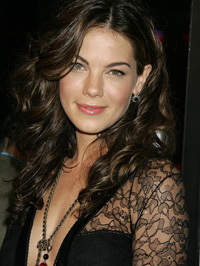
  • INTERVIEW: Michelle Monaghan

    Michelle MonaghanOf all the actors I’ve spoken to over the years, I do not remember having such a great time as I did with Michelle Monaghan, currently on screens in “Trucker” and generating some awards chatter for her work. The actress is funny, honest, refreshingly frank and grateful for her career, unaffected by her fame, and a genuinely nice gal, still obviously remembering the lessons she learned growing up surrounded by working class values.

    She laughs often and it is a deep, infectious laugh that seems to surge right through the phone line.  What she has achieved in a very short time is special indeed, and despite having no training as an actor, she may be one of the finest American actresses of her generation; she is certainly the best I’ve seen this year.

    Monaghan has been visible on the American film scene since earning strong reviews for her riveting performance in “North Country” in 2005, with Oscar winner Charlize Theron, which she followed with “Mission: Impossible III” a year later, more than holding her own opposite Tom Cruise. Her performance in “Gone Baby Gone” was remarkable, resonating with a great deal of sadness, and she ran around the blockbuster “Eagle Eye” with Shia LaBeouf, managing to find an actual character amid the fluff.

    The girl can act, and she is getting better with each film.  Her turn in “Trucker” is astonishing.

    (more…)

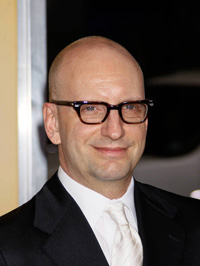
  • INTERVIEW: Steven Soderbergh

    Steven SoderberghToronto Film Festival

    Steven Soderbergh freely admits how much luck has played into his career, beginning with winning the coveted Palme d’Or at Cannes in 1989, the victory that launched his career and his first major work, “sex, lies and videotape.”

    “First of all the film was not supposed to be part of the competition but when another film was removed they bumped mine into that category,” he explains, “and then Francis Ford Coppola, who was supposed to be head of jury, couldn’t do it, so Wim Wenders took over. Without those two sets of circumstances would anything good have come out of Cannes for me? You have to ask yourself those things. Luck was with me, and I am fine with that. It’s knowing what to do with that luck.”

    Soderbergh is a relaxed guy in this posh hotel suite. For some reason Warner Bros. chose the Royal York Hotel for their press days, away from festival village, and a cab (or subway) ride away from the action. I don’t mind the break, and frankly I admire Soderbergh very much, so I was looking forward to meeting him and speaking with him about his film “The Informant!” (opening today) and his career.

    At this stage in his life, as he nears 50, Sodebrergh smiles and says he sees so much comedy in the world around him these days.  “You have to see the humor in things don’t you,” he asks.  “When I read ‘The Informant’ for the first time I saw it as a comedy, which many other people did not. But think about it, there have been films like this done as drama, Michael Mann’s ‘The Insider,’ which I like very much, so I chose not to go in that direction.

    (more…)

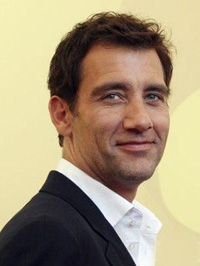
  • INTERVIEW: Clive Owen

    Clive OwenToronto Film Festival

    “I have two lives, mate,” Clive Owen says with clear-eyed certainty. “My work, and when I am done, my home life. There is no question to me which is more important. My wife and children are everything to me.”

    Owen is as intense in person as he is in some of the roles he played on screen the last few years. Best known as a tough guy type in films such as “Sin City” and “Shoot ‘Em Up,” he is also brilliant without the edge, as evident in “Bent” and his Oscar-nominated turn in “Closer.” He sits close to me, his eyes never leave mine, and when I glance down to make a note he is still staring at me. But when he smiles his eyes smile as well. As Scott Hicks says, “Clive loves his life, he loves his family, his girls, his work, and his success…he loves his life.”

    I wondered how much that love for family and life allowed Owen to tap into the mind of the character he portrays so very well in “The Boys are Back,” the new film from Aussie director Hicks, who first made an impact here back in 1996 with “Shine.” Owen has emerged as one of the great British actors in recent years, his scalding performance in “Closer” an extraordinary poiece of acting that seemed to blow everyone else in the film off the screen, no mean feat considering the quality of the acting in the movie. Julia Roberts and Natalie Portman gave career best work in the film, many of their scenes coming opposite the actor in front of me.

    Owen’s road to this place began in television, with his first memorable film performance coming in the powerful drama “Bent,” based on the play by Martin Sherman about Hitler’s massacre of homosexuals during the Holocaust. It was “Gosford Park” that next earned him strong notices, followed by a role in “The Bourne Identity” with Matt Damon.

    After the box office failure of “King Arthur,” Owen was back in theaters with “Closer,” which changed the course of his career. Brilliant work in “Children of Men,” “Inside Man” and, more recently, the under-appreciated “Duplicity,” have made him one of the top stars working in film today, and among the busiest. At one time he was among the leading contenders for the role of James Bond, a role that eventually went to Daniel Craig. He possesses a Bogart tough guy persona, but with a soft side buried within. There is certainly an edge to his work, but there is a heart there as well.

    (more…)
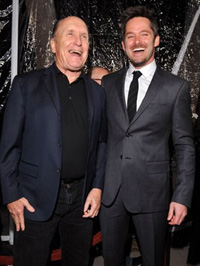
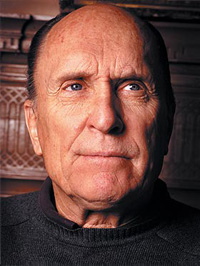
  • INTERVIEW: Robert Duvall

    Robert DuvallToronto Film Festival

    Sitting down with Robert Duvall is more than a little intimidating. The man does not suffer fools, nor does he have a lot of time for small talk or stupid questions. He likes to talk, but he also likes an informed conversation.  As he nears 80, he is still a force of nature, with a powerful presence and voice that goes up and down depending on his excitement.

    Duvall and I first met in 1997 when “The Apostle” exploded out of Toronto, landing the veteran actor a much-deserved Oscar nomination for Best Actor.  The performance was a volcanic, furious portrait of a man trying to atone for his sins by building a church in the backwoods of Louisiana after killing a man in a fit of rage. For 13 years Duvall shopped the project around Hollywood, being turned down by the major and minor studios until his accountant suggested he finance the film himself.  In a position to do so, he did just that, eventually selling the film at TIFF after a famed bidding war.

    I got to know him when he invited me to spend some time with him on the set of “John Q” while it was shooting here in Toronto, the invitation coming during the 2000 Film Festival when I interviewed him a few times for his soccer picture, “A Shot at Glory,” in which he co-starred with soccer star Ally McCoist.  In the years since, Duvall has kept himself busy with great roles and performances in films such as “Broken Trail,” for which he won the Emmy Award for Best Actor, and “Kicking and Screaming,” a soccer comedy with Will Farrell that seemed like an odd choice for the actor.

    Recognized as one of America’s greatest thespians, Duvall has given an array of brilliant performances over the years, from his breakthrough, shy Boo, in “To Kill a Mockingbird” through to his mafia lawyer Tom Hagen in “The Godfather” and “The Godfather Part II” and perhaps most memorable of all, Kilgore in “Apocalypse Now.” He came into his own in the 1970s, at a time when other major talents such as Jack Nicholson, Dustin Hoffman, Al Pacino, Robert De Niro and Gene Hackman were also turning in brilliant performances, changing the face of American acting.

    (more…)

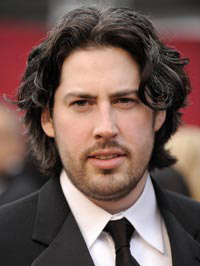
  • INTERVIEW: Jason Reitman

    Jason ReitmanTelluride Film Festival

    Four days ago, Jason Reitman finalized his latest film, “Up in the Air,” by making one final song change. Two days ago he unveiled it to its first-ever first audience, his nerves shot. Today, somewhat more relaxed in the wake of a warm reception to the film, he’s sitting outside at a cafe on a sunny day, the famous gondolas of Telluride swinging around and up the hillside to Mountain Village behind him as he thinks back on the experience.

    “It felt really good,” he says. “I’ve never had that short a period of time between finishing a film and it showing for the first time. I’m used to having a few weeks to get nervous, but I was really making creative choices up until the last second. It was almost surreal, it’s like, ‘Oh, yeah, I’m watching it with an audience.’ And there’s this moment when you give up the movie. It stops being yours and starts being everyone else’s. It’s unusual. People laugh at a certain point or they’ll find something moving that you didn’t expect. They start telling you what the movie was. I didn’t expect that emotional experience for myself. A lot came together Saturday.”

    Reitman began conceiving the story of “Up in the Air” — which strays considerably from the film’s source material, a 2002 Walter Kirn novel — six years ago. (Sheldon Turner, who shares screen credit on the adaptation, penned a draft early on, but Reitman came from his own place on things.)  He began turning over its themes in his head, considering them in their barest form.. “They started coalescing further a few years ago,” he says, “and then, really in the year leading up to the movie, right after ‘Juno,’ it suddenly felt like, you know, this was a question I really needed to ask. I go through the same questions that the main character does.”

    In the film, George Clooney stars as career transition specialist Ryan Bingham, a hired gun terminator. It’s an element of the film that skims the zeitgeist but its the personal journey of the character that Reitman wanted to dig at, notions of one’s responsibility to engage with the world around you, with one’s family, and the idea that no man is — or at least no man should be — an island unto himself.

    (more…)

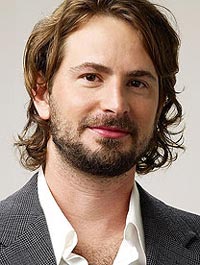
  • INTERVIEW: Mark Boal

    Mark BoalFor a man more accustomed to the dirt-under-the-fingernails highs of hard journalism, the red carpets, photo calls and cosseted hotel suites of film promotion clearly represent a very different kind of strain for Mark Boal, the journalist-turned-screenwriter who on Monday won the prestigious Gucci Group Award at the Venice Film Festival.

    Back in August, on the hottest afternoon of the year, the tall, lank-haired writer of Kathryn Bigelow’s “The Hurt Locker” lopes into the lobby of London’s cooler-than-thou Sanderson Hotel, dressed in jeans and a plaid shirt, and politely asks if I’ll join him over a beer.

    “I’ve been on coffee all day, and it’s not working,” he grins, his face betraying missed hours of sleep, but still more boyish than its 36 years. “Maybe this’ll make a difference.”

    Boal registers a brief flicker of bewilderment upon learning that the only beer on the Sanderson’s ultra-precious bar menu is Sri Lankan, and rather exotically priced at that, but we order two anyway. “It’s still beer, right?” he confirms with the waiter.

    It’s regular-guy moments like this that shed a little light onto Boal’s humanistic gifts as a reporter and, now, as a screenwriter: modest, relatable and defiantly no-bullshit, it’s easy to imagine a group of soldiers welcoming him into the fold, as happened in 2004, when Boal was an embedded in (or, to use his term, “hung out with”) an elite bomb disposal unit for several weeks, laying the groundwork for the screenplay he then had no plans to write.

    “I was really keen to do a story on the bomb squad,” he explains. “It was clear that IEDs (Improvised Explosive Devices) would be the army’s central logistical element by 2004, but still, nothing was being written on it. Iraq was a bit of a news black hole after the invasion … people simply thought it too dangerous.”

    (more…)