 We’re wrapping things up today with a final look at the below-the-line of Joel and Ethan Coen’s “True Grit” and a chat with production designer Jess Gonchor.
You might recall our interview with Gonchor from last year when he mentioned how he first came to work with the Coens (on 2007’s “No Country for Old Men”). The brothers had been very impressed with what they saw on Bennett Miller’s “Capote” and liked what he brought to the table. Gonchor had already shown his value as art director on films like “Kate & Leopold” and “The Last Samurai,” but “Capote” was his first stab at being the head of the art department as production designer.
Four films later the collaboration is still going strong as Gonchor has settled in nicely with the Coens’ family of craftsmen and women, and “True Grit” might be the apex of that work so far. Any designer would delight in working on a western, but the attention to detail in Gonchor’s work, and particularly in the work of his set decorator, Nancy Haigh, is truly wonderful.
 Nearing the end of our week-long series of interviews with the below-the-line talent of Joel and Ethan Coen’s
 The Coen brothers’
 Continuing today with our week-long look at the below-the-line elements of the Coen brothers’
 Directors Joel and Ethan Coen have evolved into the quintessential American filmmakers of our time since charging onto the indie scene over 25 years ago. It was a trajectory hinted at in early depictions of Prohibition-era gangsterism (
 Christopher Nolan has become known for making the Batman films look, and consequently feel, “real.” His latest film,
 *PLEASE NOTE: There will be spoilers of both
 *PLEASE NOTE: There will be spoilers of both
 When actor Ed Harris was doing the press rounds for his second directorial effort,
 Sitting at the Four Seasons’ Culina Restaurant with a tomato juice in hand, politely asking to turn the heaters up on a fair weather day, composer Alan Menken recalls the afternoon before, when he received a star on the Hollywood Walk of Fame.
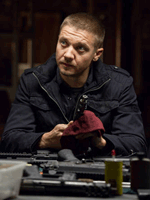 Warner Bros. has been looking for any and every opportunity to get Jeremy Renner and his well-liked supporting performance in Ben Affleck’s
 I chatted with
 I’m getting to that point where the interviews are stacking up and there’s precious little time to transcribe and write them up. It pains me to resort to audio for these purposes as I enjoy writing them out and giving a narrative interpretation of a persona, but sometimes one’s hand is forced.
 Actor — and as of late, filmmaker — Ben Affleck makes his way to a cozy corner of Santa Monica’s Casa Del Mar hotel restaurant. He’s coming from a “Dad’s event” at his daughter’s school, he says, propping his feet up on a nearby chair.
 “I’m going to bring back the letter,” a flustered Patricia Clarkson announces as she makes her way to our lunch table, ever-so-slightly rain-mussed but otherwise immaculate in black and cream, a jaunty matching fedora astride her familiar blonde mane. “I’m never late. I blame email for this. I’m only just getting acquainted with it.”
 Danny Boyle has been wanting to tell the story of Aron Ralston on celluloid for four years now. He met with the mountain climber in 2006 seeking permission, but at the time, Ralston was looking to convey the story in documentary form.
 When the director of a gentle indie character study—even one joshingly praised as “mumblecore with a plot” by certain critics—cheerfully tells you that his next project is more of a “werewolf buddy cop comedy,” you could be forgiven for expecting a thick veil of irony to cover the remark.
 James Franco sits in one of the countless, nondescript rooms on the sixth floor of the Four Seasons hotel in Los Angeles remembering the time he first met mountain climber Aron Ralston in the same building, perhaps in a room not unlike this one.