In Contention

Tag: Interviews

  • INTERVIEW: Paul Schneider

    Paul SchneiderTelluride Film Festival

    Paul Schneider has had a headache since he was nine years old.  Or at least, he says, that’s what it feels like.  Since the rush of a film festival isn’t the best environment for migraines, a corner booth in an unassuming cafe is a nice distraction for the actor.

    Schneider left the North Carolina Piedmont with a degree in film editing and a role in his friend David Gordon Green’s feature debut “George Washington” in the spring of 1999.  He moved to Los Angeles for what he calls “six weird months” before retreating to home base and a year living in Raleigh, and that’s when things started happening.  Green’s film hit the festival circuit, later became one of the most celebrated debuts of 2000 (landing on Roger Ebert’s top 10 list) and put Schneider in a position to make some moves.  He picked up an agent and things started to come together.

    “I thought it was sort of a fancy situation,” he says, sipping coffee, looking off in the distance, thoughtfully choosing his words.  “I was farther ahead in this game than I was in the editing game.  I was still around what I liked.  I was still around this thing and I thought I’d just give it a whirl.  Even a moderate success in acting can afford you a lot of time and a lot of money to do a lot of other stuff.  But it kind of just kept on happening.”

    From “George Washington” Schneider starred opposite Zooey Deschanel in Green’s equally respected “All the Real Girls” (which Schneider co-wrote while he and Green were in film school).  He landed roles in Cameron Crowe’s “Elizabethtown,” Tom Bezucha’s “The Family Stone” and Andrew Dominik’s “The Assassination of Jesse James by the Coward Robert Ford,” but despite the indication that directors were banging down his door, Schneider makes it clear that he didn’t have much autonomy, nor does he today.

    (more…)

  • INTERVIEW: 20 questions with Denis Leary

    Denis LearyWe rarely cover television with any real focus around these parts, but as you’ve probably gathered from my sporadic posts on the matter, I’m really digging the new season of “Rescue Me.”  So it was a little difficult to pass up an opportunity to sit down with the film’s star and co-creator Denis Leary recently.
    With the Emmy nominations set to be unveiled next week (7/9), it seemed the perfect time to get together.  Leary was nominated for his performance as FDNY firefighter Tommy Gavin two years in a row in 2006 and 2007, but was unfortunately ignored last year.  Perhaps this new, electrifying season will put him back in the awards saddle as he seeks his first win in the category of Outstanding Lead Actor in a Drama Series.

    Leary, of course, got his first big break on MTV, where his chain-smoking, ranting misanthrope appealed to the pent-up angst of the network’s target audience.  From stand-up to film roles and finally a break-out FX series, now in its fifth season, Leary has continued to stretch himself both as a writer and an actor.  His most recent big screen appearance hit screens yesterday in the form of “Ice Age: Dawn of the Dinosaurs.”  Leary voices the sabertooth tiger Diego in the successful franchise.

    On a drizzly Santa Monica afternoon last month we met for lunch and discussed his versatile career, from his early years at Emerson College in Boston to his recently released best-selling comedy book, the edgeless MTV of today to his distant cousin Conan O’Brien’s assuming the “Tonight Show” throne on NBC late night.  Oh yeah, and plenty of football talk between fellow devotees, for all the gridiron fanatics out there.  There’s a little something for everybody…

    (more…)

  • INTERVIEW: ‘The Stoning of Soraya M.’ director Cyrus Nowrasteh

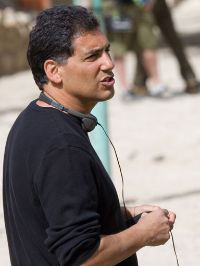
    Cyrus Nowrasteh on the set of The Stoning of Soraya M.Those seeking a cinematic escape from this week’s barrage of “Transformers” silliness couldn’t find a much more sober alternative than Cyrus Nowrasteh’s “The Stoning of Soraya M.,” an adaptation of the non-fiction bestseller by French-Iranian journalist Freidoune Sahebjam.
    A spare, moving study of gender persecution in 1980s Iran, as frank and unpretentious as its title, Nowrasteh’s fact-based drama may pivot on the eponymous ritual killing, but builds its larger narrative on more cathartic themes of storytelling and silence-breaking. As such, while it may sound like a grim night at the movies, it’s an oddly hopeful film – one whose accessibility was proved with the runner-up Audience Award at last year’s Toronto fest.

    Shohreh Aghdashloo (whom you’ll remember from her deservingly Oscar-nominated work in 2003’s “House of Sand and Fog”) plays Zahra, a senior resident of a remote desert village seeking retribution against the town’s male elders for their collective murder of her niece, the Soraya of the title.

    (more…)

  • INTERVIEW: Jeremy Renner

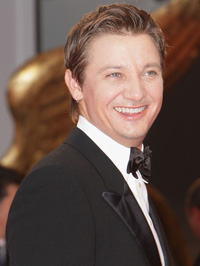
    Jeremy Renner at the 2008 Venice Film FestivalJeremy Renner doesn’t have one of those handy “I always wanted to be an actor” stories.  His journey to the screen was, much like the man, a rather unpretentious, play-it-by-instinct series of events that began to unfold in college.

    “I was fumbling around with different majors like most people do,” the actor says, calling from somewhere on the road to Los Angeles in Northern California.  “I was a criminology major and I was interested in science.  I took an elective, which was an acting class, and that was a pretty wonderful place for me to express 19 years of repression, and I fell in love with it.  I fell in love with the stage.”

    Even though Renner is making his screen impact felt in films like “28 Weeks Later,” “The Assassinantion of Jesse James by the Coward Robert Ford” and Kathryn Bigelow’s “The Hurt Locker,” opening in limited U.S. release today, he says he still holds a special place for theater.  “There’s something that you can’t get anywhere else,” he says, “that living, breathing sort of synergy that kind of happens on stage and with your audience, it’s a wonderful cohesive feeling.”

    Nothing he had performed could serve as any sort of preparation for his role as an Army bomb squad officer, a cog in the wheel of the military’s Explosive Ordinance Detail (EOD).  Mark Boal’s thoroughly researched screenplay first crossed Renner’s path when he was in London filming Juan Carlos Fresnadillo’s “28 Weeks Later.”  Producer Greg Shapiro approached him with the material and the character leapt off the page at the actor.

    “It wasn’t one of those things that I needed to decide to do it or not,” Renner says.  “There was no choice in the matter to me.  I’ve never been so affected or so interested in a project.  I just thought that EOD was a whole world that had never been explored in cinema.  On paper, he was one of the best-written characters I’d seen in a long time.  I had so many questions and answers, at the same time, to what made this guy tick and I was just so curious I couldn’t wait to figure it out.”

    (more…)

  • INTERVIEW: Francis Ford Coppola

    Francis Ford CoppolaThe words sound like they might be spoken by a young up-and-comer experiencing his first big break, someone fresh off the bus with stars in his eyes and the unbreakable, still unsoiled spirit of art coursing through his veins.

    “Here I’ve finished this film and now I can dream up some new adventure that I know I can finance and keep doing that and learning from it and learning how to make movies.”

    Except this isn’t a young up-and-comer experiencing his first big break.  This is a filmmaker whose contributions to the cinema have altered the course of the medium.  And only now is he able to do what he really wants to do.

    At 70 years old, Francis Ford Coppola is embarking on the career he says he thought he was going to have from the start, back when he was a post-UCLA film student training as an assistant to filmmaker Roger Corman.  When he and colleague George Lucas established American Zoetrope in the Bay Area in the late 1960s, the sky was the limit.  But life had other plans.

    “In a sense we never really got it going,” he says.  “We were all there at Zoetrope in San Francisco wanting to make personal films and films that were not usually expensive so they could afford to be more extravagant in ideas and freedom, and yet I was never able to get any money to do ‘The Conversation.’  In the despair of the on-coming poverty I took this job that was offered to me and it turned out to be ‘The Godfather’ and it was like getting hit with a tsunami of success.  I didn’t know that was going to happen to me and that opened up all sorts of possibilities.”

    Possibilities that came with fiscal consequences, of course.  The next thing Coppola knew after a wave of creative successes in the 1970s, he was in debt and “had to make a movie every year for 10 years in a row.”

    (more…)

  • INTERVIEW: 20 questions with ‘Up’ director Pete Docter

    Pete DocterPete Docter’s filmmaking career is as tethered to the history of Pixar as it gets.  After all, he was the third animator hired by John Lasseter back in 1990, when the company was a fledgling computer-animation house making it’s name in short films and commercials.  Nineteen years (and 10 features) later, the studio has more than made its mark on the industry, and Docter has just finished helming his second feature film, “Up,” which opens nationwide today.
    Docter’s initial crack at a project this size was 2001’s “Monsters, Inc.,” the first Pixar film to be nominated for the animated feature film Oscar.  Eight years later, the pressure is certainly on, especially in the wake of the studio’s most critically acclaimed film to date (2008’s “WALL-E”).  But if early reviews are any indication, Pixar — and Docter — not only have another success on their hands, but one that could potentially eclipse the impact last year’s lovable robot had on the critical community.

    I recently spoke with Docter about, among other things, taking the reins on his second feature, what impact 3D technology will have on the medium, the decision to write an Asian-American character into the film and just why the heck no one has cast Delroy Lindo in an animated film until now.  And yes, I asked about that little conversation we’ve been having about the final shot of “Monsters, Inc.”  Keep reading to find out what he had to say.

    (more…)

  • INTERVIEW: Michael Caine

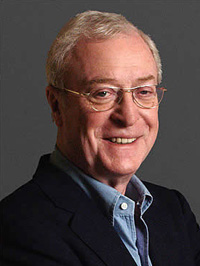
    Michael CaineSo far 2008 hasn’t offered much for an Oscar shortlist beyond a few festival offerings that have yet to see a domestic release.  Certainly nothing in the way of powerhouse awards-caliber performances has come down the pike, leaving some to talk up smaller, menial turns amid the lull.  But one actor has certainly put forth an effort in the year’s first half that deserves the kind of recognition we cover here at In Contention.

    In John Crowley’s “Is Anybody There?,” a delicate little film focused on the unlikely friendship between an aged magician and a death-obsessed young boy, Sir Michael Caine gives perhaps his best performance since 2002’s “The Quiet American.”

    It is, of course, his first significant role in the seven years between the two films.  Supporting work in “Children of Men,” “The Prestige” and the Batman franchise has certainly been laudable, but in Crowley’s fourth feature the actor shows that he still has both the chops to carry a film and the courage to explore mortality in ways that unexpectedly cut close to home.  I had the chance to speak with Caine about the film last week and found a delightful legend trying his best to have a blast with the opportunities he’s given.

    “It’s an attitude you have to have towards growing old,” he says, calling from London.  “People ask, ‘How do you feel about getting older?”  Well, what is the alternative?  I think it’s great.  I’m one of those people who tries to have fun the whole time.”

    And whether it be the high-budget antics of a blockbuster like “The Dark Knight” or something as independent as Crowely’s film or Caine’s upcoming “Harry Brown,” the actor tries to approach all material with the same philosophy.

    (more…)

  • TECH SUPPORT INTERVIEW: The crafts of ‘Benjamin Button,’ part two

    Tech Support at In ContentionYesterday was the first of our two-part look at the crafts artists behind “The Curious Case of Benjamin Button.” Today, I feature conversations with cinematographer Claudio Miranda, visual effects supervisor Eric Barba and film editors Kirk Baxter and Angus Wall, who have all received Oscar nominations for their work on the film.
    When asked about the enormity of the project, Wall rhetorically asks, “‘How do you eat a whale? One bite at a time.  The metaphor we always used is that we always look not at the peak but our feet. It was a two-year process and you have to be sure of every decision you make every day because it affects the end project.”

    Miranda admits he was intimidated by the task of breaking down the script. “I had to just try to imagine how this would be realized on screen,” he says, “going through each task at hand, devising a plan for all the different looks, especially with some things on blue screen.”

    Barba was especially scared that the main character would have to be created by visual effects for the first 50 minutes. “We had to make it work or else it wouldn’t be believable,” he says. “I had to think of the enormity of having to do what up until now hasn’t been done.”

    As regards the man at the helm, Baxter agrees with his colleagues who were featured yesterday that David Fincher is “extremely helpful and very very clear. He knows when to be loose and when to be a lot more specific. He’s got great intuition on what his crew needs from him.”

    (more…)

  • TECH SUPPORT INTERVIEW: The crafts of ‘Benjamin Button,’ part one

    Tech Support at In ContentionThirteen Oscar Nominations.

    Very few films in Academy history have achieved that status and, prior to this year, no film had secured that many nods since “Chicago” in 2002. But “The Curious Case of Benjamin Button” has managed it this year, largely because of the incredible work going on below-the-line.

    Last week, I featured composer Alexandre Desplat and his role as film music composer on David Fincher’s film. In the past week, I have spoken to cinematographer Claudio Miranda, production designer Don Burt, set decorator Victor Zolfo, costume designer Jacqueline West, film editors Kirk Baxter and Angus Wall, visual effects supervisor Eric Barba and makeup artist Greg Cannom, a healthy lot, all of them cited for their work on the film by the Academy this year.

    Today, I concentrate on my talks with Burt, Zolfo, West and Cannom. Tomorrow, Miranda, Baxter, Wall and Barba will be featured.

    “The Curious Case of Benjamin Button” is, without any doubt, a film extraordinarily reliant on visual attributes to be effectively told. The crafts artists acknowledge the intimidation poised by such a project.

    “‘Hmmmm…’ is what went through my mind when David [Fincher] first asked me to do this,” says Burt. “How in the world are we going to do this? Then I started going through the different periods in my mind and started building a plan, thinking maybe – just maybe – we could pull it off.”

    (more…)

  • TECH SUPPORT INTERVIEW: Alexandre Desplat

    Tech Support at In ContentionOver the last several years, Alexandre Desplat has gone from being a relatively unknown (in the United States anyway) French composer to emerging as one of the most acclaimed and sought after commodities in the business today.  Receiving his second Oscar nomination this year for “The Curious Case of Benjamin Button,” Desplat has continued to cement his place at the top of his field.

    Despite the acclaim, however, he remains very close to his home in European cinema.  “I have tried to keep as much of a relationship as I can with my French directors,” he says.  “I always try to go to do two or three French movies a year.  That’s a lot but I don’t want to lose that.”

    While there are certainly exceptions, there is definitely a difference in the manner that French and American filmmakers approach their work, Desplat says.  Being forced to think differently because of different filmmaking styles helps his creative resources.  “It feeds me,” he says.

    David Fincher’s “Button” posed unique challenges for Desplat.  “It doesn’t have a linear storytelling,” he says.  “It’s a complex puzzle and I’d ask myself, ‘How do you deal with this in music and deal with the main character when he is a passive character?’  It’s not easy to capture in music.”

    Describing the film as a “sound epic,” Desplat notes that the music had to be strong without being overly dramatic or imposing.  It was a crucial demand from Fincher that Desplat says he had to struggle with.

    The composer has worked with some of the world’s top directors in recent years – Ang Lee, Stephen Frears, Jacques Audiard — but despite Fincher’s unique perspective in the wake of those talent helmers, Desplat says certain professional similarities smoothed the journey.

    “He has an amazing quality as a collaborator,” Desplat says. “He’s very demanding but so am I so that’s fine.  He’s very detailed but so am I, so that’s also fine.  He wants his people to bring their own world, talents and colors into the film.  I think that’s the sign of a great director.  All the great directors I’ve worked with know that it is crucial that your creative energy is opened and not just restrained.”

    (more…)

  • TECH SUPPORT INTERVIEW: the crafts of ‘Slumdog Millionaire’

    Tech Support at In ContentionGarnering 10 nominations last week confirmed “Slumdog Millionaire”’s established status as the frontrunner for this year’s Best Picture Oscar.  Unusually for a Best Picture winner, the film failed to nab any acting nominations.  Its high tally counts comes from seven nominations in the crafts fields.

    I recently had the chance to speak to three of those below-the-line nominees: composer and songwriter A.R. Rahman, cinematographer Anthony Dod Mantle and film editor Chris Dickens.  All are first-time nominees and all must be considered in genuine contention for statuettes, if not favored to win.

    Rahman, a self-proclaimed introvert, has already won Golden Globe and BFCA awards for his score, which has become massively popular.  Though very humble, it is clear he is relishing the opportunity to have his music exposed to such a wide audience.

    “I was attracted to the film right away,” he says.  “It is about modern India, young people and optimism.  There’s a kind of urge to it.  It’s not a laid-back score.  It needed something edgy and experimental to create interest in the whole thing.”

    Dickens also was attracted to the film right away, not only because of the story but because of the unique way it was to be told.  “Basically, the film was designed that way in the script,” he says.  “Though there was always a doubt in my mind as to how it would work when you saw it.  There are lots of different scenes that the audience had to understand to get to know where they were with the story.  The intention was always to shoot in different formats and different styles.  I found that fascinating.”

    (more…)

  • Interviews with this year’s Oscar nominees at In Contention

    Mickey Rourke (Best Actor, “The Wrestler”)
    Michael Shannon
    (Best Supporting Actor, “Revolutionary Road”)
    Amy Adams
    (Best Supporting Actress, “Doubt”)
    Marisa Tomei (Best Supporting Actress, “The Wrestler”)
    Danny Boyle (Best Director, “Slumdog Millionaire”) (also here)
    James Marsh (director, “Man on Wire”)
    Kristi Zea, Albert Wolsky (Best Art Direction, Best Costume Design, “Revolutionary Road”)
    Chris Menges (Best Cinematography, “The Reader”)

  • A word of advice

    To any actors who might find themselves in the hunt for an Oscar nod next year: don’t let me interview you.

    Seriously. It appears that the mere act of shaking my hand, or even greeting me over the phone, placed an immediate hex on the Oscar chances of several deserving thesps this season. If your publicist informs you that you’re due to speak to one Mr. Guy Lodge, proceed at your peril. (Directors, however, are apparently safe.)

    To Sally Hawkins, Kristin Scott Thomas, Eddie Marsan, Rosemarie DeWitt, Michelle Williams and Elsa Zylberstein, I’m sorry you had to learn this the hard way. It doesn’t make me love your performances any less.

  • INTERVIEW: Amy Adams

    Amy AdamsAmy Adams has arrived.  No “doubt” about it.

    Sunday she was sitting at a table with Meryl Streep, Viola Davis and John Patrick Shanley at the Hollywood Foriegn Press Association’s Golden Globe Awards where she was nominated for Best Supporting Actress, one of five nods the film received. Surrounded by major artists such as Ron Howard, Frank Langella, Steven Spielberg, Martin Scorsese, Brad Pitt, Angelina Jolie, Clint Eastwood, Kate Winslet, and so many others, she looked comfortable and right at home.

    But seven years ago she was struggling to find work.  And the actress says she was ultimately stunned to land a plum role in a major film being directed by Steven Spielberg, two time Academy Award winning director and starring Leonardo DiCaprio.

    “It’s been fantastic,” she explains by phone, “surreal, but I am loving it.  ‘Catch Me If You Can’ was a huge break for me and Steven was just so generous as a director, so enthusiastic and positive all the time. Going to the set was a constant pleasure.”

    The actress says she is “trying to just experience things right now, to let them happen and see where we go with it — take everything as it comes to me.”  She’s somewhat overwhelmed by the attention she is getting these days. I liked Adams within seconds of speaking with her: soft-spoken yet talkative, forthright, honest, and modest.

    (more…)

  • INTERVIEW: Marisa Tomei

    Marisa TomeiI’m coming around to Marisa Tomei rather late in the publicity game this year.  I didn’t make it to Venice or Toronto and we just haven’t crossed paths here in L.A. during this exhausting — as always — Oscar season.  But the first thing I have to ask is if she feels the pressure yet.

    A studio can run an artist ragged this time of year, especially when they’re on the cusp of an Oscar nomination.  And that’s a position Tomei undoubtedly finds herself in as we move into the new year and her performance in Darren Aronofsky’s “The Wrestler” continues to light up the circuit.

    “I’m getting there,” she says of the approaching fatigue factor.  But you wouldn’t know it from the energy that still pops.  Those bright brown eyes are as beautiful as you’d expect, of course, and that laugh is infectious.  She’s fresh off a much-needed holiday vacation — back east for Christmas and home in L.A. for new year’s, quiet and with depressurizing on the mind.

    When she comes over to the table she takes a moment to speak to a fellow celebrity sitting adjacent to us before popping open the menu and declaring, “I’m gonna eat.”  What was going to be maybe a half-hour discussion over coffee turns into almost an hour of talk over lunch, topics ranging from her early passion for acting to her attempt at going back to college at one point in her career to, of course, the process of creating Cassidy, the “stripper with the heart of gold” at the center of “The Wrestler.”

    (more…)

  • TECH SUPPORT INTERVIEW: The crafts of ‘Doubt’

    Tech Support at In ContentionThose fortunate enough to have caught John Patrick Shanley’s “Doubt” in its original Broadway run were almost unanimous in their praise for it.  When Shanley announced his intention to bring the play to the screen — starring Meryl Streep, Philip Seymour Hoffman and Viola Davis, no less — many were skeptical of his ability to transform the very theatrical piece into a cinematic work.

    Cinematographer Roger Deakins, production designer David Gropman, costume designer Ann Roth, film editor Dylan Tichenor and music composer Howard Shore all had pivotal roles in making that happen.  Shanley, despite his acclaim as a playwright and screenwriter, had only directed one previous feature film.  And “Joe Versus the Volcano” is hardly considered a masterpiece of cinema.  Deakins nonetheless recalls that the director came to the set with very concrete ideas of what he wanted, and did not come across as inexperienced at all.

    “He knew what he wanted to see and turned to me to realize it,” he says.  Tichenor adds that, despite having written the play, Shanley was “not overly precious about his work, which was good as we had to cut a lot out.”

    Gropman already had a brief history with Shanley, having worked with him on an off-Broadway play in the 1980s.  “There was never a moment where experience was an issue,” he says of the director.  And while she had not worked with Shanley before, Roth, who also cut her teeth on theatrical productions, acknowledges she could work together easily with him because of their shared background.

    “There are some film directors who just use actors as part of visual scenery,” she says, adding that, conversely, theater directors tend to start with the actor and then build the scenery from around him or her.

    (more…)

  • TECH SUPPORT INTERVIEW: The Crafts of ‘Revolutionary Road’

    Tech Support at In ContentionIn less than a decade, filmmaker Sam Mendes has established himself as one of the most intriguing directors of his generation. “Revolutionary Road,” his fourth film to date, hit theaters over last weekend. Regardless of its Oscar fate in the writing, directing and acting categories, the film seems poised to be a major player in the craft arenas, our central focus here at Tech Support.

    I recently spoke to cinematographer Roger Deakins, production designer Kristi Zea, costume designer Albert Wolsky and film editor Tariq Anwar about their work on the film, a 1950s period piece featuring the on-screen reunion of Leonardo DiCaprio and Kate Winslet. All four artists are veterans, having had long (Deakins is the youngest at age 59) and successful (each has been nominated for an Oscar at least once, with Wolsky earning two statues to date) careers.

    Each of the respective department heads commented on Mendes’s tendency to balance a well-defined vision with the necessity of cooperative discovery on the set. Deakins previously worked with Mendes on “Jarhead,” stepping into the shoes of late legend Conrad L. Hall, who lensed Mendes’s first two efforts. “He’s not happy until he gets what he wants,” he says of the director, “but he has an enormous respect for the collaborative process.”

    Zea, meanwhile, says Mendes has a great “willingness and affection for collaboration, but has a precise vision and, because of that, the movie, in its entirety, is very controlled.”

    Anwar received an Oscar nomination in 1999 for his work on Mendes’s “American Beauty.” This year marks their own reunion. He agrees with Zea’s reflection of the director’s balance of his own preparation and the input of his collaborators.

    “In spite of being so sure-footed in his approach to film production, there is never a feeling of being excluded from the creative process,” he says, “or a sense that his material is too precious not to be rearranged or even deleted.”

    (more…)

  • INTERVIEW: Dustin Hoffman

    Dustin HoffmanHe doesn’t seem like Dustin Hoffman for some reason.  He sounds like Dustin Hoffman.  He looks like him.  But there aren’t really any traces of his decades-long assemblage of characters.  And he’s got an approachability that seems somehow uncommon for a star of his stature.

    But there he is, piecing together a sandwich with arugula, veggie cheese, spicy mustard and wheat bread as he recalls his first major interview with Studs Terkel over 40 years ago.  Terkel has passed recently, which brought the topic to the fore.

    “It was Chicago, right after ‘The Graduate,’” Hoffman says.  “I went into his office and he had floor-to-ceiling books and everything, you know.  The office looked like him.  He turns the tape recorder on and it was an intricate and intensive interview that probably went on for over two hours.  We shook hands and he said, ‘Let me just check’ — and the tape didn’t work.  It had been blanked for some reason.  So he says, ‘You wouldn’t mind doing it again?”

    So it was that we kicked off our own two-hour conversation, one steering in and out of his legendary career, briefly touching on the particulars of his latest film, “Last Chance Harvey” (now playing in limited release and for which Hoffman received a Golden Globe nomination for Best Actor), but mostly wandering from this mundane particular to that.

    He has a fondness for iron furniture, a number of antiques peppering his Brentwood offices.  A large Italian “Midnight Cowboy” poster hangs in the lobby, but I’m caught off guard by the food and drink spread in the hallway as we move into his personal office.  The dainty dishes and cutlery seem to clash with the casual air of the actor before me.

    (more…)