In Contention

Tag: Best Original Score

  • Portman and Giacchino: too many notes?

    “It’s quality work. There are simply too many notes,” says the Emperor Joseph II to an incredulous Mozart in Milos Forman’s 1984 Oscar-guzzler “Amadeus.” It’s a delicious critique, and it’s one I’ve found myself remembering a lot over the past few weeks of London Film Festival viewing, during which I seem have jotted down the word “overscored” in more shorthand film reviews than I care to count. (On the bright side, it’s made me all the more appreciative of the minimalist power of Trent Reznor and Atticus Ross’s work on “The Social Network.”)

    But then I seem to have watched an inordinate number of recent films — be they down-the-middle Hollywood product like “Conviction” or ungainly European art films like Ferzan Ozpetek’s “Loose Cannons” — that suffer to some extent from the sheer conspicuousness of their music scores, scene after scene smothered in swooping strings or plinky piano motifs aimed to telegraph emotion instead of supplementing it.

    The two biggest offenders, in my book, are scores from gifted, Oscar-winning composers that have garnered much acclaim and even awards buzz: Rachel Portman’s for “Never Let Me Go” and Michael Giacchino’s for “Let Me In.”

    (more…)

  • Website for Daft Punk’s ‘TRON Legacy’ soundtrack launched

    Is it really worth getting excited at the possibility of the Academy’s music branch being progressive enough to make room for Daft Punk in this year’s list of Best Original Score nominees?  Ever since the French electronica duo was announced as the composers on “TRON Legacy,” excitement has been through the roof.

    This is the most problematic branch of the Academy for reasons illuminated year after year.  And despite letting a few new (if traditionalist) names into the Oscar fold over the last few years, the branch remains fiercely insular.  And you don’t get more outside the box than Daft Punk.

    Nevertheless, the score sounds like it could be one of the highlights of a production that has long been rumored to be quite troubled.  And an official site has launched with a taste of what the boys have to offer.

    (more…)

  • Rachel Portman’s ‘Never Let Me Go’ score available

    I’m heading out to catch my flight for Telluride in a bit, but I wanted to turn your attention to this before I take off.  Rachel Portman hasn’t been in Oscar’s good graces for 10 years now, but she has a hell of an opportunity this year with a beautiful score for Mark Romanek’s “Never Let Me Go.” The album hits stores September 14, but Portman’s compositions were made available on iTunes Monday.  Beautiful, haunting melodies.  A real home run of emotion.  I imagine she’ll be back in the hunt this year.

  • TECH SUPPORT: Best Original Score — Volume I

    I am marveled by the accomplishments of all the crafts artists who elevate our films, but this is particularly the case with respect to music composers. Composing equals genius as far as I am concerned.These musicians  join the film at the end, when usually only the director, editor and perhaps the sound mixers are still working.  But capturing the mood and feel of a film that has been created in your absence must be extraordinarily difficult.And  I do not need to count the ways in which a brilliant score can make a good film truly unforgettable.

    The category of Best Original Score is one of the hardest to predict in my opinion, even shortly before the nominations are announced. So what sort of music is rewarded by this branch? Certainly being noticeable in the film helps. Loud music and/or music which plays for lengthy parts of the film with minimal dialogue can do well, too. Being an animated film or a Best Picture contender hardly hurts either.

    For years, we could count on John Williams to take a spot among the nominees. But given that Williams is only composing for Steven Spielberg these days, his name has been absent from the nominees for five straight years now. (I suspect we’ll see him finally move past Alfred Newman on the all-time list next year.)

    Nevertheless, while the branch is not quite as insular as it was in the earlier part of last decade, it remains a fairly exclusive club. Seldom do composers get first trips to the Kodak – usually only one a year. In fact, of the past 11 years, only three have seen two new nominees, and only one has seen three.

    (more…)

  • INTERVIEW: ‘Inception’ composer Hans Zimmer and ambient music designer Mel Wesson

    From outside on 14th Street, Hans Zimmer’s Santa Monica offices reflect the typically sterile architecture of the city. Take a few steps in and you’re in the expected world of a musician: bays of dubbing equipment lining the walls, screening alcoves filled to the brim with technology, the usual trappings of a media artist…nothing out of sorts yet.
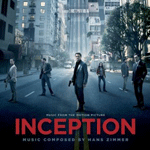
    However, something lurks behind a large, brown, engraved door in the back, a portal to a creative sanctum and a gargantuan expanse no one would expect to be housed within these otherwise unremarkable premises. Step inside and it feels more like a Viennese castle’s quarters than a Southern California office space (not that the reporter has been to a Viennese castle). Burgundy and cherry wood dominate the scenery as technology mingles with designs of another time, memorabilia decorating every nook and cranny, a Joker statuette keeping watch on the space from afar.

    Zimmer walks in, enthusiastic to discuss his contribution to Christopher Nolan’s “Inception.” He politely (yet somehow cheekily) asks if it’s alright that he smoke a cigarette, then settles in opposite his colleague, ambient music designer Mel Wesson.

    Twenty-six years into a lucrative Hollywood career, Zimmer is tapping into a new creative golden age. He’s coming off his eighth Oscar nomination for his delightfully jaunty work on 2009’s “Sherlock Holmes” and has been a key element of Nolan’s revitalized Batman franchise since 2005. But with “Inception,” his third collaboration with Nolan to date, he says he’s beginning to take note of early career lessons and how they are influencing his work today.

    (more…)

  • Preview Zimmer’s ‘Inception’ score

    Christopher Nolan’s “Inception” is 13 days away, though the bulk of reviews will be dropping in 51 hours.  How’s that for a countdown?

    The score from Hans Zimmer is exciting the same people behind the scenes who saw greatness and potential awards success in his work on “Sherlock Holmes.” It’s already available for pre-order at Amazon, but even though the album doesn’t release until July 13, you can listen to excerpts from the ominous work.

    The guys at Nevermind Pop Film went to the trouble of collecting a nifty sampler widget from the tracks available in part at Amazon.  It’s a dense work, very unique to Zimmer’s experiences collaborating with Nolan, but I wonder if it will have the same staying power in the awards season as the delightful melodies of “Sherlock Holmes.” Which would speak nothing to quality, mind you.

    Have a listen after the jump and judge for yourself.

    (more…)

  • Howard’s ‘Airbender’ score hits iTunes

    When I took my initial stab at the 2010 Oscar forecast a few weeks back, I went out on a limb in a few places for M. Night Shyamalan’s “The Last Airbender,” which I’ve frequently said could be a disaster or something really special.  One of those limbs was Best Original Score, as James Newton Howard could potentially land his sixth nomination in the category.

    Howard has lately become a perennial favorite with the Oscars. His most recent nominations came for “Defiance” (a film that didn’t do well in other categories) and “Michael Clayton” (for a score few could remember when his name popped up on nomination morning). And let’s not forget his saving grace work in “The Village,” which was also recognized.

    His score for “The Last Airbender” has already been released via iTunes for a $9.99 download, and it’s packed with all of Howard’s usual percussive intensity and has just the right touch of epic strokes to perhaps be recognized come year’s end. Additionally, a rave review of the work has already popped up online.

    (more…)

  • Carter Burwell on musical inspiration for ‘True Grit’

    Amid his coverage of the Nashville Film Festival, Nathaniel Rogers at The Film Experience served up a nice little nugget on composer Carter Burwell, the subject of a much-deserved individual tribute at the fest. Naturally, there was much emphasis on his ongoing collaboration with the Brothers Coen, which will continue this year with “True Grit.”
    His score for the film is still in the conceptual stages, but his current source of inspiration suggests something typically singular is in the works:

    “We don’t always see eye to eye.” Burwell noted when discussing his 14th collaboration with Joel and Ethan Coen. But when it came to the conception of the True Grit score “We both had the same idea at the same time: Protestant hymns.” The composer went on to explain that the lead character, Mattie Ross (to be played by Hailee Steinfeld) was so convinced of her own righteousness that they all thought Protestant hymns would be a fine way to play with her misplaced rectitude … He’s currently looking for appropriate hymn recordings but griped that “they all sound too sweet.”

    (more…)

  • Andy Trudeau handicaps the original score contenders

    Sherlock HolmesOne of the best parts of Oscar season is NPR’s rundown of the Best Original Score nominees by music critic Andy Trudeau.  The copy is live now, but the audio won’t be up until noon (EST) tomorrow.  He says there’s not a real standout this year, and goes with Hans Zimmer and “Sherlock Holmes” for his prediction.  Last year he picked went with “The Curious Case of Benjamin Button,” but his “predictions” have increasingly become more about personal preference as of late.
    He has this to say on Zimmer’s compositions:

    The scoring assignment for director Guy Richie’s reimagining of Sherlock Holmes went to Hans Zimmer, a composer whose trademarks are loud and hard. Here, it was the director who urged the composer to change his persona. Zimmer obliged — sort of. Early cuts of Sherlock Holmes were temporarily tracked with Zimmer’s music for The Dark Knight. Rather than trying to match the continuous, pounding energy of that score, Zimmer often went the other way. But this is an action film after all, and the action sequences are where Zimmer is most effective. At one point, with the hero in harm’s way, he has fun with the Westminster Chimes melody — you’ll hear it in the low strings.

    Check out the rest at NPR.

  • TECH SUPPORT: Final stretch, final predictions

    Zoe SaldanaWell, here we are. On Sunday, the statuettes for the Oscars will handed out. It seems difficult to remember that it was eight months ago when we started looking at the categories for the first time. Today, let’s take one last look at the crafts categories to see where we stand.

    Best Art Direction (Oscar Guide)
    One of the easiest predictions for the evening, for me, is Best Art Direction. James Cameron’s “Avatar” has won the Critics’c Choice, BAFTA and guild awards and this category and the sets, while not being typical of winners in this category, were brilliant. “The Imaginarium of Doctor Parnassus” strikes me as too small, “Nine,” too hated and “The Young Victoria,” more of a costumers film. I’d put guild winner “Sherlock Holmes” in second…but a very distant second.

    Will win: “Avatar”
    Could win: “Sherlock Holmes”
    Should win: “Avatar”

    (more…)

  • WEEKLY WRAP: ‘Hurt Locker’ BAFTA sweep, minor fracas

    Best Actress winner Carey Mulligan at the 2009 BAFTA Awards• “The Hurt Locker” continued its cruise through the precursors, taking six awards at the BAFTAS.

    • The pile of guild awards grew as the writers, costume designers and sound editors all picked their winners.

    • In our ongoing Oscar Guide series, we broke down the lead actress, documentary feature, documentary short, original score and original song races.

    • Off the Carpet took stock of a quiet season, mainly just counting down the days.

    (more…)

  • TECH SUPPORT INTERVIEW: Composer symposium, part two

    Michael Giacchino at the 2010 Golden Globe AwardsI think everyone who has seen Pixar’s “Up” was utterly taken by the scene “Married Life,” where emotions ran high and three characters were built between images and music.  As Kris mentioned in this morning’s Oscar Guide, composer Michael Giacchino had the full aural attention of the audience for 10 minutes.

    Speaking to Giacchino, it’s clear he knew it was perhaps the most pivotal moment to get right into a film where music was destined to play a significant role, no matter what. “I remember watching that scene for the first time,” he recalls, “and even watching it without music, it makes you cry. You’re not just looking at what happens on screen, you’re looking at what happens in your life.”

    He found the scene, and indeed, the film itself, to be quite personal. “You end up analyzing yourself,” he says. “It’s an emotional experience and when I’m writing music for any good film, I know I can only do a good job when I’m reflecting what I’m feeling. It’s like a mirror.”

    Giacchino loves being part of what he describes as the “Pixar family” and came aboard the film eight months before it was released. “I’m always at Pixar for something,” he says, adding that he loves doing the music for their short films as well. “Being at Pixar is like being 10 years old and everyone accepts each other for whoever you are.  It’s a wonderful open, honest feeling of being able to say if you don’t like something.”

    (more…)

  • OSCAR GUIDE: Best Music (Original Score)

    (from left) Wally Wolodarsky (voice) and George Clooney (voice) in Fantastic Mr. FoxFor years the composers of the music branch tended to be a bit insular. Impressive newcomer talent was often ignored while the usual suspects showed up year after year. Not long ago, there seemed to be a shift, yielding slates much like the one we have for 2009.

    There is one first-timer, but other nominees are only enjoying their second and third nominations, while the true veterans of the category haven’t been to the dance in six and nine years respectively. Usually the Academy at large springs for a Best Picture nominee with overwhelming consistency, most often films with cultural flavor or dramatic, sometimes whimsical heft.

    The nominees are:

    “Avatar” (James Horner)
    “Fantastic Mr. Fox” (Alexandre Desplat)
    “The Hurt Locker” (Marco Beltrami and Buck Sanders)
    “Sherlock Holmes” (Hans Zimmer)
    “Up” (Michael Giacchino)

    (more…)

  • TECH SUPPORT: Post mortem

    Michael Gambon in Harry Potter and the Half-Blood PrinceSo here we are. For the most part, the crafts category nominations weren’t surprising, and there is not a single film that fared drastically better – or worse – than I expected.
    As for comments on individual categories? In Best Cinematography, Bruno Delbonnel’s nomination for “Harry Potter and the Half-Blood Prince” has got to be one of the biggest surprises of the year. The other nominees were completely expected. Dion Beebe apparently couldn’t overcome “Nine”’s collapse.

    On the other hand, John Myrhe managed to make it in for Rob Marshall’s musical in Best Art Direction after missing with both BAFTA and the guild. Nominations for “Avatar” and, in my opinion, “Sherlock Holmes” were to be expected. But the other nominees were slightly surprising.

    “The Imaginarium of Doctor Parnassus” was richly deserving but still surprising. And “The Young Victoria” evidently had more support than I first thought. The real snub here, however, is David Wasco. If he can’t get in for “Inglourious Basterds,” I’m not sure what it’ll take.

    (more…)

  • TECH SUPPORT: Final predictions, part two

    Sharlto Copley in District 9Continuing from where we left off yesterday, today we look at the fields of makeup, music, sound and visual effects.

    BEST MAKEUP

    The shortlist of seven makes predicting this category slightly easier. “District 9”’s realistic wounds, not to mention the practical elements of the central character’s transformation, likely make it the frontrunner. “Star Trek,” meanwhile, boasted an array of alien species and turned young actors into iconic characters.

    So what will get the last spot? “The Young Victoria” has done better than I would have expected it to do this season and the costumes are assured a nomination. But its shortlisting here seems really for hairstyling, which historically doesn’t lead to nominations.  Then again, a BAFTA nomination shouldn’t be taken lightly.

    I find it difficult to believe that “Night at the Museum: Battle of the Smithsonian” will be nominated when its predecessor failed to even be shortlisted. Admittedly, it worked for “Austin Powers: The Spy Who Shagged Me,” but the characters there were much more iconic. Still, one never knows.

    (more…)

  • ‘Princess and the Frog’ score DQ’d

    The Princess and the FrogThe whole branch is reaching a level of farce that is unbelievable.  Reports Steve Pond:

    Although Randy Newman’s score to Disney’s animated film “The Princess and the Frog” was originally deemed to be eligible in the original score category at the Oscars, the Music Branch Executive Committee met on Monday and disqualified Newman’s music from consideration.

    The score, the committee determined, runs afoul of an AMPAS rule disallowing “scores diluted by the use of tracked themes or other preexisting music,
    diminished in impact by the predominant use of songs, or assembled from the music of more than one composer.”

    Sounds familiar.

  • ‘Wild Things,’ ‘Crazy Heart’ ineligible for score Oscar

    Where the Wild Things AreSteve Pond reports that Karen O and Carter Burwell’s wonderful, Golden Globe-nominated score for “Where the Wild Things Are” has been disqualified for Best Original Score by the Academy’s music branch. T-Bone Burnett and Stephen Bruton’s “Crazy Heart” score, which has taken several critics’ prizes, will not compete either.

    It’s hardly a surprise, given that both are largely song-based scores — not that that stopped “Slumdog Millionaire” qualifying last year. But it is disappointing, particularly for the former film, which was campaigning for a nomination in the category. (Fox Searchlight, presumably anticipating a disqualification, didn’t bother listing Original Score in the FYC ads for “Crazy Heart.”)

    Also out of the race is “The Lovely Bones,” though that is by composer Brian Eno’s own volition. Pond has the details, as well as a list of the 81 films that did qualify for the category, here.

  • LA Times shines light on notable 2009 composers

    Fantastic Mr. FoxLA Times music critic Todd Martens has posted a useful series of short interviews with the men behind some of the year’s most distinctive film scores. Indeed, it’s group of five names that isn’t too hard to imagine mirroring the year’s eventual Oscar slate: Alexandre Desplat for “Fantastic Mr. Fox,” Michael Giacchino for “Up,” Randy Newman for “The Princess and the Frog,” Marvin Hamlisch for “The Informant!” and Elliot Goldenthal for “Public Enemies.”

    There are nice quotes and musical snippets peppered throughout all the profiles, but I was particularly drawn to read Desplat’s take on his “Fox” score, given how curiously — yet happily — the jangly Americana and English folk notes in the work sit with his more Euro-flavored oeuvre:

    “I just felt that if we found a sound that would belong to these little puppets, it would make them come alive,” Desplat said. “I suggested to Wes that we do a sort of puppet orchestra. I wanted to make everything sound like they were play- ing. I wanted little things — the mandolin, the banjo, the whistle, the recorder and all these little families of instruments. They weren’t toys but kind of toy-ish instruments.”

    (more…)