In Contention

Tag: Best Original Score

  • Danny Elfman meets Ennio Morricone

    Hans ZimmerThat’s what I’ve decided the Hans Zimmer score for “Sherlock Holmes” is.  I’ve been listening to it all weekend.  The themes present in that brief snippet we led off yesterday’s Oscar Talk are felt throughout in different ways, but mostly I keep getting a spaghetti western homage.  Specifically, the mandolin picking of Morricone’s “Once Upon a Time in the West” score gets a bold tip of the hat, mixed with a jaunty rhythm that just puts a smile on your face.

    I know when I brought this up last week a number of people thumbed their nose at Zimmer, and that’s fine.  I get the animosity to an extent.  But even with the homages, this is a pretty substantial, creative piece of work, in my book.  And I can’t be pegged as being in the tank for bombast because my favorite score of the year is probably still Mark Bradshaw’s subtle work on “Bright Star.”

    I thought I’d offer up the first track on the “Holmes” score, a bit called “Discombobulate.”  Have a listen and tell us what you think:

    [audio:http://www.incontention.com/audio/discombobulate.mp3]
  • Is Hans Zimmer someone to watch for ‘Sherlock Holmes?’

    (from left) Jude Law and Robert Downey Jr. in Sherlock HolmesI’ve been hearing from vested interests for a long time now that Hans Zimmer’s score for Guy Ritchie’s “Sherlock Holmes” is something quite extraordinary.  I haven’t paid a lot of mind because it’s all jockeying for position and putting your best foot forward this time of year, etc.

    But the chatter is getting louder lately as more and more people see the film in-house.  It’s the one element that keeps being brought up and I have to wonder if there might be something to this.

    I have no idea what to expect.  Frankly I would have assumed something fairly standard for a film like this, but truly, Zimmer has been doing great work even in films that missed on nearly every other level (like, say, “The Da Vinci Code”).  He’s a seven-time nominee after all, despite his flirtations with action-oriented entertainments.  So it’s fair to assume we may be in for a pleasant surprise.

    (more…)

  • WEEKLY WRAP: Doc shortlist, honorary Oscars and more

    Lauren Bacall at the 2009 Governors' Awards• The shortlist of contenders for the documentary Oscar was announced, surprising many — we dug into it a little.

    • The season’s first Oscars were handed out, as Lauren Bacall, Gordon Willis, Roger Corman and John Calley were celebrated at the Governors’ Awards.

    • This week’s Off the Carpet column broke down the wide-open Best Original Screenplay race.

    • The Long Shot lived up to its name, spotlighting a few of the season’s most deserving outsiders.

    (more…)

  • TECH SUPPORT: Best Original Score — Volume II

    (from left) Tobey Maguire and Jake Gyllenhaal in BrothersSome categories haven’t had that much renewal since I last reviewed them. Best Original Score is an exception. Principally, this is because the category is very difficult to judge before hearing the scores, not to mention last minute personnel changes (as composers always seem to be the most disposable members of film crews).

    As I said last time, the music branch, though it has opened up to newbies slightly in recent years, is notoriously one of AMPAS’s most insular branches. Best Picture nominees tend to do reasonably well, but the category also tends to award “loud” music, and as of late, world music has been a favorite.

    One thing that has not changed, in my opinion, is that Michael Giacchino continues to lead this category for his score for Pixar’s “Up.” Giacchino was nominated two years ago for “Ratatouille” and again composed a soundtrack which was sad, joyous and suspenseful. The film is likely headed towards a Best Picture nomination and I expect Giacchino to show up as well.

    At the same time, I also can’t help but wonder if Giacchino maybe, just maybe, could pull off a double nomination this year for his compositions on J. J. Abrams’s “Star Trek.” The music was quite original and bombastic.  And, of course, the film a huge hit. I don’t see a lot of surefire nominees in this category, so this could be a place where it finds a home.

    (more…)

  • TECH SUPPORT: Best Original Score — Volume I

    The Princess and the FrogAs long as humanity has been recording history, music has been immensely important in society. Not only can it be joyous and entertaining, but it can capture the mood and feel of a time and a place. Cinema has been no exception in this regard.

    The creation of original music for a film is awarded by the Academy in the Best Original Score category. The composer has one of the most difficult and lonely jobs in filmmaking. Almost always arriving at the end of the editing stage, he or she has to fashion music appropriate to the mood of a film.  But when a composer does a magnificent job, the result can be iconic.

    This category tends to awards its favorites. It is notoriously one of AMPAS’s most insular branches (though it has warmed up to newbies slightly in recent years). It also tends to award music that features prominently in the films.  From this vantage point, however, it is always hard to guess which films will find themselves in contention, largely because we have not heard the scores.

    An exception in this regard is Michael Giacchino’s work on Pixar’s “Up.” Giacchino, who was nominated two years ago for “Ratatouille,” has once again composed a soundtrack which can be sad, joyous and suspenseful. The film is likely headed towards a Best Picture nomination, and I suspect a citation here will follow.

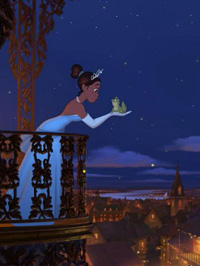
    Another animated film which may very well end up in contention is “The Princess and the Frog.” The music is being handled by Randy Newman, clearly beloved by the music branch. I remain skeptical of how this film will be received and, in any event, think that Best Original Song may be the more likely spot to consider for this film. However, Newman’s name means a lot and there are few other favorites in the running this year.

    (more…)

  • TECH SUPPORT: Postmortem

    Tech Support at In ContentionWhat can I say? It was a big night for “Slumdog Millionaire” at the 81st Annual Academy Awards on Sunday.

    While I do like the film a great deal, I found its dominance this awards season unnecessarily monotonous.  For instance, I preferred Thomas Newman’s work in both music categories this year, but I was nonetheless very happy with A.R. Rahman’s triumphs. The music branch needs to be seriously rewired, though.  Their choices in recent years have often been bizarre and at times terrible.

    Anthony Dod Mantle’s deserved victory in the cinematography feield means that Roger Deakins is still waiting for that first statuette. (Though, might I add, as effective as the work is in “The Reader,” I would have found it slightly disappointing if Deakins had finally won this year, considering Chris Menges shot most of the movie.) I would also like to think that Wally Pfister will eventually triumph in this category, considering Pfister has received three nominations in the last four years (all on Christopher Nolan projects).

    Chris Dickens winning Best Film Editing was probably the easiest call of all the tech categories. Though I would say Angus Wall, Kirk Baxter, Elliot Graham and especially Lee Smith have built up good will with their fellow editors, while Mike Hill and Daniel P. Hanley must be considered in contention whenever they make a prestigious film with Ron Howard.

    (more…)

  • Andy Trudeau reviews the Oscar nominated scores for NPR

    Alexandre DesplatOne of my favorite pre-Oscar specials is music critic Andy Trudeau’s analysis of the Oscar nominated original scores on NPR’s weekend edition.  He used to stretch the piece over two weekends and discuss the pieces with the show’s host, but this year he both waited until the last minute and did the piece as a stand-alone by himself.

    Trudeau’s favorite of the nominees (and mine) is Alexandre Desplats beautiful work on “The Curious Case of Benjamin Button,” putting together compositions that can be played both forward and backward.  Last year his pick was Darion Marianelli and “Atonement,” so maybe he’ll be spot on again this year — but I think we all doubt that.

    “Call me old-fashioned, but if I had a ballot, I’d go for a score with strong melodies, crystalline orchestration; one that takes us on an emotional journey,” Trudeau says.  “So I’m casting my one, unofficial vote for ‘The Curious Case of Benjamin Button’ by Alexandre Desplat.”

    Listening to the piece I was suddenly taken with how competitive it might actually be.  The A.R. Rahman win has become a foregone conclusion, and for many good reasons.  In addition to the “Slumdog” sweep train, the Academy simply likes music from other cultures.  “Babel,” “Frida and “Crouching Tiger, Hidden Dragon” are examples.  Maybe the work simply stands out a little more from the rest of the field.  I don’t know, but it’ll be interesting to see how the re-instated allowance for CD mailers made a difference.  “Button” probably has the most beautiful, listenable score, but Thomas Newman’s work on “WALL-E” is also brilliant.

    Anyway, it’s a short piece, well worth the listen this Oscar morning.  Head on over and feed your brain as we wait for the season to come to an end.  And check out Gerard’s Tech Support interview with Desplat here and with Rahman here if you missed them in the last few weeks.

  • TECH SUPPORT: Final predictions

    Tech Support at In ContentionAfter six months of Tech Support previews and interviews, the films have arrived, the nominations have been announced and the guilds, the critics and BAFTA have all announced their preferences.  Today we take a final look at the races before the envelopes are opened on Sunday.

    BEST ART DIRECTION
    After guild and BAFTA wins, I would say “The Curious Case of Benjamin Button” has cemented its frontrunner status in this category. Spanning decades of the 20th Century, Donald Graham Burt’s production design was impossible not to notice and gave us gorgeous backdrops for its character’s predicaments.

    The other nominees all have the odds stacked against them, whether similar work has been seen before (Michael Carlin’s “The Duchess” and Kristi Zea’s “Revolutionary Road”), is just not showy enough (Nathan Crowley’s “The Dark Knight”) or the nominee is otherwise along for the ride (James Murakami’s “Changeling”).

    Will win: “The Curious Case of Benjamin Button”
    Could win: “The Duchess”
    Should win: “The Curious Case of Benjamin Button”

    (more…)

  • Oh, one more reason the Academy missed the boat this year…

    The Grammys saw fit to give Hans Zimmer and James Newton Howard the award for best score soundtrack last night. The HFPA, as you know, gave The Boss a Golden Globe earlier this year. Did the Academy distinguish itself by snubbing these two works or just further prove that music branch to be off its rocker?

  • TECH SUPPORT INTERVIEW: Alexandre Desplat

    Tech Support at In ContentionOver the last several years, Alexandre Desplat has gone from being a relatively unknown (in the United States anyway) French composer to emerging as one of the most acclaimed and sought after commodities in the business today.  Receiving his second Oscar nomination this year for “The Curious Case of Benjamin Button,” Desplat has continued to cement his place at the top of his field.

    Despite the acclaim, however, he remains very close to his home in European cinema.  “I have tried to keep as much of a relationship as I can with my French directors,” he says.  “I always try to go to do two or three French movies a year.  That’s a lot but I don’t want to lose that.”

    While there are certainly exceptions, there is definitely a difference in the manner that French and American filmmakers approach their work, Desplat says.  Being forced to think differently because of different filmmaking styles helps his creative resources.  “It feeds me,” he says.

    David Fincher’s “Button” posed unique challenges for Desplat.  “It doesn’t have a linear storytelling,” he says.  “It’s a complex puzzle and I’d ask myself, ‘How do you deal with this in music and deal with the main character when he is a passive character?’  It’s not easy to capture in music.”

    Describing the film as a “sound epic,” Desplat notes that the music had to be strong without being overly dramatic or imposing.  It was a crucial demand from Fincher that Desplat says he had to struggle with.

    The composer has worked with some of the world’s top directors in recent years – Ang Lee, Stephen Frears, Jacques Audiard — but despite Fincher’s unique perspective in the wake of those talent helmers, Desplat says certain professional similarities smoothed the journey.

    “He has an amazing quality as a collaborator,” Desplat says. “He’s very demanding but so am I so that’s fine.  He’s very detailed but so am I, so that’s also fine.  He wants his people to bring their own world, talents and colors into the film.  I think that’s the sign of a great director.  All the great directors I’ve worked with know that it is crucial that your creative energy is opened and not just restrained.”

    (more…)

  • TECH SUPPORT INTERVIEW: the crafts of ‘Slumdog Millionaire’

    Tech Support at In ContentionGarnering 10 nominations last week confirmed “Slumdog Millionaire”’s established status as the frontrunner for this year’s Best Picture Oscar.  Unusually for a Best Picture winner, the film failed to nab any acting nominations.  Its high tally counts comes from seven nominations in the crafts fields.
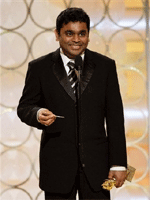
    I recently had the chance to speak to three of those below-the-line nominees: composer and songwriter A.R. Rahman, cinematographer Anthony Dod Mantle and film editor Chris Dickens.  All are first-time nominees and all must be considered in genuine contention for statuettes, if not favored to win.

    Rahman, a self-proclaimed introvert, has already won Golden Globe and BFCA awards for his score, which has become massively popular.  Though very humble, it is clear he is relishing the opportunity to have his music exposed to such a wide audience.

    “I was attracted to the film right away,” he says.  “It is about modern India, young people and optimism.  There’s a kind of urge to it.  It’s not a laid-back score.  It needed something edgy and experimental to create interest in the whole thing.”

    Dickens also was attracted to the film right away, not only because of the story but because of the unique way it was to be told.  “Basically, the film was designed that way in the script,” he says.  “Though there was always a doubt in my mind as to how it would work when you saw it.  There are lots of different scenes that the audience had to understand to get to know where they were with the story.  The intention was always to shoot in different formats and different styles.  I found that fascinating.”

    (more…)

  • Is ‘Slumdog’ score too pop?

    Thanks to Nat Rogers at The Film Experience for pointing out a really worthwhile article in the Wall Street Journal, in which music critic Jim Fusilli takes a close look at this year’s nominees for Best Original Score. It’s not a category which tends to inspire much intelligent coverage in mainstream outlets, so it’s great to see someone giving the race the attention it deserves.

    Fusilli starts by commending the Academy for dodging the iffy qualification issues that have plagued previous races — principally the weirdly flexible criteria that allowed “Babel” in, but not “There Will Be Blood” — though I would still venture that “The Dark Knight”‘s initial disqualification scuppered its chances in the category. In any case, this year’s five nominated scores are all clearly original works, and Fusilli is generally impressed by the calibre of the competition. He is, however, not entirely convinced by frontrunner A.R. Rahman’s work on “Slumdog Millionaire”:

    This year, voters will have to decide whether to recognize music that’s most memorable as catchy pop or symphonic music that illuminates story and character. Mr. Rahman’s ebullient work for “Slumdog Millionaire,” a film about a poor boy who may win a fortune on a game show, is likely the early favorite — last week, I stopped in a theater in Boston to see it again and members of the audience cheered when his name appeared in the end credits. That may not be what a film-score composer is looking for. As Mr. Elfman told me last week, “If I’m going for any reaction, the best I could possibly hope for is that they see my name and go, ‘Oh really?’ Writing a score that gets people to jump out of the chairs is a whole other ballgame.”

    (more…)

  • TECH SUPPORT: The aftermath

    Tech Support at In ContentionSo the nominations have descended upon us. “The Dark Knight,” “Slumdog Millionaire” and “The Curious Case of Benjamin Button,” as expected, all did phenomenally well, garnering seven crafts nominations each. The only absolute shock, in my opinion, was “Wanted” managing to show up in the sound fields.

    Allow me a few comments on each category…

    Best Art Direction
    As expected, “The Curious Case of Benjamin Button,” “Changeling” and “The Dark Knight” all managed to score nominations.

    My “Frost/Nixon” hunch and “Slumdog Millionaire” gamble, however, were incorrect. Rather, Michael Carlin’s lavish sets for “The Duchess” and Kristi Zea’s recreation of 1950s suburbia on “Revolutionary Road” managed to overcome guild snubs and find a home here.

    Best Cinematography
    My hunch that the guild and the AMPAS branch would not match 5/5 was right on as Tom Stern managed to prevent a second consecutive double nomination for Roger Deakins. Stern’s work on “Changeling” was his sixth collaboration with Clint Eastwood this decade; a nomination seemed inevitable eventually.

    Joining him, as expected, are Chris Menges and Roger Deakins for “The Reader,” Claudio Miranda for “The Curious Case of Benjamin Button,” Wally Pfister for “The Dark Knight” and Anthony Dod Mantle for “Slumdog Millionaire.”

    (more…)

  • TECH SUPPORT: Final preview special, part two

    Tech Support at In ContentionThis is part two of my last glance at the year’s tech category contenders.  For part one, click here.

    Best Music (Original Score)
    Now here is a category where there are no locks. Nonetheless, considering the success of their films and scores in awards season to date, A.R. Rahmen (for “Slumdog Millionaire”) and Alexandre Desplat (for “The Curious Case of Benjamin Button”) seem solid bets.

    Thomas Newman, despite only having a BAFTA nomination to his credit so far in the awards season, often scores when the precursors don’t coming calling so I think he’s in for “WALL-E.” Alternatively, he could get in for “Revolutionary Road.”

    The rest of the Golden Globe nominees strike me as facing challenges. Clint Eastwood has performed well this season with “Changeling” but I am doubtful he will ever be embraced by the music branch. James Newton Howard’s compositions for “Defiance” may be lost with his film while Hans Zimmer’s Globe citation for “Frost/Nixon” seems more like a tribute to the composer, a Globe favorite.

    I would actually wager that Zimmer and Howard have a better opportunity with their fantastic “The Dark Knight” collaboration. Zimmer has been campaigning hard. Even so, I’m skeptical the duo will score. Co-composers receiving Oscar nominations is extremely rare. (Though, in all fairness, so is co-composing.)

    (more…)

  • ‘Dark Knight’: “The Sound of Anarchy”

    If you’ve picked up the DVD of “The Dark Knight,” then you’ve probably already seen the great featurette on Hans Zimmer’s musical vision of the Joker in the film.  The studio has made the six-minute feature available at the film’s FYC website, but I tracked it down on YouTube below.  I love watching this creative process.  Despite some moaning that the score is merely flat background acoustics, I remain of the mind that Zimmer and James Newton Howard’s work is powerful aural storytelling of the unconventional sort, fully deserving of awards consideration.

  • Yes, it’s true — Zimmer and Howard are back in the mix

    Patrick Goldstein’s sources are apparently right on.  I was told by a representative party at tonight’s premiere of “The Curious Case of Benjamin Button” that, indeed, James Newton Howard and Hans Zimmer’s wonderful score for “The Dark Knight” is officially back in the running for an Oscar.  I was actually told this was coming two days ago, but had nothing to go on beyond one inside source, so I didn’t want to go there yet.  Oh well.  Here’s hoping it can translate to a nomination, but that pesky two-composer thing might still stick in the branch’s craw.

    It was an interesting place to hear the news, considering the only score that tops Howard and Zimmer is Alexandre Desplat’s sublime work on “Button,” the likely (and deserving) Oscar victor.

  • Take that, Oscar: Grammy nominates ‘Dark Knight’ duo

    The Academy’s petty disqualification of Hans Zimmer and James Newton Howard’s score for “The Dark Knight” from Oscar contention has already caused much gnashing of teeth on these pages, so here’s something to compound the embarrassment.

    It seems the Grammy voters are rather less fussy. Zimmer and Howard’s work was nominated yesterday in the category of (deep breath now) Best Score Soundtrack Album For Motion Picture, Television Or Other Visual Media. (Still with me? Good.)

    And hey, look who joins them on the list: none other than Jonny Greenwood for “There Will Be Blood,” who of course won last year’s Oscar because the work was simply too groundbreaking to be ignored. Oh right, except he didn’t, because he was disqualified. Sensing a pattern here?

    We shouldn’t be surprised by now that a voting body unrelated to the field of film should exhibit more common sense than AMPAS’ music blue-hairs, but that doesn’t make it any less frustrating.

    Joining Greenwood, Zimmer and Howard on the list are three more 2008 contenders, Thomas Newman for “WALL-E,” Ramin Djawadi (surprise!) for “Iron Man” and John Williams (yawn) for “Indiana Jones and the Kingdom of the Crystal Skull.”

    (more…)