In Contention

Author: John Foote

  • Those underrated gems of the 1980s

    BirdFor me, no decade was as overall weak for films as the 1980s, a 10-year span when bad movies made a fortune good ones went unnoticed. Of course there were exceptions to that rule.  “Amadeus,” “E.T.: The Extra-Terrestrial” and “Platoon” were brilliant productions that also scored at the box office, but more often than not, great films were discovered on video, sometimes years after release.

    A quick glance at the decade will show you that “Raging Bull” was not hailed as a masterpiece right away, and was by all acounts a failure at the box office, as was Warren Beatty’s masterful “Reds.” Phillip Kaufman’s extraordinary space adventure “The Right Stuff” had all the makings of a great American film (which it was and remains) and a box office smash, but sadly never found an audience, falling by the wayside in the summer of 1983. Audiences were flocking to see junk like “Flashdance,” “Footloose,” “Top Gun” and “Dirty Dancing” while many great films opened and closed without causing a ripple.

    I went back through the 1980s recently and re-visited 15 films that deserved attention when they were released, deserved Academy Award nominations (or more than they got), and certainly should have found an audience at the time of their release. Many of them were admired by critics, but I have left out the obvious — “Raging Bull,”  “Blade Runner,” etc. — to include smaller films that need a little love. Here they are, in no particular order…

    (more…)

  • ‘Black Sunday’ still reigns as the screen’s most accomplished depiction of terrorism

    Black SundayI remember watching 9/11 unfold in horror. As I came home that day, leaving the idle Toronto International Film Festival, all I wanted was to be with my family. Together we watched CNN well into the night and I found myself unable to translate some aspects of the day to my curious daughter. Explaining what happened was easy; explaining why was impossible.
    We live in times when terrorism is a very real part of our lives, when acts of terror come unannounced, swift and brutal, doing exactly what the engineers of hate hope to accomplish.

    Cinema is my job, my life. I spend much of my life in the dark watching flickering images created by artists, their stories unwinding through the projector and unto the screen. Sometimes they make films to make us laugh, sometimes they try to frighten us, enlighten us, or thrill us. Sometimes films replicate life in such a way it is unnerving, the realism is that strong.

    Every now and then comes a film seems to be too real, too close. I felt that way after seeing John Frankenheimer’s unnerving thriller “Black Sunday” in 1977. The film was terrifying in its depiction of terrorism, portrayed with a grim realism and matter-of-fact reality I had rarely seen before. It seemed to me that Frankenheimer had actually contacted real-life terrorists and been permitted to film their deeds.

    “Black Sunday” was based on a best seeling novel by Thomas Harris, who had not yet written “Red Dragon” or “The Silence of the Lambs.” The rights to the book were snapped up by Paramount and Robert Evans set to work on a blockbuster wrongly envisioning the project as a disaster film. His greatest move was to hire director John Frankenheimer, who saw something darker, more sinister — something extraordinary.

    (more…)

  • Which moments hooked you?

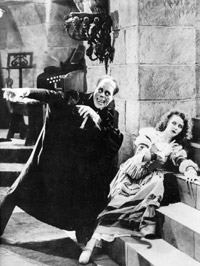
    (from left) Lon Chaney and Mary Philbin in The Phantom of the OperaI love the current poll series about the most influential films of all time, but it got me thinking about the moments in movies that hooked me on cinema forever. You know, the ones we see as kids that have an enormous impact on us, forever bonding us to this art form we all so love?

    For me, as I’ve mentioned before, it was a scene in “The Ten Commandments,” Cecil B. DeMille’s remake of his own epic, which I saw in 1972 (I think) in a re-release of the picture. In the days before video (yep, that old) the studios would re-release their films every few years and this was a major re-release for Paramount. My dad, also a movie junkie (though not as bad as his son), had talked about this for years and now that it was back we were going.

    Admittedly, I was a tad cynical at 12 years old.  I fully expected to be disappointed.  Still I wanted to see it because I enjoyed going to the movies. Little did I know my life would be changed forever.

    We piled into the car and made the drive to the theater, which was packed with familes similar to ours. The lights went down and for the next four and a half hours I was swept back in time, stunned by the size and scope of the film, amazed at the colors, and most of all, astonished at Charlton Heston. Never before had I realized how an actor could command the screen.  I never felt like I was watching a performance, either.  In awe I watched the Exodus scene as literally thousands of actors moved out of Egypt, led by Moses.

    (more…)

  • ‘Grey Gardens’ redefines Drew Barrymore as an actress

    Drew Barrymore in Grey GardensIn a stunning, Oscar-worthy performance that redefines her as an actress, Drew Barrymore is nothing short of miraculous as Little Edie in “Grey Gardens,” the latest knockout from HBO. Nothing the actress has shown us before will prepare you for her transformation into the eccentric character she portrays in this fine film.

    I remember seeing her and Jessica Lange presenting at the Golden Globes, holding hands, both looking like they had the most amazing secret in the room. Obviously they adored working with one another on the film, and together they create two characters who could not exist without each other. Ironically, neither actress could do what they do on film without the other.

    The film is based on the famous documentary of the same name by the Maysles brothers, which chronicled the everyday life of a mother and daughter, once affluent and wealthy, now eking out an existence in a run down, vermin-infested 14 room mansion in East Hampton. The aunt and cousin of Jacqueline Kennedy, the odd mother and daughter became cult figures in New York’s underground art world. Their story, from wealth to abject squalor, is explored in the film.

    We have come to expect high quality work from Lange, though in fairness her better efforts have been sporadic over the years. She overcame the stigma of the terrible remake of “King Kong” in 1976 with a string of outstanding performances beginning with the Angel of Death in “All That Jazz” and Cora in “The Postman Always Rings Twice,” for which she deserved an Academy Award. Lange was electrifying in the film, all but blowing Jack Nicholson off the screen.

    One year later Lange was nominated for two Academy Awards, winning Best Supporting Actress for her lovely comic turn in “Tootsie” and astonishing audiences with her ferocious work in “Frances” as troubled actress Frances Farmer. More nominations would come for “Country” and “Sweet Dreams,” with attention for “Crimes of the Heart,” but no nomination, however deserving.

    (more…)

  • Remembering ‘Blow Out’

    Blow OutThe name Brian De Palma first came to me when I saw a screening of the director’s new film “Phantom of the Paradise,” a high energy rock and roll fantasy based loosely on the classic “Phantom of the Opera” story. The film was a knockout, with a marvelous score by Paul Williams that should have earned the attention of the Academy for the many outstanding songs within.

    Shortly thereafter I saw a De Palma double feature: “Carrie” and “Obsession,” the former a superb adaptation of the Stephen King novel that earned Oscar nods for lead and supporting actress, while the second was a Hitckcockian thriller with a great musical score. The Hitchcock homage continued with “Dressed to Kill,” a superbly shot thriller that gave Michael Caine one of his most bizarre, yet finest roles. Sexy and terrifying, the film was a huge hit with critics and audiences in the summer of 1980.

    One year later De Palma gave us his masterpiece, a moody noir with John Travolta in his first role as an adult. Here we had a director at the top of his game and an actor made into a superstar with his previous films, “Saturday Night Fever,” “Grease” and “Urban Cowboy.” Travolta was hungry, looking for the role that would bring him greater attention as an actor.

    People forget Travolta was nominated for an Oscar for “Fever” and won the National Society of Film Critics Award for the performance, which launched his career. His one career fumble, at that time, was the goofy love story “Moment by Moment” with Lily Tomlin that left everyone who saw the film puzzled as to why it was ever made. In De Palma, the actor had a director who understood cinema, who adored actors and allowed them their freedom while gently guiding them towards his vision of the film. Travolta could not have been in better hands.

    (more…)

  • Great performances in bad movies

    Tim Roth in Planet of the ApesIt happens, sometimes when a really fine actor manages to give a brilliant performance in a terrible or weak film, a diamond in the rough. In fact, some of the best actors working have shone brightly in bad films as far back as the 1940s, though I will focus on the 1970s to present day here today.

    For whatever reason the respective film fails: perhaps the writing was weak, the direction went horribly wrong, or all the ingredients needed to make a great film, hell even a good film, simply were not there. Yet a single actor did everything right, understood their character, understood the impact they needed to make in their scenes and they give a superb performance despite his or her surroundings.

    Look at Bruce Dern in “The Great Gatsby.”  Here we have an exceptional actor in one of the roles of his career.  He WAS Tom Buchanan, elevating every single scene he was in with sheer presence. Jack Clayton’s direction was lumbering, Robert Redford was woefully miscast and Mia Farrow? Please.  (The single burning question we need to ask ourselves is what about Daisy attracts Gatsby when he can now have anyone — she doesn’t appeal on that level.)

    Dern radiates the sort of danger Redford needed to have in the role of Gatsby, but is far too good as Tom to even think of him in a different role here.  The lead really should have been Jack Nicholson.  Can you imagine the sparks between him and Dern?

    Perhaps one of the best performances ever given in a bad film was Morgan Freeman’s breakthrough in “Street Smart,” portraying a vicious pimp using a journalist portrayed by Christopher Reeve to get off a murder rap without realizing that he too is being used. Freeman is brilliant, all smiles and kindness, the sort of guy you would like to hang out with until his temper flares (to say the least). With just a few moments of screen time he gave an unforgettable performance as Fast Black.

    (more…)

  • When not watching films, reading about them

    Cover of Cecil B. DeMille: A Life in ArtMy wife has often called film my heroin, as I confess to be more than just a little bit addicted. When not watching and writing about cinema, I can usually be found either in our family room in the winter months or on the deck by the pool in the summer with the latest new film book or biography in my hand.

    I have always loved reading, discovering Classics Illustrated, that incredible comic book series at a young age in the 1960s, and laying eyes on the first Famous Monster of Film Land shortly after that. My grandmother took me to the library where I followed a sign that said “film.” Thinking they were showing a movie, I wandered over and found an entire floor devoted to books on movies.

    Talk about a wet dream for that 11- or 12-year-old kid! She got me my own library card and I took out six or seven books at a time, focusing on my first love at the time, horror, and then absorbing John Wayne, Elia Kazan, John Ford, Orson Welles, everything I could find.

    As a film critic and published author, I receive many film-related books to read and comment on, which I do when time permits. So I thought I might share some of the best reads I have enjoyed lately in this week’s column.

    “Victor Fleming: An American Master” by Michael Sragrow is the best film biography I have read in a long, long time, likely since Richard Schickel’s seminal work on Elia Kazan. Fleming, of course, is the director behind two of Hollywood’s most essential classics: “The Wizard of Oz” and “Gone With the Wind,” both in the same freakin’ year. He was a man’s man, who took no garbage from anyone and was known to bully the talent into doing their job. The research for this book is superb because Fleming left no personal papers, making the writer’s job a massive jigsaw puzzle, but one he finished to utter perfection. A master work of a bio.

    (more…)

  • Are 70s acting legends on the verge of fading away?

    Jane Fonda in KluteGrowing up I was a huge John Wayne fan, but I remember when the Duke started to fade, and then that shocking evening he presented the Academy Award for Best Picture to “The Deer Hunter” just a few months before his death in 1979.
    Perhaps because we watch these people age in front of our eyes we feel a unique kinship with them, as though we know them, but seeing Wayne at the Oscars was shocking, a terrible reminder that the acting icons are very human, subject to everything life brings: aging and death (as we found out terribly this week).

    The great actors of the 1970s, those that kick-started a second movement in American acting — Jack Nicholson, Dustin Hoffman, Ellen Burstyn, Al Pacino, Robert Duvall, Robert De Niro, Jane Fonda — are all well past 60 these days, some over 70 with Duvall edging ever closer to 80. Their best work may indeed be behind them (one never knows) and to me it represents a point of great sadness. We may never see their like again.

    They brought to the screen an inherent realism, an extraordinary authenticity that only Brando had accomplished. The day is coming when we will never be able to look forward to another great performance from the likes of Nicholson or Duvall or Fonda again.

    I remember the moment I first became aware of Nicholson, seeing him for the first time in “Five Easy Pieces,” in which he established himself as the actor of the decade, that intelligent rebel who simply would never conform to what society felt he should. Nicholson gave us a great array of performances through the 1970s, fearless in the face of risk, even singing in “Tommy,” Ken Russell’s lavish rock opera by The Who.

    (more…)

  • Coming in June: Coppola’s ‘Tetro.’ Will it bring him back?

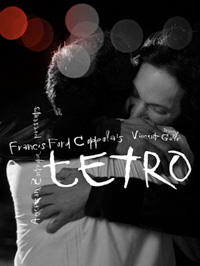
    TetroNo other director in the history of the cinema dominated a 10-year span as Francis Ford Coppola did the 1970s. Beyond directing four of the decade’s greatest films — “The Godfather”, “The Godfather, Part II”, “The Conversation” and “Apocalypse Now” — his name was on “Patton” and “The Great Gatsby” as screenwriter and “American Graffiti” as producer.

    In addition, Coppola created American Zoetrope in the hopes of building a haven for young directors to make small films free of the studios.  But he also believed what the press were saying: he was a genius who would turn whatever he touched into gold.  His ego got in the way and he alienated friend and comrade George Lucas, eventually making up with the director years later when positions of power had been reversed.

    In the years after “Apocalypse Now,” the Oscar-winning Coppola fell on hard times with one failure after another it seemed, his once golden touch lost in the jungles of the Philippines while making his Vietnam epic. There were glimmers of former greatness from time to time, such as the expressionistic brilliance of “Rumble Fish,” the Cab Calloway sequence in “The Cotton Club,” the haunting scene with Kathleen Turner and her grandparents in “Peggy Sue Got Married” and Jeff Bridges’s wonderful work in “Tucker.”

    But “One from the Heart” was a mess.  “The Outsiders” was a sentimental disaster of a film. And then there was “The Godfather, Part III,” a failure because Paramount failed the director, breaking their word after making the promise he would have complete control, refusing to pay Robert Duvall, integral to the story, half of what Al Pacino was making, forcing a major re-write (that cost…?) and casting his daughter (the poor girl) in a key role when she simply lacked the acting chops to work with that ensemble.  On and on.

    (more…)

  • ‘Lovely Bones’ next year’s Oscar victor?

    Cover of The Lonely BonesKris recently took his initial stab at predicting next year’s Oscar nominees, so I thought I would join the madness by planting a flag for “The Lovely Bones.”  I read the book in three days at the suggestion of my daughter, who knows that I admire Peter Jackson and that this is his next film. On the way to my office, the train offered a quiet solitude.  I’ll never forget this book.

    The greatest tragedy a parent can suffer is losing a child.  I simply cannot imagine the pain this must cause. As the father of two beautiful girls, 17 and 9, they are the lights of my life and reason for smiling everyday. Should anything ever happen to them, they might as well throw me in the ground with them, because I would be dead.

    “The Lovely Bones” deals with the rape and murder of a young girl, who then watches her family, and her killer, from heaven for years after the event. The father suspects the next door neighbor (great instinct) while the mother cannot deal with the agony and leaves the family to forge a new life. The sister experiences something rather extraordinary that I will not give away, while the heroine grieves for her loss of family as much as they grieve for her.

    Jackson is, in my opinion, an enormously gifted filmmaker. I stand among those who believe “The Lord of the Rings” trilogy was the greatest risk in movie history, which paid off tremendously. The final film, “The Lord of the Rings: The Return of the King,” is a masterpiece that deserved every single Oscar it won, the NYFCC Best Picture it won, and actually should have been nominated for a couple more. I remember the emptiness I felt after seeing the film, armed with the knowledge that the trilogy was over and there was no film to look forward to seeing next year from the director.

    (more…)

  • Penn’s performance for the ages

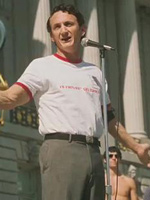
    Sean Penn in MilkOn a third viewing of “Milk”, one of the best films of they year and a major accomplishment for director Gus Van Sant, I was again struck, no, blown away by the brilliance, the joy, the remarkably loving work of Sean Penn as the doomed politician. Penn has been my pick for Best Actor since seeing the film last fall, and though I share the love for Mickey Rourke (and others do as well, judging by today’s sidebar poll), I still think Penn will take the Oscar on Sunday.
    This is a major performance, one destined to be discussed for decades to come from one of the greatest actors to ever grace the screen.  What sets it apart from Rourke’s work is that Penn had less from his life to draw on, and both being method actors, this is why I believe that Penn’s is the greater accomplishment. Now saying that is right away going to get the folks in Mickey’s camp thinking I am dissing his work…NOT AT ALL.  It is a brilliant performance that signals the return of a great actor.

    It all begins with words on a page. The actor reads those words and begins to create his character, perhaps after discussing it with his director, perhaps not. And from those words come magic. There are no directions as to how a character is be be portrayed in any screenplays I have ever read. The actor brings that to the table, which makes some of the great acting works all the more impressive.  Where did Johnny Depp find Captain Jack Sparrow?  Where did Heath Ledger find the Joker?  Where did Marlon Brando find Terry Malloy so long ago?  They make decisions about how they are going to say a line, or take a beat, or a pause, and mesh these things together to create, and then throw that energy out at another actor and maybe the work gets better.

    (more…)

  • Best Actor race — shades of ’74 and ’02

    Richard Jenkins in The VisitorThe 1974 Academy Award nominees for Best Actor were Jack Nicholson in “Chinatown,” Al Pacino in “The Godfather, Part II,” Albert Finney in “Murder on the Orient Express,” Art Carney in “Harry and Tonto” and Dustin Hoffman in “Lenny.”  There had been some mild surprise that Gene Hackman had been passed over for his work in “The Conversation” and Richard Dreyfuss in”The Apprenticeship of Duddy Kravitz,” but other than those minor quibbles, it was a strong field of contenders.

    Essentially it was a two-man race.  The frontrunners were clearly Nicholson and Pacino, both nominated the previous year for their work in “The Last Detail” and “Serpico,” respectively.  For his sly, slick portrayal of Los Angeles private detective JJ Gittes, Nicholson had again displayed his extraordinary range and ability to slip easily inside a character to the delight of audiences.  Pacino, meanwhle, again portrayed Michael Corleone in the sequel to “The Godfather,” moving farther down the path of power, corrupting himself totally, eventually ordering the execution of his own brother.

    Of the two actors, Nicholson had the inside track, having won the Golden Globe and the New York Film Critics Circle award, but there was a lot of Pacino love, too.

    On Oscar night, many jaws hit the ground when the winner was television veteran Art Carney for his performance in “Harry and Tonto,” a nice little film about an old man and his cat traveling across America looking for a home. Carney was terrific in the role, no argument, but it was hardly a performance for the ages. The likely scenario, some thought, was that Nicholson and Pacino split the vote.

    (more…)

  • ‘Dark Knight’ snub puts it in great company

    Christian Bale in The Dark KnightWhile I, too, am tired of the carping and griping about this years Academy Award nominations, I still have not been able to wrap my head around how this group could have snubbed “The Dark Knight” and Christopher Nolan. They obviously liked the film, something akin to “Dreamgirls” two years ago, landing many nominations but lacking best film and director.

    But “The Dark Knight” is in pretty fine company in terms of great films not nominated for the big prize. I have always found it incredible that a group of people so close to the industry (working within it, actually) could miss films that we as critics and audience members know to be great films.  How does that happen? Are the Academy Awards truly elitist? Are they wrong-headed? Or are they that political and so controlled by the studio campaigning system that they really can be swayed like the members of the Hollywood Foreign Press Association?

    Yes I am still smarting about “The Reader,” whether it really was #5 or not, because I share Kris’s opinion of the film: sloppy, not very well put together, not particularly moving, and aside from Kate Winslet, in a SUPPORTING role, the film did not not seem to have very much going for it. Yes I have heard all those nasty rumors and theories about Holocaust films getting nominated, and until now, I have never put much stock in them, but I have to tell you, this one stunned me.

    Would I be so miffed if it was “Gran Torino” or “Revolutionary Road?” No, because with the former I would understand the Eastwood love, and with the latter I believe it should have been nominated, but “The Reader” has left me in a spin.

    Mr. Nolan, you made a great film, something the Directors Guild of America (God bless them) recognized, and legions of admirers anxiously await your next work, Batman or not. And rest assured you are in good company, here are some of the great films that the Academy chose not to nominate for Best Picture:

    (more…)

  • Oscar might go for “Button”

    Cate Blanchett in The Curious Case of Benjamin ButtonThere is no good reason for me to think this, of course.  Call it a gut feeling, but I have a sneaking feeling the Academy might ignore “Slumdog Millionaire,” despite its countless awards, and go for homegrown studio product this year.  Let’s face it, the Academy has proven they march to their own drummer over and over again.

    “Slumdog” has already become a pop culture phenomenon around North America and Britain, making far more money than the filmmakers ever thought it would. Hell, before the festival season started the film was doomed, set for direct-to-DVD distribution.  Yes, Danny Boyle has won the DGA award, a solid predictor, but I’m not convinced.  Hollywood loves to congratulate itself, which we saw in 1997 with “Titanic” somehow winning a record 11 awards over the vastly superior “L.A. Confidential.”  David Fincher’s “Button” has been around for years, waiting for the right director, the right effects, the right time.

    So often in the past the Academy has gone for a film that is conservative and offends no one, ignoring the better work.”Driving Miss Daisy” over “Do the Right Thing” (which wasn’t even nominated), “Gandhi” over “E.T.: The Extra-Terrestrial,” “Oliver!” over “2001:A Space Odyssey.”  The list goes on and on.  “Button” is a handsomely mounted project, beautifully shot, meticulously crafted, with strong performances from the cast,and rock solid direction from Fincher.

    “Slumdog” may well prevail, but as a devil’s advocate, I am throwing it out there that “Button” could surprise, taking wins for both Best Picture and Best Director.  Am I crazy?

  • On Mickey

    Mickey RourkeAfter screening “The Wrestler” again recently, I realized just how much I have missed the work of Mickey Rourke in movies. There are some actors that are consistently interesting, those that we enjoy watching because we just know they are going to give us something we have not seen before. Jack Nicholson does this, as does Sean Penn, Johnny Depp and Dustin Hoffman, each artist giving us something extraordinary with each new performance, and often even in failure, growing as artists.

    Rourke was discussed in the 1980s as Marlon Brando was in the 1950s, the next great actor. His work in “Diner” was nothing short of spectacular, but it was his small role as Teddy the arsonist in “Body Heat” that told me Rourke was going to be something quite incredible. As a firebug saved from charges by his lawyer Ned (William Hurt), he never once raised his voice.  In fact, he spoke so softly, with such gentle tones it was alarming to realize what he was. He pulled the audience in just as he pulled William Hurt to him to share his secrets.

    Rourke had what the great Pauline Kael called “bite-you-on-the-nose talent” and I could not wait for his next role.

    (more…)

  • Did Harvey Weinstein cost Kate the Oscar?

    Harvey WeinsteinFor all his marketing and campaigning genius, Harvey Weinstein’s tactics have become — well, have been — a bit thuggish. In Peter Biskind’s extraordinary book “Down and Dirty Pictures,” a stunning look at the independent film world in the late 1980s and all through the 1990s, we are made privy to many of Harvey’s tantrums, eyewitness accounts of his bullying behavior, and crazy belief that because he is rich, he can do whatever he wants.  He can always buy his way out.

    Is there anyone left out there who truly believes that “Shakespeare in Love,” a lovely film, was actually better than “Saving Private Ryan?” Somehow Weinstein convinced the Academy it was, so the best directed, best edited, best shot and best sounding film, lost to a beautifully written work that will be forgotten in time, if it has not been forgotten already.

    Weinstein is a genius at getting his films Academy Award nominations, and some have said he will promise the artists as much when he buys the film or agrees to finance the work. He took Billy Bob Thornton from relative obscurity to an Oscar win for writing “Sling Blade.”  Who did Thornton defeat that year?  No less than the great Arthur Miller for “The Crucible!”

    I had hoped that when Disney dismissed Weinstein and brother Bob from Miramax (a company they founded) that perhaps he had learned something. It seems The Weinstein Company will continue the legacy of Miramax during the Oscar season, however.

    (more…)

  • After cooling off a bit…

    Michael Shannon in Revolutionary RoadYesterday the Academy displayed just what a fractured organization they are, championing a small film like “Slumdog Millionaire,” for which I applaud them, but snubbing “The Dark Knight,” one of the best reviewed films of the year and a titan at the box office. All day I was asking, ‘How?’  All day I wondered just how out of touch this organization truly is and what a major overhaul is needed.

    Call it ageism if you must, but we I think we need new blood in there.  I have been covering the Academy Awards for more than 20 years and have had my share of disappointments and shocks over that span of time. One would think I’d get used to it.

    I remember the rage when “Ghost” was nominated for Best Picture and when Roberto Begnini won Best Actor. That anger and shock was nothing like I felt yesterday morning at 8:30 Ontario time.

    I could not speak. I closed my office door and quietly raged, trying to make sense of it. Reading the other reactions helped ease the wound (I take it personally you see when my films are snubbed) and tried to see the good in the nominations this year. And as Guy astutely points out, there is some good.

    Melissa Leo in “Frozen River” made the cut, as did Richard Jenkins for “The Visitor.”  Both deserved, both terrific performances. “Wall-E” grabbed a screenplay nod, as well as sound nominations, and “Slumdog Millionaire” did very well indeed, with 10 nods. “The Curious Case of Benjamin Button” lead the pack with 13 and Brad Pitt finally got a nomination for Best Actor — long overdue.  Mickey Rourke and Marisa Tomei made the list for “The Wrestler” and all four major actors from “Doubt” are nominees.

    (more…)

  • Could Benicio Del Toro sneak into the Best Actor race?

    Benicio Del Toro in CheThe first time I saw “Che” back in September at the Toronto International Film Festival I believed the performance of Benicio Del Toro was extraordinary and the film was one of the most exceptional achievements in modern cinema. For me, “Che” works as a massive work at more than four hours and exists because of Del Toro’s mesmerizing performance which is almost wholly internal. I have seen the film again on DVD twice and actually have come to admire the work even more than I did that first time.

    Here we are in January, the Oscar nominations one day away, and I have a sneaking feeling Del Toro could end up with a lead actor nomination, which would thrill me. No idea why I think this, and I am likely dead wrong, but something in the air I guess tells me it might happen. The film and the director have no chance, I have resigned myself to that (and I understand it), but Del Toro is a revered actor and the actors’ branch just might nominate him because they, more than anyone else, will understand the depth and quality of his superb performance.

    I do not mean for a moment that others do not get his performance, but I have had discussions with other critics who have stated that the work has no great moment, no arc, no major speeches. Perhaps not, but rarely have I seen an actor so totally own the role.  Del Toro inhabits the character with an extraordinary authority.

    Why does a performance have to have some “huge moment” to slide in?  Look at Anthony Hopkins and Emma Thomson in “The Remains of the Day”.”  Emotions stifled, performances were internal.  Sometimes the acting, the greatness of it, is not in what’s being shown but what’s being felt.

    Del Toro felt Che throughout and is deserving of attention, certainly much more than he is getting.  The Academy likes him enough.  There is no doubt in anyone’s mind he is a great actor and every once in a while they smile on a performance that deserves it, catching us off guard.

    If it doesn’t happen, well, them’s the breaks, but I will always champion the film and his work.  It is not a perfect film by any means, but may it be a perfect performance.