In Contention

Author: John Foote

  • Nice to be wrong: actresses who changed my mind

    Kristin Scott Thomas in I\'ve Loved You So LongHaving been a film critic for more than a quarter of a century now (my God) and a film junkie for more than 40 years, I have never gotten over the joy of surprise when an actor or actress comes out of left field with a performance of such brilliance it eliminates every single bad performance or bad film they have ever been associated with.

    As a critic and a journalist, I tend to call it as I see it, sometimes to a fault.  I remember a stunned Al Pacino looking at me flabbergasted when I asked why the devil an all powerful evil being would have to shout so much as he did in “The Devil’s Advocate.”  He eyed me up and down for a few uncomfortable seconds before answering, beginning with, “So your one of the honest guys.”

    And there have been those delicious moments when I have been forced to eat my words. And you you know what?  I love it.  I love seeing an actor I had written off or dissed deliver a breathtaking portrayal to the point that I can scarcely believe what I’ve seen.

    It happened this year for me with Kristen Scott Thomas in “I’ve Loved You So Long,” a stunning piece of acting from a thesp I had previously loathed. I remember being at press screening for “The English Patient” in the fall of 1996, after barely enduring the film.  Thomas was ice cold, leaving me to wonder who could love this woman, and worse, why would they?  Nothing else she has done since impressed me much until now, and frankly, her performance left me in awe.

    There have been others, of course.  Sally Field had been written off as “The Flying Nun” and Burt Reynolds’s latest squeeze in those goofy “Smokey and the Bandit” films in the late 1970s.  She gave a remarkable performance on TV in “Sybil” as a woman with multiple personalities, but nothing prepared me for her superb performance in Martin Ritt’s beautiful little film “Norma Rae,” about a woman recognizing her potential amid textile union politics. Field was astounding, winning every major acting award there was, including the Oscar.  The performance remains one of the finest ever captured on film.

    (more…)

  • Could Woody Allen be a surprise Best Director nominee?

    Woody Allen at the 2002 Academy AwardsIn 1994, Woody Allen’s masterful “Bullets Over Broadway” was not really on anyone’s charts as a potential Oscar nominee. A very funny film about a playwright who enlists a gangster to help him bring life and reality to his play, it was one of Allen’s best works with hysterically funny performances from John Cusack, the great Dianne Wiest (who won an Oscar), Chazz Palminteri, Jennifer Tilly, Jack Warden, Mary Louise Parker, Rob Reiner, Jim Broadbent, and Tracey Ullman. The film premiered here at the Toronto International Film Festival with excellent reviews, but it seemed overshadowed that season by Quentin Tarantino’s “Pulp Fiction,” without question the movie of the year.

    The day the Academy Award nominations were announced, as expected, “Forrest Gump” and “Pulp Fiction” dominated, but in a huge surprise, Allen’s film was up in seven categories including Best Director, Best Screenplay, Best Supporting Actor (Palminteri), Best Supporting Actress (Weist and Tilly) and a couple of technical awards.

    I have always believed the film to be one of Allen’s funniest and finest films, with beautifully created characters and knockout performances throughout. Wiest is miraculous as a manipulative diva seducing the director/writer portrayed by Cusack because she knows it to be the only way to create a better character for herself. Her “don’t speak” becomes more and more insane throughout the film.

    I have always felt the film was robbed of a Best Picture nomination, likely edged out by “Four Weddings and a Funeral,” but it really did not matter as “Forrest Gump would dominate the ceremony.

    This year, Allen has directed and written a critically acclaimed film in “Vicky Christina Barcelona,” with a powerhouse performance from Penélope Cruz (the Oscar frontrunner), and solid work from Javier Bardem, Rebecca Hall, and Scarlett Johansson (two of them Golden Globe nominees). The film is funny, sexy and dangerous, both vintage Allen, but also a newer, darker Allen, a director evolving.

    (more…)

  • Sean Penn on course for Oscar #2, and he deserves it

    Sean Penn in MilkWith two of the major critics awards won, actor Sean Penn seems to be headed for his second Academy Award for Best Actor for his brilliant work in “Milk.”

    Penn’s work through the 1980s and 1990s defined him as one of the greatest actors of his generation (if not the best) and certainly on the level with Marlon Brando, Jack Nicholson and early Robert De Niro.  I find it incredible to see him today in “Fast Times at Ridgemont High” and try to connect that actor and character to anything he has done in his career. It gives a very clear example of his seemingly limitless range.

    His first Oscar nod came for “Dead Man Walking” in 1995, with only the Independent Spirit Awards giving him the grand prize.  All the others went with Nicolas Cage in “Leaving Las Vegas,” a great performance to be sure, but for my money Penn was stronger. Four years later he was something of a surprise nominee for “Sweet and Lowdown,” a fine piece of acting, but a kind of out-of-nowhere nomination, as was his third nod for “I Am Sam,” which I still struggle with watching; it represents the only time I can “see” Penn acting.

    “Mystic River” won him his first and only Oscar, and I stand by it as a stunning example of the craft.  I agree with The New York Times, which declared it one of the great acting performances of all time. Bill Murray was a popular choice that year for “Lost in Translation” and no argument, he would have been a most worthy winner.  But I am pleased Penn won. For me, he captured the anger and rage of the character, as well as the disappointment and hurt over something so precious as a daughter, now lost. There was shame in his eyes for not having protected her, and to make up for that in his mind, he avenges her.

    (more…)

  • ‘Che’ — no respect in the precursor circuit so far

    Benicio Del Toro in Che“Nothing if not the movie of the year,” wrote Scott Foundas in LA Weekly.
    “One of the best films of the year,” declared Roger Ebert.

    “A great movie,” says J. Hoberman of the Village Voice.  “Che is a thing to be experienced.”

    “The film that places Steven Soderbergh in the ranks of the masters,” raved Amy Taubin at Film Comment.

    “An experience you won’t forget,” said Peter Travers of Rolling Stone.  “Benicio Del Toro gives a magnificent performance. No one who cares about organic film acting will want to miss it. He keeps you riveted.”

    And finally, “Del Toro gives a soulful and charismatic performance,” according to A.O. Scott of The New York Times.

    So, with all this critical approval, why is Soderbergh’s film “Che” not being appropriately considered among the year end critics awards, the Hollywood Foreign Press Association and, therefore, not being discussed as a favored Oscar contender?  Here is a magnificent achievement from a world class filmmaker that breaks down the conventions of mainstream cinema (which he knows all too well) and challenges the audiences with its deliberate pacing and involving character study.  Unhurried, Soderbergh is telling a story in great detail with perhaps the greatest detail being an astounding performance from Del Toro.

    I have long championed this film since seeing the four-and-a-half-hour cut at this year’s Toronto fest.  But here in December, I find myself struggling to understand why such a masterful film is not a part of the discussion, and moreover, why critics on each coast did not take the opportunity to put it in the conversation with their annual awards announcements.

    I am incensed that Soderbergh, already an Oscar-winning director, is not being mentioned as a potential nominee again for this singular achievement. It’s certainly not mainstream cinema on any level, and it takes a great investment from the viewer of course, but once the film began, I found myself pulled in by the superb performances and cinematography.  As did a number of esteemed critics.  So what gives?

    Surely SAG and the DGA will come forward and recognize this work for what it is?  “Che” was stronger than at least half the Golden Globe nominees. Soderbergh created a masterpiece and so few perople actually know about it.  It’s shameful.

  • Getting carried away with ‘WALL-E’ and the LAFCA

    BrazilI have been griping about the state of the movie year since after the Toronto International Film Festival, and frankly I took some heat for bitching about it. So yes, I feel some vindication about the way the season is shaping up: 2008 is a hugely disappointing year at the movies, with only a handful of really brilliant films. After the bounty of last year, obviously our hopes were high, which is a mistake, but it seems we have endured one failure after another this year.
    So the Los Angeles Film Critics Association voted “WALL-E” best film of the year.  Does this increase the film’s Oscar chances for a Best Picture nod? It will certainly draw some more attention but at the end of the day the film will land in the feature animation category, which is where it belongs.

    I agree with Kris that “WALL-E” is over-appreciated and hugely overrated. Yes, it was a good film, a beautiful picture that was a stunning visual experience, but it’s not the masterpiece it is being hailed as. In my opinion it is indicative of the weak movie year we are suffering through.  I have three more films to see to wrap up my 2008 coverage, and at this writing, “The Dark Knight” is my choice as best film of the year, with Nolan my best director.  So I have to say it was cool to see both slide in as runner-ups.

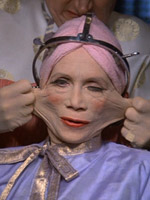
    But let’s be realistic about the L.A. Film Critics.  They like to make a statement. They did it in 1985 with “Brazil,” an unreleased film from Terry Gilliam that somehow won their Best Picture prize and forced Universal to finally put it in theaters.

    (more…)

  • The Streep question

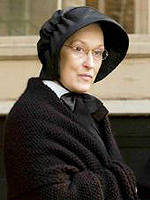
    Meryl Streep in DoubtWill she be nominated for a performance Todd McCarthy and even our own Kris Tapley found underwhelming? Of course she will, because all due respect to both, they are wrong.

    I finally saw “Doubt” this week, and as other critics are making clear, Streep does some of her best work in the film. Whether or not she will win is another question, and the chances of that are becoming less each day as we hear more and more about Kate Winslet, who will become the Streep-esque actress of her generation, if she already is not.

    Watching Streep at work in “Doubt” I was amazed at her choices and how correct they always were. She chooses to portray this nun as an Old Testament type, no spoil the rod for her, hell, whack the kid in the head when he slouches, punish them when necessary, and always believe you are acting in their best interests. She is never wrong in the film, at least her character never believes she is wrong, and that sense of righteousness is what makes her character so terrifying. Stalking the halls looking for trouble, wanting to find it, she brings to the part a ferocity that is alarming in its intensity, wholly right for the role. And of course it’s a different take than Cherry Jones gave us on stage.

    Has any actor portrayed Hamlet the same? Or Romeo? Or Richard III? Or let’s go modern and ask about Brando’s Kowalski compared to Treat Williams on TV or Alec Baldwin on stage?  Streep chose a different interpretation, a quieter one that works for the cinema because unlike the stage, the camera misses nothing…NOTHING!

    (more…)

  • INTERVIEW: ‘Changeling’ screenwriter J. Michael Straczynski

    J. Michael Straczynski“In the feature film world, we television writers barely exist,” explains J. Michael Straczynski screenwriter of Clint Eastwood’s “Changeling,” starring Angelina Jolie.  “So for this to all happen so fast is really a fairy tale year for me. I am elated with how this has all gone down and changed the course of my life.”

    Straczynski was making a fine living on the small screen, writing episodes of “Murder She Wrote” and “Jake and the Fatman” before moving on to  Showtime’s series “Jeremiah” and “Babylon 5,” two of his most well-known credits.  He had worked as a journalist for the Los Angeles Times and upon discovering the story of Christine Collins, he put it on the back burner for a few years until he found the time to do it right.

    He describes his research and fact-finding like “putting a jigsaw puzzle together” for the simple reason that facts and articles had been lost, and they simply did not have the technology then to store everything he required. Taking a year off writing television, he researched the Collins case and put a script together, which his agent sent off to Imagine Entertainment and Ron Howard.  The script was bought as is and Howard wanted to direct the film, but when his schedule became impossible, “Frost/ Nixon” looming on the horizon, he sent the screenplay to Clint Eastwood.  The grizzled vet read the work on a plane back to the States and committed to direct after the first reading.

    Yes.  This was a FIRST DRAFT that went before the cameras within a year of being sold, something rather unheard of in Hollywood unless you’re Woody Allen.

    (more…)

  • THE LISTS: Top 10 films of the 1970s

    (from left) Dustin Hoffman and Robert Redford in All the President's MenWhen critics and historians of the cinema sit down to discuss uh, cinema, the conversation almost always turns to the great decades in movie history. And n nearly conversation I’ve been a part of, the 1970s reigns supreme as the single decade of brilliance.

    It was a time of enormous artistic growth for film, as up-and-coming directors grabbed Hollywood and ran with it, merging their love for cinema and the works of John Ford, Billy Wilder, and Elia Kazan (among others) with their own fresh ideas. And the releases of “Bonnie and Clyde,” “The Graduate” and “2001: A Space Odyssey” had already announced the arrival of the new American cinema by the end of the 1960s.

    But the next 10 years brought us Francis Ford Coppola, who exploded onto the scene wit four brilliant works and mentored many of the younger directors of the time. Steven Spielberg would earn the name “whiz kid” for his incredible visual storytelling gifts that would eventually make him one of the greats of all time.

    Martin Scorsese was making unsettling character studies that alarmed the studios but thrilled critics and actors, who felt challenged by his work. Woody Allen evolved from comedy writer, to comedic actor-director, to world-class filmmaker by the end of the decade. And Oscar winning film editor Hal Ashby would make a name for himself behind the camera with a swath of works.

    Sidney Lumet, William Friedkin, Peter Bogdonavich, Bob Fosse, Roman Polanski, Bernadro Bertolucci, Alan J. Pakula, Milos Forman, and Michael Cimino would all leave their mark in the 1970s and continue directing to varying degrees of success in the 1980s and beyond.

    Society heavily impacted the work as films about the war in Vietnam dominated much of the 70s’ final years. Watergate raged mid-decade. Stories were plucked from the headlines and committed to celluloid. Movies were exciting, well made, and interesting. Films like John Frankenheimer’s “Black Sunday,” Milos Forman’s “Hair” and Don Siegel’s “The Shootist.”

    Big budget disaster films enlivened the trade, along with movies about divorce, drug addiction, mental illness, organized crime, vigilantes, prostitution, and countless other topical issues that were explored with great courage on screen. I found narrowing it down to a 10 best list to be nearly impossible and enormously frustrating because some the films left off the list should really be here. But that’s just a testament to the era’s resilience.

    (more…)

  • Oscar nominations that made me cheer

    Over the years I have been watching and studying the Oscars in earnest, since about 1974 (age 13).  It has always been a nice surprise when an unexpected actor, director or film made the cut to the final five.  It’s a special kind of high.

    I remember reacting with surprise and genuine happiness when Giancarlo Giannini was nominated for Best Actor for his performance in “Seven Beauties,” but even better was the inclusion of Lina Wertmuller, the film’s director (becoming the first woman ever to receive a designation in the directing category — nd for a foreign language film, no less).  I loved the film, so this put me over the moon, even though Giannini’s nod likely cost John Wayne his nomination for “The Shootist.”

    In 1997 it was Atom Egoyan, nominated for Best Director and Best Adapted Screenplay for “The Sweet Hereafter,” a brilliant study of grief in small town Canada; the L.A. Times named it the best film of the year but up here in Canada, we never expected Oscar attention for Atom and his film.

    I was equally thrilled when Martin Scorsese was rewarded with a nomination for his direction of “The Last Temptation of Christ,” a bold, passionate film made from the heart by one of our greatest directors.

    (more…)

  • My stance: ‘The Dark Knight’ will be nominated for Best Picture

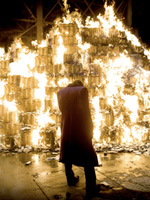
    Heath Ledger in The Dark KnightSo much speculation has surrounded the possible inclusion of this tremendous film in the year’s final five.  And though there are those who believe it has no chance of happening, the majority has gradually seen otherwise.
    Where is written that entertaining films cannot be art? Where does it say that a box office smash cannot be a genuinely great film? May I remind everyone that “The Godfather” was a major hit at the box office before it won the Oscar for Best Picture, basking in some of the finest reviews ever written. That said, success can sometimes be the enemy of both the film and the director (ask Steven Spielberg).

    While no one is calling “The Dark Knight” a film on the level of “The Godfather,” it certainly has its own particular brand of appeal and excellence. Made with breathtaking confidence, technical brilliance and spectacular command of the language of the cinema, the film moves constantly, yet director Nolan never allows the spectacle to overwhelm the very intimate story he is telling here.

    His actors are sublime, beginning with the extraordinary performance from Heath Ledger as the Joker, a performance that takes madness to a new level, one that is terrifying in its realism and authenticity. Yet Ledger is surrounded by a strong ensemble, Christian Bale very good as Batman/Bruce Wayne, a troubled, contradictory man at war with himself, knowing the only way he can remain a hero is to appear to be the enemy.

    (more…)

  • Why does the Academy fear controversy?

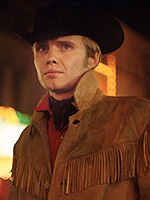
    Jon Voight in Midnight CowboyIn 1969, the Academy saw fit to give “Midnight Cowboy” the award for Best Picture — a first ever for an X-rated film.  Some saw the moment as a bellwether signaling a new dawn for the group, that they were developing a growing acceptance for the films that would start coming at them around this time of creative invigoration in the cinema.  But was it really?

    I remember somewhere that a high-ranking Academy official stated that if “A Clockwork Orange” won the Oscar for Best Picture they would resign their membership! The film had already won top honors from the New York Film Critics Circle and was nominated for four Academy Awards, among them Best Picture and Best Director. A ground-breaking work, the best of Kubrick’s career, still looking futuristic 37 years later, the film is an obvious masterpiece.  But it frightened the Academy for whatever reason.

    A year later Bernardo Bertolucci’s “Last Tango in Paris” came along with a galvanizing performance from Marlon Brando and was certainly a better film than at least two of the pictures nomination int he top race, “The Sting” and “A Touch of Class,” yet as expected, the Academy backed away from the film, nominating only Brando and Bertolucci.

    What is it in the makeup of this esteemed organization of artists that makes them steer clear controversial films, films that push the envelope, that go further out on a limb than most in exploring dark and sometimes daring subject matter?

    (more…)

  • Why ‘Che’ is a great film, but not Oscar material

    CheMost biographical films tend to play like sort of a “greatest hits” of that person’s life, and sadly much of the negative of that life is left out. Sir Richard Attenborough is most guilty of this with “Gandhi,” his hugely overrated epic about the Mahatma, who did everything short of walking on water in the film. The man was human, and by all historical accounts, had his issues, yet not one of them is in the film.

    Hollywood has been making biopics like that years. Anyone remember the final moments of “Man of a Thousand Faces,” the story of Lon Chaney, the great silent screen actor as portrayed by James Cagney?  Despite a pretty decent performance, the movie is ruined by a howler of an ending in which a dying Chaney scribbles “Jr.” beside his name on his make-up kit, thereby giving his son his blessing to go into the business.

    Anyone who knows anything about the two Chaneys knows that senior did NOT want his boy anywhere near the movie business. “Gable and Lombard” and “W.C. Fields and Me” anyone? Jeez Louise, what a terrible pair of films with no connection to the lives of the subjects within.

    In recent years biopics have gotten marginally better with “Malcolm X” and “Nixon” leading the way from directors that refused to candy coat their subjects and allowed them to be portrayed warts and all. Of course, Martin Scorsese did this with “Raging Bull,” but the entire point of his film was about a man forever shadow boxing with his own demons, unable to find decency within himself.

    I quite liked what Meryl Streep and Sam Neill accomplsihed with their characters in “A Cry in the Dark,” never romanticizing them or allowing them to become overly likable for the audience. That sort of realism, to me, is exciting. To see real life people portrayed with their flaws.  It’s real, accurate, truthful.  This humanizes them.  This makes them people, not things.

    (more…)

  • INTERVIEW: Dennis Hopper

    Dennis HopperThe voice on other end of the line sounds nothing like the many wild and somewhat insane characters Dennis Hopper has portrayed throughout his career, which now spans more than 50 years. This is a man who has walked with James Dean (his mentor), John Wayne (who affectionately labeled him a “pinko”) and Francis Ford Coppola.

    As a director, Hopper was part of the movement that would bring the New American Cinema into play, closing the 1960s with his biker flick “Easy Rider,” and though he won prizes at Cannes and was hailed around the world, he has rarely directed since.

    Hopper portrayed perhaps the single most terrifying character in a film with his seething work as Frank Booth in David Lynch’s “Blue Velvet.’  The same year he was nominated for an Oscar for his work as the town drunk seeking redemption with his son through basketball in “Hoosiers.”  Even Hopper was stunned that the Academy failed to nominate him for Lynch’s film instead.  He remembers roaring, “HOOSIERS?  You’re kiddin’ me, man” when being told of the nomination. “Blue Velvet” was a film the Academy obviously feared, allowing a single nomination to David Lynch for his dreamy, surrealistic direction of the classic.

    Currently Hopper is celebrating the upcoming DVD release and a low-key Oscar campaign for Best Supporting Actor in “Elegy,” a fine little film in which he portrays the poet best friend of Ben Kingsley’s introspective professor — Sir Ben as Hopper calls him.

    “I was a big fan of Isabel’s [Coixet, the film’s director] work”, he explains. “So when my agent called and said I had an offer to be in a film with Sir Ben Kingsley and Penelope Cruz, I jumped in. It was a very human story, the sort of film I like to see, and being a big fan of Philip Roth helped me along. The film had comedy and tragedy, and most of all characters I think we can all identify with.”

    (more…)

  • Rousing Best Actor race shaping up

    Brad Pitt in The Curious Case of Benjamin ButtonIn a year I maintain to be disappointing, I must confess that the sprint to the finish is looking more and more exciting all the time, with an exceptional crop of actors vying for Best Actor nominations. This could very well be the year that Clint Eastwood wins an acting Oscar, or that the previously washed-up Mickey Rourke wins for “The Wrestler.”

    At this writing I have 12 actors who could potentially land in the field of play, though in fairness, four of the films have not been widely seen and I am going on the buzz and speculation within the industry right now.

    There seems to be a lot of belief that Richard Jenkins, a wonderful character actor who has been around forever, could land a nomination for “The Visitor.”  He came back into the public eye as the dead father in HBO’s critically acclaimed “Six Feet Under” and has been working consistently ever since.  This year he did a nice job as the heart and soul of the Coen brothers’ “Burn After Reading.”  If the studio can mount a decent campaign and keep him in the minds of the voters, he may nab a nomination.

    But he could easily be left out. Remember Michael Douglas in “Wonder Boys”? After the film’s November re-release for awards consideration helped him win the Los Angeles Film Critics Association award for Best Actor, everyone was stunned when he failed to land a nomination with the Academy.

    (more…)

  • Helmers of the English language, the best and why: part two

    Peter JacksonThis is the second part of a feature running down the 10 best filmmakers working in the English language.  For part one, click here, and stay tuned in the coming weeks for a similar feature on European helmers.

    PETER JACKSON
    I know this one will bother some people but what Jackson accomplsihed with “The Lord of the Rings” trilogy was fucking historical. Who would have thought the man who made the small, personal thriller “Heavenly Creatures” could guide a film as big as “The Ten Commandments?” Furthermore, he gave the Tolkein story heart and soul, never sacrificing character for scope.

    “The Lord of Rings: The Return of the King” was such a staggering work of brilliance I never wanted it to end (some felt like it never did, with multiple denouements).  But after investing nearly 12 hours with these characters, I wanted to know every last detail of what would become of them. And “King Kong” (I love it!) was among the best films of its year, a massive work with superb visual effects, spectacular art direction and design and a terrific Naomi Watts performance.

    I look forward to “The Lovely Bones,” one of the very few books I have read in the span of two days, unable to put it down. If any director can take us to the heaven described in that book, it is Jackson.

    (more…)

  • Helmers of the English language, the best and why: part one

    David CronenbergMy recent article on Clint Eastwood drew an excellent response from Nathaniel Rogers (a regular commenter) that led me to this article. In that piece, I make clear my admiration for Eastwood, his artistry and the fact I believe him to be among the three finest directors working in movies. I stand by that, because I do not feel every film a director makes needs to be a masterpiece, as long as they are growing and continually trying to reach for something new.  Even the greatest of artists fail, and in fact they learn more from failure than they ever do success.

    Before the knives are drawn and tossed my way I will remind all that this is my list, just an opinion. I have selected what I believe to be the finest 10 directors working in the English language (five today, five tomorrow). I am positive that there will be disagreement, but that’s what keeps the world turning. Bear in mind that one film does not a genius make, and that a body of work (at least four films) was essential for the list.

    With that, the filmmakers…

    (more…)

  • On Eastwood: for the haters

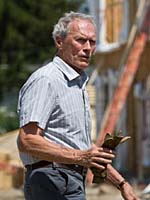
    Clint Eastwood in Gran Torino18 months ago I began researching my book “Clint Eastwood: Evolution of a Filmmaker” after signing a three book deal with Greenwood Press in the United States. This was it, my life-long goal, writing books on film and getting paid to do it. Eastwood was my choice, a director I greatly admire, but who I found along the way is not exactly admired by all. In fact there are some who are openly hostile towards Eastwood and his films, as we have found in recent days.

    What I admire, beyond the sheer artistry and the deceptive simplicity of his films, is the manner in which he forged his directing career, using his stardom to get the films he wanted to make into production. Yes he would agree to a fourth Dirty Harry IF the studio agreed to fund “White Hunter Black Heart,” his thinly disguised study of John Huston and the shooting of “The African Queen.”  Et cetera.

    Studying Eastwood’s films, I watched an artist growing, always taking new chances, fearless of a challenge, and with each new film, learning.  Even when the film tanked, there was a lesson to be learned. Eastwood himself says the lesson of the terrible “The Rookie” was simply, “Never make a film because you are bored and have nothing to do…ever.” As far back as his first film, “Play Misty for Me,” the talent was most evident as was the courage. Imagine Eastwood, the world’s biggest box office star, known for kicking ass as Harry Callahan, pitching to the Universal brass his love story “Breezy” with William Holden and Kay Lenz.

    Even I remember the shock of seeing “Bird” knowing it was directed by Eastwood and being stunned by the style of the film, the brilliance of the lead performance and the powerful story being told.

    But moving beyond his past accomplishments, which I’ve covered at length in this space before, I have to say I have been looking forward to both of Eastwood’s films this year, and have little doubt he will find himself in the Oscar race again.

    (more…)

  • 40 movie moments that galvanized and shaped me

    Judy Garland and Bert Lahr in The Wizard of OzOn the weekend here I thought I’d offer a vast list of movie moments and particulars that have forged the guy who hammers out these columns week to week.  Lists such as these are bound to differ from person to person, but I’m sure we all share plenty of them as well.

    1. The Wicked Witch of the West in “The Wizard of Oz”
    At six-years-old that witch was terrifying as my family watched this in black and white for the first time (that I recall) — nightmares ensued.

    2. John Wayne in “True Grit”
    With a twirl of the rifle he marches boldly ahead to do battle outnumbered four to one by men half his age. Putting the reins between his teeth, he draws a weapon in each hand and charges…true grit indeed.

    3. That searing ending of “Planet of the Apes”
    I still get shivers watching Heston find Lady Liberty up to her armpit in the sand, his world gone forever.

    4. The parting of the Red Sea in “The Ten Commandments”
    THE moment that forever addicted me to movies. And I expected so little of the film. The sheer scope and spectacle took my breath away and when Moses parted the water? Hooked like a junkie to his junk1

    5. “The Godfather”
    In its entirety.  Such beauty and brilliance…family…murder…wow.

    (more…)