In Contention

Author: John Foote

  • The Great Performances: 2005

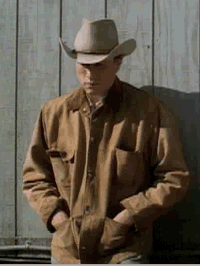
    Heath Ledger in Brokeback Mountain2005 was the year of Heath Ledger’s beautiful, moving performance in “Brokeback Mountain,” which I saw for the first time in Toronto.  It instantly became the talk of the festival, and the film became the one to beat for the Academy Award.

    Ledger was astonishing as the taciturn cowboy who is more surprised than anybody when his soulmate turns out to be another cowboy, portrayed superbly by Jake Gyllenhall. If there is a more deeply felt moment in film history than Ledger gently adjusting Gyllenhall’s shirt at the end of the film, his eyes filled with tears, I don’t know what it is. That’s loss, that is absolute heartbreak, that is one of the greatest acting performances of the decade.

    Phillip Seymour Hoffman would win the Oscar for his transformation into “Capote” and he’s very good, but just not in the same league as Ledger. I wondered from time to time if “Infamous” had been released earlier if Toby Jones might have won the Oscar instead of Hoffman. Each becomes Capote in a very different manner, and side by side it is difficult to choose the stronger portrayal. Certainly I prefer Hoffman’s as it is darker, and for me more realistic, but there can be no denying Jones.
    (more…)

  • The Great Performances: 2004

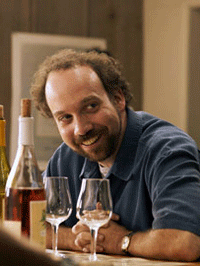
    Paul Giamatti in SidewaysIn Alexander Payne’s “Sideways,” Paul Giamatti gave the best performance by an actor in 2004, so said the New York Film Critics Circle, and how right they were.  So why, why, why was the actor denied an Oscar nomination?  Granted, it was a strong year, but his work was at the top of that heap and that snub was one of the biggest shocks of the year.

    Here was a man giving perhaps the finest performance in a comedic film since Dustin Hoffman in “Tootsie.” His co-stars go were recognized, save for the equally deserving Sandra Oh, but the leading man, around whose performance the film stands, is snubbed.  All I can remember saying is: “Wow.”

    Certainly Jamie Foxx deserved the attention he received for “Ray” and Leonardo DiCaprio was astonishing in “The Aviator,” even though he drew some criticism for before too youthful in the role. Rubbish, I thought.  He was superb, inhabiting Howard Hughes as he must have been in those days, brash, cocky, wealthy and willing to do anything that interested him.

    Clint Eastwood was terrific in “Million Dollar Baby,” while Jim Carrey gave a wonderful performance in “Eternal Sunshine of the Spotless Mind” — a marvelous piece of acting, in fact.  Equally fine, and dark, was Kevin Bacon as a pedophile struggling to start anew in “The Woodsman,” which was one of the most daring American films in a long time.

    (more…)

  • INTERVIEW: Bryce Dallas Howard

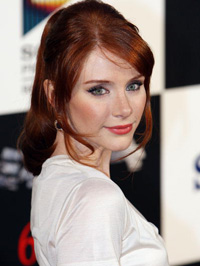
    Bryce Dallas HowardBryce Dallas Howard dominated M. Night Shyamalan’s “The Village” with a beautiful performance of intensity, ferocity, gentle sensitivity and vulnerability.  She made the audience fall almost instantly in love with her character, the blind, though all-seeing Ivy.
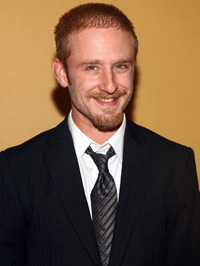
    With her flowing red locks, warm smile, and imposing gaze, the young actress appears to be to be an old soul in the body of a youth.  And she has fast made a name for herself as a major rising talent.

    Talking to an actress on the cusp of greatness is always interesting because in many ways the attitude she brings to interviews will define her to the media.  With Howard, there is no trace of ego at all.  There is, however, an excited young mother eager to discuss her role as a mom, the trials and tribulations of being a mom for the first year, etc.  And, of course, there is the work.

    Howard’s latest role comes in Jodi Markell’s “The Loss of the Teardrop Diamond,” from a lost screenplay written by legendary playwright Tennessee Williams. The film is the story of Fisher, a spirited young southern lady, vivacious, exciting to be around, fun loving, and perhaps in love with a young man she convinces to be her escort during the party season of the roaring 1920s.

    When an incident occurs that could forever alter their relationship, she is forced to make a decision that will decide which way her life goes, and the manner of woman she will become.

    (more…)

  • INTERVIEW: Ben Foster

    Ben FosterBen Foster became an actor I knew I would watch for a long time during an episode of the now canceled TV drama “Boston Public.”
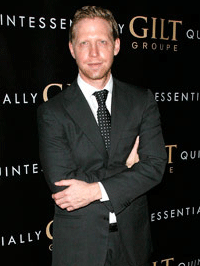
    Foster was cast as a high school student dying of cancer and had an extraordinary monologue about wanting a Christmas with no crying, with no tears; he wanted his last Christmas to be about joy, so he kept the fact that the cancer was no longer in remission from his family.  He had what Pauline Kael called, “Bite you on the nose talent.”

    In the last few years Foster has slowly been building up a strong filmography that I believe has placed him as one of the most gifted and exciting young actors in American cinema.  Even a role on “My Name is Earl” was electrifying.  With major roles in “Alpha Dog,” “3:10 to Yuma” and now “The Messenger,” it’s a quick cross-section of a talent on the rise.

    Many times interviewing young actors on the way up is an exercise in tedium because they can be so full of themselves there is barely room in the same room for us both.  Not so with Foster, a thoroughly engaging, intelligent, brutally honest young man with his head firmly attached.

    Films dealing with the wars in Iraq and Afghanistan have not been popular with audiences or critics over the last few years. “In the Valley of Elah” was superb because of the haunting performance from Tommy Lee Jones, and this year Kathryn Bigelow gave us “The Hurt Locker,” which is easily among the best films of the year and could see her become the first women to win an Academy Award for Best Director.  So I waded right in: Why this film?

    (more…)

  • INTERVIEW: ‘Valentino: The Last Emperor’ director Matt Tyrnauer

    Matt TyrnauerFor 17 years, Matt Tyrnauer worked for Vanity Fair writing up profiles of major artists and pop culture figures such as architect Frank Gehry, producer Robert Evans, writer Bret Easton Ellis, actor Greg Kinnear, designer Tommy Hilfiger, Martha Stewart (her post-prison cover story) and legendary designer Valentino Garavani.
    That final name has made an impact on his life that will alter the course of his career as an artist, and may just land him an Academy Award nomination for Best Documentary.

    Having studied film in college, a life in the cinema was never out of the realm of possibility for Tyrnauer, though his work at Vanity Fair consumed a great deal of his life through the last two decades. When he decided to make a film about Garavani, he did so with an abandon that suggests a fierce passion for his subject and deep belief in what he was doing as an artist.  “Valentino: The Last Emperor” was the result.

    The director admits there were times he did not know what he was doing, in particular when it came to distribution, but that flying-by-the-seat-of-the-pants sensation seems to have served this likable young man very well. Confidence in his film, that it was a truthful representation of the inner world of Garavani, would also help him when his subject disliked the film upon first viewing. Garavani ultimately needed the reassurance of a standing ovation at the Venice Film Festival to convince him otherwise.

    (more…)

  • The Great Performances: 2003

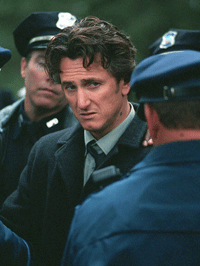
    Sean Penn in Mystic RiverThere is little doubt in my mind I am going to take some heat this week, so let’s kick it off right away with my belief that Sean Penn deserved his Best Actor Oscar for “Mystic River,” a performance of overwhelming ferocity and staggering emotional power.
    Yes, I too loved Bill Murray in “Lost in Translation,” and would have loved to have seen him win, but he didn’t, and frankly he lost to a stronger performance (in my opinion). I know it is a cliche to say the nomination is the reward, but I would hope that Murray would be happy with that.

    But there were so many great male performances in 2003!

    Robert Duvall was superb in “Open Range” as the wily old rancher who ends up in a gunfight for his life with his friend, played by the also fantastic Kevin Costner, by his side. Tom Cruise gave a great performance in “The Last Samurai” for director Edward Zwick, while Russell Crowe was again brilliant in “Master and Commander: The Far Side of the World,” adding to his string of stunning performances.

    (more…)

  • The Great Performances: 2002

    Chris Cooper in Adaptation2002 was probably one of the greatest years for performance excellence in film history, from leading actor right through all the supporting players. They could have easily nominated 10 actors in each of the four acting categories, and still missed some.
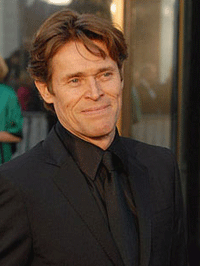
    Though Adrien Brody won the Oscar for “The Pianist,” which was a huge shock, I have always felt that Jack Nicholson gave one of his finest performances in “About Schmidt.” I suspect he and Daniel Day-Lewis in “Gangs of New York” may have split the vote in some way, allowing for Brody’s win.

    Michael Caine was up for “The Quiet American” after that film scored with critics at many precursor fests, and Nicolas Cage was the fifth nominee in “Adaptation.” Great performances all, deserving performances all, but there were so many other noteworthy turns.  Like Robin Williams’s chilling performance in “One Hour Photo” as a deranged photo lab worker obsessed with a family. Equally brilliant was Leonardo DiCaprio as the young fraudster in “Catch Me If You Can” while Tom Cruise gave one of his very best performances in Steven Spielberg’s “Minority Report.”

    One of the year’s very best films, “Road to Perdition,” contained one of the year’s best leading performances from Tom Hanks, as a lethal killer on the run from his own mob.  And though I loathe the work of Richard Gere, I must confess he did some of his finest work in “Chicago,” winning a Golden Globe for his performance, but no Oscar nod.

    (more…)

  • INTERVIEW: Willem Dafoe

    Willem DafoeI have thought about little else since seeing Lars Von Trier’s “Antichrist” at TIFF a few months ago.  The astonishing, beautiful images are in my head once a day, the performances have never strayed from my mind. At this writing I still do not know if I liked the film, but I do feel it is an important work of art that makes tough demands on the audience, as all fine art should.
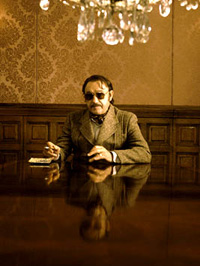
    The subject matter is difficult, the images tough, the well-documented graphic imagery very hard to watch, and the characters not particularly likable.  Yet I was drawn into the film.  I cannot remember in the history of the cinema a more profound portrayal of grief and all its agonies than what Von Trier has given us here.

    This kind of brutally honest acting takes a great deal of courage, but Willem Dafoe has always been a brave actor, willing to do just about anything it takes to get to the heart of his characters. Twice he has been nominated for an Oscar, the first time for his doomed Elias in Oliver Stone’s “Platoon,” the second as Max Schreck, maybe a vampire, maybe not, in “Shadow of the Vampire.”

    In between he has given an array of superb performances, topped by his astonishing turn as the conflicted Messiah for Martin Scorsese in “The Last Temptation of Christ,” one of the most controversial films of the 1980s. Dafoe has never shied away from playing dislikable characters, such as his hateful Bobby Peru in “Wild at Heart,” but he can also be shockingly gentle, as we saw in “Tom and Viv.” He is the complete movie actor: as comfortable in blockbusters like “Spider-Man” as he is in independent cinema such as “Antichrist.” All he asks for is a challenge.

    (more…)

  • The Great Performances: 2001

    Gene Hackman in The Royal TenenbaumsIn one of the weakest years in memory, not just for performances but for great films, 2001 saw Denzel Washington and Halle Berry knock “two birds out with one stone,” as the former declared on Oscar night, as two African Americans won the top acting prizes for the first time ever.  And it was difficult to argue with either.
    Washington was superb in “Training Day,” clearly loving his role as crooked cop Alonzo, walking the line without ever going over the top, blowing everyone off the screen. In many ways it was a make-up award for his having lost for “Malcolm X” in 1992 to Al Pacino’s ranting work in “Scent of a Woman” and perhaps, though lesser so, for his loss for “The Hurricane.”

    Berry gave a raw, sexually charged performance in “Monster’s Ball,” one of such searing truth and rage you could never look away from the screen. Robert Duvall called her performance the finest by an American actress he had ever seen and was not the least bit surprised when she won the Oscar for Best Actress.

    My question remains: Should Denzel Washington have won over the non-nominated performances of Gene Hackman in “The Royal Tanebaums” or the vastly under-appreciated Jack Nicholson in “The Pledge,” one of his finest recent performances? Don’t think so.

    There was a lot of love shown to Tom Wilkinson for his heartbreaking work in “In the Bedroom” as well as Russell Crowe (again) for his performance in “A Beautiful Mind,” which eventually won the Best Picture Oscar. I was very surprised that Sean Penn was nominated for his performance in “I Am Sam” because though I consider Penn one of the greatest actors in the history of the cinema, his work in that film represents one of the very few times I could “see” him acting.

    (more…)

  • The Great Performances: 2000

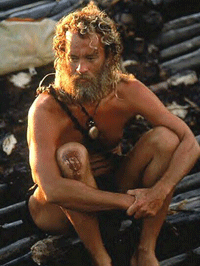
    Tom Hanks in Cast AwayMichael Douglas was robbed.

    The already Oscar-christened actor gave a career-best performance in 2000 in Curtis Hanson’s “Wonder Boys,” but he got no love from the Academy. Worse, his performance was easily among the five best of the year and won the Los Angeles Film Critics Association Best Actor prize.

    That having been said, I don’t think Douglas actually deserved the Oscar in 2000.  That honor belonged to Tom Hanks in “Cast Away” for a performance that was nothing less than astounding. For two and a half hours Hanks commands the screeen, moving into silent film territory for a stretch, the actor using strictly his body and face for the performance. Anyone who has ever, and I mean ever, doubted his range needs to take a hard look at this film.

    The five nominees for Best Actor in 2000 were Hanks, Russell Crowe for “Gladiator,” Ed Harris in “Pollock,” Geoffrey Rush in “Quills” and Javier Bardem in “Before Night Falls.” For me, Douglas was the most glaring omission, followed by George Clooney’s Gable-esque work in “O Brother, Where Art Thou?,” which I think remains one of the actor’s very best pieces of work.

    (more…)

  • The Great Performances: 1999

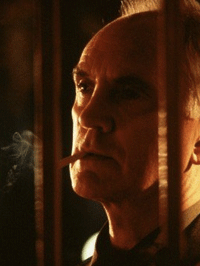
    Terence Stamp in The Limey1999 was a strange year.  And it’s hard to believe a full decade has slipped past since.  There were some great award-winning performances, to be sure, but there seemed to be just as many not nominated that certainly should have been.
    Ten years later, I remain stunned that Reese Witherspoon was not nominated for her brilliant work in “Election” as a pathologically ambitious, grasping social climber student doing anything it takes to head up the student council in Alexander Payne’s astute and black comedy.

    Witherspoon won the National Society of Film Critics award for Best Actress, besting eventual Oscar, LAFCA and NYFCC champ Hilary Swank in “Boys Don’t Cry.” What made Witherspoon’s work so incredible was that we all must have known a Tracy Flick during our high school days, and the actress created such an accurate depiction.

    Swank was a most deserving winner for her superb performance, winning over nominees, Annette Bening in “American Beauty,” Janet McTeer in “Tumbleweeds,” Julianne Moore in “The End of the Affiar” and Meryl Streep in “Music of the Heart” (perhaps the perennial Oscar favorite’s least accomplished nominated performance).

    Bening’s performance was brilliant, she won the Screen Actors Guild award for it, and though there seemed to be a swell of support for her as Oscar night approached, there was no denying Swank for her career-altering work.

    (more…)

  • The Great Performances: 1998

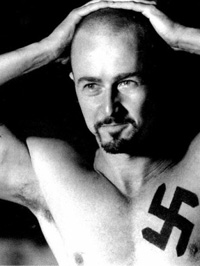
    Edward Norton in American History XFor all my bitching about Roberto Benigni winning Best Actor in 1998 for his incessant mugging in “Life is Beautiful,” I was also thrilled the Academy watched enough films and paid enough attention to realize that Edward Norton was deserving for his magnetic turn as a neo-Nazi who sees the light in “American History X.” Norton was electrifying as Derek, the charismatic leader of a group of skinheads, handpicked by the older gentleman, played with menace and sleaze by Stacey Keach, who believes in what Hitler taught and seeks to spread the word to the youth of California.
    Norton gave the best performance by an actor I saw in 1998, but the Academy got caught up in the groundswell of support of Benigni’s movie, a fable set in a death camp. I’m not a fan, either of his overwrought, over the top performance, or the film itself. No rant, you all know what I think there.

    That said, there was a bounty of great male performances in 1998, many of which went unnoticed by the Academy. They did their best to get it right, though.  Joining Norton and Benigni for nominations were Nick Nolte in “Affliction,” Ian McKellen, superb in “Gods and Monsters,” and Tom Hanks as the weary soldier in Steven Spielberg’s magnificent “Saving Private Ryan.”

    Not even nominated, however, were Warren Beatty for his brilliant turn as the truth-talking senator in “Bulworth,” Joseph Fiennes in Best Picture winner “Shakespeare in Love,” Jim Carrey in “The Truman Show,” George Clooney in “Out of Sight,” Brendan Gleason in “The General” and John Travolta in “Primary Colors” or “A Civil Action,” take your pick.  And perhaps the most deserving of all: Jeff Bridges as The Dude in “The Big Lebowski,” the actor’s finest work, in my opinion.

    Each of the aforemenetioned men gave stronger performances than the eventual Oscar winner, yet failed to nab a nomination.  Jeez!

    (more…)

  • The Great Performances: 1997

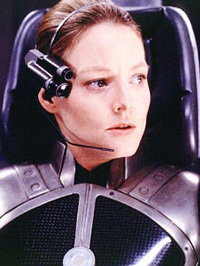
    Jodie Foster in Contact1997 was a great year for actors, but a tough year for Oscar; how do you choose when there are so many deserving nominees?
    It’s that age-old issue that some award-worthy performances are going to be left out, which though unfair and sad, is very much part of the Academy Awards and frankly what makes the whole thing interesting for us.  The Best Actor field ended up largely a battle of the old boys.  The acting warriors from the 1970s gave some of their finest performances in 1997, and four of the five nominees for Best Actor had been icons for 20 years.

    In fact the Academy could have allowed the one upstart to slip past and nominated Al Pacino in “Donnie Brasco,” which was the actor’s best work in years. As it was Pacino was by-passed in favor of young Matt Damon in “Good Will Hunting,” who found himself going toe-to-toe with Robert Duvall in “The Apostle,” Jack Nicholson in “As Good As It Gets,” Dustin Hoffman in “Wag the Dog” and Peter Fonda in “Ulee’s Gold.”

    I first saw Duvall’s performance at the 1997 Toronto International Film Festival and have written about it many times since.  He won the Los Angeles Film Critics Association’s Best Actor award, and then the National Society of Film Critics’ honor, but the Mayor of Hollywood stood in the way of Duvall’s second Oscar.

    (more…)

  • INTERVIEW: Michelle Monaghan

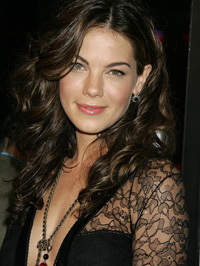
    Michelle MonaghanOf all the actors I’ve spoken to over the years, I do not remember having such a great time as I did with Michelle Monaghan, currently on screens in “Trucker” and generating some awards chatter for her work. The actress is funny, honest, refreshingly frank and grateful for her career, unaffected by her fame, and a genuinely nice gal, still obviously remembering the lessons she learned growing up surrounded by working class values.
    She laughs often and it is a deep, infectious laugh that seems to surge right through the phone line.  What she has achieved in a very short time is special indeed, and despite having no training as an actor, she may be one of the finest American actresses of her generation; she is certainly the best I’ve seen this year.

    Monaghan has been visible on the American film scene since earning strong reviews for her riveting performance in “North Country” in 2005, with Oscar winner Charlize Theron, which she followed with “Mission: Impossible III” a year later, more than holding her own opposite Tom Cruise. Her performance in “Gone Baby Gone” was remarkable, resonating with a great deal of sadness, and she ran around the blockbuster “Eagle Eye” with Shia LaBeouf, managing to find an actual character amid the fluff.

    The girl can act, and she is getting better with each film.  Her turn in “Trucker” is astonishing.

    (more…)

  • The Great Performances: 1996

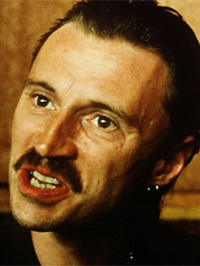
    Robert Carlyle in Trainspotting1996 was an odd year, a year when the independent cinema dominated the weak product emerging out of Hollywood. I am going to confess right off the top of this article (as I have numerous times before) that I was not a fan of “The English Patient,” which for me remains one of the most vastly over-appreciated films ever made.  I couldn’t stand Kristin Scott Thomas’s work, though I did enjoy the Dafoe/Binoche storyline.
    So with that out of the way, and firmly in mind, let’s go…

    The Best Actress race was clouded with the notion that Madonna was hell-bent on being nominated for her performance in “Evita,” which finally made it to the screen after years of starts and stops. Her performance split critics, but for me lacked the depth and edge that it was given on stage by Patti Lupone, and that Meryl Streep or Michelle Pfeiffer would have given the role. Her performance proved that Madonna should stop acting as she has little or no acting talent, and should stop making movies and trying to conquer Hollywood as she did the music industry.

    Honestly, the performance rarely rises above a really good community theater performance. Mercifully she was not nominated, but she did win the Golden Globe for Best Actress in a Comedy or Musical over the eventual Oscar winner, Frances McDormand in “Fargo.” The nominees for Best Actress included, McDormand, Kristin Scott-Thomas for the aforementionend “The English Patient,” Diane Keaton for “Marvin’s Room,” Brenda Blythyn in “Secrets and Lies,” and best of all, perhaps, Emily Watson in “Breaking the Waves.”

    (more…)

  • The Great Performances: 1995

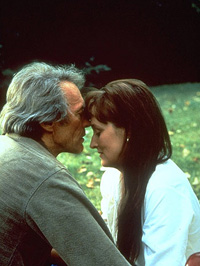
    (from left) Clint Eastwood and Meryl Streep in The Bridges of Madison CountyBased on some of the comments I received last week regarding my article on great acting, I took the suggestion of a young lady and am kicking off a series of articles, one per week, that will explore the best performances ofeach year, beginning today with 1995.  So let’s go back and work our way towards 2008 and discover the great film performances we know about, and maybe a few we do not.
    The Academy did a pretty fine job in 1995 when it came to the acting nominees.  Sure there was some shock when John Travolta was snubbed for his superb work in “Get Shorty,” and those hoping for a three-peat with Tom Hanks missed it when the actor was not nominated for his solid work in “Apollo 13.” I personally would like to have seen Clint Eastwood nominated for his wonderful work in “The Bridges of Madison County,” but there are just five slots open, and so many fine pieces of acting.

    One could also argue for Morgan Freeman and Brad Pitt, both excellent in David Fincher’s “Seven,” or Bruce Willis, who was nobly brilliant in “Twelve Monkeys,” and perhaps even Jack Nicholson in “The Crossing Guard.”

    Nobody could argue with Nicolas Cage in “Leaving Las Vegas,” Sean Penn in “Dead Man Walking” or Anthony Hopkins for “Nixon” as Best Actor nominees.  And frankly I believe Penn gave the best performance of the year, one for the ages in fact. However, Richard Dreyfuss in “Mr. Holland’s Opus?” Seriously?  I love Dreyfuss and I think he’s even been short-changed in the past, but come one.  He does fine work and it’s not his fault the script asks him to be mushy and sentimental, but I have struggled with his nomination over Hanks, Travolta and Eastwood for many years.

    (more…)

  • On acting

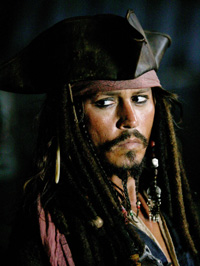
    Johnny Depp in Pirates of the Caribbean: The Curse of the Black PearlWhat constitutes a great performance?  What makes it something that puts it head and shoulders above the rest?  What does an artist do to go to that level of art and achieve something that is both extraordinary and rare?
    Does the Academy, or rather the branch that nominates the actors, look as closely at performance as critics do?  Is a performance considered great because it is an Oscar-winning piece of acting or nominated for one of the acting prizes?

    An actor reads a script and likes both the character he or she is being offered and the story on the page. The actor accepts, and begins (we hope) work on the character.  A year or so later, after shooting and cutting the film, on the screen in front of us the actor’s work will be seen and judged, commented on, praised, perhaps showered with accolades or negative comments, perhaps winning an Oscar or a Razzie, maybe becoming discussed for years to come, or forgotten moments after seeing it.

    I doubt, seriously, that an actor accepts a role with any of that in mind. Perhaps I am overly idealistic, but I hope actors accept roles because they are trying (always) to evolve as an artist, to discover something different in their acting and themselves, and to do something they have never done before. Of the many actors I have interviewed over the years, most of them take a role based on something that speaks to them in the screenplay.

    Meryl Streep once told that me she seeks something that “touches my soul” while Robert Duvall looks for a character that is “real, something that will challenge me, but he has to be real.” Tom Cruise said he “likes to try different things each time out, and hopes he does the part justice”, while Hilary Swank looks “for something that speaks to me, as though the character were whispering to me.”

    (more…)

  • THE LISTS: Top 10 Robert Duvall performances

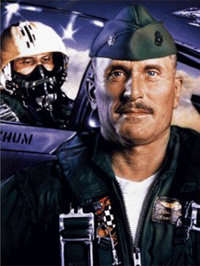
    Robert Duvall in The Great SantiniWith “Get Low” bringing actor Robert Duvall back to the spotlight, and Sony’s purchase of the film no doubt landing him in the Oscar race for Best Actor (whether released this year or next), I thought perhaps a look back at the legend’s substantial carer and best performances might be fun.

    Since his first brilliant turn as Boo Radley, both boogey man and savior to the children in “To Kill a Mockingbird,” Duvall has been one of America’s greatest actors. A self-described late bloomer, he did not see great success until he was in his 30s, but once there he never stopped, giving us an array of brilliant performances that have made him one of the most beloved, finest actors in American history.

    Over the years I have had the chance to spend some time with Duval and it should seem obvious by now that I admire the man. Sure there have been missteps along the way — what great actor does not err — but films like “Newsies,” “The Scarlett Letter” and “Kicking and Screaming” are few and far between in a career spanning more than 50 years.

    With “Get Low,” a decent campaign should see the veteran actor with his seventh Oscar nomination, his fourth for Best Actor, and given the Academy’s wont for waxing sentimental or fixing past wrongs, they might just give it to him for having passed on the opportunity 12 years ago.

    Here are my picks for his 10 best performances…

    (more…)