Minus the banal yammering of Mary Hart smothering it all.
Still pretty, still powerful, still promising. DiCaprio looks particularly good here, I think.
Minus the banal yammering of Mary Hart smothering it all.
Still pretty, still powerful, still promising. DiCaprio looks particularly good here, I think.
This may be a movie awards site, but it would be remiss of us not to acknowledge that the Emmy awards take place tonight. I find it difficult to get invested in the Emmys when they so brazenly ignore landmark television on a yearly basis — this is the group that waited until “The Sopranos”‘ fifth season to give it the gold, and never even got around to rewarding such shows as “Six Feet Under” or “Homicide: Life on the Street.”
Suffice to say that if they snub “Mad Men” tonight — as I suspect they will — I’ll care about the Emmys even less than I already do. Still, my fingers are crossed for Matthew Weiner’s magnificent series, not because it needs any kind of validation, but because anything that might raise its viewing figures is to be welcomed.
As a tribute to the show, here is a fascinating scene from the first season’s finale that neatly summates the show’s numerous virtues: the rigorous intelligence and economy of the writing (there is so much going on subtextually in these three minutes), the refreshingly languid pacing, the impeccable production values and the galvanizing star presence of Jon Hamm. (Could he be the next George Clooney?) Watch and savour:
I’ve just found out that, any minute now, a two-hour interview with Philip Glass will begin on BBC Radio 6. Glass is inarguably one of the most fascinating composers of our era, and he doesn’t grant interviews all that often, so this is quite special.
He’ll be discussing “Glass Box,” the new 10-disc boxset of his work which is out soon, and I’m sure his film work will come up in the interview. Listen here.
 Everyone has a favourite Oscar category, and Best Original Screenplay is mine. It’s partly because I’m a screenwriter myself, so I feel a little more invested in the outcome. My evaluation of the category often comes down to the question: “Which screenplay do I most wish I’d written first?”
More importantly, however, it’s the category where the Academy takes its greatest artistic risks. With the Best Picture category generally weighted towards adaptations, they often use Best Original Screenplay as a way to acknowledge the edgier, more adventurous work that voters can see the greatness of, but don’t yet have the guts to honour with their biggest prize. Hell, once in a blue moon they even give it to (gasp) a foreign-language film.
It’s this convenient ghettoising mentality that ensures the likes of “Citizen Kane,” “The Red Balloon,” “Chinatown,” “Pulp Fiction,” “Talk to Her” and “Eternal Sunshine of the Spotless Mind” don’t go empty-handed. Sure, it sucks that they couldn’t win more. And, being the Academy, they make more than their share of screw-ups. (Let’s try and forget that, in 1960, “Pillow Talk” beat — wait for it — “Wild Strawberries,” “North by Northwest” and “The 400 Blows,” shall we?) But they occasionally hit on an otherwise-snubbed masterpiece, and for that we should be grateful.
This year’s Best Picture slate appears to be heavy on prestige adaptations, allowing for a more idiosyncratic ragbag of contenders on the Original Screenplay front, mixing familiar Academy-anointed favourites with some exciting new voices.
There is, of course, a chance this could be a year when the paths of the Best Picture and Best Original Screenplay races converge, principally in the shape of “Milk” scribe Dustin Lance Black. Already high hopes for “Milk” were amplified by an excellent trailer, and a number of Oscar clairvoyants are labelling it the front-runner in the top race. If this turns out to be the case, Black will likely benefit.
Addressing Diablo Cody’s bizarre rant against her “haters” (seriously, is there a less worthwhile target than IMDB fanboys?), The Guardian’s Xan Brooks has come up with a witheringly tart response. It amused me, anyway:
The author also explained that “5-million 12-year-olds think I’m Buck Henry. Accept it”, boasted that “my pilot was so good it got picked up for a series” and (most intriguingly) admitted to “jamming toxic silicon toys up my ass for money.” Ms Cody admits that she is perplexed as to why anyone might dislike her and implies that she has discussed the issue at length with her therapist. Lucky old therapist.
For those who aren’t fussed about Diablo Cody one way or the other, reading her blog is a disconcerting experience. It’s like being screamed at in the street by a stranger. I don’t know the back-story, if indeed there is one. I’m not sure whether her rage is entirely justified, or whether the “haters” are just the demons of an unbalanced brain, constantly whispering that her pilot stinks and that “5-million 12-year-olds” actually think she’s Buck Rogers.
So, like I say, I’m slightly at a loss and need this explained to me. Does anyone actively hate Diablo Cody?
I mean, before they read her blog?
To revisit some old friends from the 2007 awards season, the Humanitas Prize in the feature film category has been jointly awarded to Ronald Harwood, for “The Diving Bell and the Butterfly,” and Nancy Oliver for “Lars and the Real Girl.”
The prize is a screenwriting award aiming to honour achievements that “explore the human condition and reveal our common humanity.” (Previous winners include “Crash,” “You Can Count on Me” and “The Shawshank Redemption.”) Under those criteria, both winners strike me as worthy — even if I find Harwood’s script a rather more substantial achievement.
Amusingly, the tie leaves Diablo Cody as the lone unrewarded nominee in the category — somewhat appropriate given the lack of maturity or insight she recently displayed in her online hissy-fit. Oh well, to borrow her words, at least she still has her fake name engraved on an Oscar.
Elsewhere, the Sundance Feature category was awarded to the TV-movie adaptation of “A Raisin in the Sun” over Tom McCarthy’s “The Visitor,” which strikes me as a little odd. But humanity isn’t exactly a quantifiable achievement, is it now?
It’s finally landed. “Another Way to Die,” the theme song recorded by Jack White and Alicia Keys for the latest installment of the Bond franchise, made its radio debut earlier today — listen to it here and see what you think.
I must say, on first listen, I’m a little disappointed. Perhaps it’s a grower. But for all the gutsy guitar riffs and atmospheric build-up, I found any clear melody — the bedrock of all the best Bond compositions from “You Only Live Twice” to “Nobody Does It Better” — distinctly lacking. And Keys’ presence is so muted, I’m not sure what the point of the duet was.
I have a feeling we won’t be seeing this performed on Oscar night. Your thoughts?
(EDIT: Thanks to Bradley Porter for sending me the full song, sans DJ intrusion. I will try and amend the post to include the song, but technical issues fail me at the moment.)
With the deadline for submissions for Best Foreign Language Film coming at the end of the month, these are virtually being announced on a daily basis. The latest:
Canada, whose “The Barbarian Invasions” took the gold in 2004, has selected French-Inuit period drama “The Necessities of Life.” The film, a period piece about the relationship between a hunter (played by Natar Ungalaaq from “Atanarjuat: The Fast Runner”), dying in a Quebec City hospital, and a young Inuit orphan, premiered at the recent Montreal Film Festival, where it won the audience award.
Variety describes it as “a finely wrought drama” and “a model of emotional restraint.” Hopefully my fellow contributor John can offer a local perspective on the selection.
Elsewhere, Finland has chosen “Home of Dark Butterflies,” another Montreal entry. The film is centred on a group of teen boys at an isolated reform school, got only a middling Variety review — they criticise it for “veering into melodramatic excess.”
 A quietly extraordinary debut from French novelist and screenwriter Philippe Claudel, “I’ve Loved You So Long” interweaves so many narrative strands familiar from various other domestic dramas it’s hard to believe this particular story hasn’t been told on screen before.
Yet these elements — sisterly estrangement, parental insecurity and the social rehabilitation of a chronic introvert among them — have been assembled here with such authorial dexterity, emotional immediacy and narrative audacity that the resulting film feels at once inventive and essential. This is that rarest of things in contemporary cinema: a story that needed to be told.
It seems perverse, then, that I am unable to furnish this review with anything more than the most fundamental aspects of said story. But to do otherwise would detract both from the delicacy and patience with which Claudel unfurls his narrative, and the visceral emotional response felt by the viewer upon each successive revelation. (In my opinion, some readers may indeed have learned too much already from reading certain gauche reviews.)
Claudel’s storytelling accumulates information on a strictly need-to-know basis, forming a structural house of cards in which each plot point fragilely supports the next — until, in the film’s very last reel, the intricate system of withheld knowledge can no longer sustain itself, and the protagonist’s staggering truth emerges.
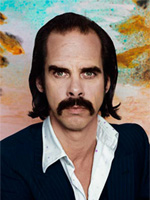 I can’t think offhand of an upcoming film score that I’m more eager to hear than Nick Cave and Warren Ellis’ work for “The Road.” Their dark, elegiac score for “The Assassination of Jesse James by the Coward Robert Ford,” which wove together a panoply of Americana with a smattering of modern influences, was one of the great overlooked achievements of last year.
Of course, “The Road” reunites Cave and Ellis with director John Hillcoat, with whom they collaborated on “The Proposition” — the fascinating Outback “Western” that Cave himself also scripted. “The Proposition”‘s score was another sonically dense, richly atmospheric affair, and I expect them to repeat the feat on “The Road.”
All of which brings me to this interesting little interview with Cave, taken while he was recording for “The Road” in London. He’s long been one of the most articulate, intelligent guys in rock music, and he offers quite generous insight here into his deliciously strange creative process. There’s also this rather matter-of-fact perspective on working for film:
The whole film business, everything is done by committee, it would seem. So what you feel about what you’ve created is highly irrelevant in the process of making a film. You hand something in and the worth of it is judged by people you’ve never even seen, so it’s mentally frustrating in that way, but at times it’s hugely enjoyable because the kind of agony of original creation, of having to think of the actual idea and the theme and what you’re going to write about and all that kind of stuff, which is really very difficult, the toughest part of songwriting for me, is not there. You’re simply supplied everything by what’s on the screen.
 As regular readers may know, I’ve been yammering on about a Best Actress nomination for “Happy-Go-Lucky”‘s delightful Sally Hawkins since I reviewed the film back in April. So I’m pleased to see that Hawkins will receive the Breakthrough Actress award at next month’s Hollywood Film Awards.
As I said when they named their crafts honorees earlier this month, I’m a bit mystified by these awards, which appear to honour as-yet-unseen films rather frequently. Still, it’s difficult to argue with this selection: in a crowded field of Best Actress contenders, Hawkins is the freshest face out there. It’s a good omen for her Oscar chances — last year’s honoree was Ellen Page.
“Happy-Go-Lucky” didn’t emerge from the festival circuit with quite the amount of heat I hoped it might, but Hawkins remains a solid contender for awards consideration. As we know now, the performance has a major Marmite factor — people either love or hate Hawkins’ character — but it’s sure to stick in people’s minds.
Elsewhere, the Breakthrough Actor award went to James Franco — another obvious choice, and a move that gives credence to the Best Supporting Actor buzz for his performance in “Milk,” something Kris just discussed.
“Milk” scored twice with the awards, with newbie (not that you’d know it from the marketing) scripter Dustin Lance Black named Breakthrough Screenwriter. Meanwhile, “Doubt” helmer John Patrick Shanley picked up Breakthrough Director. The latter strikes me as something of a safe choice in a year that has given us stellar debuts from such talents as Martin McDonagh and Philippe Claudel, but we only have the trailer to go on.
Finally, pointing to two Oscar inevitabilities, the Animation award will go to Andrew Stanton for “WALL-E” (well, duh), while “Iron Man” will be recognised for its visual effects.
 As anyone who follows the arcane workings of the Best Foreign Language Film award knows, there is no such thing as a sure thing in the category. However, it’s fair to say that Sweden and Germany have emerged as strong contenders in the race after both countries selected high-profile films as their official entries.
Unsurprisingly, Sweden has chosen “Everlasting Moments,” a highly personal biopic from veteran filmmaker Jan Troell — a Best Director nominee back in 1973 for “The Emigrants.” The film is a portrait of Maria Larsson, Sweden’s first female photographer, who also happens to be the grandmother of Troell’s wife (and co-scripter) Agnes. The film bowed at Toronto last week to warm reviews, including this rave from Screen International:
Discreet, old fashioned, traditional and altogether admirable, this is Jan Troell in what he does best … Paying minute attention to the smallest details, taking its time but never appearing to drag its feet, immensely sympathetic to its heroes and villains alike, this is an intimate family portrait and at the same time a rich canvas of working class life … This picture has quality stamped all over it, awards are likely to come its way whether for direction, photography or the performances of Maria Heiskanen and Mikael Persbrandt.
By all accounts, it’s a stately, beautifully crafted period piece with a degree of social gravitas — difficult to see the Academy resisting that one.
On a very different note, Germany has gone with Uli Edel’s terrorism thriller “The Baader Meinhof Complex” as its entry. The film, a chronicle of the infamous left-wing Red Army Faction group that terrorised the country through the late 60s and early 70s, has yet to open in its home country, but advance word is promising. (Jeff Wells gives some useful insight here.)
Jack White is reportedly none too pleased about this, but an instrumental sample of “Another Way to Die,” his much-awaited Bond theme on which he duets with Alicia Keys, has been revealed in a new ad for Coke Zero.
The ad, a promotional tie-in which finds the soft drink rebranded as Zero Zero 7 (geddit?) is a fairly low-rent knockoff of a typical Bond credit sequence, but the music is terrific — sounds like White has married his own guitar sound with a throwback to John Barry brassiness. If the vocals are this good, it could be the best Bond theme in some time.
 I’ve already expressed my eagerness for Baz Luhrmann’s “Australia,” probably my single most anticipated film of the year. I was thoroughly enraptured by the trailer that had many others passing snide pre-judgments on the film. (Bizarrely, words like “corny” and “artificial” were frequently thrown up as pejoratives, indicating that the self-irony of Luhrmann’s previous work entirely escaped certain audiences.)
Now my appetite has been further whetted by this lengthy profile of the film that appeared in today’s Sunday Times, in which Luhrmann and his stars make the scale of their ambition abundantly clear. And that ambition, to go by this quote from Nicole Kidman, is to create something as vast, iconic and quintessential as the title suggests:
This is the last of a dying breed, this kind of movie. They don’t build stuff like this any more. To feel that air and see people ravaged by the elements, as hard as it is, it’s exquisite. I dreamt of making a film that had the passion and the weight of the films I grew up watching — Gone with the Wind, Doctor Zhivago. When Baz and I first started speaking about this, seven years ago, I said there needed to be a film about our land that speaks on a much broader scale.
No pressure, then. Luhrmann, meanwhile, acknowledges the flak he will likely receive (already expressed by some readers on this site) for that bald, broad title, but his defence is both intelligent and mischievous:
Why “Australia?” Well, first of all, to get people all uppity about it, so there’s a lot of comment. I think about films like Lawrence of Arabia, Out of Africa, Casablanca, Hawaii, by James A Michener: epics that use one word to describe a place. The film can’t be definitive about Australia, but ‘What does it mean?’ is not a bad place to start when you’re creating a story.” Sixty years ago, Casablanca meant “faraway, exotic.” I think even now, to the rest of the world, ‘Australia’ just means big, somewhat mysterious, somewhat misunderstood. This is a land far, far away. It has a sense of fairy tale about it.”
 If you were remotely surprised that “Slumdog Millionaire” took the People’s Choice Award at Toronto, you’ve clearly been living under a rock for the past month. The award is an auspicious one, having previously annointed such international Best Picture contenders as “Chariots of Fire,” “Shine,” “Life is Beautiful” and “Crouching Tiger, Hidden Dragon.”
Whether or not the widely-predicted Best Picture nom for “Slumdog” materialises, we’re clearly going to hear the title a lot this awards season. (Not that the audience award is a guarantee of success — remember 2006’s winner “Bella?” No? Didn’t think so.)
Looking further down the list of winners, however, I’m pleased to see recognition for two “difficult” films that I’ve been interested in for some time.
As a devotee of South African author J.M. Coetzee, I’ve been eagerly tracking the film adaptation of his seminal novel “Disgrace,” which won the FIPRESCI (International Critics’) Prize for Special Presentations. By all accounts a measured, intelligent take on a very challenging work, the film, and leading man John Malkovich, have attracted very warm notices, including this Variety rave:
Anchored by another marvelously quirky yet deadly serious performance from John Malkovich, and likely to be relished by the fan base of J.M. Coetzee’s Booker Prize-winning novel, this is a strong, perceptive, old-school arthouse pic with solid legs in all media … Malkovich is a living symphony of tics and mannerisms in service of a profoundly self-absorbed character.
Screen Daily was similarly enthusiastic, commending the film for its “intelligent restraint,” and going so far as to draw a comparison between Malkovich’s portrayal and Burt Lancaster’s monumental turn in “The Leopard.” David Poland loved it too, emphasising Malkovich’s “fearless, unshowy, brilliant” performance.
Thanks to Nick Plowman for pointing out this brief taster of “Revolutionary Road,” arguably the most prestigious-on-paper of the upcoming Oscar bait.
I found the footage too haphazardly edited to get much of a feel for the film, but we can safely say that it looks lovely, with Roger Deakins offering his trademark burnished sheen, and that DiCaprio and Winslet seem to be on form. I’ve already expressed my hopes for the film; this keeps them afloat.
And the use of Nina Simone’s version of “Wild is the Wind” in the background is unimpeachably classy.
I know there are a lot of “Crash” haters out there — I’m one of them. (Apologies to Kris — I know you’re a fan, and I respect that.)
So it will either please or dismay you to learn that there is a longer, less well-acted and seemingly even more overwrought alternative to Paul Haggis’ didactic crowd-splitter.
Ladies and gentlemen, I give you “Crash” — the TV series. (Thanks to Vulture for the heads-up.)
 There has been so much hype around Kristin Scott Thomas’ apparently devastating performance in Philippe Claudel’s “I’ve Loved You So Long” that a lot of the press I’ve read tends to sideline the film itself.
Now Jeff Wells has rectified that with a piece in which he declares it the best film of the year so far:
The film itself is a landmark-level achievement. It’s remarkably tight, absorbing and affectng every step of the way — a genuinely profound growth journey taken with quiet and gentle steps. Whatever happens on the Oscar nomination front, this film has immediately shot to the top of my list of the year’s best films.
Not that he neglects to discuss the film’s esteemed British star. Indeed, he thinks she’s a shoo-in for an Oscar nod — and possibly more:
She’ll definitely land a Best Actress nomination, and she just might win, considering that she achieves so much in ILYSL with very little “acting” plus the fact that she’s been around for a couple of decades.