In Contention

Author: Guy Lodge

  • More than just happy

    I’ve already discussed how many critics seem to be misinterpreting Mike Leigh’s “Happy-Go-Lucky” and its protagonist, Poppy, by interpreting it as a sheer feelgood work — and in doing so, missing much of the film’s complex, subtle social observation.

    So I’m glad to see that Mike Leigh has addressed the issue at a NYFF press conference. In this video courtesy of IFC.com, Leigh and the film’s star, Sally Hawkins, discuss with Lisa Schwarzbaum the issue of Poppy’s optimism, with Leigh stressing that there is a lot more to her character than simple cheeriness. First saying that “to desribe her as being unadulteratedly happy is not really to understand her at all,” her goes on to draw an interesting parallel between Poppy and the title character in the very differently-toned “Vera Drake.”

    Finally, with a grin, he insists that while “Happy-Go-Lucky” is indeed “anti-miserablist,” it’s not necessarily the start of a trend in his work: “Wait until you see how depressing the next film might be!”

    More from the conference here.

  • ‘Changeling’ provokes dissent in the blogosphere

    Uh-oh. Since its premiere at Cannes, “Changeling” has provoked both breathless raves and withering putdowns, but after its NYFF screening, a number of prominent bloggers are falling into the latter camp, expressing disappointment over both the film and Angelina Jolie’s much-hyped performance.

    The most articulate view expressed so far is by the ever-readable Nathaniel Rogers, who, despite high hopes for the film, thinks it is “overlong, overwrought” and suffers from an identity crisis:

    Somewhere buried in “Changeling” is an interesting story about a woman finding her strength against significant odds … Unfortunately the movie as directed and scripted works against this potentially thrilling internal drama. The plotting and direction can’t decide which kind of movie this is: melodrama, courtroom, serial killer picture, procedural, period epic?

    “Changeling“‘s title accurately reflects its early creepy child switch and its relentlessly mediocre shift from melodrama to true crime story. A better more disciplined film would have earned that title in a more ambitious way. It’s a shame that there’s so little real fluidity, few emotional surprises and no transformative character arcs within the sprawling story.

    As for Jolie, Rogers doesn’t doubt her Oscar chances, but he finds her fatally miscast:

    Angelina Jolie’s screen presence is, as everyone knowns, competent and forceful which is usually a good thing. Unfortunately her largeness somewhat robs Mrs. Collins of the journey from socially conditioned feminine weakness to lioness strength that we need to watch her stumble through. Jolie is technically proficient enough in these “womanly confusion” scenes but they don’t feel organic to the actress and there’s no surprise or reveal once she starts fighting back.

    (more…)

  • WEEKLY WRAP: Newman remembered, Rudin/Weinstein, Foreign film race

    Paul Newman in HudAs we head into the weekend, here’s a quick overview of what we (and you) have been talking about at In Contention this week:

    • Kris paid tribute to the incomparable Paul Newman, as well as rounding up some of the man’s greatest performances.

    • As the Scott Rudin-Harvey Weinstein soap opera continues, Kris wonders where this leaves “The Reader” in the race.

    • John Foote contemplated the screen’s greatest leading ladies, past and present.

    • Matteo Garrone presented his red-hot foreign-language contender “Gomorrah” in London. I was impressed with the film.

    • Speaking of which, all the submissions for Best Foreign Language Film are in.

    • In the wake of a sensational new trailer, Apple takes a mouthwatering look at the tech credits of “Australia.”

    • Continuing the technical conversation, Gerard previewed the runners and riders in the Best Sound Mixing race.

    • Clint Eastwood scooped the first in what could be yet another run of awards for him this season.

    • And finally, in case you weren’t aware awards season has started, the people behind “Frozen River” and “Elegy” would like to remind you otherwise.

  • Foreign film watch: all the contenders

    The race starts here. With the deadline having passed on Wednesday, 53 67 countries have submitted a candidate for the Best Foreign Language Film award.

    Now it’s all in the hands of the Academy’s notoriously obtuse foreign film committee. Under a new system aimed to avoid embarrassing exclusions like last year’s snub of “4 Months, 3 Weeks, 2 Days” and “Persepolis,” the committee will vote on a six-film shortlist, while a smaller executive panel will add three extra titles afterwards.

    Looking down the list of titles, there aren’t any glaring omissions so far — and it’s nice to see left-field festival successes such as “Tony Manero” (Chile) and “Eldorado” (Belgium) in contention. There is still the problem of the ‘one film per country’ rule which means exceptional films such as “Il Divo” and “I’ve Loved You So Long” can’t compete. From a personal perspective, I’m also a little disappointed to see only two African entries: I fully expected Ethiopia to submit the much-acclaimed Venice success “Teza,” but it wasn’t to be.

    As I’ve said before, making predictions in this category is nigh-impossible, but for the hell of it (and so you can jeer at my foolishness come January), I’m hazarding a guess as to what the nine semi-finalists will be. My predictions, and a full list of the contenders, after the jump:

    (more…)

  • REVIEW: “Gomorrah” (****)

    IFC Films' GomorrahThe title “Gomorrah” is at once metaphorically apt and tonally misleading. In referencing the Biblical city destroyed by God for its sinfulness, Roberto Saviano’s best-selling non-fiction posited its own setting, Naples, as some kind of present-day equivalent.

    A city ruled and consequently ravaged by the Camorra, the notoriously brutal crime syndicate that has reportedly been responsible for over 4,000 deaths since the 1970s, it is also suffering for its sins — though in this case, the destruction comes entirely from within.

    The weightiness of the Biblical allusion, however, implies a fire-and-brimstone subjectivity that is refreshingly absent in Matteo Garrone’s thrilling remixing (adaptation is too cautious a word) of Saviano’s book. Marked alternately — and, in its best moments, simultaneously — by jolting violence, poetic kitchen-sink realism and blacker-than-black humor, this is first and foremost a work of social observation.

    As he repeatedly emphasized in his recent Q&A at London’s ICA, Garrone is more concerned with truth than tract.  Though the film lays the grim consequences of organized crime bare for all to see, his primary interest is in how such horrors complicate the everyday lives of those who live within and without the Camorra’s snare.

    The film’s social consciousness and dense, initially disorienting multi-narrative structure has earned comparisons with such recent crime sagas as “City of God” and “Traffic,” though it’s not as cinematically self-aware as the former, nor as narratively diagrammatic as the latter. (Neither term is meant pejoratively.)

    Garrone instead cites neo-realist doyen Roberto Rossellini as a key influence, and this provides a far clearer reference point: Garrone may have far busier story material here than exists in “Paisan” and “Open City” combined, but he shares Rossellini’s most academic qualities as a filmmaker, patiently following his characters through everyday domestic exchanges, and noting the physical and social textures of his story world with an anthropologist’s eye. In doing so, he further mines territory initially opened by such works as “The Sopranos” to offer up the least glamorous Mafia film ever made.

    (more…)

  • The phone gods have spoken

    My cellphone just told me that Kate Winslet will win next year’s Best Actress Oscar.

    Who am I to argue? My phone is right about a lot of things — the time, my account balance, my friends’ numbers. It couldn’t tell me which film she would win for, but nobody’s perfect.

    Admittedly, the tip didn’t come unprompted, but courtesy of Any Question Answered (AQA), the eerily knowledgable text-message service that comes in mighty handy for settling drunken pub quiz disputes  when the internet is just too complicated for inebriated fingers. With no clear leads to go on in this year’s Oscar race so far, I thought I’d put it to their wisdom.

    According to AQA, “Revolutionary Road” will win Best Picture. I was prepared to believe them until, further into the text, they described it as a “depression-era romance.” So much for the phone gods, then.

    Nobody knows anything, indeed.

  • Garrone on ‘Gomorrah’: “It’s not real, but it’s true.”

    Viva Italia, is all I have to say. In the past 48 hours, I’ve been lucky enough to see the two films that have widely been heralded as marking a renaissance for the Italian film industry, a world cinema titan that had been lying dormant for a couple of years. No more.

    One of them is Paolo Sorrentino’s blistering, return-to-form political thriller “Il Divo,” which I will discuss closer to its appearance at the upcoming London Film Festival. The other is Italy’s submission for the Best Foreign Language Film race, “Gomorrah.” Possible masterpieces, both of them — and as solid a case as any for abolishing the silly “one film per country” rule that so plagues this problematic Oscar category.

    Walking out of London’s Institute of Contemporary Arts after Sunday’s UK premiere of “Gomorrah,” which was followed by a lively Q&A with director Matteo Garrone, I couldn’t shake the feeling that I might have just met one of next year’s multiple Academy Award nominees.

    Far-fetched, I know, but the film’s achievement is that staggering and far-reaching. Under the foreign-language committee’s new voting system, a nomination in that category should, by rights, be a slam-dunk, while Best Director and, particularly, Best Adapted Screenplay nominations are, to my mind, well within the realm of possibility. I will resist further gushing until I post a proper review in the next day or two, but for now, I want to share some of the thoughts Garrone offered at the Q&A.

    A modest, thoroughly disarming presence, far younger in demeanor than his 40 years suggest, Garrone himself seems a little bewildered by the film he has made and the discussion it has wrought. For those who don’t know, “Gomorrah” is a documentary-style examination of the Camorra crime syndicate that terrorizes Naples, based on the bestselling non-fiction expose by Roberto Saviano.

    (more…)

  • Foreign film watch: ‘Correction,’ ‘Ploning’

    Two days to go until the deadline for Best Foreign Language Film submissions, and the latest nation to enter the fray is Greece. Seeking their first nomination since 1977 — that’s right, no Theo Angelopoulos film ever made the cut — the Greeks have selected Thanos Anastopoulos’ “Correction,” a racially charged drama about the country’s Albanian immigrant population.
    By all accounts a challenging, defiantly minimalist work, the film bowed at Berlin in February to middling reviews, with both Variety and Screen International predicting it would have a hard time crossing over.

    On another note, The Philippines is seeking their first ever nomination in this category for “Ploning.” This was announced some time ago, and I listed it in one of my updates last week. However, following an enthusiastic recommendation for the film from a reader (see, we do listen), I thought I’d mention it again.

    (more…)

  • Foreign film watch: Spain and Mexico go period

    Just recently, the strongly linked film industries of Spain and Mexico were the talk of the world cinema scene, with auteurs like Almodovar, Del Toro, Amenabar and Inarittu enjoying an unprecedentedly high profile in the US, and picking up awards left, right and centre.

    This past year, however, has a seen a shift back to more traditional cinematic sources, with rejuvenated European stalwarts Italy and, in particular, France churning out the critical hits and festival sensations.

    The Spanish-speaking countries’ slight (and no doubt temporary) loss of momentum is arguably reflected in their recently announced submissions for the Best Foreign Language Film race: both have selected sober-sounding period dramas with relatively low international profiles.

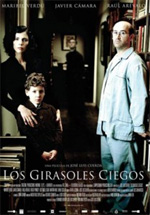
    Spain’s choice, “The Blind Sunflowers,” takes place in the aftermath of the Spanish Civil War, and tells the story of a presumed war widow harbouring her left-wing husband in the family home. It’s a period that has proved fertile ground for great Spanish cinema, and the cast, including the wonderful Maribel Verdu and Javier Camara, is exciting, but Variety was decidedly unimpressed by the film at Toronto:

    Brimming with ideas it fails to galvanize, “The Blind Sunflowers” reps an unhappy swan song for late, great screenwriter Rafael Azcona. As a portrait of the dullness of life in provincial postwar Spain, the pic is fine, but much of that dullness spills over into the treatment, which fails to do justice to Alberto Mendez’s dark novel … Top-notch cast feels wasted, with most of the content rerun from previous Civil War dramas.

    (more…)

  • Russia, Argentina, Slovenia enter the derby

    This morning brings three more entries in the Best Foreign Language Film race. KIcking things off, Russia has selected Anna Melikyan’s “The Mermaid,” which won the Directing Award in the World Cinema section at Sundance, before going on to scoop a FIPRESCI prize at the Berlin fest.

    A modern-day fairytale about a teenage girl’s coming of age in Moscow, the film has inspired comparisons to “Amelie” from a number of critics. Variety praises it for its “abundant charm,” “bravura visuals” and “a winning personality all its own.” I’ve been intrigued by this one for a while.

    Meanwhile, Argentina has also gone with a success from the festival circuit: Pablo Trapero’s “Lion’s Den,” a story of a young woman’s imprisonment for accidental murder. The film played in competition at Cannes this year to enthusiastic reviews, including this rave from Andrew O’Hehir:

    “Lion’s Den” is marvelously shot and acted, constantly surprising, and completely focused on Julia’s struggle to get from one moment, or one day, to the next one rather than through some formulaic story arc … Martina Gusman (Trapero’s wife in real life) gives a vivid, ferocious, almost animalistic performance.

    Finally, Slovenia’s selection is “Rooster’s Breakfast,” a gentle study of small-town life that has been wildly popular in its home country but has virtually no international profile to speak of.

    Once again, feel free to share any further information or perspective on these (or other) foreign-language entries in the comments below.

  • Foreign film watch: China picks Olympics doc

    Heading the latest round-up of Best Foreign Language Film entries, China has taken the unusual step of submitting a documentary in the race. As you may gather from the title, “Dream Weaver: Beijing 2008” is a study of the country’s seven years of preparation for last month’s Olympic Games, and was produced by a state-owned company.

    It’s certainly a distinctive and topical selection, though I really can’t imagine it making the lineup. “Mei Lanfang,” Chen Kaige’s lush, Ziyi Zhang-starring biopic of the eponymous opera star, would have been a more expected choice, though sources reveal the film isn’t finished yet.

    Staying in that part of the world, Hong Kong has submitted “Painted Skin,” a fantasy epic from Gordon Chan centred on the love affair between a scholar and a beautiful, man-eating demoness. Featuring production design from Oscar nominee Chung Man Yee (“Curse of the Golden Flower”), it all sounds rather wild and wonderful — though probably a bit too “out there” for the voters.

    Potentially more in their comfort zone is the Czech Republic’s entry, “The Karamazovs.” A portrait of a travelling Czech theatre troupe staging a production of the titular Dostoyevsky novel in a Polish steelworks, it was described by Variety as an “excellent but extremely highbrow pic that should enrapture festival-goers.” (The review also makes structural comparisons to Almodovar’s “Bad Education.”) The film will screen at next month’s London Film Festival.

    Finally, Bosnia-Herzegovina, the nation that scored an upset win in 2002 with “No Man’s Land,” has gone with “Snow,” a female-oriented debut film about rural village life in the wake of the Bosnian genocide. The film bowed at Cannes to respectable reviews, and went on to take the Critics’ Week Grand Prize.

  • In defense of ‘Happy-Go-Lucky’

    Brad Brevet, over at Rope of Silicon, likes “Happy-Go-Lucky.” A lot. And like me, he’s a bit perturbed by some of the hostile criticism that has been lobbed at the film, and its protagonist Poppy in particular — such as Jeff Wells’ wildly off-base (to my mind) accusation that the film is guilty of “emotional fascism.”

    In response to such critiques, Brevet has written a smart, thoughtful defense of the film. (I praise it not only because he quotes extensively from my own review, though that’s an obvious point in its favour. Ha ha.) The core of his argument is that the film is less an isolated character study than it is a study of its own audience, and how they respond to character:

    Happy-Go-Lucky was hardly about any of the characters in the film as much as it was about the audience watching the film. Taking that into consideration, film critics are perhaps the absolute best audience for this film. Critics of any sort can be cynical and jaded creatures and when confronted with someone that is altogether happy despite not having an abundant amount of wealth or status (i.e. Hollywood reasons to be happy) it annoys the cynical sort.

    I say this in general terms and without direction of blame or accusation, but it is what comes out of judging art as a profession. Why else would the most trying times for the film’s central character be met with the most glowing responses? As Lodge said, the character hasn’t changed … As much as Poppy may want to change the folks she encounters inside the film she ultimately ends up changing the people watching.

    (more…)

  • ‘Gomorrah’ is in — do we have a frontrunner?

    Well, as speculated a few hours ago, Italy has announced their submission for Best Foreign Language Film. And, to the surprise of precisely nobody, they have gone with Matteo Garrone’s “Gomorrah” — the sprawling, breathlessly acclaimed portrait of Naples mafia life that was arguably the breakout hit of May’s Cannes festival. (It received the runner-up prize.)

    It’s almost impossible to declare frontrunners in this category, given the foreign film committee’s wilful voting habits. Still, it’s safe to say that “Gomorrah” is the most anticipated and discussed contender to officially enter the race so far.

    Whether it will prove too bleak and violent for the blue-hair voters is difficult to predict — they acknowledged the edgy brilliance of “Amores Perros” in 2001, but since then, they’ve been unable to stomach the likes of “City of God” or last year’s “4 Months, 3 Weeks, 2 Days.”

    Based on the unanimously good word for the film, I’ve long been predicting that “Gomorrah” could even score breakout noms in the Best Director and Adapted Screenplay categories (a la “City of God”), but that was when I imagined Italy picking the more parochial “Il Divo” as their foreign-language entry. As it is, they’ve chosen the title with more crossover potential — it’ll be interesting to see what momentum Garrone’s film can build from its New York Film Festival screening.

    For my part, I’m seeing the film at its UK premiere this Sunday — hopefully to be followed by a Q&A with Garrone. I can’t wait.

  • Naming and shaming

    I think it’s fair to say that Jack White and Alicia Keys’ Bond theme (which so disappointed yours truly) is not going down all that well.

    So much so that Popjustice, one of my personal favourite websites, is seeking retribution.

  • Editing honors for ‘Dark Knight,’ ‘Iron Man’

    One of the more oddly timed awards ceremonies of the year,  the Hollywood Post Alliance Awards revealed their nominees yesterday. (Variety has a report and full list of nominations here.)

    Amid the awards for lesser-recognised arts like colour grading and compositing, I was interested to see that they have a Best Film Editing category. Mashing together work from late 2007 and 2008, the nominees emerged as Lee Smith for “The Dark Knight,” Jay Cassidy for “Into the Wild” and Dan Lebental for “Iron Man.”

    Interesting that Cassidy is the only late-2007 Oscar nominee to reappear here. (For me, the finest editing achievement of last year was “The Diving Bell and the Butterfly,” but maybe it wasn’t rugged enough for their liking.) I highly doubt we’ll see “Iron Man” in the Oscar lineup in this category, but “The Dark Knight” is looking like a real contender.

  • ‘Three Monkeys’ joins the Foreign Film mix

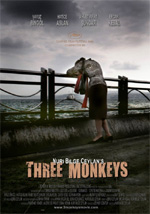
    Nobody who was paying attention at Cannes will be surprised that Turkey has selected Nuri Bilge Ceylan’s “Three Monkeys” as their entry in the foreign-language derby.

    The film was one of the critical sensations of the festival back in May and was many pundits’ pick for the Palme d’Or — it wound up with the Best Director award. Just to jog your memory, here’s a rave from the ever-reliable Jonathan Romney:

    An ostensibly routine noir-style psychological thriller vaults into the realms of high art in “Three Monkeys” … For the first time, Ceylan really involves himself in narrative complexity, spinning a subtly-twisty yarn with echoes of such crime writers as Simenon and James M. Cain … the smallest amount of trimming could well turn an exceptional film into a near-perfect one.

    I have been excited by this for some time. Ceylan’s 2002 film “Uzak (Distant)” is one of my favourite films of the decade so far, a work of visual wonder and immaculate storytelling grace. While wildly acclaimed, his follow-up, “Climates,” did less for me — it was exquisitely rendered, but on a narrative and thematic level, Ceylan seemed to me to be treading water. So I like the idea of this move into more genre-tinged territory. It’s one of my must-sees at the upcoming London Film Festival.

    I suspect the film may prove a little too resolutely arthouse for the frequently auteur-shy Foreign Film committee, but no matter. As when Mexico selected Carlos Reygadas’ bold, beautiful and thoroughly Academy-unfriendly “Silent Light” last year, I applaud Turkey for the bravery of their selection.

    (more…)

  • ‘Miracle at St. Anna’ added to London fest lineup

    Just, you know, FYI. Curiously, the addition of Spike Lee’s film means they’re bumping “Rachel Getting Married” into a slightly less high-profile slot. Weird, since we all know which film has more heat in the wake of the festivals.

    Though I’m not very excited about “Miracle,” any expansion of the programme is encouraging to see. Now if they could just wrangle “The Wrestler,” I’d be most grateful.

    Check out further programme modifications here.

  • ‘O’ Horten’ among further Foreign Film entries

    Leading a quick roundup of some recent entries in the Best Foreign Language Film race, Norway has unsuprisingly selected Bent Hamer’s absurdist comedy “O’ Horten” as their pony. The film garnered a number of followers at Cannes and Telluride, with Variety declaring it a “warm and gently humorous divertissement.”

    I was a big fan of Hamer’s previous films “Kitchen Stories” and “Factotum,” the latter a sadly underexposed Charles Bukowski adaptation that featured a career-best performance from Matt Dillon. I’m looking forward to “O’ Horten”; I wouldn’t be surprised to see it in the final shortlist, at least.

    Other titles joining the mix (that we haven’t already reported) include:

    “Taare Zameen Par,” from India, starring and directed by Aamir Khan, a 2001 nominee for “Lagaan”;

    “Last Stop 174,” from Brazil, a Toronto entry from Bruno Barreto, a 1997 nominee for the brilliant “Four Days in September”;

    (more…)