In Contention

Author: Guy Lodge

  • SHORT TAKE: “Two Lovers” (***)

    London Film Festival

    Bar the odd appearance of a text message or Ecstasy tablet, James Gray’s “Two Lovers,” a disarmingly modest tale of misdirected passion, could just as easily be set in 1958 as in the present day. This is both one of its charms and one of its failings.

    The premise is unfussy and somewhat familiar. Devastated after being left by his fiancee, shy Brooklynite Leonard (Joaquin Phoenix) moves back in with his concerned parents, who set him up with Sandra (Vinessa Shaw), the sweet, plain daughter of family friends. Leonard, however, is more attracted to his neighbor Michelle (Gwyneth Paltrow), a glamorous but deeply troubled young woman, hopelessly entangled with a married man. She initially adopts Leonard as a confidante, but with time, the relationship grows closer and more complicated.

    As has been noted by other critics, this is very much early Paddy Chayefsky territory, recalling works like “Marty” and “The Bachelor Party” in its low-fi drama and shabby middle-class milieu. This is still a New York where neighbors converse window-to-window across apartment block courtyards. The old-fashioned structure of this love triangle (boy finds himself caught between the homely good girl and the beautiful bad one) and the gentleness with which the relationships unfold are unusual in today’s cinematic landscape, where urban adult romance usually has to come packaged in the tropes of higher-concept romcom.

    However, amid the throwback trappings and finely etched sense of melancholy, the film doesn’t have all that much to say about contemporary relationships. Modern notions of gender and sexuality never really come into play; Michelle, in particular, seems remarkably limited in her outlook for a 21st century woman. The story is clearly intended to have a timeless quality — heartbreak never goes out of style, after all — but the downside of that is a complete inability to surprise, especially in the final act. (The tartly unhappy “happy ending,” however, is beautifully executed.)

    What “Two Lovers” does provide is a strong showcase for Phoenix in a rare everyman role. Paltrow’s Michelle, meanwhile, is equal parts goofy vulnerability and chilly allure. She hasn’t been this alert and unaffected on screen in quite some time.  But above all, the film represents a welcome change of pace for Gray. Despite its occasional obviousness, his storytelling here has more immediacy and conviction. Thanks in no small part to his actors, this is the first James Gray film that could be ascribed the adjective “moving,” even if you always know where it’s moving to.

  • LONDON: ‘Incendiary,’ ‘A Christmas Tale,’ ‘Blind Loves’

    I’ve been swamped with screenings at the London Film Festival, so between watching the films, maintaining some semblance of a day job and occasionally remembering to sleep and eat, my review updates have got a bit behind track.

    Hopefully, I can make up some of the distance tomorrow, when I have a lighter screening schedule, so expect a compilation of capsule reviews shortly, as well as some more in-depth evaluations of titles like Steve McQueen’s fascinating “Hunger.” In the meantime, here are some thoughts on three notable (if not necessarily successful) titles that made their London bow on the weekend:

    INCENDIARY (**)

    Steadily, and with very little fuss, Michelle Williams is growing into a remarkable young actress, as this, the first of three films she has in the festival, makes clear. It’s one thing to shine in a film as immaculately crafted as “Brokeback Mountain,” but it’s quite another to shoulder a project as problematic as Sharon Maguire’s “Incendiary.”

    A wildly confused, schizophrenic film based on a controversial novel, it stars Williams as a working-class London mother whose life is thrown into turmoil when her husband (a bomb disposal officer) and young son are killed in a (fictitious) terrorist attack on Arsenal football stadium. A low-key study of grieving ramps up into convoluted thriller territory when a journalist (Ewan McGregor), with whom the woman is having an affair, senses a cover-up and brings her into the investigation.

    (more…)

  • Too many independents?

    I know I’m just one of many who have been concerned about the future of independent film, following the closing in quick succession of Picturehouse and Warner Independent Pictures, and the incorporation of Paramount Vantage into the main body of the studio.

    Someone who has a different perspective on matters, however, is Miramax head Daniel Battsek. Screen Daily reports that, in his keynote speech at the London Film Finance Market, he expressed the view that the specialty field is, if anything, overcrowded:

    Asked whether Miramax had been helped by the recent closure of Warner Independent Pictures, Picturehouse and Paramount Vantage, he replied:

    “Not significantly…the sector of the business was definitely overcooked. There were too many players. There probably still are too many players … Even with the slight reduction of companies operating in this space, there are still too many movies being released. It is very, very difficult to get your voice heard.”

    (more…)

  • THE LISTS: Top 10 actors who need a nomination, stat!

    Kevin Bacon in Mystic RiverA couple of weeks ago, we invited you to submit ideas for our ‘The Lists’ feature, and, true to form, the suggestions came thick, fast and occasionally puzzling. (The Ten Best Bond Actors, for example, would require a couple of rather inventive entries. But hey, we like challenges.) As I was sifting through the suggestions ahead of this week’s edition, I noticed that a couple of you brought up the ever-popular issue of under-rewarded performers.

    No surprise there. It’s a subject that has endless mileage because our relationship with on-screen actors is so personal and idiosyncratic — everyone has their own list of thesps who we feel that tiny bit closer to than anyone else, who we’ll watch and defend even in their lowest career troughs, and whose lack of formal recognition from the likes of the Academy is something we take very, very personally. With actors, our devotion may not always be rational (as any of my friends who I’ve dragged with me to see the latest Jennifer Aniston disappointment can attest) but it is unwavering.

    So it is that Oscar blogs are littered with impassioned posts about the overdue and the unfairly snubbed, with Kate Winslet and Johnny Depp seemingly the current patron saints of the ‘how have they not won’ brigade. But today I want to celebrate the victims of an even more fundamental oversight: The Un-nominated.

    From Buster Keaton to Dirk Bogarde, from Marilyn Monroe to Katrin Cartlidge, the list of gifted and/or iconic actors whose careers ended without so much as a single Oscar nomination is distinguished, baffling and surprisingly long. The Academy tends to ensure that most great actors get at least one bite at the cherry, even if it’s not always for their best work. (The fact that Tim Roth’s Oscar resume begins and ends with “Rob Roy” is but one embarrassing example.)

    But every now and then, for whatever reason, a worthy name continues to slip through the cracks, despite consistently doing the right work in the right films with the right people. (Just ask Mia Farrow.) For the list below, I’ve gathered 10 men and women for whom it’s not too late. All are fine, actively working actors who should have at least one — usually more — Oscar nomination by now, but thus far, the Academy has turned a blind eye. Wake up, guys.

    Steve Buscemi in Ghost World10. Steve Buscemi
    Indiewood’s go-to guy for neurotic, bug-eyed eccentrics ever since his immortal protest against being Mr Pink in “Reservoir Dogs,” and the comic high point in many an overblown Hollywood product, Buscemi’s Oscar drought is proof how slack Oscar can be in rewarding character actors. Passed over for his hilarious work in Best Picture nominee “Fargo,” he seemed to be on course for his first nod in 2001, when he picked up a slew of awards for his turn as sweet, socially inept record collector Seymour in “Ghost World.” Sadly, the Academy had other ideas.

    (more…)

  • REVIEW: “The Class” (***1/2)

    Sony Pictures Classics\' The ClassLondon Film Festival

    “We could have ended up making a leftwing ‘Dead Poets Society,’” states star and co-writer François Bégaudeau in the press notes for “The Class,” Laurent Cantet’s exhilarating Palme d’Or winner ( and a surefire frontrunner for the Best Foreign Language Film Oscar). “That didn’t seem amusing to us at all.”

    Too right. Few settings are as simultaneously overworked and under-thought in cinema than the psychological (and occasionally physical) battleground of the high school classroom. From “The Blackboard Jungle” and “To Sir, With Love,” through to “Dangerous Minds” and that aforementioned Peter Weir schmaltzathon, the ‘inspirational teacher’ movie has become a sub-genre in itself, generally characterized by diagrammatic characterization and comfortable liberal homilies.

    Two years ago, Anna Boden and Ryan Fleck’s “Half Nelson,” about a dedicated history teacher who just happened to be a crack addict, introduced some darker notes to the formula, which has now been completely reconfigured by “The Class,” an astonishing, one-of-a-kind work that is effectively the last word in the classroom genre.

    Seamlessly meshing documentary-style observation with a loose fictional script from the Mike Leigh school of work-shopping, Cantet’s richly layered film is a return to the masterful form of “Human Resources” after the curious misstep that was “Heading South.” With an organic, unhurried sense of scene construction and a keen eye for behavioral detail, “The Class” emerges not only as a highly entertaining piece of one-off storytelling, but as an urgent (yet unforced) microcosm of the sociopolitical tensions running through modern-day France.

    (more…)

  • INTERVIEW: Eddie Marsan

    Eddie MarsanIt is somehow fitting that I meet Eddie Marsan not in the lounge of some swanky West End hotel or members’ club, but amid the worn wooden chairs and scuffed 1970s wallpaper of his local pub in the villagey West London suburb of Chiswick. For Marsan is not a movie star, but an actor — and that’s the way he likes it.

    “I have friends who are leading men, and they’re only ever allowed to play leading men of a certain type,” he says over a lunchtime drink once we’re settled into a corner booth. “But as a character actor, there’s a wider variety of projects available. On the big Hollywood films, all they care about is having their lead in place, so it’s actually easier for someone like me to slip in. And I’m happy to do so.”

    “Slipping in” is precisely what the 39-year-old London native has been doing to impressive effect over the last couple of years. After a long apprenticeship in British television, he can now boast having worked with such A-list auteurs as Martin Scorsese (2002’s “Gangs of New York”), Terrence Malick (2005’s “The New World”), Michael Mann (2006’s “Miami Vice”) and Alejandro Gonzalez Inarittu (2003’s “21 Grams”).

    2008, however, has been Marsan’s breakthrough year, with two major credits on opposite ends of the creative scale: an appearance opposite Will Smith in summer blockbuster “Hancock,” and now, a career-best performance in Mike Leigh’s serio-comedy “Happy-Go-Lucky,” which is garnering well-deserved awards buzz for the actor in the supporting race.

    (more…)

  • LONDON: ‘Tulpan,’ ‘La Belle Personne,’ ‘A Simple Heart’

    Continuing the discussion of yesterday’s London Film Festival offerings:

    Spearheaded by such titles as “The Class” and “Gomorrah,” the big story of world cinema this year appears to be the fusion of a documentary aesthetic with fictional storytelling, in many cases employing semi-improvised scripts and non-professional actors to create the spontaneous, slightly unnerving feel of watching life being lived. The latest in this cinematic line is “Tulpan” (***), a spare, sure-footed and thoroughly winning first foray into fiction film from documentarian Sergei Dvortsevoy.

    Since picking up the Un Certain Regard award at Cannes, the film has built up healthy buzz on the festival circuit, and was recently named Kazakhstan’s entry in the Best Foreign Language Film Oscar race. (Kazakhstan, incidentally, is seeking their second consecutive nomination in the category after the surprise success of 2007’s “Mongol” — for all the “Borat” associations, this country is no joke.)

    Part folk tale, part National Geographic-style environmental study, the film unfolds on the barren, windswept steppes of south Kazakhstan, a milieu familiar from 2003’s documentary “The Story of the Weeping Camel.” “Tulpan” actually resembles that film in more ways than one, employing a similarly  leisurely, observational shooting style with a keen eye for domestic ritual.

    The story, such as it is, concerns a socially awkward young man, Asa, who returns from naval service to settle on the deserted steppe with his sister and her sheep-herder husband. Determined to find a wife, he sets his sights on marrying Tulpan, the daughter of neighbouring herders, who remains an unseen presence in the film. However, as he fails to win her over, while his herding abilities prove inadequate, he comes to re-evaluate his goals.

    (more…)

  • WEEKLY WRAP: ‘Road,’ ‘Soloist’ out, ‘Frost’ stumbles, Ledger buzz

    Busy week, this. Here is how it went down:

    • In the biggest story of the week, the pool of contenders narrowed as “The Road” got bumped to 2009…

    • … followed, in quick succession, by “The Soloist.”

    • The London Film Festival kicked off with “Frost/Nixon,” which got off to a middling critical start. We were underwhelmed.

    • More London coverage here, here and here.

    • As Tech Support ran down the Visual Effects contenders, we got an angle on the tantalising FX for “The Curious Case of Benjamin Button.”

    • Heath Ledger’s buzz remains as solid as ever — word went round that a lead campaign was in the works, but they’re staying put in supporting. Good move.

    • More (and still more) foreign film contenders bring the field to a record tally of 67.

    • We responded to the bad “Changeling” buzz with a kinder view, but like everyone else, are looking ahead to “Gran Torino.”

    • And finally, we solve your sartorial dilemmas in time for Halloween.

  • LONDON: ‘Dean Spanley,’ ‘1234,’ ‘Goodbye Solo’

    Long day today, with some complicated scheduling: after a press screening of Atom Egoyan’s “Adoration” turned out to be full, I was presented with the choice of catching up with either “Miracle at St. Anna” or Kazakhstani Oscar submission “Tulpan.” I opted for the latter — well, it’s got more of a chance of getting an Oscar nomination than Spike Lee’s film, right?

    Anyway, as I have six films to discuss from today, for the sake of economy (and my own sleep requirements) I’ll look at three of them now, and deal with the rest early tomorrow. We’ll start with the English-language contingent.

    I missed tonight’s main attraction, Richard Eyre’s tepidly received “The Other Man.” However, Eyre’s film was preceded by another UK-set Toronto title, “Dean Spanley” (**), a sophomore effort from Kiwi helmer Toa Fraser, whose debut “No. 2” was, oddly, rather more ambitious than this amiable but over-extended skit.

    The ornate animated credit sequence and jaunty score announce upfront that the film demands high whimsy-tolerance levels from the audience. In the interest of full disclosure, mine are pretty low. Still, that doesn’t distract from the fact that the narrative is barely feature-film material. Set in London at the turn of the 20th century, the film focuses on the brittle relationship between mild-mannered gentleman Fisk (Jeremy Northam) and his batty, emotionally distant father (Peter O’Toole). Idly attending a lecture on reincarnation one afternoon, they encounter the enigmatic Dean Spanley (Sam Neill), whose own account of his imagined past life as a dog strikes an unexpected emotional chord with both father and son.

    (more…)

  • Foreign film watch: 67 entries, but how open is the race?

    Since my last update on the Best Foreign Language Film race, a further ten latecomers have entered films, bringing the number of entries to a record 67. (The full, updated list is here.)

    The new names in the derby are Afghanistan (“Opium War”), Albania (“The Sorrow of Mrs Schneider”), Azerbaijan (“Fortress”), Egypt (“The Island”), Georgia (“Mediator”), Kazakhstan (“Tulpan”), Latvia (“Defenders of Riga”), Lebanon (“Under the Bombs”), Ukraine (“The Illusion of Fear”) and, interestingly enough, the United Kingdom (“Hope Eternal”).

    The last-named title proclaims itself the first ever Welsh-African production, and features dialogue in seven languages — including Swahili and Afrikaans. Beyond that, I haven’t a clue what it is. Incidentally, I saw the Kazakhstani entry “Tulpan” this afternoon, and will review it in my next London Film Festival roundup.

    Reflecting on the race in his Notes on a Season column, Pete Hammond declares the race “wide open,” but I’m not sure I agree. After all, the new voting system — whereby the foreign film committee votes on six of the shortlisted titles, after which a smaller executive will add a further three — is specifically designed to ensure that the most acclaimed (and most expected) films make the cut.

    Under this system, you can bet a film like “4 Months, 3 Weeks and 2 Days” would have made the shortlist last year. Ditto “City of God” in 2002. Consequently, it seems safe to say that even if the general committee snubs high-profile critics’ favourites like “Gomorrah” or “Waltz With Bashir,” the executive committee will get them on the shortlist.

    (more…)

  • LONDON: ‘Three Blind Mice,’ ‘Nights and Weekends,’ ‘Lazy Days,’ ‘Kala’

    So today was the first full day of London Film Festival action, after last night’s premiere of “Frost/Nixon” kicked off proceedings. With a raft of fair-to-respectable reviews (as you know, I was firmly in the “meh” camp), Howard’s film didn’t land with quite the bang I’m sure the festival organisers were hoping for, but it was still a notable coup — and they have the comfort of more tried-and-tested titles to come.
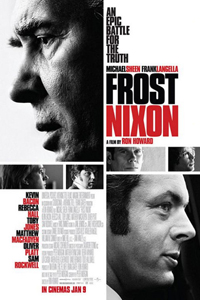
    Today’s fare was more low-profile, with the biggest event being the UK premiere of Spike Lee’s “Miracle at St. Anna,” which arrives at the festival as damaged goods. Perhaps tellingly, it wasn’t screened for the festival press, and after a long day of film-watching, I couldn’t muster up the energy for tonight’s screening. I’m not particularly bothered — I’ll catch it one of these days. (Here’s Kris’ withering review, to jog your memory.)

    As I’m restricted by time (not to mention a hellish head cold), I can’t offer full reviews on everything, but what follows are my impressions of four titles that screened earlier today.

    In my view, the best film of the day (and likely to remain one of the best of the festival) was, easily, writer-director-actor Matthew Newton’s “Three Blind Mice” (***1/2), a baldly funny, ultimately devastating study of male insecurity from Down Under that I already highlighted in my festival preview.

    The film follows three naval officers as they embark on a boozy, debauched night of shore leave before shipping out to Iraq the next morning. Randy alpha male Harry (Newton) is the leader of the night’s entertainment, ordering prostitutes and drinks with equal abandon; more reluctant are strait-laced Dean (Toby Schmitz), seeking time alone with his fiancee, and emotionally frail Sam (Ewen Leslie), whose secret escape plans are sparked by an encounter with free-spirited waitress Emma (Gracie Otto).

    (more…)

  • REVIEW: “Frost/Nixon” (**)

    Universal Pictures\' Frost/NixonLondon Film Festival

    For director Ron Howard and screenwriter Peter Morgan, “Frost/Nixon” was always going to be a tricky beast to handle. A film adaptation of Morgan’s own stage play that was itself very much about the powers of television, the relationship between text, medium and audience has shifted in ways I’m not sure the film’s makers have fully accounted for.

    It is one thing to portray a momentous televisual event on the stage, where the intimacy and crackle of live human interaction allows for a very different, and rather more immediate, experience of the proceedings. It is quite another to recreate said event for  television’s closer cousin — with the legendary interviews between David Frost and Richard Nixon that form the spine of the narrative widely available, the film has to recreate the spontaneous feel of history in progress, and in doing so, reveal something in a 30-year-old document that we haven’t already seen.

    It’s a tall order, and with Morgan’s script hewing closely to its source, Howard responds to it in the manner he knows best: with the most prosaic of visual aesthetics to hand, a doggedly linear approach to storytelling and the spotlight thrust squarely on a reliable pair of actors. The approach only gets him so far.  Howard’s hands-off direction makes for an oddly bloodless viewing experience, with a lot of talk standing in for any fresh perspective (or frankly, much of a perspective at all) on the events.

    To be honest, we could have seen this coming. It’s difficult to think of a director less-suited to take on the intricate, minutiae-obsessed writing of Peter Morgan than Howard — a director who, even in his finest films, has always been interested in the big picture first, with characters serving history rather than the other way round.

    (more…)

  • London Film Festival: six to watch

    So the 52nd annual London Film Festival begins tomorrow, bringing with it a feast of cinema cherry-picked from the rest of the fests, with a couple of new titles thrown into the mix too.
    As promised, I will be keeping you updated with proceedings, starting with tomorrow’s world premiere of “Frost/Nixon.” I’m seeing the film bright and early in the morning, and will have a review for you before the day is out.

    As I’ve said before, this year’s London lineup is a little more low-key than usual, but that’s the kind of year it’s been for movies. All the major festivals have struggled a bit this year, but London at least has the advantage of filtering their best bits, meaning plenty of hot films will appear, from “Slumdog Millionaire” to “Che.”

    But those tickets are hard to come by, and when one moves beyond the big, sexy drawcards, the waters get a bit murkier. With almost 200 films (not counting shorts) screening from every corner of the globe, there’s a lot to explore. I’ve been immersed in festival press screenings for the last fortnight, and have still seen only a fraction of what the festival has to offer.

    In the interest of providing alternatives then, let me offer up a handful of lesser-hyped titles that are really worth catching. More detailed reviews will be provided as the festival progresses, but for now:

    1234 (dir. Giles Borg)

    Lots of buzz circling around this under-the-radar crowdpleaser. A sweet-natured character comedy (with an ace soundtrack) about a lovelorn geek struggling to start up an indie band in boho East London, “1234” had the most packed press screening of the festival so far, and is bound to be a Brit hit. Ditch “Nick and Norah,” and catch this instead.

    (more…)

  • South Africa among the foreign-language stragglers

    Despite the deadline for submissions for the Best Foreign Language Film race ostensibly being October 1st, a further four dawdling countries have been added to the list of contenders that I discussed recently. They are Thailand, Lithuania, Uruguay and my home country, South Africa. I’m guessing none of them will really trouble the race, but as we know, this category moves in mysterious ways.

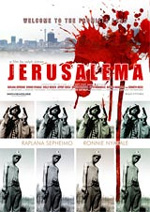
    Great South African films are few and far between — and none of them have yet come within touching distance of an Oscar. No “Tsotsi” fan am I. But in picking Ralph Ziman’s “Jerusalema” this year, the South African selectors are clearly hoping it will strike a similar chord to Gavid Hood’s 2005 Oscar-winner — like that film, it’s another Johannesburg-set crime story, though evidently a less sentimental one.

    Following its appearance at Berlin in February, Variety was moderately impressed:

    A propulsive, glossy, Johannesburg-set actioner charting the rise of an ambitious ne’er-do-well a la “Scarface,” “City of God” and virtually every other rags-to-riches-to-ruins underworld epic, “Jerusalema” overcomes derivative genre cliches and daunting length to punch home its crime-doesn’t-pay message on chutzpah alone.

    To offer a local perspective, our South African friend Nick Plowman has some reservations, but ultimately gives it the thumbs-up:

    “Jerusalema” is a first rate thriller, bursting at the seams with energy. Its vivid ambition is unlike anything I have seen come out of South Africa in ages … It’s too long at times, it drags here and there, (but) it’s gritty, real and ambiguous.

    (more…)

  • U.S. critics wild for ‘Happy’

    Wow. I was expecting a warm Stateside reception for Mike Leigh’s “Happy-Go-Lucky,” but even so, this is exceptional. For those who place stock in such things, the film’s Metacritic score is sitting at 82, but more importantly, some top critics have fallen hard for this one.

    If the film’s awards hopes seemed to be slipping oh-so-slightly following a respectable but somewhat muted festival showing last month, these reviews should give it a second wind. Sally Hawkins, in particular, should gain traction in a crowded Best Actress field with amazing notices like this one from Stephanie Zacharek:

    Poppy’s cheerfulness isn’t a shield against reality … And that’s where both the boldness and the delicacy of Sally Hawkins’ performance come in. This is the finest performance of the year — though it’s only October, I can’t believe I’ll see anything better … Here, Leigh has given her the challenge of a lifetime — the kind of role an actress can play at just one point in her life — and she more than meets it.

    Zacharek is no less ecstatic on the film itself:

    It takes more than ambition, and more than money, to make an intimate masterpiece like Mike Leigh’s “Happy-Go-Lucky,” a picture so seemingly light that it might be hours (or even days) before you realize how deep and rich it really is … Leigh and his actors work mysterious magic in “Happy-Go-Lucky.” This is a movie about hitting the groove of everyday life and, nearly miraculously, getting music out of it.

    (more…)

  • WEEKLY WRAP: Rudin bails, Brolin buzz, original scores

    And this, as they say, is the week that was:

    • In the biggest news of the week, Scott Rudin has washed his hands of the whole “The Reader” fiasco by taking his name off the film. What now?

    • Lots happening on the music front this week, with Universal offering a taste of the scores for “Changeling” and “Frost/Nixon,” while elsewhere, the surprisingly rich score for “W.” was revealed.

    • Carrying on the musical theme, we nabbed an interview with “Appaloosa” composer Jeff Beal.

    • This week’s Off the Carpet column contemplated the marked social currency of this year’s contenders.

    • Following its NYFF screening, “Changeling” got a rough ride from the blogosphere.

    • Josh Brolin has been all over the place this week, speaking out about that Shreveport incident, while his “W.” performance gathers positive buzz. Meanwhile, rumor has it that he’s down for “Jonah Hex.”

    • EW looks to revisit history (i.e. gloat over the Academy’s mistakes) with its Oscar revote.

    • A look at the sometimes troubled relationship between Hollywood and Philip Roth.

    • Continuing Tech Support’s preview of the crafts categories, this week was the costume designers’ turn.

    • And finally, is Alfred Hitchcock overrated? Join the debate here.

  • More buzz for Brolin

    The mixed notices for Oliver Stone’s “W.” — some of which seem to be simultaneously admiring and bewildered — make it quite clear that the film isn’t going to be a player in the top categories. But we pretty much knew that all along.

    Josh Brolin’s performance, however, is another story altogether. After the stunning breakthrough that he’s had in the past year, playing an incumbent president — and a widely-loathed one at that — in a film by an off-the-boil director might not have seemed the safest career move.

    But the gamble appears to have paid off: whatever the ultimate fate of the film, Brolin’s interpretation of Bush has been widely hailed as a courageous and accomplished addition to an increasingly interesting filmography. Naturally, Oscar talk is swirling, and Screen International’s review minces no words on the matter:

    A wonderfully brash and fearless performance … If the film itself fails to figure in the year-end awards shortlists, Brolin must surely be considered a likely best actor nominee. Wholly immersing himself in the part, he doesn’t imitate the president so much as breathe human complexity into him. Rudderless and restless as a young man, Brolin nonetheless plays him as a likeable enough fellow, a harmless jock, attractive to women and tortured by his father’s expectations. As a president, Brolin plays him as a man of some intelligence, even if his arrogance and machismo are on full ugly display.

    (more…)

  • ‘Harvey’ on the radar

    Some of our keen-eyed readers may have noticed my review on these pages of the Dustin Hoffman-Emma Thompson starrer, “Last Chance Harvey,” earlier today. The film, another feather in the cap for hard-working new outfit Overture Films, is due for a late December release, just in time for viable awards consideration.

    We’ve temporarily taken the review down for practical reasons, but it will be re-posted soon enough. For now, I’m at liberty to tell you that it’s a charming, understated sleeper whose full-wattage star power makes it a genuine prospect in the acting categories. Assuming the film opts for the comedy/musical route at the Golden Globes, Hoffman and Thompson seem virtual shoo-ins for nominations, while Hoffman could really make a run in the Oscar race for Best Actor — this is his most substantial, endearing portrayal in some time.

    We’ll have more on the film soon. Keep an eye out.