In Contention

Author: Guy Lodge

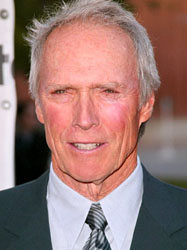
  • Eastwood tells Lee to ‘shut his face’

    After a terse response at Cannes to Spike Lee’s accusation that “Flags of Our Fathers” sidelined African-Americans’ contribution to WWII, Clint Eastwood has spoken at greater length about the matter. In a substantial interview in today’s Guardian, he makes his feelings toward Lee quite clear:

    “He was complaining when I did Bird. Why would a white guy be doing that? I was the only guy who made it, that’s why. He could have gone ahead and made it. Instead he was making something else.” As for Flags of Our Fathers, he says, yes, there was a small detachment of black troops on Iwo Jima as a part of a munitions company, “but they didn’t raise the flag. The story is Flags of Our Fathers, the famous flag-raising picture, and they didn’t do that. If I go ahead and put an African-American actor in there, people’d go, ‘This guy’s lost his mind.’ I mean, it’s not accurate.”

    In what appears to be a pre-emptive strike, he defends his new film “Changeling” against similar accusations, noting that it takes place in Los Angeles before it had a significant black population:

    “What are you going to do, you gonna tell a fuckin’ story about that? Make it look like a commercial for an equal opportunity player? I’m not in that game. I’m playing it the way I read it historically, and that’s the way it is. When I do a picture and it’s 90% black, like Bird, I use 90% black people … A guy like him should shut his face.”

    Well, I wouldn’t expect the Clintster to mince his words, but still… wow. It will be interesting to see if Lee has (another) rebuttal prepared. For one thing, one wonders what makes of Eastwood taking on Nelson Mandela in “Human Factor.” (Eastwood has a quip prepared already: “I’m not going to make Nelson Mandela a white guy.”)

    Lots of good stuff in the interview besides, particularly for fans of the Dirty Harry films. Check it out here. 
  • And the pointless remake of the day is…

    … “My Fair Lady.” Variety reports that Columbia is putting together a new version of the classic Lerner & Lowe musical, George Cukor’s 1964 filmization of which copped the 1964 Best Picture Oscar. 

    The studio is calling it an “update,” something of a misnomer considering it will in fact retain the 1912 London milieu of the original. Their reasoning for this move escapes me, but Columbia co-president Doug Belgrad claims:

    “This update will preserve the magic of the musical while fleshing out the characters and bringing 1912 London to life in an authentic and exciting way.”

    I thought we already had the various interpretations of Shaw’s “Pygmalion” (not least Anthony Asquith’s still-surprisingly-fresh 1938 film) for character depth, but apparently we need another. London theatre impresario Cameron Mackintosh is also on board, and his justification for the project strikes me as even more tenuous than Belgrad’s. Apparently the story of Eliza Doolittle’s metamorphosis from Cockney guttersnipe to society belle “couldn’t be more timely in a contemporary world obsessed with overnight celebrity.” To which I can only ask, if the story is so relevant and contemporary, why not really update it?

    (more…)

  • Eastwood finds his ‘Human Factor’

    Does Clint Eastwood ever sleep? With “Changeling” and “Gran Torino” set to keep his profile high in 2008, Variety reports that he’ll begin shooting his next film, “Human Factor,” in South Africa early next year.

    The project, based on John Carlin’s upcoming book “Playing the Enemy: Nelson Mandela and the Game That Made a Nation,” is a study of South Africa’s landmark 1995 home-turf victory in the Rugby World Cup; an event that symbolically consolidated a new era of hope for the country after its first democratic election in 1994. Key to the proceedings was recently-elected president Nelson Mandela, whose wholehearted endorsement of the Springbok rugby team went a long way towards breaking down racial barriers in the post-apartheid state.

    Morgan Freeman (did you really expect anyone else?) was drafted in to play Mandela some time ago. Now Matt Damon, after a long period of speculation, has finally been confirmed to play Francois Pienaar, the captain of the Springbok team. (The none-too-pretty Pienaar should be flattered with that casting – the two look about as alike as… oh, say, Nelson Mandela and Morgan Freeman. But I digress.)

    So far, so Hollywood. But as a South African myself, I must admit to having mixed feelings about the whole enterprise. As someone who remembers exactly where he was on the 24th of June 1995, when the Springboks squeaked past New Zealand 15-12 to claim the trophy, part of me is stunned and a little thrilled that the day that made such an impression on me, as a 12 year-old kid in Johannesburg, would capture the imagination of otherwise disinterested Hollywood execs. And if anyone in Tinseltown can handle the material without letting it slip into gloopy underdog sports-drama treacle, it’s probably latter-day Eastwood.

    (more…)

  • Two things I like about ‘Indiana Jones and the Kingdom of the Crystal Skull’

    1) Cate Blanchett as Irina Spalko

    If only because it serves to remind us, after her criminally overlooked turn in “Bandits,” what an undervalued comedienne she is. (Don’t believe me about “Bandits?” Watch her first scene, where she’s getting down to Bonnie Tyler in the kitchen as she prepares a casserole, and ask yourself how many other actors could make so much out of so little scripted material.)

    Back to “Indy 4,” she’s the only actor in the whole cast who seems to have judged the right comic tone for her character. It may be bizarre, wigged-out camp, in her case, but that’s what the script tells her to do, and damn it if she doesn’t have fun channelling a thousand hokey “Ry-aw-shun” villainnesses from Hollywood’s B-movie back catalogue. After “Elizabeth: The Golden Age,” she seems to have established a nice line in (not quite) saving po-faced, overboiled schlock with stylish, balls-out burlesque. And all this from an actor equally capable of rendering a character’s crucial moral decision with a simple, silent glance. (If you haven’t seen “Heaven,” do so.) Mr Foote recently made a good case for Sean Penn as the greatest actor of this generation; my vote would go to Blanchett.

    2) Um… uh… no, actually there was just one thing

    I side with Kris on this one. The film’s an utter wash.  

  • No surprises as Cannes jury surprises

    Well, I missed that one badly. As is so often the case, the Cannes jury threw a curveball, handing their top prize to a late-breaking film that had generated very few column inches. Admittedly, I should have paid more attention to “The Class,” French auteur Laurent Cantet’s school-based docudrama.

    I was a huge fan of Cantet’s 2001 film “Time Out,” an ingeniously constructed character study, and while his 2005 follow-up “Heading South” was a major disappointment, Cantet’s name on the competition list should have rung more bells – not least when the very warm reviews started rolling in yesterday. Variety called it “one of the most substantive and purely entertaining movies in competition at Cannes this year.”

    Congratulations to Cantet then, and to France, scoring their first home victory at Cannes since “Under Satan’s Sun” triumphed in 1987. The other awards threw up fewer surprises, with Benicio Del Toro taking Best Actor as I, and many others, predicted. Meanwhile, “Three Monkeys” and the Italian one-two punch of “Gomorra” and “Il Divo” all took home major silverware, if not necessarily in the categories that I anticipated.

    I must admit to being shocked that the widely beloved “Waltz With Bashir” went home empty-handed; an omission for which Sean Penn and fellow juror Natalie Portman seemed almost apologetic. No matter: Ari Folman’s animated war documentary leaves the festival with a dedicated following, and I’m certainly putting it on my Best Animated Feature shortlist.

    The full list of competition winners follows:

    Palme d’Or: “The Class”

    Grand Jury Prize: “Gomorra”

    (more…)

  • Cannes: uneducated guesses

    Well, it’s almost over. The competition films have all been screened, picked over and digested by the world’s critics, and now all that’s left to do is that finicky business of handing out some prizes. Sean Penn and his formidable jury (Marjane Satrapi, Alfonso Cuaron and Natalie Portman are just some of those involved) will be deliberating over a crop of films that has generally been deemed a solid selection, with few outright “Brown Bunny”-style disasters.

    (more…)

  • The story so far

    The Times of London has a very handy roundup of the highlights of the Cannes Film Festival thus far, echoing the widespread acclaim for such titles as “Gomorra,” “Vicky Cristina Barcelona,” “Waltz With Bashir,” and the long-awaited new film from Terence Davies, “Of Time and the City” – which, while out of competition, has probably been the festival’s most universally adored film so far. They also share my suspicion that Nuri Bilge Ceylan’s “Three Monkeys” may nab the Palme d’Or over the more extravagantly hyped contenders.

  • A bit of perspective

    A day after its Cannes premiere, more “Changeling” reviews are coming through, and while the general feeling towards the film is still positive, some high-profile dissenters are emerging. The inestimable Manohla Dargis at The New York Times, usually an Eastwood die-hard, is surprisingly agnostic on the film, particularly with regard to Jolie’s performance:

    Despite Ms. Jolie’s hard work and Mr. Eastwood’s scrupulous attention, the difficult, fairly one-dimensional character fails to take hold. For much of the film, Christine weeps and pleads, begging the police for help and fending off disbelievers. She clings to hope, the problem being that Ms. Jolie, whose off-screen role as Angelina Jolie is so much more vivid and all-consuming than the parts she now plays on screen, this one included, does not come across as a clinger or a whiner or a pleader or even much of a waterworks. Like Joan Crawford, Ms. Jolie seems capable now of only playing variations on herself, which is why she was more persuasive holding back her tears as a steely Mariane Pearl in “A Mighty Heart.”

    On this side of the ocean, meanwhile, The Guardian’s Peter Bradshaw is distinctly underwhelmed, declaring the film “long, self-conscious and cumbersome.” He goes on to say:

    The film’s heart is very obviously in the right place, but it is trying to be so many things at once: family drama, cop-corruption thriller, child-snatcher nightmare – and, for Jolie, another flight over the cuckoo’s nest, only this time with far more queenly dignity than in Girl, Interrupted. Accompanied with a syrupy musical score to cushion the dramatic blows (and to ensure that the audience isn’t too horrified or upset too early on) this over-long film fails to convey – is in fact afraid of conveying – the real horror of child loss.

    Finally, Jeff Wells has posted his verdict, and while he joins the yea-sayers, he ultimately deems it “not a great film, but a very fine one.”

    Make no mistake, “Changeling” still sounds like a helluva contender, but it’s useful to get some balance of opinion. The industry adores Eastwood, which explains the trade papers’ lyrical reviews; but that doesn’t always make for critical consensus. With another 2008 release still on the cards for Clint, it anyone’s guess how the man’s awards season will play out. He sure keeps the game interesting.    

    As for the whole title issue, there still appears to be confusion – even Eastwood doesn’t know what it’s called. I say they should take a cue from Awards Daily, retitle it “The Changelina,” and stick with it.

  • Cannes update: Eastwood scores…again

    Well, I’m pleased to report that my initial doubts about Clint Eastwood’s latest, “Changeling,” were obviously unfounded.

    His Angelina Jolie-starrer, based on a true story about a child’s kidnapping in 1920s Los Angeles, premiered this morning at Cannes, and, judging from the reviews so far, the man’s impeccable recent run of form hasn’t hit a snag yet. (Incidentally, both Jeff Wells and Screen Daily report that the film has been retitled “The Exchange,” a far less intriguing title, in my opinion. However, some trade papers are still going by the original title in the reviews, so I’m sticking with that for now.)

    Clearly, however, the film’s a stunner by any name. Todd McCarthy’s rave for Variety puts it thus:

    A thematic companion piece to “Mystic River,” but more complex and far-reaching, “Changeling” impressively continues Clint Eastwood’s great run of ambitious late-career pictures … Graced by a top-notch performance from Angelina Jolie, the Universal release looks poised to do some serious business upon tentatively scheduled opening late in the year.

    McCarthy also puts to rest the rumours that film was a foray into hysterical genre territory, which I admit had me concerned for its awards prospects:

    Fears that the story is now destined to veer off into “The Snake Pit” or, given Jolie’s presence, “Girl, Interrupted” looney-bin horrors prove largely unfounded, despite a couple of brief electroshock scenes. Rather, this is where the picture really spreads its wings, as ramifications of this tragic but unexceptional case seep through the police department, the legal system, the medical establishment and City Hall in entirely unexpected ways.

    The word on the other side of the Atlantic is just as hot. In his Screen Daily review, Mike Goodridge minces no words abouts the film’s quality or its prospects:

    Beautifully produced and guided by Eastwood’s elegant, unostentatious hand, it also boasts a career-best performance by Angelina Jolie who has never been this compelling. Like “Mystic River” in 2003, it should go all the way from the Palais to the Academy Awards next March.

    (more…)

  • Cannes update: Italy’s ‘Gomorra’ wows ’em

    (EDITOR’S NOTE: New Cannes poll in the sidebar as of this morning, FYI.)

    We’re at the halfway point now, and this year’s Cannes Festival seems to have been a pretty staid affair so far. With the dust settled, “Blindness” appears to have been labelled an honourable disappointment. Meanwhile, some of the big arthouse names in the competition are widely agreed to be treading water.

    Walter Salles’ “Linha de Passe” appears to be worthwhile, but hasn’t generated the critical heat of “Central Station” or “The Motorcycle Diaries.” “Lorna’s Silence,” the latest from Belgium’s hitherto unimpeachable Dardenne brothers, here aiming for a record third Palme d’Or, has garnered respectable notices (and an outright pan from Jeff Wells), but doesn’t seem to be up to the standard of “Rosetta” or “The Son.”

    There have been some international successes. “Three Monkeys,” the latest from Turkey’s great Nuri Bilge Ceylan, has gathered predictably excellent reviews, of which The Hollywood Reporter’s take (a “brilliant, gorgeously visual film”) is typical. If I were to bet on a Palme d’Or winner (always a silly thing to do), this would be it – though I fear this will have as much trouble crossing over to the US and UK markets as Ceylan’s previous work.

    One of the real breakout films of the festival so far, however, appears to be Italian director Matteo Garrone’s “Gomorra,” an intricate documentary-style look at the Camorra crime empire of Naples, based on a bestselling expose by Roberto Saviano. Amid generally enthusiastic reviews, The Hollywood Reporter states:

    Powerful, stripped to its very essence and featuring a spectacular cast (of mostly non-professionals), Matteo Garrone’s sixth feature film “Gomorra” goes beyond Tarantino’s gratuitous violence and even Scorsese’s Hollywood sensibility in depicting the everyday reality of organized crime’s foot soldiers.

    In his always-worthwhile Cannes roundup, The Guardian’s Peter Bradshaw concurs:

    The competition films have been more than a little upstaged by Matteo Garrone’s Gomorra, a gut-wrenchingly brutal film about notorious Naples gangsters, the Camorra. The title’s twist implies the whole area is sunk in a kind of self-created hell, almost literally, since the mobsters are responsible for unsafe nuclear dumping. Perhaps it tells us nothing we don’t already know about gangsters, but there’s no denying the film’s power.

    I confess I am not very familiar with Garrone’s work, but I, for one, am intrigued by this. It will be interesting to see how this one plays out. From the sounds of things, if the film finds the right buyer, there could be “City of God”-style crossover potential here. Or nothing. You never can tell at Cannes.

  • Whew…

    I’m sure I’m not the only one who heaved a sigh of relief after reading some of the reviews of Woody Allen’s latest, “Vicky Cristina Barcelona,” which recently premiered out of competition at Cannes. The consensus appears to be that the film, while unlikely to enter the canon of his greatest, is an attractive, frothy entertainment.

    In his Variety review, Todd McCarthy puts it thus:

    “Vicky Cristina Barcelona” is a sexy, funny divertissement that passes as enjoyably as an idle summer’s afternoon in the titular Spanish city … pic offers potent romantic fantasy elements for men and women and a cast that should produce the best commercial returns for a Woody Allen film since “Match Point.”

    McCarthy is particularly enamoured of Penelope Cruz’s performance, deeming her to be “dynamite” in the film, and extending the Anna Magnani comparisons that we first started hearing when “Volver” emerged two years ago.

    Happily, The Hollywood Reporter’s Kirk Honeycutt is equally enthusiastic about the film, and is most impressed by its Spanish stars:

    The film belongs to Bardem and Cruz. This is a Spanish version of “Private Lives,” a couple that cannot live apart or together, whose love will always burst into fiery combat. Their scenes are some of the funniest Allen has ever put on film, and the culmination of this love/hate tango is not to be missed.

    I had a good feeling about this project from the get-go, but then I admit I’m one of those die-hard Allen supporters who maintains that “Melinda and Melinda” is a misunderstood almost-great, and tried his damnedest to find something – anything – to like about “Hollywood Ending.” So I’m thrilled to learn that this is likely to be one of those Allen treats I can enjoy guilt-free, without having to construct a defence case for it afterwards.

    As for awards prospects, after those notices, I’m going to go ahead and put Cruz on the lower rungs of my ladder of Best Supporting Actress contenders. Woody’s films have long been good to women in this category, and while the competition looks crowded this year, a slight but appealing performance from a well-liked star is often the one left standing when the bigger guns misfire. As for Allen himself, any film of his that is generally given at least a B+ by the critics is a contender for a Best Original Screenplay nomination, so I’m going to plunge in and put him on my list. What can I say? The sun’s out (at last) in London, one of my favourite auteurs appears to be back on track, and I’m in a generous mood.

  • Day-Lewis in line for ‘Nine?’

    OK, so the dream cast potentially just got dreamier.

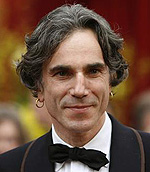
    Nothing has been confirmed yet, but Variety reports that none other than Daniel Day-Lewis (one almost feels that should be preceded with a Sir, no?) is in talks to play the lead in Rob Marshall’s film version of “Nine” — the Broadway show that is in turn based on Fellini’s “8½,” and is arguably one of the artiest musicals out there.

    If he boards, Day-Lewis will be joining a cast already sagging under the weight of its riches: Marion Cotillard, Penelope Cruz, Judi Dench, Nicole Kidman and (wow) Sophia Loren.

    It is a fascinating casting prospect for a number of reasons, and not just because we know so little of Day-Lewis’ abilities as a song-and-dance man. (And for those unfamiliar with the show, it’s a full-on, virtuoso musical role — no getting away here with shuffling and speak-crooning, a la Rex Harrison.) Of course, it wouldn’t surprise me to learn that a great voice and great moves are merely two other weapons in the man’s well-stocked arsenal of actorly gifts; given how selective Day-Lewis is with his projects, I sense he wouldn’t take the part if he wasn’t sure he could pull it off.

    (more…)

  • ‘Blindness’ misses the bullseye, say critics

    Well, in my last post, I said that “Blindness,” with its immaculate credentials, could hardly miss – which of course was issuing an invitation for it to do just that. The latest from red-hot director Fernando Meirelles opened this year’s Cannes Film Festival a few hours ago, to frustratingly mixed reviews.

    In his review, Kirk Honeycutt of The Hollywood Reporter calls the film both “provocative” and “predictable cinema,” and while he does admire Meirelles’ craft, he ultimately finds the film emotionally lacking:

    This philosophical coolness is what most undermines the emotional response to Meirelles’ film. His fictional calculations are all so precise and a tone of deadly seriousness swamps the grim action … Removing a fable from the comfort of the printed page to the photo-reality of film can sometimes lead to its own kind of blindness.

    Variety’s Justin Chang is similarly lukewarm on the film, bemoaning its “diminished impact and excess of stylish tics,” and is less impressed than Honeycutt is by the film’s technical qualities:

    Meirelles adopts a cooler but, in its own way, no less fussy aesthetic. He often floods the screen in luminous white to mimic the sensation of blindness, at other times bathing his characters in the stuff so they appear to be, in one’s words, “swimming in milk.” This deliberately artificial effect gives the film a stagy, self-conscious air.

    However, it’s not all doom and gloom by any means. On the other side of the Atlantic, Peter Bradshaw of The Guardian offers an unqualified rave of the film:

    Blindness is a drum-tight drama, with superb, hallucinatory images of urban collapse. It has a real coil of horror at its centre, yet lightened with finely judged touches of gentleness and even humour. It reminded me of George A Romero’s Night of the Living Dead, John Wyndham’s Day of the Triffids and Peter Shaffer’s absurdist stage-play Black Comedy, showing humanity groping in the darkness. This is bold and masterly film-making from Meirelles: popular entertainment with challenging ideas.

    (more…)

  • Cannes arrivals: ‘Blindness’ set to bow

    Wow, that seemed to sneak up on us quickly. The 61st annual Cannes Film Festival kicks off today, with Fernando Meirelles’ hotly anticipated “Blindness” opening the proceedings tonight.

    Pete Hammond at The Envelope has a neat round-up of the Cannes arrivals, with an emphasis on the Oscar prospects of the American films in competition. (Although, as I mentioned in an earlier post, the world cinema lineup this year is equally, if not more, mouthwatering.)

    Hammond does take care to point out to the awards-watchers out there that Cannes glory and Oscar victory don’t often go hand in hand, however:

    This year, particularly with the talent involved, there is lots of speculation about Oscar potential for new Cannes entries from past academy nominees and winners like Fernando Meirelles, Atom Egoyan, Charlie Kaufman, Walter Salles, Steven Soderbergh, Clint Eastwood, Woody Allen and others, although the sad fact remains that since it won, no film other than “Marty” has gone on to win the best picture Oscar after also nabbing the Palme d’Or — and that was in 1955!

    Several Palme D’Or victors over the years, like “Friendly Persuasion,” “MASH,” “The Conversation,” “Taxi Driver,” “Apocalypse Now,” “All That Jazz,” “The Piano” and “Pulp Fiction” did go on to best picture nominations.

    Roman Polanski’s 2002 Cannes winner “The Pianist” probably came closest, taking the academy’s director, actor and screenplay awards before what we imagine had to be the narrowest of losses to “Chicago” in the big category.

    All true, of course, but still – it’s been a while since the Cannes slate featured this many Oscar darlings in the official competition. And they don’t come any more Academy-beloved than the venerable Clint Eastwood, whose “Changeling,” starring Angelina Jolie, is one of the Cannes titles generating the most buzz from the awards-geek set. I remain less excited about the film than others, but one cannot overestimate the amount of industry goodwill out there towards Eastwood (and indeed Jolie, whom many feel was unfairly snubbed by the Academy for “A Mighty Heart” – though I thought that was one of their smarter calls, personally.)

    (more…)

  • Kidman takes on Dusty: could Oscar beckon?

    Unwritten rule of Oscar strategy #476: playing a troubled popular music icon will probably net you at least a nomination. Just ask Marion Cotillard, Reese Witherspoon, Joaquin Phoenix, Jamie Foxx, Angela Bassett, Laurence Fishburne, Jessica Lange, Sissy Spacek, Gary Busey, Diana Ross, Susan Hayward… the list goes on.

    It’s not hard to figure out why. Academy voters have long had a bias towards biopics, somehow believing that interpreting a real-life figure, whose physicality, voice and mannerisms are already established, is more of a challenge than creating a fictitious character from scratch. Playing a real-life entertainer only ups the ante, allowing the actor to build multiple performance personae within the character, as well to show off any singing/dancing/playing skills we didn’t know they possessed. (Singing being optional, of course, as Cotillard and Foxx can attest.) Throw in the mental breakdowns and substance abuse problems that generally go with the territory, and you have Academy Award bait of the highest order.

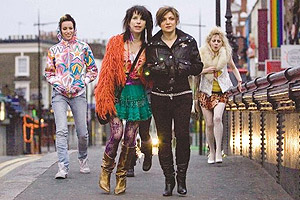
    So the news that Nicole Kidman, arguably the foremost leading lady of her generation, is set to produce and play in a biopic of the late Dusty Springfield, inarguably the greatest white soul singer of all time, can’t fail to prompt early Oscar speculation.

    Even laying aside Springfield’s astonishing musical legacy for a moment, the woman is a fascinating character: born and raised in London, she overcame crippling self-confidence issues to top the U.S. charts in the 1960s, confusing the barriers between what was perceived as “white” and “black” music. As her hold on the charts loosened, however, she descended into a reclusive lifestyle of alcoholism, drug abuse and self-harm, all the while conflicted between her emerging bisexuality and her Catholic faith. Finally clean, she made something of a comeback in the late 80s, before being diagnosed with breast cancer, finally losing the battle in 1999. All this, and with a British accent to boot. Like I said, baity stuff.

    (more…)

  • REVIEW: “Happy-Go-Lucky” (***)

    The common line in the British press so far on “Happy-Go-Lucky,” Mike Leigh’s alternately fascinating and frustrating new film, is that it’s a departure for him — an exuberant comic revelation following the spare, precise despair of “All or Nothing” and “Vera Drake.” How quickly we forget.

    Only nine years ago, Leigh gave us the similarly punctuated “Topsy-Turvy,” a period romp that in some moments rivalled “Shakespeare in Love” for broad music-hall humour. Even his biggest crossover hit, the 1996 Best Picture Oscar nominee “Secrets & Lies,” had a much more explicit comic tone than many seem to recall.

    However, the most accurate precedents for “Happy-Go-Lucky” date farther back still: the film is not so much a new direction for Leigh as a throwback to the gentle character-oriented comedy and wispy, free-form narrative of his breakthrough features “High Hopes” and “Life is Sweet.” It’s a welcome move. As immaculately crafted and performed as “Vera Drake” was, it didn’t, for me, play to Leigh’s strengths as a writer: his witty ear for vernacular language and his preoccupation with the tensions and absurdities inherent in everyday conversation.

    These qualities re-emerge with a vengeance in “Happy-Go-Lucky,” a film bursting with rapid-fire banter, cathartic outbursts and occasionally didactic speechifying. The inimitably fluid language of London’s multicultural, multi-class population is woven through the film’s every exchange; if Leigh could snag a Best Original Screenplay nomination for a film as comparatively underwritten as “Vera Drake,” it’s difficult to see him getting passed over for this.

    (more…)

  • Kudos season starts here: Cannes lineup is out

    So Cannes Film Festival president Gilles Jacob has revealed the lineup for this year’s competition… and it’s a doozy.

    Suffice to say that next month we’ll have some clarity on at least three of the titles being talked up for next year’s derby, all from formidable Oscar champs – Charlie Kaufman’s “Synecdoche, New York,” Clint Eastwood’s “Changeling” and Steven Soderbergh’s Che Guevara double-whammy, “The Argentine” and “Guerrilla.”

    Interestingly, Soderbergh’s films will screen (and compete) as one four-hour entry, titled simply “Che”; I can’t help wondering whether this is a road-test for an alternative distribution strategy. Seems to me that having only one release to deal with would heighten the project’s awards prospects… not that Soderbergh is any stranger to competing against himself, mind you.

    For Eastwood, meanwhile, this marks his fifth directorial appearance in the Cannes competition, after “Pale Rider,” “Bird,” “White Hunter, Black Heart” and “Mystic River.” As the mixed fortunes of those titles attest, a place in the lineup is no guarantee of future awards glory. Nevertheless, the unexpected inclusion of “Changeling” on the list (a last-minute addition, like the Soderbergh films), combined with Eastwood’s impeccable recent form, certainly boosts the cache of a film that, with its supernatural story elements and the maddeningly inconsistent Angelina Jolie in the lead, has me guarded about its awards potential.

    (more…)

  • Marketa Irglova: More than ‘Once’

    Good news for fans of the winsome 20 year-old singer/songwriter/actress — the one who, not content with showing up every other Best Song nominee in her live performance with Glen Hansard, went on to deliver the best damn acceptance speech of the night too. (Fan? Me?)

    Anyway, after stating in multiple interviews that it was unlikely she would ever act again, seems like Irglova has had a change of heart. Screen International reports that she’s in talks to play the female lead in Czech production “Darkness,” a psychological thriller from veteran Slovak director Juraj Herz. The film, which begins shooting in the fall, centres on a man returning to his childhood home and being haunted by visions of his past.

    OK, so far so familiar, and chances are it won’t see the light of day in the US. Still, nice to see that someone noticed there was more substance to her performance in “Once” than a couple of (very) pretty songs. I’m sure I’m not the only one crossing my fingers for her.

    (Meanwhile, those seeking to recapture the magic of Marketa and Glen’s Oscar night performance would be well advised to check out their equally awesome appearance on last week’s episode of “Later… with Jools Holland” on BBC Two, where even the terrific Goldfrapp paled by comparison. Bound to be on YouTube soon, folks.)