 Two weeks ago in this space I discussed the precariousness of “frontrunner” status in an Oscar race. At the time, coming off of a big surge in Toronto, “The King’s Speech” was the big dog on the porch. But be warned, I said. It’s a marathon, not a sprint.
Now that “The Social Network” has released, accompanied by glowing review after glowing review, not to mention a media blitz to make the head spin, that film is looking like an alpha in the year’s awards season. And, inevitably, the race is already being reduced to a generational battle between the two…yet it’s barely October.
Here’s the thing. If you’re a studio still priming your pony, you have to be watching all of this unfold with giddy delight, licking your chops, ravenous. This is the kind of situation easily devoured by savvy marketing in Oscar land, and if I’m a rival contender, I’m remembering my Horace: “Seize the day.”
But it’s a delicate balance. One doesn’t want to charge out and shoehorn into the discussion, lest you be tossed aside as mere garnish to the main course of these two films. However, playing it too cool and quiet isn’t the safest bet either, as an Oscar win is the culmination of built steam and sustained speed (which be in the form of a long drag or a quick burst of energy at the right during the right frame).
 Welcome to Oscar Talk.
 Telluride Film Festival
 As I write this, I can hear Peter Weir’s
 Danny Boyle’s
 The second day of Telluride has brought treat after treat. I decided early this morning to skip the world premiere of Danny Boyle’s
 Pete Hammond,
 I have to say, if Newmarket Films isn’t planning an Oscar qualifying run in December for
 I’m just settling in here in the Colorado mountainside as the Telluride Film Festival prepares to draw the curtain on its 37th dance tomorrow afternoon.
 Now matter how many times I watch the Oscars, someone will always ask, “So what is the difference between the two sound categories?”
 I am marveled by the accomplishments of all the crafts artists who elevate our films, but this is particularly the case with respect to music composers. Composing equals genius as far as I am concerned.These musicians join the film at the end, when usually only the director, editor and perhaps the sound mixers are still working. But capturing the mood and feel of a film that has been created in your absence must be extraordinarily difficult.And I do not need to count the ways in which a brilliant score can make a good film truly unforgettable.
 I still remember when I was 12 and getting into the Oscars for the first time. My Dad said, “How can you tell if the film has good editing?” To a very large extent, I had to concede his point, as the best editing is often that which we don’t explicitly notice. Rather, it simply “becomes” the film as we become immersed in what is on the screen, not remembering that everything was staged from different angles on different days.
 Costume design in many ways represents much about the Oscars: glitz, glamor, beauty. But obviously threads do much more than make movie stars look attractive. They build character, set mood, define period and serve as a defining design aspect of a film.
 Of the so-called “tech” categories, Best Cinematography is one of the most popular, certainly for me. The invention of the camera took us beyond radio and literature and set modern art on a path aimed toward the moving picture, and this field recognizes those behind the lens.
 As I look over the last week of activity, believe me, I’m as over-inundated with
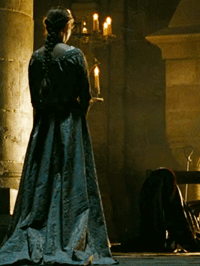 As we like to point out in this space each year, the Academy Award for Best Art Direction is presented to two individuals who have different but key roles in designing a film’s sets and props.
 Despite a precious few
 In one of the year’s more groan-worthy feats of movie marketing magic, Disney recently slapped their plucky horse ’n’ housewife drama