 Some categories haven’t had that much renewal since I last reviewed them. Best Original Score is an exception. Principally, this is because the category is very difficult to judge before hearing the scores, not to mention last minute personnel changes (as composers always seem to be the most disposable members of film crews).
As I said last time, the music branch, though it has opened up to newbies slightly in recent years, is notoriously one of AMPAS’s most insular branches. Best Picture nominees tend to do reasonably well, but the category also tends to award “loud” music, and as of late, world music has been a favorite.
One thing that has not changed, in my opinion, is that Michael Giacchino continues to lead this category for his score for Pixar’s “Up.” Giacchino was nominated two years ago for “Ratatouille” and again composed a soundtrack which was sad, joyous and suspenseful. The film is likely headed towards a Best Picture nomination and I expect Giacchino to show up as well.
At the same time, I also can’t help but wonder if Giacchino maybe, just maybe, could pull off a double nomination this year for his compositions on J. J. Abrams’s “Star Trek.” The music was quite original and bombastic. And, of course, the film a huge hit. I don’t see a lot of surefire nominees in this category, so this could be a place where it finds a home.
 As a recap from the
 When I
 As I
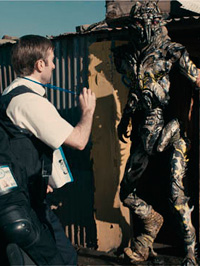 As more films have been unleashed, the race for the visual effects Oscar now appears clearer than it did
 Since I last analyzed the costume design category
 Back in July, I took an
 Almost three months ago, I described how our cinematographers bring movies to life, by lensing the director’s vision, the actors’ performances, the production designer’s and the writer’s mood, just to begin. In the absence of these talented individuals, there would truly be no cinema.
 With Venice and Toronto behind us, the time has come to re-evaluate where the race stands in the crafts categories.
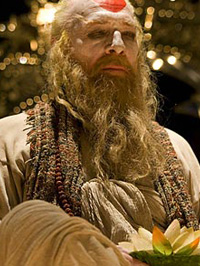 “Make me look good.” While this might seem a vain phrase, in the context of a movie, makeup cannot only make an actor “look good” but it can capture the character and transform the performer, providing invaluable assistance in reaching the “truth” in the portrayal.
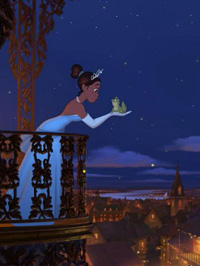 As long as humanity has been recording history, music has been immensely important in society. Not only can it be joyous and entertaining, but it can capture the mood and feel of a time and a place. Cinema has been no exception in this regard.
 A few weeks ago I analyzed the Best Sound Editing category, which awards the creation and integration of artificially created sound effects. Today, we look at sound mixing – the overall composition of all the elements of a movie’s soundscape into a singular soundtrack. The re-recording mixers, who do this work during post-production, are rewarded alongside the production sound mixer, who captures the sound on set.
 Sets and props can create a time period, an era or simply the feel of a scene. And the individuals involved in this process are awarded by the Academy in the category of Best Art Direction.
 Best Achievement in Film Editing. It’s a difficult phrase to define. To a large extent, excellence in film editing can be editing which blends into the film, allowing the director’s vision, screenwriter’s story and actors’ performances to shine without interference. But equally, a film that stands out as a showcase for flashy but motivated construction deserves recognition as well.
 “How did they do that?” Movie-goers often ask this in response to spectacular visual effects, one of few elements of a film, apart from acting, directing or story, that a studio might choose to sell a film directly on.
 Movie stars are often given much attention for the fashion that they sport off-screen. Seldom does the on-screen attire garner as much publicity.
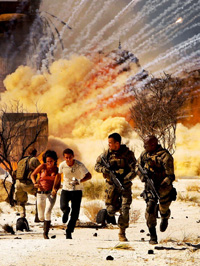 Zoom. Smash. Bang. Grunt. Zap. Splash. Screech.
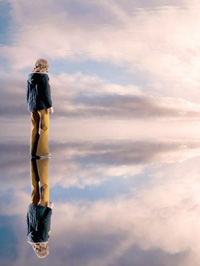 LIGHTS…CAMERA…you were probably waiting for the word “action,” no? Action is, after all, what many individuals go to a film to see. But the “lights” and the “camera” in this classic phrase bring a film beyond a book or a radio show…and capture the “action.”