 Jeremy Renner doesn’t have one of those handy “I always wanted to be an actor” stories. His journey to the screen was, much like the man, a rather unpretentious, play-it-by-instinct series of events that began to unfold in college.
“I was fumbling around with different majors like most people do,” the actor says, calling from somewhere on the road to Los Angeles in Northern California. “I was a criminology major and I was interested in science. I took an elective, which was an acting class, and that was a pretty wonderful place for me to express 19 years of repression, and I fell in love with it. I fell in love with the stage.”
Even though Renner is making his screen impact felt in films like “28 Weeks Later,” “The Assassinantion of Jesse James by the Coward Robert Ford” and Kathryn Bigelow’s “The Hurt Locker,” opening in limited U.S. release today, he says he still holds a special place for theater. “There’s something that you can’t get anywhere else,” he says, “that living, breathing sort of synergy that kind of happens on stage and with your audience, it’s a wonderful cohesive feeling.”
Nothing he had performed could serve as any sort of preparation for his role as an Army bomb squad officer, a cog in the wheel of the military’s Explosive Ordinance Detail (EOD). Mark Boal’s thoroughly researched screenplay first crossed Renner’s path when he was in London filming Juan Carlos Fresnadillo’s “28 Weeks Later.” Producer Greg Shapiro approached him with the material and the character leapt off the page at the actor.
“It wasn’t one of those things that I needed to decide to do it or not,” Renner says. “There was no choice in the matter to me. I’ve never been so affected or so interested in a project. I just thought that EOD was a whole world that had never been explored in cinema. On paper, he was one of the best-written characters I’d seen in a long time. I had so many questions and answers, at the same time, to what made this guy tick and I was just so curious I couldn’t wait to figure it out.”
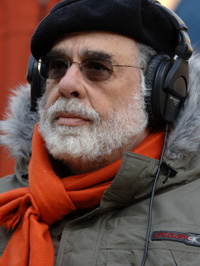 The words sound like they might be spoken by a young up-and-comer experiencing his first big break, someone fresh off the bus with stars in his eyes and the unbreakable, still unsoiled spirit of art coursing through his veins.
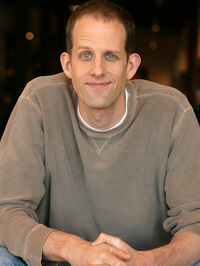 Pete Docter’s filmmaking career is as tethered to the history of Pixar as it gets. After all, he was the third animator hired by John Lasseter back in 1990, when the company was a fledgling computer-animation house making it’s name in short films and commercials. Nineteen years (and 10 features) later, the studio has more than made its mark on the industry, and Docter has just finished helming his second feature film, “Up,” which opens nationwide today.
 So far 2008 hasn’t offered much for an Oscar shortlist beyond a few festival offerings that have yet to see a domestic release. Certainly nothing in the way of powerhouse awards-caliber performances has come down the pike, leaving some to talk up smaller, menial turns amid the lull. But one actor has certainly put forth an effort in the year’s first half that deserves the kind of recognition we cover here at In Contention.
 After taking a backseat to younger, scrappier film industries in recent years, 2008 marked a defiant resumption of the throne for a number of traditional world-cinema stalwarts – Italy was the talk of May’s Cannes festival, while France churned out one masterwork after the other. Joining them at the top, meanwhile, was Sweden, with a pair of exquisite, acclaimed titles that otherwise couldn’t be more diametrically opposed.
 Yesterday was the first of our two-part look at the crafts artists behind “The Curious Case of Benjamin Button.” Today, I feature conversations with cinematographer Claudio Miranda, visual effects supervisor Eric Barba and film editors Kirk Baxter and Angus Wall, who have all received Oscar nominations for their work on the film.
 Thirteen Oscar Nominations.
 Over the last several years, Alexandre Desplat has gone from being a relatively unknown (in the United States anyway) French composer to emerging as one of the most acclaimed and sought after commodities in the business today. Receiving his second Oscar nomination this year for “The Curious Case of Benjamin Button,” Desplat has continued to cement his place at the top of his field.
 Garnering 10 nominations last week confirmed “Slumdog Millionaire”’s established status as the frontrunner for this year’s Best Picture Oscar. Unusually for a Best Picture winner, the film failed to nab any acting nominations. Its high tally counts comes from seven nominations in the crafts fields.
 Amy Adams has arrived. No “doubt” about it.
 I’m coming around to Marisa Tomei rather late in the publicity game this year. I didn’t make it to Venice or Toronto and we just haven’t crossed paths here in L.A. during this exhausting — as always — Oscar season. But the first thing I have to ask is if she feels the pressure yet.
 In less than a decade, filmmaker Sam Mendes has established himself as one of the most intriguing directors of his generation. “Revolutionary Road,” his fourth film to date, hit theaters over last weekend. Regardless of its Oscar fate in the writing, directing and acting categories, the film seems poised to be a major player in the craft arenas, our central focus here at Tech Support.
 Fate can have a bittersweet sense of timing, and Michelle Williams understands this better than most. A 2008 that started bleakly with the passing of Heath Ledger, her former partner and the father of her daughter, has ended as a professional banner year for the 28 year-old actress.
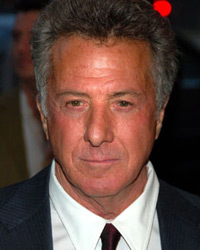 He doesn’t seem like Dustin Hoffman for some reason. He sounds like Dustin Hoffman. He looks like him. But there aren’t really any traces of his decades-long assemblage of characters. And he’s got an approachability that seems somehow uncommon for a star of his stature.
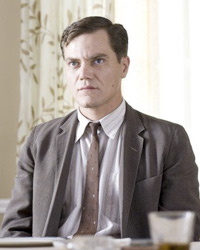 If you’ve seen James Marsh’s “Man on Wire,” then you know of Philippe Petit’s dazzling tight-rope walk between the towers of New York’s World Trade Center on the morning of August 7, 1974. What you probably don’t know is that while Petit was criss-crossing back and forth between the towers for roughly 45 minutes, Michael Shannon was coming into the world down in Lexington, Kentucky’s Good Samaritan Hospital.
 It’s a rare achievement, but through the ups and downs the last fortnight’s precursors, one film has failed to miss a beat, landing gongs from the New York, Los Angeles and Washington critics, as well as the NBR and the British Independents, not to mention Indie Spirit and BFCA nominations.
 “We didn’t necessarily set out to create someone as perpetually sunny as Poppy,” says Sally Hawkins of her radiant performance in Mike Leigh’s “Happy-Go-Lucky,” which is currently