 It’s not every year that my biggest cheer on Oscar nomination morning comes in the technical categories, but such was the case last week when Janet Patterson’s name showed up in the Best Costume Design lineup.
Patterson’s inclusion (following a senseless Guild snub) is gratifying not merely as recognition for her tangibly textured, richly story-serving threads in “Bright Star,” but as a representation of one of 2009’s most immaculately integrated – and under-rewarded – technical ensembles.
Jane Campion’s John Keats biopic derives its fresh, fragile romanticism as much from writing and performance as the combined efforts of Patterson, cinematographer Greig Fraser and composer Mark Bradshaw. Their work has prompted countless critics’ punning on Keats’s “a thing of beauty is a joy forever” chestnut, but sometimes the most obvious praise is the most appropriate.
For Fraser and Bradshaw, “Bright Star” represents their first experience on a Campion feature, having previously collaborated with the New Zealander on a pair of short films, “The Water Diary” and “The Lady Bug.” For Patterson, however, the film extends a collaboration with the filmmaker that dates back to Campion’s 1993 breakthrough “The Piano,” and has yielded previous Oscar nominations for both that film and 1996’s “The Portrait of a Lady.”
 As pundits continue to posit art-versus-genre arguments around the 10 titles vying for Best Picture, the finest film to be nominated in any category at this year’s Academy Awards is to be found a little further down the list – and it’s one that would bridge the discussion rather nicely.
 Nearly a year after they
 Nearing the end of January on an awards season run for a film that bowed at Cannes is an odd time to be crossing paths with a filmmaker to talk about the goods, but that’s where I found myself with Quentin Tarantino this year.
 Some performances are so selflessly and expertly integrated into a film’s ensemble that awards voters tend to take them for granted, looking instead to more assertive scene-stealers from sometimes starrier names.
 When you’re coming off of one of the most elaborate and intensive sound mixing gigs in movie history, let alone of your own career, how do you top it with a sequel?
 Michael Fassbender is unemployed.
 The Coen brothers’ latest film
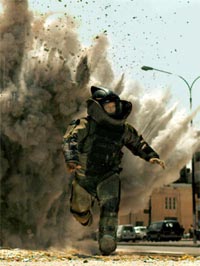 When it comes to extravagant Hollywood blockbusters, we’ve become accustomed to the phrase “the money is up on the screen” – delighting in the filmmakers’ own delight in the tools and tricks at their disposal.
 Terry Gilliam’s
 Because some of director Jason Reitman’s work tends to be stylistically traditional and classic, he says there might be the assumption that he’s not a visual filmmaker. But seven years as a commercial director tends to make you as visual as the next guy. And make no mistake. He is absolutely specific when it comes to below-the-line elements on his features, and
 Jane Campion’s laugh comes as a rather lovely surprise: full, throaty and often directed at herself, it betrays a personality more robust, mischievous even, than one might surmise from her fragile, often solemn films. It’s a disconnect she cheerfully acknowledges, and credits in part to her collaborators.
 In a quiet corner of the Four Seasons restaurant late one afternoon, Robert Duvall gives
 Two striking films in this year’s Best Foreign Language Film Oscar race probe the theme of moral drift, both individual and communal, bred in a rural European community – the very opposite of what Hillary Clinton meant by “It takes a village.”
 Still fully engaging at the end of a long day of interviews, actress Saoirse Ronan seems as eager to dive into the particulars of Peter Jackson’s latest film,
 To call Abbie Cornish’s astute, china-delicate performance in
 Bryce Dallas Howard dominated M. Night Shyamalan’s
 Ben Foster became an actor I knew I would watch for a long time during an episode of the now canceled TV drama “Boston Public.”