In Contention

Category: Interviews

  • INTERVIEW: Kristin Scott Thomas

    Kristin Scott ThomasWhen interviewing Kristin Scott Thomas, the woman who for many audiences represents the living portrait of English upper-crust serenity, Led Zeppelin isn’t exactly the first name you expect to crop up in the conversation. And yet, halfway through our Transatlantic chat, that is exactly what happens.

    “Seeing the guys, well into their sixties, just getting up on stage and doing their thing … it’s just so inspiring,” she says, referring to the British rock gods’ reunion concert that took place in London a year ago. “And spanning generations too — my son is into them. It’s a reminder that you don’t stop being interesting or relevant at a certain age. I’d love to do that.”

    As entertaining as the idea of Thomas belting out “Whole Lotta Love” to a screaming arena of thousands is, it’s a weirdly apt comparison. Where many actresses her age recede (albeit not usually by choice) into mumsy bit parts and dreary disease-of-the-week movies, Scott Thomas, now (incredibly) 48, has recently been taking on the most challenging, intriguing work of her career to date.

    As if to prove the point, she is speaking from New York, where she is tackling one of the theater’s greatest female roles in her first ever Broadway gig. Her witty, ferocious interpretation of Arkadina in Chekhov’s “The Seagull” earned her an Olivier Award for the play’s original London incarnation and is now garnering breathless raves Stateside.

    It’s her recent film work, however, that has made 2008 a banner year for the thesp. Two highly entertaining, highly contrasting supporting roles — as a worldly lesbian in the smash French thriller “Tell No One” and an icy matriarch in period comedy “Easy Virtue” — are mere appetizers to her staggering, career-peak performance as an introverted, grief-ridden ex-con, reconnecting with family and society alike, in Philippe Claudel’s superb debut feature “I’ve Loved You So Long.”

    (more…)

  • INTERVIEW: Elsa Zylberstein

    Elsa ZylbersteinThough still in her 30s, Elsa Zylberstein’s career has been so rich and multi-stranded — in addition to two decades of screen performances, she has also worn the hats of a classical dancer and a United Nations Goodwill Ambassador in the past — that it’s odd to think she is only now achieving Stateside recognition for a role in one very modest film.

    Or it would be, at least, were that film not “I’ve Loved You So Long,” Philippe Claudel’s searing, critically acclaimed study of lives undone by grief and separation.  The film has quietly emerged as one of the most memorable entries in another banner year for French cinema. You have no doubt heard the well-deserved buzz for star Kristin Scott Thomas, but she’s not the film’s only name generating whispers in awards circles.

    As Thomas’ onscreen sister, a seemingly grounded wife and mother whose carefully organized sense of self begins to collapse as she is confronted directly with her past, Zylberstein’s delicate, empathetic portrayal is a dark horse to watch in the Best Supporting Actress race. The term “supporting,” however, isn’t entirely accurate.  Not unlike the season’s other highly-praised story of sisterly reunion, “Rachel Getting Married,” the film sees two sterling actresses supporting each other, each playing impeccably off the other’s gestures and silences.

    For Zylberstein, it marks the clear high point of an already-fascinating career, and she doesn’t mind admitting that she’s been taken happily off-guard by the response to the film.

    “It’s just exploded,” she enthuses down the phone line, in her limber, beguilingly accented English. “Nothing like this was meant to happen, was it? I mean, it’s just this tiny little film. And now… bang! I’ve just been in London, and I’m now I’m going to L.A. tomorrow, and people there know the film. And they know me in it. I’m just, like, what?”

    She laughs, as do I: her giddiness is infectious. I’ve caught her at her Paris home, relaxing for a few moments just before she heads off to her father’s birthday party.  (“I got him an iPhone.  You do think that’s a good idea, right?” she sidetracks, as if I was one of her oldest friends.)

    (more…)

  • INTERVIEW: ‘Changeling’ screenwriter J. Michael Straczynski

    J. Michael Straczynski“In the feature film world, we television writers barely exist,” explains J. Michael Straczynski screenwriter of Clint Eastwood’s “Changeling,” starring Angelina Jolie.  “So for this to all happen so fast is really a fairy tale year for me. I am elated with how this has all gone down and changed the course of my life.”

    Straczynski was making a fine living on the small screen, writing episodes of “Murder She Wrote” and “Jake and the Fatman” before moving on to  Showtime’s series “Jeremiah” and “Babylon 5,” two of his most well-known credits.  He had worked as a journalist for the Los Angeles Times and upon discovering the story of Christine Collins, he put it on the back burner for a few years until he found the time to do it right.

    He describes his research and fact-finding like “putting a jigsaw puzzle together” for the simple reason that facts and articles had been lost, and they simply did not have the technology then to store everything he required. Taking a year off writing television, he researched the Collins case and put a script together, which his agent sent off to Imagine Entertainment and Ron Howard.  The script was bought as is and Howard wanted to direct the film, but when his schedule became impossible, “Frost/ Nixon” looming on the horizon, he sent the screenplay to Clint Eastwood.  The grizzled vet read the work on a plane back to the States and committed to direct after the first reading.

    Yes.  This was a FIRST DRAFT that went before the cameras within a year of being sold, something rather unheard of in Hollywood unless you’re Woody Allen.

    (more…)

  • INTERVIEW: Rosemarie DeWitt

    Rosemarie DeWittRosemarie DeWitt is excited.

    It can be difficult to gauge emotion in the formal, slightly removed context of a phone interview, but DeWitt’s warm, clear voice betrays an eagerness right from the get-go, articulating thoughts at a pace that occasionally exceeds my shorthand. Only when addressing the heady buzz of awards season does she finally pause to reach for words.

    “It’s crazy, seriously crazy, but more than anything, it’s just really flattering,” she says.  “This is the best job I’ve ever had, and I’m so, so proud of the film. Anything more than that is just…” A moment passes as she takes a breath, and considers the matter. “Wow,” she concludes simply.

    The film in question, of course, is “Rachel Getting Married,” Jonathan Demme’s barbed family drama that has been widley declared the filmmaker’s return to form after some years in the wilderness. The buzz, meanwhile, is for DeWitt’s subtle, complex turn in the title role, which has garnered considerable plaudits for the hitherto low-profile 34-year-old actor, a frequent stage presence only recently receiving her due on screen, both big and small.

    Best known until now for her tart, sexy portrayal of Midge, Jon Hamm’s bohemian city mistress in TV critics’ darling “Mad Men,” DeWitt is calling from Los Angeles.  She’s just finishing work on another cable series, “The United States of Tara,” a dark, high-concept comedy created by Diablo Cody and starring Toni Collette (an “absolute genius,” DeWitt gushes).

    All of which would be enough to get excited about without Oscar talk being thrown into the mix. But as Rachel, the older sister of Anne Hathaway’s self-destructive addict Kym, DeWitt’s attentive, commendably unflattering performance finds itself right in the thick of the Best Supporting Actress competition. Hers is, for me, the most resonant performance in a film that doesn’t want for thespian fireworks, largely because DeWitt never pushes Rachel into the stock character of the saintly, long-suffering sibling.

    (more…)

  • INTERVIEW: ‘Gomorrah’ author Roberto Saviano

    Roberto SavianoI’m pretty sure that only in Hollywood can you find publicity mobilized behind a targeted man for the purposes of securing an Oscar nomination (and, of course, prepping a film release).  But there Roberto Saviano was yesterday at the…wait, I probably shouldn’t even mention the hotel should I?

    Saviano has been pegged for assassination (let’s not mince words) by the Neapolitan Camorra organized crime syndicate following the massive success of his book “Gomorrah,” adapted for the screen this year by a swath of writers and entering the Oscar race as Italy’s foreign language film submission.  Peeved at how deep Saviano’s book plunges behind the veil of the wide-reaching organization, the result of “great rage” as the author describes the passion that drove him within its pages, the Camorra has reportedly declared they want Saviano dead by Christmas.

    A highly sincere security guy/bodyguard was my first impression, me waving my iPhone as the only device concealed on my person — I swear.  Moving into the Spartan hotel room, Saviano was seated in the most unassuming manner, feet crossed in front like a child passing the time.  His bald head and dark eyebrows set off a striking complexion, and he certainly looks as young as his 29 years.  Which makes the achievement of “Gomorrah,” written in a style compared to the “non-faction” of Truman Capote, all the more impressive.

    The film adaptation, spear-headed by Saviano and director Matteo Garrone, is an absolute success, managing to steer clear of any modern cliches its multiple narrative structure might have allowed.  It took Cannes by storm over the summer, landed nominations across the board at the European Film Awards and has already been bandied about in this space as a potential Oscar spoiler in more than just the anticipated Best Foreign Language Film category.

    And now, those who can make that kind of thing happen are aiming to do just that.  “Gomorrah,” it seems, won’t be settling for the obligatory tip of the hat in one ghettoized field, nor should it.  And if anything, it ought to be a testament to Saviano’s courage (the guy is in hiding for Christ’s sake) if the film manages to be seen and awarded by more than the already fickle and questionable foreign language film committee.

    I spoke with Saviano, through a translator, for about a half hour.  Rather than piece together an interview article I thought I’d let the exchange speak for itself.  I didn’t realize how much of an honor it was to meet the guy until maybe half-way through, and when I tell him I think he’s a hero, I assure you I mean it.  Have a listen:

    [display_podcast]

  • INTERVIEW: Mickey Rourke

    Mickey Rourke at the Los Angeles premiere of The WrestlerMickey Rourke fucked up his career.  Who am I to say that though?  I don’t get to chastise the guy, pass judgment, even comment really.  It’s a cliche to say it, so why not be specific otherwise: Mickey Rourke had some shit to work out.  Who doesn’t?

    He looks at you with stone eyes that seem to betray the early moments of a blackout.  But after another look, it’s clear that he’s focused.  He’s walking a straight line to spite his former self these days, even if it means lighting up in a non-smoking room to get through the unfamiliar terrain of a major film awards push.  Because fuck it, right?

    His pet chihuahua, Loki, moves slowly about the room, using what senses are still available to her after 17 long years, like some externalized representation of Mickey’s busted professional life.  But she’s still here, isn’t she?  So is Mickey.

    He’s the kind of guy Bob Dylan calls up in the middle of the night with a modest, “Hey, it’s Bob.”  He’s the kind of guy who can tell you he and Bruce Springsteen lost touch for 13 years and mean it.  His fight-ravaged hand cracks after a forceful handshake.  “Everything’s still crackin’.”  With a smile, no less.

    Everything could seem like a name drop but somehow becomes an honest, bard-like story of purpose.  He repeats himself.  Maybe he forgets, maybe he wants to make his point.  Maybe he can’t believe it himself — stories of self-destruction or good fortune — so he has to hear himself say the words again.  Introspection seems to come forth like the memorized therapy over a decade on the couch will give you.  But the necessity of that hard work comes through.  This is just where he is for the moment.

    He’s a steward of the truth and takes his work bringing that truth to bear quite seriously.  He won’t even waste time on a biography because he can’t get into his associations with the Hell’s Angels and John Gotti, so why bother?  It wouldn’t be true.

    (more…)

  • Danny Boyle: 8 things I’ve learned from my career in features

    Danny Boyle on the set of SunshineFilmmaker Danny Boyle is set to be feted this evening by the American Film Institute, but with just eight feature films under his belt, the dynamic director of such milestones as “Trainspotting,” “28 Days Later” and this year’s festival favorite “Slumdog Millionaire” is hardly due for a career retrospective.  He’s still going strong, excited by each new project and willing to take his time on whatever strikes his fancy along the way.  But as “Slumdog” begins to stand out as, perhaps, Boyle’s greatest cinematic accomplishment to date, the director shares with us what he’s learned along the way, film-by-film.

    “SHALLOW GRAVE” (1995)
    “I was very lucky to get a really tight, 90-minute, taut script.  Because you kind of don’t know what you’re doing on your first movie and there’s something wonderful about that.  You can never get back to that innocence.  It’s a good thing to start with a thriller, because you’re not going to have a lot of money and thrillers don’t depend on a lot of money.  I say sort of semi-controversially or provocatively, your first film is your best film, always, because it has that innocence about it, about not knowing what you’re doing.”

    “TRAINSPOTTING” (1996)
    “Take risks is the one I got from that.  Really take risks.  I haven’t always clung to it but I certainly always return to it.  And I love that.  That’s what people go to the movies for.  They don’t go to see what’s acceptable.  That’s television.  John [Hodge] adapted it in a way — it was impossible to adapt, so he didn’t try.  He sort of was inspired by it and went off.  And I love that in adaptations.  It’s really irreverent to the skill.”

    (more…)

  • INTERVIEW: Dennis Hopper

    Dennis HopperThe voice on other end of the line sounds nothing like the many wild and somewhat insane characters Dennis Hopper has portrayed throughout his career, which now spans more than 50 years. This is a man who has walked with James Dean (his mentor), John Wayne (who affectionately labeled him a “pinko”) and Francis Ford Coppola.
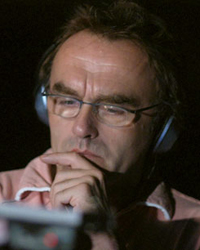
    As a director, Hopper was part of the movement that would bring the New American Cinema into play, closing the 1960s with his biker flick “Easy Rider,” and though he won prizes at Cannes and was hailed around the world, he has rarely directed since.

    Hopper portrayed perhaps the single most terrifying character in a film with his seething work as Frank Booth in David Lynch’s “Blue Velvet.’  The same year he was nominated for an Oscar for his work as the town drunk seeking redemption with his son through basketball in “Hoosiers.”  Even Hopper was stunned that the Academy failed to nominate him for Lynch’s film instead.  He remembers roaring, “HOOSIERS?  You’re kiddin’ me, man” when being told of the nomination. “Blue Velvet” was a film the Academy obviously feared, allowing a single nomination to David Lynch for his dreamy, surrealistic direction of the classic.

    Currently Hopper is celebrating the upcoming DVD release and a low-key Oscar campaign for Best Supporting Actor in “Elegy,” a fine little film in which he portrays the poet best friend of Ben Kingsley’s introspective professor — Sir Ben as Hopper calls him.

    “I was a big fan of Isabel’s [Coixet, the film’s director] work”, he explains. “So when my agent called and said I had an offer to be in a film with Sir Ben Kingsley and Penelope Cruz, I jumped in. It was a very human story, the sort of film I like to see, and being a big fan of Philip Roth helped me along. The film had comedy and tragedy, and most of all characters I think we can all identify with.”

    (more…)

  • INTERVIEW: Danny Boyle

    Danny BoyleRoughly halfway through my interview with Danny Boyle, the small, rather alarmingly wallpapered room we’ve been seated in is, by some technical error, suddenly flooded with the opening beats of “Orphans,” the first track off Beck’s “Modern Guilt” album.

    Boyle immediately leaps to his feet to report the problem, though he can’t help nodding in
    time to the music. “That’s the new Beck, isn’t it,” he notes excitedly. “Fantastic stuff. Now’s not the time, but fantastic stuff.” The music vanishes. Boyle flops back onto the couch, straightening out his rumpled plaid shirt.

    It’s a fittingly surreal interlude for an audience with Boyle, demonstrating both his utterly unflappable personality and his keen interest in every sight and sound around him — whether invited or not. It’s a heightened awareness that is apparent in every one of his films; few directors make films as busy as Boyle’s, films as alive to the possibilities of environment, movement and music. His is a sensation-driven cinema that comes into full fruition in his astonishing new film “Slumdog Millionaire,” a breathless rush of visual and narrative energy that marries fanciful storytelling to a rich, perceptive study of a 21st-century nation.

    It’s also his first film with an entirely non-Western context, something which seems to have further fired Boyle’s creative impulses. “India is just … everything at once,” he enthuses, gesticulating wildly to convey the scale of it all. “It’s got these amazing extremes of wealth and poverty and religion and landscape, but in the West we go to a lot of trouble to separate those extremes. Nothing is separate in India. That makes it an incredible place to set a story, particularly one that is so tough and so joyful all at once.”

    True to form, “Slumdog Millionaire” tells a pretty incredible story, a rags-to-riches tale in the most literal sense. It’s a story that hinges on the fairytale conceit of destiny, but as Boyle notes, that notion still plays into contemporary Indian society. “There’s a bond between the classes there, however far apart they are in terms of wealth. They get each other because they pretty much come from the same place — destiny makes all the difference.”

    Boyle pauses to pour himself a fresh cup of tea, cheerfully dismissing the waitress’s offer of bottled water. (An Englishman through and through, he still resides in Mile End, an unfashionably working-class corner of East London.) It’s late in the day, he’s tired and, he sheepishly admits, a little hung over — the previous night saw “Slumdog” close out the London Film Festival, with all the flashing lights and partying that entails.

    While it should be noted that a “tired” Boyle still projects more energy than most of the normal human population, this level of media attention is new to him. For all the acclaim his previous work has garnered, he’s never before made a film that received the awards buzz that “Slumdog Millionaire” is receiving (remarkably for an edgy, foreign-set picture with not a single name star attached).

    “It’s brilliant, it’s insane,” he says, shaking his head. “It seems I just came here from L.A., and now I’m off to L.A. tomorrow. But you can’t release a film like this, something so potentially alien to audiences, and not work hard to promote it. Fox Searchlight are working me ragged, which is fantastic.”

    (more…)

  • INTERVIEW: Eddie Marsan

    Eddie MarsanIt is somehow fitting that I meet Eddie Marsan not in the lounge of some swanky West End hotel or members’ club, but amid the worn wooden chairs and scuffed 1970s wallpaper of his local pub in the villagey West London suburb of Chiswick. For Marsan is not a movie star, but an actor — and that’s the way he likes it.

    “I have friends who are leading men, and they’re only ever allowed to play leading men of a certain type,” he says over a lunchtime drink once we’re settled into a corner booth. “But as a character actor, there’s a wider variety of projects available. On the big Hollywood films, all they care about is having their lead in place, so it’s actually easier for someone like me to slip in. And I’m happy to do so.”

    “Slipping in” is precisely what the 39-year-old London native has been doing to impressive effect over the last couple of years. After a long apprenticeship in British television, he can now boast having worked with such A-list auteurs as Martin Scorsese (2002’s “Gangs of New York”), Terrence Malick (2005’s “The New World”), Michael Mann (2006’s “Miami Vice”) and Alejandro Gonzalez Inarittu (2003’s “21 Grams”).

    2008, however, has been Marsan’s breakthrough year, with two major credits on opposite ends of the creative scale: an appearance opposite Will Smith in summer blockbuster “Hancock,” and now, a career-best performance in Mike Leigh’s serio-comedy “Happy-Go-Lucky,” which is garnering well-deserved awards buzz for the actor in the supporting race.

    (more…)

  • INTERVIEW: ‘Appaloosa’ composer Jeff Beal

    Jeff BealLike a number of film music composers, Jeff Beal makes his home north of Los Angeles in the rocky, canyoned city of Agoura Hills.  One feels a sense of the old west before even seeing the ranch-style houses in his neighborhood and the tail-flipping horses tied out back.  Questions about his work on “Appaloosa,” Ed Harris’s latest entry in the western genre, seem to manifest out of thin, dusty air by the time we make it downstairs to his efficient but Spartan studio.

    At the beginning of the process, Harris told Beal he was not interested in anything overly romantic or mythic.  The mandate was the relationships, the conflict they bring about and the intimate world the characters inhabit.  It was a unique vision for Beal, but one he was more than willing to explore.  He had his share of wells to draw upon, but his work in high-end television projects really stuck out.

    “The only thing I can think of that was sort of similar was [HBO’s] ‘Rome,’” Beal said.  “It was a similar approach creatively because you were dealing with a historical genre, a genre that’s been done a lot, sometimes with a lot more overt flare.  And this was more like the ground view of these people.”

    To that end, Beal set about constructing a theme with little harmonic movement, something that would carry the feeling of the audience being visitors in the world of Virgil Cole and Everett Hitch.  Spring-boarding off a life-long interest in folk music (American or otherwise), Beal wanted to make the music reflect the story-telling nature of the narrative.

    “There was actually a second half that became more of a traditional piece of music because at the end of the day we decided we don’t need that because it’s better to have just a clean, simple statement,” he said.  “These guys are men of action.  It’s all about a process, one step in front of the other.  It’s a journey.  One of the phrases Ed gave me when we were starting was ‘rough elegance,’ which I loved.  A lot of the music sprang from that inspiration.”

    (more…)

  • TORONTO: Ed Harris on ‘Appaloosa,’ acting and film crticism

    Ed HarrisWalking into to interview with any actor/director can be a tad intimidating, even after 20 years of doing it.  They have a tendency to be…difficult.  But 30 minutes into my interview with Ed Harris, he pays me a compliment that could keep wind in my sails for the duration of the fest: “Thank you for your integrity, intelligence and dedication to your job.  This has been a pleasure.”  He smiled as we shook hands and he walked me to the door
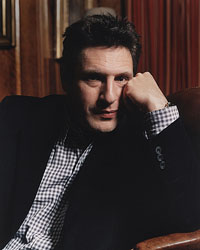
    Harris has been an actor I have admired since first seeing him as squeaky clean John Glenn in “The Right Stuff” back in 1983, which he followed with a chilling turn as a mercenary in “Under Fire,” his bright blue eyes windows into hell’s furnace. His career has moved along an interesting trajectory, shifting between supporting roles and leads with ease, often dominating whatever film he takes on with powerhouse acting.

    Oddly enough, he did not receive his first Oscar nomination until 1995 when he gave a sterling performance as Gene Kranz in “Apollo 13,” followed by another brilliant turn in “The Truman Show” as a God-like TV producer. He nurtured his dream project, “Pollock,” through its funding, before taking up the reins as director and grabbing another Oscar nod in front of the camera. And in 2002 he was nominated for a fourth time for his AIDS-afflicted writer in “The Hours,” a critically acclaimed ensemble piece from director Stephen Daldry.

    It is doubtful that “Appaloosa” will see any Oscar attention.  Though it is beautifully shot and the art direction is sublime, the film was something of a letdown, despite strong work from Harris and co-stars Viggo Mortensen and Jeremy Irons.

    “I gave the book to Viggo here at this festival in 2005,” Harris said, “when we were here for ‘A History of Violence.’ There was no one else I really wanted to do the film with, and I certainly never considered anyone else. I just thought he and I would make a strong partnership on screen. We don’t hang out, I mean we’re friends, but we don’t see much of each other. He agreed to do it, and Viggo’s the sort of guy where his word is his bond, so that gave me the start to keep moving on the film. It didn’t really occur to me that the film was a western, what struck me was the relationship between these two men in 1882, that’s what really grabbed me about the film. That it happened to be a western was incidental.”

    (more…)

  • INTERVIEW: Patrick Marber

    Patrick MarberIn some sense, playwright and screenwriter Patrick Marber could best be described as he endearingly refers to friend Daniel Craig: “He’s just a dude.”

    He sports a shock of black hair with hints of gray, looking still younger than his actual years. He’s fond of his cigarettes and has the same icy blue eyes as fellow Oscar nominees Peter Morgan and Guillermo Arriaga. However, where he seems to break away from that, or any company, for that matter, seems to be in his idiosyncratic nature. He’s warm and open, but clearly there’s more underneath.

    This is a guy concealing his hand.

    A glimpse at Marber’s film work alone will reveal two strikingly different portraits of obsession and dependency. In “Closer,” which he adapted from his own play for filmmaker Mike Nichols in 2004, the sexes wage war in unforgivable, bitingly honest ways. In “Notes on a Scandal,” adapted from the Zoe Heller novel and directed by Richard Eyre, the scathing realities of “Closer” give way to equally painful notions of fantasy, longing and self-delusion. How does a guy with three young children and a healthy professional status allow himself to “go there?”

    To be fair, “Closer” came at a troubling time for the writer. Though he doesn’t subscribe to “writing as therapy,” the drama and characters of that stage hit certainly served such a function for him at a crucial time. And he’ll be the first to admit the work reads better if you happen to be concurrently experiencing the crushing truths it puts on display. That was a decade ago, however, and even today, he can’t seem to feel those same emotions when he revisits the work. To Marber, it’s just material now.

    (more…)

  • The nominees react

    After a few weeks of frigid, citrus terrorizing temperatures, if you step outside this morning in Los Angeles, it’s a beautiful, cloudless, sunny day. But it’s a little sunnier for those who were greeted with Oscar nominations, whether expected or unexpected. I had the opportunity to talk with a few of the lucky souls who’ve had the pleasure of fielding phone call after phone call this morning. Here’s what they had to say.

    Lots of happiness in the Fox Searchlight camp today, as the little film that could, “Little Miss Sunshine” made its way to four Oscar nominations including Best Picture and, not surprisingly, Best Original Screenplay for Michael Arndt. I called Michael around 7:45 this morning to get his reaction, and he was still the same modest fellow I spoke to face to face over the weekend.

    “I knew that there were a lot of people out there who loved the film,” he told me, “but this is the ultimate validation of the idea that the film industry is democratic. A year ago we were hoping to get a distribution deal and now we have four Oscar nominations.”

    Michael says he went to sleep pretty easily (and who wouldn’t, in his shoes), but that didn’t stop him from waking up at three o’clock and suffering insomnia throughout the rest of the early morning hours. Suffice it to say, he was wide awake when he heard his name called this morning.

    Best Supporting Actor nominee Jackie Earle Haley (“Little Children”) has to be the happiest guy in the business this morning. “I think I’d have to agree with you on that,” he told me, calling from his home in San Antonio. “This is just unbelievably crazy. They need to invent a few more words, because every adjective, this is just a little bit better.”

    The most adorable and giddy Oscar nominee you could expect to talk to, Haley was clearly on cloud nine, even hitting bouts of speechlessness during our conversation. Funnily enough, even in the central time zone, Jackie was asleep when the announcement hit. His wife ran into the bedroom screaming and crying, “You got it!” “We just hugged each other and cried for, like, five minutes,” Haley said.

    One of today’s nominees was actually surprisingly snubbed for his work on “Good Night, and Good Luck.” last year, film editor Stephen Mirrione. Mirrione and Douglas Crise shared one of “Babel”‘s seven nominations this morning.

    “The types of movies I gravitate towards aren’t really mainstream movies,” he told me via telephone shortly after the nominations were announced. “So I’m pleasantly surprised when they become so widely accepted, even if I know the material I’m working with is exceptional. And I owe a lot to wonderful performances.”

    Crise has served as Mirrione’s first assistant editors for ten years. This year he got the bump to co-editor because “Babel” started shooting before Mirrione had finished work on “Good Night, and Good Luck.” Now the longtime collaborators get to share in the spoils of an Oscar nomination together.

    Another nominee who has felt the sting of Oscar’s avoidance is Patrick Marber, nominated today for his adapted screenplay “Notes on a Scandal,” based on the novel by Zoe Heller. In fact, when Marber failed to score a WGA nomination for his work two weeks ago, he says it felt exactly how the circumstance of “Closer” played out in 2004, for which he received BAFTA and Golden Globe nominations, but found no such luck with the guild and with the Academy. Suffice it to say, he was pleasantly surprised this morning.

    “Being nominated is a lot more fun than not being nominated,” he told me, calling from London. “You suddenly get lots of phone calls from people you haven’t spoken to in years. And it’s huge for us, for the film, to get four nominations. Judi and I texted each other, and I got a one word email from Zoe: ‘Yay.’ She’s always to the point.”

    Finally, one of the big stories of the morning was Picturehouse’s six nomination haul for Guillermo del Toro’s “Pan’s Labyrinth.” Hitting the ground running in its inaugural year, Picturehouse had two critically lauded efforts hit screens in “Pan’s” and director Robert Altman’s “A Prairie Home Companion.” Picturehouse president Bob Berney concedes that it was a shame not to land at least one mention for Altman’s golden-hued, poignant swansong, but it was bittersweet considering the surprising glut of appreciation thrown the way of “Pan’s Labyrinth.”

    “We decided to come out at the very end, but to do that, you have to know you’ve got a great film,” he told me earlier this morning. “It’s cool to get these broader nominations outside of the foreign film category, because this really is such a group effort. You get a lot of energy from this film and it just takes you back to the joy of movies.”

    Berney conceded that a lesson learned in this introductory year for his studio was the subtlety of positioning your film as an underdog. The strategy paid off in spades this morning, and the president affirms that he and his team are ready to do it all over again next Oscar season.

  • INTERVIEW: Ryan Gosling

    Ryan Gosling is a smooth customer. Lacking pretension so much that one can’t even find a hint of his intending to steer clear of it, the actor recently celebrated his 26th birthday on November 12th. This following a year that has seen his directorial debut come to pre-production light, a coveted spot amongst GQ’s annual “Men of the Year” issue and, oh yeah, one of the most acclaimed performances of 2006.

    The critically hailed star of “The Believer” and “The Notebook,” Gosling finds himself in the thick of the year’s awards race for his riveting portrayal in Anna Boden and Ryan Fleck’s “Half Nelson.” The film received five Independent Film Spirit award nominations this morning, including Best Male Lead for Gosling.

    Greeting me via telephone from Toronto, where he is nearing the end of principle photography on Craig Gillespe’s “Lars and the Real Girl,” the actor seems to have tripped over his sister’s computer chord and is having some trouble with the usual “hellos.” It’s all for the best, really, because when you have a conversation with Ryan Gosling, the last thing you want to do is bog things down in formalities. Gosling is a real guy, attracted to real ideas and, above all else, real characters.

    “I had read the script and thought it was about people I had met, people I knew or was like in some way,” he says. “When I go to the movies, I want to feel like I’ve met someone. People who do things out of character, who don’t have a clear character arc, those are the people I’m interested in seeing in a film.”

    In “Half Nelson,” Gosling stars as Dan Dunne, a charismatic junior high school history teacher in a drab and dismal Brooklyn neighborhood. Dan’s professional environment is one of enlightenment for his pupils. He captures the spark of their educational hunger and even finds time to coach the girls’ basketball team. But personal demons can haunt even the saintliest of souls, and Dan’s crutch is drug addiction. The allure of the crack pipe frequently pulls him away from the buoyancy he works so hard to construct for his students, dragging him through the realities of crushed idealism.

    In some ways not the most sympathetic of individuals, Dan provided for Gosling a character of tangibility and truthfulness.

    “I think you have to love and hate the characters you play,” he says. “They’re people. It’s not as simple as sympathizing with them.”

    To prepare for the role, Gosling moved to New York for one month before shooting even began, immersing himself in the life of his character. He lived in a small apartment in Brooklyn and spent time shadowing 8th grade teacher David Easton. Speaking matter-of-factly about his methods, Gosling mentions, “There’s a million ways to get there, but it’s a challenge when there’s no real reference for the people you play.”

    What might also be considered a challenge for some actors is sharing the screen with untrained thespians. But Gosling seems to have found a preference of sorts, so much so that he plans on casting his upcoming directorial debut, “The Lord’s Resistance,” with non-actors across the board.

    “I love working with non-actors,” he says. “Actors are so manipulative, and non-actors are not. They push you in ways that the best actors in the world can’t.”

    One such non-actor is Shareeka Epps, receiving equal praise for her portrayal of Drey in the film. One of Dan’s students who happens upon his secret early in the first act, Drey seems weathered and accustomed for her years, but exuberant and youthful all the same – qualities Gosling also found bursting out of his co-star.

    “Shareeka has no reverence, which I really respected,” he explains. “She doesn’t approach any scene with any preciousness. She’s brutally honest and not ashamed of how she feels.”

    Finding himself in the heat of contention for Best Actor consideration at this year’s Oscar ceremony, Gosling is predictably apathetic about the awards process. One almost doesn’t want to approach the subject with him, given the expected response from an actor so obviously concerned with the work above anything else. But this is a business of sound bites, and even the most apprehensive awards hopefuls can give you gold in that regard.

    “It affects me,” he says of the Oscar race, “in the sense that I’m happy that a film that cost $500,000 can get to a point where this many people are aware of it. Awards – I don’t know who that’s up to, but I appreciate that the film is being received the way it is. I had one of the best experiences of my life on this. We never had to hit any marks. We never had to say anything twice or worry about continuity. You never felt like you were in a scene in a movie. A lot of directors never see it that way. Anna and Ryan have a great eye for the way that we are and the lies we tell about who we are, and that’s rare.”

    From here, Gosling will assuredly take it all in stride. The aforementioned “The Lord’s Resistance” is high on his list of priorities. Telling the story of the Lord’s Resistance militia in Uganda, the film looks to be another pointed political entry in the current canon of Africa-centralized cinema. Even still, don’t expect the actor to look too far ahead at the kinds of films he wishes to make, in front of or behind the camera. He holds such judgment to a case-by-case basis.

    “I’ll have to wait until I’m tested,” he says. “Films I love have a certain allowance for accidents. When I was a kid, my favorite films were the ‘Abbot and Costello’ movies. I love Werner Herzog’s films, Terry Malick, John Cassavettes. But I’ve got a lot of things I want to do in my life, and not just acting. There’s no anxiety about not having enough time to do all the movies I want to do or anything, but I have to keep it interesting for myself. I don’t want to make the same movie over and over again.”

  • INTERVIEW: Patrick Wilson

    Patrick Wilson’s star has steadily been on the rise following an on-screen debut in the 2003 mini-series “Angels in America.” Consistent work in John Lee Hancock’s “The Alamo” and Joel Schumacher’s “The Phantom of the Opera” have kept him in the game, but 2006 might be his year to really shine. Currently receiving considerable acclaim for his work opposite Kate Winslet in “Little Children,” the actor is entering a defining stage that could perpetuate that rise. I had the opportunity to sit and chat with Wilson while he was promoting “Little Children” at the Toronto International Film Festival.

    After earning a BFA at Carnegie Mellon University in 1995, Wilson, an unabashedly friendly and humble man, quickly made a name for himself as a stage performer. Only recently has he found his way to the film industry. Director Mike Nichols happened to catch Wilson in the Broadway production of “The Full Monty” in 2002, which inspired the filmmaker to cast him in the award-winning HBO mini-series, based on Tony Kushner’s revered play.

    “The transition from stage to screen was a smooth one,” Wilson explains. “Though for a while on ‘Angels in America,’ I did find myself asking the cinematographer where I should be in the picture. But I was fortunate enough to have an acting style already well-suited for cinema”.

    Though his segue from the stage to the big screen came relatively without fuss, Wilson admits considerable differences between the two mediums that remain striking.

    “With stage, you do it and it’s there. Watching ‘Little Children’ now, I’m seeing work I did a year ago”. The experience must certainly contrast with the immediate audience interaction he experienced on stage.

    Calling theater “the actor’s medium” with film being “the director’s medium,” Wilson praises filmmaker Todd Field for his work on “Little Children,” specifically admiring the editing of the film “to create a tension that was not there on the page”. And though acknowledging Field is obviously attracted to drama, he also says this was in many ways a departure for the director of “In the Bedroom.” “Some of the hardest laughs I have had came on the set of his movie,” Wilson reminisces. “Like Todd, I personally consider the film to be a satirical melodrama.”

    Satirical or not, “Little Children” boasts delicate subject matter that might have worked against the film without the proper care. While infidelity is surely an issue front and center in the screenplay (adapted from author Tom Perotta’s novel of the same name), the story also revolves around a convicted sex offender, portrayed in the film by former child actor Jackie Earle Haley.

    “I was never afraid of how the film would handle the subject matter,” Wilson explains. “Jackie was fantastic in the role. But even before that, Todd and Tom created a human out of a subject abhorrent and tough to watch.” And regardless of controversial elements, as he told the audience at the premiere the night before we spoke, “five, six, seven dynamic, intertwining characters is rare in a film.”

    Much of the buzz surrounding “Little Children” following showcases at the Telluride and Toronto Film Festivals has specifically been aimed at Wilson’s co-star, four-time Oscar nominee Kate Winslet. An actress Wilson acknowledges for continually taking roles to challenge herself, Winslet certainly has a clear trajectory for Oscar consideration once again. Wilson is clearly grateful for the opportunity to have worked with her on “Little Children.”

    “The great actors are the great actors because they want to become even better actors,” he begins, speaking fondly of his co-star. “We sat down together for several days before shooting started, getting to know each other and going over the script. Her dedication was infectious.”

    So where does Wilson hope to go from here? When asked if he has any desire for truly mainstream endeavors, his response is “a great part is a part. I go to movies all the time.” He also points out Russell Crowe’s Maximus, from Ridley Scott’s “Gladiator,” as being an example of a great role in what is clearly a mainstream movie.

    “I’m not at the top of the pecking order,” he continues. “Usually a role gets turned down before getting to me. ‘Little Children’ is the rare example of a director wanting me for the part from the get-go. But I’m fortunate that the opportunities I have had have been great ones. Some roles I have been intrigued by, and not been offered, have ended up being in less-than-great films. But I think I know where my strengths are.”

    No matter what roles Wilson ends up taking as his career continues to blossom – in film, television or stage – I have no doubt we’ll be seeing more of the already accomplished 31 year-old thespian in the future. Releasing this Friday and sure to make a mark on this year’s film awards season, “Little Children” could be that early turning point that keeps him on our radars for years to come.

  • INTERVIEW: John Cameron Mitchell

    John Cameron Mitchell might be one of the few true artists working in the film medium today. In his much celebrated feature debut “Hedwig and the Angry Inch,” the actor/director pealed his own creation from the stage and molded it into a cinematic experience that became one of the most accomplished films of 2001. His electric performance as a shafted transsexual (let’s say almost transgender) rock star reached new heights on celluloid, claiming a lion’s share of critical honors, while his efforts behind the camera announced the arrival of a promising new directorial talent.

    Now with “Shortbus,” one of the best films of 2006 and undeniably one of the most thematically potent, Mitchell has found his groove as a speaker to the metaphors of primal and cultural humanity. Glaring through, yet paradoxically past the cardinal sexual characteristics we share as frail co-inhabitants of a wicked world, he has tapped into a method of creativity that reawakens the senses to a commercial medium’s true potential.

    “It’s a film about the question we all have to ask of whether we’re going to be alone,” Mitchell explains with a staggering intellectual delicacy. “And sex is just one of the languages we use to not be alone.”

    Indeed, if unsuspecting viewers make it beyond “Shortbus”’s riveting opening sequence, they will find a central nervous system of artistry that speaks to deeper truths than the most well-intended of artfully-minded cinema. A bona fide explosion of sexual expression that dictates the film’s themes in vivid detail, the scene climaxes with a puzzling moment Mitchell describes with measured confidence and candor.

    “You meet James…who is sucking his own dick. It’s kind of comic but there’s this element of poignancy there, too. Who is someone in their 30s who would try that? Why is he trying to be self-sufficient at this point, to self-fertilize? And then burst into tears? That is my way of introducing the character. Sex can be used as metaphor.”

    Therein lays the workings of Mitchell’s unique genius. It’s the standard assumption that inter-character relationships are meant to reveal and reflect the themes of a given film, but to comment upon the human condition through a character’s relationship with him or herself is another level of artistic thinking altogether. Such a motif abounds in “Shortbus”’s eclectic ensemble.

    Mechanically, the film is a dissection of community, largely the result of collaboration and improvisation from amateur thespians. It looks at individual and group reality through the lens of sex, detailing an array of characters Mitchell is quick to admit ultimately represented various facets of his own personality.

    “There’s a part of me that’s like a stalker,” he admits. “There’s a part of me that’s like a non-orgasmic woman who can’t connect. And I’ve had a part of me that feels like I’ll never be with anyone. But everyone sort of brought their own stuff to it and I just directed it.”

    He continues: “We started working on it in 2003, which was when we had our website with our mission statement and our audition to send tapes. It was open call. We avoided agents. [We were looking for] people who could work in an improvisational way, who were smart, who were funny, who were charismatic in some way, a diversity of sexuality and gender.”

    The result was a meaningful interface of creative input, one the director found quite different from the experience of his first major creation.

    “‘Hedwig’ was kind of developed gig by gig,” he explains, “sort of a solo show with a composer. ‘Shortbus’ was through improv, borrowing a page from Mike Leigh and John Cassavettes. I’d love to work with a very tightly-honed script and very virtuosic actors next time. I’d like to do an opera some day. I’d love to write a novel, make an album. I like to work in a lot of different ways and I love to keep it diverse.”

    Set in the culturally booming setting of New York City, “Shortbus” also makes light of our society’s post-9/11 consciousness. One line that sticks out is “You’re taking a picture of yourself at Ground Zero. Do you smile?” It’s a delicate stick and move that actually speaks modestly to what Mitchell describes as President Bush’s favorite weapon: fear. And wrapped up in the natural reaction to what has been considered by many to be an emotionally oppressive regime, Mitchell identifies another pitfall altogether.

    “Cynicism seems to be the currency of the day,” he begins, “especially in such a weird, ‘Bush-whacked’ country. It’s like the only comfort some intelligent people have is cynicism, and certainly humor, but kind of a fatalistic humor where you’re powerless and you think nothing’s going to change, which is just as dangerous. I think there are incredible cultural critics today who point out the absurdity brilliantly – ‘The Daily Show,’ Steven Colbert – but the odd thing is there are not a lot of people presenting alternatives. Though our film has a very small audience and doesn’t provide solutions to problems, it provides perhaps a way of thinking that makes sense, which isn’t based on fear, and which is based on this understanding that we all ‘get it in the end,’ in many ways, and we’re all in the same boat.”

    Through a delicate assembly of organic ensemble interaction, Mitchell makes his points of love and acceptance, emotional necessity and the power of discourse at every step of the way. From his vantage point, there is hope in community, however one chooses to define it.

    “All of these characters are heroes, in a way,” he declares, “because they’re trying to connect. Those who don’t try, those who hide away behind their technology are ultimately not people I’d want to share a drink with. It’s like all this technology that is meant to connect us seems to separate us and just create another shield. The advantage of growing up a sexual minority is you can see there’s surface and then there’s what really is there. You understand metaphor at a younger age because you had to hide something. So art naturally is a refuge for sexual minorities, and all minorities, really, because you’re an outsider and you see it from the outside point of view: satire. Oscar Wilde, Dave Chappelle, all these people have an outsider’s point of view, which is the artist’s point of view.”

    There is a murmur of concern in the already growing positive critical assessment of “Shortbus” that the film will struggle to find an audience. Leaving alone the effort a true independent film has to make to stay above water in this era of faux indie excursions fronted by “dependent” arms of major studios, the sheer sexual intensity of the film will keep many at arms length sight unseen. Mitchell seems to understand his film’s place, however, with somewhat minimal concern for his film’s ultimate fate in the vast marketplace.

    “I try to have low expectations,” he offers. “There are some people who didn’t like ‘Hedwig.’ Some people won’t like this. Some people won’t like it because of the sex, and some won’t like it because it’s soft-hearted. It’s pretty warm and fuzzy compared to most films. But from my point of view it’s an awareness of gender and sexuality being things that unite and divide us and the humor that comes from that. It’s ultimately a boring thing, your sexuality – inherently neutral and kind of dull. It’s what you do with it that’s interesting.”

  • INTERVIEW: Three 6 Mafia

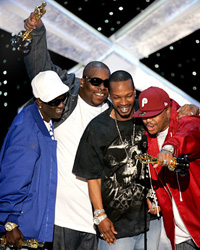
    Three 6 MafiaWhen hip-hop artist Eminem was nominated in 2002 for the Best Original Song Oscar for his track “Lose Yourself” from Curtis Hanson’s 8 Mile, he did not attend the ceremony and therefore the song was not performed per tradition. Musician and co-nominee Luis Resto was on hand to accept the award.

    Three years later, the door is open for Memphis rap group Three 6 Mafia to become the first hip-hop artists ever to perform at an Oscar ceremony.

    Jordan “Juicy J” Houston takes charge in an interview setting, speaking with a rapid fire delivery that gets his point across with the right balance of professional sincerity and conversational candor. His fellow nominee Paul “DJ Paul” Beauregard casually adds to the discussion here and there, remaining quiet the majority of the time. Nominated along with Cedric “Crunchy Black” Coleman for their song “It’s Hard Out Here for a Pimp” from the Hustle & Flow soundtrack, the group seems genuinely moved by the attention.

    “That’s so big,” Houston says. “Right now I think I’m dreaming. And it’s going to be a clean show, you know. No one’s got anything to worry about.”

    Swept up in a media frenzy following the nod to the film’s organic track, Houston and his collaborators can’t seem to go a waking moment without further exposure and regard for the accomplishment.

    “It’s a blessing, man. We’ve been getting a lot of congratulations from our hometown. It seems like we’ve been on the news every day. As a matter of fact, I was on the news just yesterday giving an interview. It’s crazy, man.”

    Craig Brewer’s sophomore effort also received a nomination for Best Actor for the film’s breakout star, Terrence Howard. The film debuted at Sundance over a year ago and has generated genuine love and respect, both for the performances (nominated en masse by the Screen Actors Guild in the Best Ensemble category), and for the music so integral to the viewing experience.

    The nominated song’s key moment in the film comes during an in-studio collaborative session that sees actors Howard, Taraji P. Henson, Anthony Anderson and DJ Qualls putting the track together piece by piece. Houston and Beauregard had plenty of experience working with established musicians, but this proved to be slightly unfamiliar territory.

    “We’ve dealt with all types of artists,” Houston affirms. “Working with artists like Ludacris and then working with the actors, Terrence and Taraji, it was a little different. Terrence is a musician. He plays guitar and he knows music, and Taraji is a singer, so they picked it up fast.”

    He continues, “They told us what the film was going to be about – a pimp struggling to be a rapper – and then we went and wrote the song. I wasn’t there when they filmed the scene, but Craig took it like it was a missing piece in a puzzle and fit it right in. He’s a brilliant director.”

    If you haven’t had the pleasure as of yet, Hustle & Flow tells the story of a Memphis pimp, DJay (Howard), who dreams of reaching higher and making something more of himself. Witnessing the quick success of hometown hero Skinny Black (Ludacris) in the hip-hop arena, DJay discovers he has a voice and he wants it to be heard as well. The question is how accurate is the film to a true hip-hop artist’s experience?

    “It’s real accurate,” Beauregard chimes in immediately. “It’s very real.” Houston backs him up, adding “That’s pretty much how every rapper got started. And that concept goes farther, into filmmaking, or doing what you do, everything’s a struggle. I’ve been through every single thing in that movie, trying to get your demo out there, get someone to play it…I’m not going to say I’ve been a pimp or anything, but the rest of it, yeah.”

    Working on the film gave Houston the chance to talk with one of his personal icons, Isaac Hayes, who plays the role of dive owner Arnel.

    “My influences are Al Green, B.B. King, you know, all the Memphis musicians. But Isaac Hayes has always been my favorite. I’d seen him before around town, you know, at the car wash. I was in the scene in the bar, I played Ludacris’s brother, and me and Isaac got a chance to talk. That was big.”

    The most colorful scenario one could imagine involving Three 6 Mafia this year would have to be the annual nominees’ luncheon, which saw the group in the same room as Hollywood’s elite. It was a surreal experience for Houston and the rest of the group to say the least.

    “I was thinking, ‘What am I doing here?’ You know, you’re used to sitting in the studio with a bunch of guys drinking beer and smelling like something they shouldn’t be smelling like, and then you pull a switcheroo and you’re in Hollywood in a room with Steven Spielberg and Reese Witherspoon. And she’s sexy, man.”

    I had to include that last bit, as it goes to show the genuine awe the Memphis group finds themselves in while still maintaining their personal sense of reality. Fish out of water? Perhaps. But still surrounded by fellow artists nonetheless.

    The Hustle & Flow experience has been a welcome one and an exciting one for Three 6 Mafia. As is typical in the city of dreams, further doors have been opening upon the success of the film. Houston isn’t too keen on talking specifically, but the ball seems to be rolling regardless.

    “Right now we have some stuff on the table. We’ve had some meetings at Paramount and Revolution Studios. I hope you’ll be hearing our songs in some future films.”

    In the meantime, Houston, Beauregard and Coleman are off to the Kodak Theater. They’ll be performing “It’s Hard Out Here For a Pimp” along with actress Taraji P. Henson (Howard opted out of performing at the ceremony, but looks forward to Three 6 Mafia’s performance all the same). Many think they have a genuine shot at taking the gold, as very few songs are such a hot button topic of discussion around town. But winning the award seems to be the furthest thing from Houston and Beauregard’s mind.

    “We really haven’t made an acceptance speech. We’re real superstitious. We’re not really thinking about winning, we’re just having fun. But if we win, we’ll know who we’ll thank when we get up there.”

    The Oscar ceremony is this Sunday, March 5, and one thing is certain. Three 6 Mafia’s mark will be left when the show draws to a close, win, lose or draw. Hip-hop will have arrived at the Kodak Theater in the form of Memphis crunk.