In Contention

Category: Interviews

  • INTERVIEW: ‘127 Hours’ director Danny Boyle and screenwriter Simon Beaufoy

    Danny Boyle has been wanting to tell the story of Aron Ralston on celluloid for four years now. He met with the mountain climber in 2006 seeking permission, but at the time, Ralston was looking to convey the story in documentary form.

    “He didn’t want to make it as a feature with a major actor,” Boyle says, sitting with screenwriter Simon Beaufoy discussing their latest collaboration. “He wanted to narrate it a la ‘Touching the Void.’ Any climber is very much conscious of Joe Simpson and that kind of world. And also he’s not from our world in the media. He and his peer group particularly think Hollywood is bullshit, and you can imagine what they think Hollywood might do to a true story like this.”

    Flash forward a few years and Boyle is coming off a high after his film, “Slumdog Millionaire,” swept the Oscars and provided plenty of cachet (and confidence) for him to tackle anything he wanted. But this story of a 27-year-old undergoing physical trauma and mental enlightenment in a tiny Utah canyon was still sticking with him.

    (more…)

  • INTERVIEW: ‘Cold Weather’ director Aaron Katz

    When the director of a gentle indie character study—even one joshingly praised as “mumblecore with a plot” by certain critics—cheerfully tells you that his next project is more of a “werewolf buddy cop comedy,” you could be forgiven for expecting a thick veil of irony to cover the remark.

    But Aaron Katz, it turns out, is as guileless and unfussy as the films he makes, describing his foray into genre play with a boyish excitement and sincere sense of movie-love. “There are a lot of big films that come out in the summer now, but not the kind that I really love,” he says, fairly late in our Sunday afternoon conversation. “In the 80s early 90s, we had films like ‘Die Hard’ or ‘Beverly Hills Cop’ – genuinely fun and weirdly classy and restrained compared to blockbusters today. So we’re trying to write the kind of entertainment that we’d want to see, but still, you know, very much us.”

    That modestly stated “us” nods to a distinct stylistic trademark the 29 year-old Oregon native and his collaborators have established across three features in just five years: his 2006 debut, “Dance Party, USA,” and Spirit-nominated follow-up, “Quiet City,” both balanced the talky, lo-fi youth idling of much contemporary Amerindie cinema with an unusually crisp visual sensibility.

    (more…)

  • INTERVIEW: ‘127 Hours’ star James Franco

    James Franco sits in one of the countless, nondescript rooms on the sixth floor of the Four Seasons hotel in Los Angeles remembering the time he first met mountain climber Aron Ralston in the same building, perhaps in a room not unlike this one.

    It wasn’t even a year ago — January, to be exact, right around the time of the Golden Globes. Director Danny Boyle had recently offered the actor the role of Ralston in “127 Hours,” a film that would depict the harrowing six days the outdoorsman spent with his hand wedged between a boulder and a canyon wall. It was an ordeal that ended with Ralston cutting off his own arm, just below the elbow, in order to survive. And the film would — naturally, given the material and the filmmaker involved — be anything but conventional.

    But Boyle was adamant that the performance not be an “outside-in approach,” as Franco puts it. It couldn’t be slavish mimicry of personality or behavior. But there was this abstract idea of confronting one’s potential demise that remained somewhat elusive for Franco, yet something he nevertheless wanted to reflect in authentic terms. Little did he know he’d find the answer during that first meeting with Ralston, Boyle, writer Simon Beaufoy, producer Christian Colson and production designer Suttirat Larlarb.

    (more…)

  • INTERVIEW: ‘How to Train Your Dragon’ producer Bonnie Arnold

    Growing up in Atlanta, Georgia, Bonnie Arnold was a product of the Watergate generation of journalists, fired up by the state of current political affairs. She sought her undergraduate degree at the University of Georgia and soon took off to grad school at Boston University, where some dabbling in broadcasting was enough to light a fire of passion for the film business.

    “I got an internship at WGBH and started to get a little taste of what was going on and what other jobs might be available,” she says over lunch on the DreamWorks campus (as they call the Google-esque environment, with its health initiatives, yoga classes and mind-settling landscaping) in Glendale, California. That job led her back to a job in Atlanta with a television station and producer David Picker, who was working on the first season of “American Playhouse.” As soon as she set foot on location, Arnold knew this business was for her.

    “The minute I saw what went on behind the scenes of a film production, any menial job on that set was exciting to me,” she says. “Now it seems there are film commissions in every city in every state in the country. At that time there just weren’t. But Atlanta being a major airport, and Burt Reynolds bringing a lot of work there, Georgia’s a big state with mountains and the beach, there were a lot of advantages. I felt like I could be a bigger fish in a smaller pond.”

    (more…)

  • INTERVIEW: Peter Weir

    Telluride Film Festival

    For director Peter Weir, the pacing of his output has become almost as measured as his brand of cinema. The Australian has built a career around art house grandeur, but his work has slowed to a handful of films per decade, in stark contrast to the frequency of the 1970s and 1980s.

    That could be reflective of a professional desire to take his time from project to project, but another hypothesis could be the fact that the general movie-going audience has shown a reluctance to the product Weir and those like him provide. The industry is changing around him, and for his part, the director appears to be a mighty oak in the storm.

    “I’ve sensed this profound change that’s occurring in the industry that’s not purely locked to the Wall Street crisis,” he says in a modest hotel room here at the Telluride Film Festival, where his film, “The Way Back,” saw its world premiere. “That’s obviously a significant part of it, but what I thought was there is a change in taste amongst a growing audience that really likes sequels and likes their films very, very simple and in the area of pure spectacle. They’re not interested in structural character, and I think the studios and others have reacted to that.”

    However, Weir says he thinks it’s all “a bit of baby out with the bath water because they then more or less said, ‘That’s it, that’s the change.’ Well people and audiences don’t change overnight. And I think there’s a large audience left high and dry, the type of people who appreciate a program like here around the world who are saying, ‘What happened? There’s nothing on.’ Everything does change but I think there’s been an over-reaction on the part of distributors and there’s been a kind of deep conservatism that has come in which has led them back to what we call the genres.”

    (more…)

  • INTERVIEW: Colin Firth, Geoffrey Rush and Tom Hooper

    Telluride Film Festival

    For actor Geoffrey Rush and director Tom Hooper, David Seidler’s script “The King’s Speech” came to them by serendipity. Still in stage play format, it arrived at Rush’s Melbourne residence with a note apologizing for a cold call avoiding the traditional agency pipeline. For Hooper, it came to him because his mother happened to be Australian.

    “My mom was invited by some Australian friends to a fringe theater play reading of this unproduced play, having never been to a play reading in her life,” the director says, tucked into a booth with Firth and Rush at Telluride’s Rustico restaurant. “They were like, ‘We need some Aussies in the audience, would you come along?’ She called me up and said, ‘I think I may have just seen your next film.’ She sent it to me and it sat on my desk. Two or three months went by and I read it in one sitting. I rang her up and said, ‘You’re absolutely right.’”

    Rush politely declined the offer to star in a play that was “trying to be ‘Henry V,’” but noted that the central idea of Australian speech therapist Lionel Logue assisting King George V with his stammer could make for quite the film. His copy of the script, by the way, was accompanied by a DVD of the very reading Hooper’s mother attended.

    (more…)

  • INTERVIEW: ‘Inception’ composer Hans Zimmer and ambient music designer Mel Wesson

    From outside on 14th Street, Hans Zimmer’s Santa Monica offices reflect the typically sterile architecture of the city. Take a few steps in and you’re in the expected world of a musician: bays of dubbing equipment lining the walls, screening alcoves filled to the brim with technology, the usual trappings of a media artist…nothing out of sorts yet.

    However, something lurks behind a large, brown, engraved door in the back, a portal to a creative sanctum and a gargantuan expanse no one would expect to be housed within these otherwise unremarkable premises. Step inside and it feels more like a Viennese castle’s quarters than a Southern California office space (not that the reporter has been to a Viennese castle). Burgundy and cherry wood dominate the scenery as technology mingles with designs of another time, memorabilia decorating every nook and cranny, a Joker statuette keeping watch on the space from afar.

    Zimmer walks in, enthusiastic to discuss his contribution to Christopher Nolan’s “Inception.” He politely (yet somehow cheekily) asks if it’s alright that he smoke a cigarette, then settles in opposite his colleague, ambient music designer Mel Wesson.

    Twenty-six years into a lucrative Hollywood career, Zimmer is tapping into a new creative golden age. He’s coming off his eighth Oscar nomination for his delightfully jaunty work on 2009’s “Sherlock Holmes” and has been a key element of Nolan’s revitalized Batman franchise since 2005. But with “Inception,” his third collaboration with Nolan to date, he says he’s beginning to take note of early career lessons and how they are influencing his work today.

    (more…)

  • INTERVIEW: ‘Restrepo’ co-director Sebastian Junger

    It may have a hard time distracting audiences from shinier baubles on the summer-movie tree, but there are few films currently in theaters more invigorating and essential than “Restrepo.”

    An unprecedentedly first-hand war documentary, shot on the fly by a pair of filmmakers embedded in a U.S. Army unit stationed in Afghanistan’s perilous Korengal Valley, it emphatically earns the previously overused adjective “immersive”: as Taliban bullets rattle past the camera lens, the terror and confusion of combat hits harder than it has – or could – in any narrative war film.

    The film, which expands its release considerably today, leads an already impressive charge of American non-fiction cinema in 2010; it won the top prize at the Sundance Film Festival in January, and we can expect an outcry if due respect isn’t paid by the Academy’s documentary branch.

    The achievement is all the more impressive for being the debut film of Sebastian Junger and Tim Hetherington, not that either name is an unfamiliar one. Hetherington is an acclaimed British photographer who won the coveted World Press Photo Award in 2007: interestingly, for an image from the same assignment that bore this film. Junger, meanwhile, is something of a superstar journalist, an adventurer best-known for his 1991 book “The Perfect Storm.” That work may have been Hollywood-ized in 2000, but Junger’s own big-screen ambitions were rather more casual.

    (more…)

  • INTERVIEW: ‘Father of My Children’ director Mia Hansen-Løve

    As film critics continue to pick over the spoils of Cannes 2010, for regular cinemagoers, it can take an awfully long time for the movies in question to trickle down to them.

    Case in point: Mia Hansen-Løve’s remarkable sophomore feature “Father of My Children,” which impressed critics and won a special jury prize in the Un Certain Regard strand a year ago, but is only now wending its way to U.S. theaters. It opened last week in Los Angeles; tomorrow, New Yorkers get to lay eyes on it.

    They’ll find it worth the wait. “Father of My Children,” which I reviewed out of the London Film Festival last October, is a marvelously mutable, personal study of family and film, beginning as a story about one thing and ending as quite another. Reviews and marketing materials may make it difficult to remain innocent of a key mid-film development — not a “twist” by any means, but a turn that entirely shifts and deepens the focus of the narrative — that floored me on my first encounter with the film. (I’ve done my best to keep it wrapped, but will insert a spoiler alert anyway.)

    This much I can tell you: the film is inspired by, and ultimately something of a tribute to, the late Humbert Balsan, a prolific French film producer and renowned champion of the arthouse. Before his premature death in 2005, he shepherded works by the likes of Lars von Trier, Claire Denis, James Ivory and Béla Tarr, but also acted as mentor to rising talents — the young Hansen-Løve, then an aspiring filmmaker and sometime Cahiers du Cinéma critic, among them.

    (more…)

  • Interviews with the winners

    Geoffrey Fletcher at the 82nd annual Academy AwardsBefore we close the book on 2009, here’s one last rundown of our interviews with this year’s Oscar recipients.  It was lovely to meet with them all as this was truly, for the most part, a season of camaraderie.
    “The Cove”
    Louie Psihoyos (Best Documentary Feature)

    “Crazy Heart”
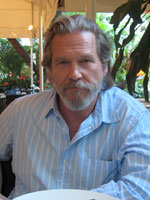
    Jeff Bridges (Best Actor)
    Ryan Bingham and T Bone Burnett (Best Original Song)

    “The Hurt Locker”
    Mark Boal (Best Picture, Best Original Screenplay)
    Chris Innis and Bob Murawski (Best Film Editing)
    Paul Ottosson (Best Sound Editing, Best Sound Mixing)

    (more…)

  • Interviews with the nominees

    Jeff BridgesAs we head into the big weekend of this year’s hotly anticipated Academy Awards telecast, I thought I’d toss this list up once more, broken down by film. We’ve added to it a bit since the nominees were announced.

    And if you’d like to re-live the season so far, you can see how things have panned out at The Circuit.

    “Avatar”
    James Horner (Best Original Score)

    “Bright Star”
    Janet Patterson (Best Costume Design)

    “Coraline”
    Henry Selick (Best Animated Feature)

    (more…)

  • TECH SUPPORT INTERVIEW: Composer symposium, part two

    Michael Giacchino at the 2010 Golden Globe AwardsI think everyone who has seen Pixar’s “Up” was utterly taken by the scene “Married Life,” where emotions ran high and three characters were built between images and music.  As Kris mentioned in this morning’s Oscar Guide, composer Michael Giacchino had the full aural attention of the audience for 10 minutes.

    Speaking to Giacchino, it’s clear he knew it was perhaps the most pivotal moment to get right into a film where music was destined to play a significant role, no matter what. “I remember watching that scene for the first time,” he recalls, “and even watching it without music, it makes you cry. You’re not just looking at what happens on screen, you’re looking at what happens in your life.”

    He found the scene, and indeed, the film itself, to be quite personal. “You end up analyzing yourself,” he says. “It’s an emotional experience and when I’m writing music for any good film, I know I can only do a good job when I’m reflecting what I’m feeling. It’s like a mirror.”

    Giacchino loves being part of what he describes as the “Pixar family” and came aboard the film eight months before it was released. “I’m always at Pixar for something,” he says, adding that he loves doing the music for their short films as well. “Being at Pixar is like being 10 years old and everyone accepts each other for whoever you are.  It’s a wonderful open, honest feeling of being able to say if you don’t like something.”

    (more…)

  • TECH SUPPORT INTERVIEW: Composer symposium, part one

    Hans ZimmerWhen you’re a film music composer as prolific as Hans Zimmer, unique soundtrack flavors can be a bit elusive. But with Guy Ritchie’s “Sherlock Holmes,” Zimmer found them, pushing the boundaries of what’s acceptable with action film scores in the process.

    But the work isn’t without its inspirations. There seem to be bits of Danny Elfman married with Ennio Morricone, but Zimmer was actually reaching back much further.

    “Let me just be German about it,” Zimmer says with a laugh. “It was actually the Kurt Weill vibe I was after. But it’s sort of all in the family, I suppose. It’s fun for me if I can actually go and embrace some of that European stuff again.”

    The score is a delightful, jaunty construction that relishes in its own peculiarity. The good thing about director Ritchie, Zimmer says, is that he’s a bold director who welcomed these slightly “quirky” and “crazy” intrusions.

    “There was an enormous amount of thinking about how to do this differently,” Zimmer recalls. “It became apparent quickly that Guy and I had similar tastes in music and, in a funny way, what hadn’t been done in a movie of this scale. It’s all soloists. It’s not really orchestral. Every note you hear has a real performance attached to it. You can’t really hide it. Everything is very opinionated and bold. It’s not the sort of homogeneous sound you get from an orchestra.”

    (more…)

  • INTERVIEW: Armando Iannucci

    Armando IannucciHe may currently be basking in the glow of a surprise Oscar nomination, but when I call him up at his London home, “In the Loop” writer-director Armando Iannucci is boasting about another achievement entirely.

    “Our family dog just gave birth to three puppies this afternoon,” he audibly beams, our opening pleasantries barely cooled. “They’re cavoodles, a poodle-spaniel hybrid. You know the Hairy Maclary books?” As a matter of fact, I do, though he’s too excited to wait for a response. “They look just like Hairy Maclary. They’re lovely.”

    As I extend my congratulations to the proud mother – on top of those to Iannucci himself – it occurs to me that the topic of hybrid puppies is as appropriate a place as any to start a conversation with this nimble giant of British TV comedy, a man whose writing trades in everyday absurdities and non-sequiturs, whether in the dead-end Norwich media scene (“I’m Alan Partridge”) or the considerably more high-powered world of Downing Street politics (“The Thick of It”).

    It is, of course, the latter – a scabrous satire of the alternately petty and ruthless antics of British government spin doctors – that provides the jumping-off point for Iannucci’s first feature film, “In the Loop.” Linked to the TV series by the presence of Peter Capaldi’s perma-scowling, cyanide-tongued political advisor Malcolm Tucker, the film broadens the canvas by taking on Washington as well as Westminster.

    (more…)

  • INTERVIEW: Geoffrey Fletcher

    Geoffrey FletcherIn a dimly lit backstage area of Santa Barbara’s Lobero Theatre, “Precious” screenwriter Geoffrey Fletcher says his Oscar nomination is still setting in. “When I see in print somewhere that I’ve been nominated, it’s still a bit of a shock,” he says.

    And of course it would be. Two years ago Fletcher was standing in line in New York City outside a comic book shop waiting to get Quentin Tarantino’s autograph on his special edition “Reservoir Dogs” DVD. Now he finds himself sharing the circuit with Tarantino, both of them nominees for their work writing two of the most popular films of the Oscar season.

    “Every day throughout the season has been a learning experience, and a wonderful one, because the journey was pretty long,” he says. “But to get here, even though you wonder how it might feel to have a film out, maybe even one that gets some attention, nothing really can prepare you for it. But there’s some good to that, too, because each learning experience helps anyone who’s creative.”

    He still remembers clearly the first time he screened the film in Midtown Manhattan, long before Sundance or buyer interest, and seemingly a whole lifetime before the film awards madness that eventually took hold.

    “I was crazy about this project and I was so close to it that I felt like I was having a child and handing it to others,” he says. “People around me, primarily strangers, were a huge part of the experience. They seemed completely engaged and they reacted very vividly. I could hear them as well, I could see them and hear them reacting. On the way home I felt so alive.”

    (more…)

  • TECH SUPPORT INTERVIEW: The crafts of ‘Star Trek’

    Eric Bana in Star TrekOne of the year’s biggest blockbusters redefined a franchise and even made it palatable to those unfamiliar with or uninterested in its vibrant history. The film, of course, was “Star Trek,” and as below-the-line craftsmanship goes, it was one of the most impressive efforts of the year.

    Director J.J. Abrams’s mandate was “to renew and refresh, give it back some life,” makeup designer Mindy Hall says. “I had never seen any of the movies, but I grew up watching the series. If we were going to use any reference, it was going to come from that. But I didn’t want my perspective to be too crowded by looking at the archive stuff.”

    With a background in watercolors and ceramics, Hall one day happened upon a documentary on the making of Arthur Penn’s 1970 film “Little Big Man,” which aged Dustin Hoffman nearly 100 hundred years.

    A light bulb went off for the young artist. All she knew was that she wanted to do that, to bring that illusion to life.

    Hall worked in tandem with costume designer Michael Kaplan on the film. A lot of their references were more fashion related, she says. They flipped through European design books and placed a certain emphasis on emulating on the clean and slick look of science-fiction films of the 1950s and 1960s.  “We weren’t trying to do period,” she says. “We were just trying to get the flavor of it.”

    (more…)

  • INTERVIEW: Neil Gaiman and Henry Selick

    (from left) Henry Selick and Neil GaimanIntrepid publicists worked diligently last month to float the idea that Wes Anderson’s “Fantastic Mr. Fox,” due to it’s healthy critics awards take, was in a position to upset the presumed frontrunner in the animated feature category: “Up.” Of course, at the time, no one in the media helping that story along bothered to point out that, well, the opinions of the critics don’t matter a whole lot when it comes to how the Academy votes at large.

    Left in the cold a bit during that discussion was “Coraline,” which opened way back in February — a full year ago — and maintained a steady course through the spring, summer and, eventually, the awards season.  In fact, given the evidence presented by the Annie Awards, it’s possible that Henry Selick’s film would have a leg up on “Fantastic Mr. Fox” as the true competition in a field many have already chalked up to the Pixar contender.

    I spoke to Selick earlier in the season and Gaiman quite recently about their work on the project.  Gaiman had Selick in mind from the beginning, dating back to his first viewing of “The Nightmare Before Christmas” 16 years ago, while Selick put a lot of trademark care into fleshing out a tangible world from Gaiman’s words.  The result is one of the finest animated films in a banner year for the medium.

    (more…)

  • INTERVIEW: Louie Psihoyos

    Louie PsihoyosLouie Psihoyos is a vegetarian.  Go figure.  On the sunny afternoon of the Critics’ Choice Movie Awards, we meet at a West Hollywood vegetarian cafe to discuss “The Cove,” the former National Geographic photographer’s first foray into the world of feature filmmaking, and a stand-out piece of activism that seems to galvanize most anyone who’s seen it.

    “A year ago this week we were just hoping people would like it in Sundance,” he says.  “We had eight public screenings there and eight standing ovations.  I certainly wanted the movie to create a wave of activism, because to me, film is the most powerful weapon by far.  You make a bomb, you kill people, you make a movie, you get allies, and that’s what I wanted to do.”

    The film, if you haven’t heard by now, exposes the brutal annual slaughter of dolphins in the small harbor village of Taiji, Japan.  Local fisherman claim it is a tradition when it doesn’t even date back a century, which really gets under Psihoyos’s skin.

    “They’ve been doing it with drive boats since 1933,” Psihoyos says.  “My mother was born in 1925.  She’s older than their ‘tradition.’  Besides, when you know that your tradition is poisoning people — and they were force-feeding poisoned meat to school children — your tradition argument, I’m sorry, it falls apart.”

    (more…)