In Contention

Author: John Foote

  • TORONTO: ‘Rachel Getting Married,’ ‘Flash of Genius’

    Greg Kinnear in Flash of GeniusWoke up dog tired this morning, yesterday’s marathon of screenings wore me out. Getting old. Do the usual pre-screening intake of food and coffee (a festival staple) before getting ready to head off to the first screening, “Flash of Genius” which I am looking to seeing.

    Greg Kinnear convinced me he was the real deal opposite Jack Nicholson in “As Good As It Gets” and even more so as Bob Crane in the dark biopic “Auto Focus.” He has got an all American quality about him that I quite enjoy.

    (Reviews after the jump.)

    (more…)

  • TORONTO: ‘Burn After Reading,’ ‘Appaloosa,’ ‘Miracle at St. Anna’

    Ed Harris in AppaloosaRough day on the legs yesterday, a lot of walking.  Five films. One of them I will watch on DVD in the luxury of my room tonight, so four that I am running to, but hey, these are films I want to see, which always helps, right?

    I scanned the local papers for reaction to Thursday’s Gala of “Passchendaele” first thing yesterday.  The reviews seem to be fair in their honesty; no one thinks the film is a masterpiece but no one is tearing it apart either. The real news seems to be the demonstrators outside of Roy Thomson Hall protesting our government’s recent announcement of massive funding cuts to the arts.

    Dumb, dumb, dumb.  When will they learn that a culture without art ceases to be a culture?

    Anyway, I arrived at the first screening and took my seat only to overhear a distressing conversation (a dangerous part of this job) between two American film critics. One said the festival had lost its identity this year because its programmers have not brought in any Oscar contenders, unlike last year when four of the five best picture nominees played here.

    I was stunned by his arrogance and ignorance. How could he possibly make that statement? The Oscar nominations…as far as I know…are not announced until January. Perhaps he is forgetting that this festival was created to celebrate the art form.  That films that went on to Oscar attention was just icing on the cake. And who is to say many of the films here may not head in Oscar’s direction? And so what…SO WHAT (??!!) if they do not?

    Perhaps they have forgotten their own identity as film critics and why they took up the job: to write about great films, big and small, Oscars or not.

    (Reviews after the jump.)

    (more…)

  • TORONTO: ‘The Wrestler’ is the talk of the fest

    Just two days and a few hours into TIFF 2008 and already one film is emerging as the talk of the festival.

    I do not see “The Wrestler” until Monday, right after “Che.” But I am counting the hours. Every year there seems to be a little film that arrives here with not a lot of advance notice and captures the imaginations of the audiences and critics on the way to becoming one of the hottest films of the season. Discovery is often what TIFF is all about. Finding that gem, celebrating it and letting the world know it is here.

    I remember “The Apostle” in 1997, as I’ve recounted in this space before. Two groups of men got up and ran out of the theater, dialing their cell phones on their way up the aisle. As Robert Duvall told it to me, they began making deals for the film in the lobby of the the theater, until Harvey Weinstein turned it into a nightmare.

    (more…)

  • TORONTO: “Passchendaele” (***)

    PasschendaeleLet’s face it, we all wanted it to be the great Canadian film we have been waiting for for so long, the one that would become mainstream enough to make its mark on the box office charts and enjoy some praise from critics around North America. We wanted “Passchendaele” to be the great Canadian film that was also popular with mass audiences in the manner of Steven Spielberg’s “Saving Private Ryan.”

    And it’s a rare occurrence.  Two examples leap to mind.  “The Sweet Hereafter,” Atom Egoyan’s 1997 masterpiece, was the last universally acclaimed work of cinematic art out of this country, while “The Barbarian Invasions” took home an Oscar for Best Foreign Language Film.

    Paul Gross, a bona fide stud of a Canadian movie star (but no Spielberg) has wanted to make “Passchendaele” since listening to the stories his grandfather used to tell him. The $21 million dollars he was given to start production was unheard of for a Canadian film, but to his credit every penny is up there on the screen. His recreation of the period is quite stunning, capturing the very essence of a small Canadian town circa 1917.

    Gross catapults his audience back to the muddy fields of the First World War, where soldiers sat and slept in cold, wet and muddy trenches, the smell and sights of death all around them, awaiting the enemy’s advance, awaiting hell to escape from the bowels of the earth. His work at the helm in these sequences is flawless, and though all war films are forever compared to what Spielberg accomplished in the summer of 1998, this was a very different war.  It was one lacking the technologies we had by the 1940s, a much more brutal and unforgiving conflict with almost barbaric weaponry. I mean, Jesus, bayonets?  Gas? Rocks? Whatever they could hit with or throw.

    (more…)

  • Can Ron Howard give ‘Frost/Nixon’ the edge it needs?

    Ron HowardIn 2000 I remember reading a post on Ain’t It Cool News by Harry Knowles.  Having seen an unfinished cut of “How the Grinch Stole Christmas,” the Ron Howard film based on the beloved Dr. Suess story and animated program, Knowles believed that the film would redefine Howard as a filmmkaer, elevate him to a higher level and be the film he would be remembered for.

    Knowles felt it was a greater achievement than “Apollo 13” and pretty much anything else the director had done, that Howard had given us the fantasy film we had been waiting for. Admittedly the effects were incomplete, but Knowles was confident what he saw was a masterpiece.

    Granted it was Harry Knowles, but then, of course, the film was released, critically crucified, reasonably successful before hitting DVD where it is not even regarded as a Christmas classic. You know why? Because it was not very good.

    Whatever Knowles saw, and I am sure he saw something he felt was exciting, did not transfer to the final cut. Instead we had a busy film with a massively over-the-top performance from Jim Carrey and these bizarre little creatures with odd makeup called “Whos.” Christine Baranski was in heat for the green misanthrope, though she had not seen him since he was a wee Grinch, and the town’s mayor was still the pompous windbag he had been in school when he had humiliated our hero and sent him off to the mountain where he now resides.

    They searched the continent of North America to find the right little girl to play Cindy Lou Who, and I suppose Howard thought they had found her.  Wrong.

    One year later Howard won the Academy Award for ” A Beautiful Mind,” one of those wildly over-praised films that somehow win Oscars over better efforts like “The Lord of the Rings: The Fellowship of the Ring” or “In the Bedroom,” or the un-nominated “A.I. : Artificial Intelligence.”

    For my money, Ron Howard has struck gold just once, with the brilliant “Apollo 13,” a superb piece of filmmaking. The Academy awarded the film with nine nominations, but stunningly, despite having won the Directors Guild Award for Best Director, Howard was not among Oscar’s list of helmers. What a terrible slap in the face that must have been!

    In the years since “How the Grinch Stole Christmas” Howard has matured as a director, giving us a superb western that nobody saw called “The Missing,” with outstanding performances from Cate Blanchett and Tommy Lee Jones, and the extraordinary “Cinderella Man,” for which he and Russell Crowe should have earned Oscar nominations.

    If this generation of directors has a filmmaker that resembles Frank Capra, I suppose Howard is the closest we have, though I am not suggesting he is in the same league. Howard is a good director, not a great one.

    Which brings me to my point: I wonder if he can bring the edge needed to make a film like “Frost/Nixon” work?

    (more…)

  • Alone: when you hate a movie everyone else seems to love

    Miramax Films\' The English PatientIn 1996 I remember sitting in a packed screening room watching “The English Patient”; it was close to the end when Ralph Fiennes leaves Kristin Scott-Thomas in the cave, promising to come back, never to return, leaving her (through no fault of his own) to perish.
    I couldn’t help thinking at the time: “For fuck’s sake woman, DIE so we can all go home.”  I hated the film — hated it, hated it, hated it — and yet the reviewes were pretty much raves.  Of course the damned thing won nine Academy Awards including Best Picture and Best Director. I did not believe the love connection between the leads (there was no heat) nor that anyone, quite frankly, could fall for an ice queen like Scott-Thomas, much less risk their life for her.

    And yet all around me was this avalanche of praise.  Even the person I did a TV show with named the film the best of the year.  I went with “Trainspotting.”  “The English Patient” was being hailed as this great historical epic while I championed “The Crucible,” which Fox fumbled in releasing, and as the critic who disliked the film, I looked very silly.

    I admire the craftsmanship with which Anthony Mingehlla made his film, but I think he surpassed it with “The Talented Mr. Ripley” and the wonderful “Cold Mountain.”  And of course “The Englsih Patient” was not the first critically acclaimed film I disliked, nor will it be the last, but it does put one in an odd position. You second guess yourself (sometimes) and wonder if you missed something along the way.

    (more…)

  • Welcome back Mr. Rourke

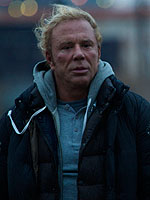
    Mickey Rourke in The WrestlerHe could radiate danger or disarm you with an impish smile. His eyes flashed with rage, or softened with love, both entirely believable. There was a purity to his work, an honesty, an authenticity that many other actors did not, and do not have; he seemed destined to be one of the greats.

    There was a time Mickey Rourke was the heir apparent to Robert De Niro, Robert Duvall and Jack Nicholson, an actor with extraordinary gifts having given an impressive array of performances throughout the 1980s. He stopped “Body Heat” in its tracks with his intimate arsonist, speaking quietly to William Hurt, his lawyer, instructing him on how to build a bomb, his tones quiet as so not to be heard, yet slightly ashamed at what he was suggesting.

    He was astonishing as Motorcycle Boy in Francis Ford Coppola’s experimental and brilliant film “Rumble Fish.”  He tackled the role of a young man blessed, or cursed, with being good at everything he did, yet lacking in ambition because nothing challenged him.

    Rourke was brilliant in “Diner” as the would-be hair dresser that gets in too deep with gambling. And opposite Eric Roberts in “The Pope of Greenwich Village” he put on a method acting workshop that would have made De Niro and Pacino jealous

    Michael Cimino’s under-appreciated “Year of the Dragon,” Alan Parker’s “Angel Heart” — equal success as a  bigoted police captain and a dedicated gumshoe respectively.  And then it all fell apart.

    Friendships with members of the Hells Angels, some of whom he took to studio meetings, and a strange foray into boxing made Rourke poison in the business. No one would work with him.

    This is all beautifully outlined in my good friend Christopher Heard’s book Mickey Rourke: High and Low, and it’s fascinating to read, to gain an understanding of how and why Rourke’s career imploded as it did. Here was a massively talented actor, a prodigy if you will, one of the new greats, and before he was 35 he was finished.

    BUT…now he’s coming back with what is said to be a solid performance in Darren Aronofsky’s “The Wrestler.”  If rumors can believed (sometimes they can, sometimes…well…), the performance might land him in the Oscar circle.  Kris touched on these possibilities a few weeks ago.

    In fairness, Rourke has been back for a while with acclaimed work in “Once Upon a Time in Mexico” and “Sin City,” but this new film supposedly challenges him as an actor and I hear he rises to the occasion with what is being hailed as the finest performance of his career and among the finest of this year.

    All hail Mr. Rourke.  And weclome back…it’s been too long.

  • Walking away with it

    Tom Cruise in MagnoliaI remember slipping into a small theater in 1987 to see something called “Street Smart,” the new Christopher Reeve film that I had no particular interest in, to be quite honest. Two hours later I emerged knowing two things: Morgan Freeman was a brilliant actor, and he would be nominated for an Academy Award.

    In a rather lacking movie, Freeman was terrifying as Fast Black, a vicious pimp who sees in a young reporter the chance to get off of a murder rap. At one point in the film he holds a pair of scissors to the eye of one of his hookers and invites her to choose which eye she is going to lose. It was an astounding performance that launched the actor’s career, earning him awards from the Los Angeles critics, New York critics and National Society of Film Critics…as well as that Oscar nod I predicted.

    Supporting performances can often be the heart and soul of a film, anchoring the picture and actually elevating the work of the lead actor. Can you imagine what “The Wizard of Oz” would be without the perfection of the cast surrounding Judy Garland, or “The Godfather” without the magnificence supporting Marlon Brando and Al Pacino? Nor can I, and in fact, through the years, supporting performances have become more and more important, certainly earning more press, with lead actors once unwilling to be promoted for an Oscar in these “lesser” categories now only to be happy to do so.

    Tom Cruise, arguably the biggest actor on the planet in 1999, gave his finest performance in a supporting role in “Magnolia” and somehow — SOMEHOW — lost the Oscar to Michael Caine. Jack Nicholson has gone the supporting route many times, winning an Oscar for his work in “Terms of Endearment” and earning nods for “Easy Rider,” “Reds” and “A Few Good Men,” though he was criminally snubbed for “The Departed.”

    Meryl Streep has become no stranger to supporting roles, earning an Oscar nod for “Adaptation” in 2002 (she too should have won) and certainly turning heads for a should’ve-been-nominated turn in “The Manchurian Candidate.”

    Sometimes an actor in a supporting role can dominate the film, as we saw this summer with Heath Ledger in “The Dark Knight.” In “Apocalypse Now” the film actually peaks with Robert Duvall’s napalm-loving surfer, not Brando’s deranged Colonel. Like Javier Bardem in “No Country for Old Men,” Duvall so dominated the screen when he was on it. In just a few scant scenes…we could never forget him.

    The work of the supporting actor, the “job,” so to speak, may seem to be support of the lead actors, secondary figures in the canvas of other artists. But what we see more often than not is their support of the story, and in many cases, their rise to infamy as a result.

    Have your say. What are some of the most sensational supporting performances in film history?

  • Most anticipated films of Toronto

    Miracle at St. AnnaArmed with the fat program book, detailing every single film to be screened at this year’s Toronto International Film Festival, I have gone through it several times to find the films I am interested in seeing. The press schedule is announced online today, at which time I will begin the nightmarish process of creating a calendar that details screening times, interview times, and leave room for the unexpected, a last minute call from a frantic publicist to do an interview I had requested and been declined, but now they want me.

    I love TIFF.

    Aside from Christmas (for my kids) this is my favorite event of the year. Admittedly this one is a tad lower key than in other years as there were some last minute disappointments, films we thought were coming, rumored to be coming, and are not. The hottest whisper on the wind saw “Body of Lies” here with Leo, Russel and Sir Ridley, as well as “The Road,” a film I cannot wait to see, having read the amazing book in three scant days.

    I had hoped Eastwood’s “Changeling” would be here, but for some goofy reason Angelina Jolie could not make it and the festival folks felt Clint Eastwood was not enough star power on his own…(ouch!).

    Those minor complaints aside, I am now officially pumped for the festival to begin. Following are the ten most anticipated films of the fest for me and me alone. I will see more than 40 films over the 10 days, conduct 20 interviews or so, and maybe get four hours of sleep a night. I will ingest more coffee than is healthy, drink far too much water, and eat poorly, but hey…it’s festival.

    Check out the list after the jump…

    (more…)

  • Will ‘W.’ hold a candle to ‘Nixon?’

    Hollywood Pictures' NixonWith Lionsgate Films’ “W.” on the horizon, we are reminded of the last film Oliver Stone made about an American President: “Nixon,” a critically praised and Oscar nominated work that was the exact opposite of what most thought it would be.

    An angry child of the 1960s, having chronicled Vietnam on screen (some say definitively), Stone announced he was making a biography of President Richard M. Nixon and the feeling was that the film would be an attack on the man, who resigned office in 1974.  Yet when the film was released and critics got a look at it, they were overwhelmed by Stone’s work. Instead of an all out diatribe, he had created a study of a man who felt unworthy of the highest office in the land, even though he spent much of his life trying to get there, and was for most of his presidency a very good Commander-in-Chief.

    Stone’s film portrayed Nixon warts and all, the paranoia, the vulgar language he was known to use, his mistrust of even those closest to him, his jealousy of the Kennedy clan, and the strange hold his mother had on him, even in his later years.  The film displayed a brilliant statesman who struggled with his own sense of self worth, knowing that he could never be loved as Kennedy was, yet also aware of the good he was doing.

    Nixon opened relations with two communist countries, Russia and China, a huge move for him as he was a known communist hater and right hand man to no less than Senator Joseph McCarthy during the red purge of the 1950s that ruined many innocents. He would end Vietnam after having escalated a war he inherited, admitting defeat, and when the nation screamed for his impeachment just two years after being re-elected with the largest margin in the history of United States politics, he resigned in disgrace.

    (more…)

  • Musings on a third ‘Dark Knight’ viewing…masterpiece?

    Christian Bale in The Dark KnightSo once with the press, a second on my own, and a third time last week with my 16-year-old daughter, and still the film enthralled me from beginning to end. In fact, I probably liked it more this time than I did the previous two, realizing as the film’s mighty power rolled over me that I was watching something truly spectacular, the likes of which we have not seen for quite some time, and are not likely to see again.

    Here is a film, a work of art that is also a movie, a great ride for the mainstream audiences seeking nothing more and a reward for those who are.  For we film maniacs who like our films to have substance, “The Dark Knight” is loaded with it: Christian Bale’s tortured hero, Heath Ledger’s deeply troubled Joker, Aaron Eckhart’s truly decent man corrupted by loss and the Joker’s twisted games, Michael Caine’s wise and warm Alfred, and the heart of the film, Gary Oldman as James Gordon, who alone understands the Dark Knight’s sacrifice for the good of his city.

    The action sequences are stunningly choreographed, but Nolan is aware that his film must have much more. He gives the picture a mood and tone that is perfect for the screenplay, he guides his actors with a delicate hand, allowing them to inhabit the characters, and he understands not only his subject, but his audience’s expectations.

    (more…)

  • The top 15 greatest foreign language films ever

    Nosferatu the VampyreI thought I’d respond to some harking in a recent post about my tendency to lean toward domestic cinema.  The assumption seems to be that I don’t care for foreign language cinema, but that couldn’t be further from the truth.

    One of the great joys of attending a film festival is to seek out films from other countries, to learn what one can about their cultures through their brand of cinema and to understand that art, in any form is really not so different around the globe.

    I discovered foreign language film at a very young age thanks to a local rep cinema that constantly played movies like “Breathless,” “Beauty and the Beast,” “The Wild Child” and “Rules of the Game.” The first time I went to see “Breathless” I was 13 and was thrilled by this “new” experience of reading subtitles and watching something that seemed so different to me. Of course as I matured I realized that what seemed new was the artistic vision of a different culture.

    The old theater ran some films directed by the great Indian filmmaker Satyajit Ray: The Apu Trilogy. For the first time I saw what extraordinary realism could be created on the screen. I remember when “The Tin Drum” was banned in Ontario (stupid, stupid, stupid). I headed down to Buffalo to see it…loved it.

    I remember the first time I saw a film directed and written by Lina Wertmuller, who was huge in the 1970s for a short time, as well as my discovery of Ingmar Bergman and Bernardo Bertolucci as well, Akira Kurosawa and Federico Fellini, their films forever seared into my mind.

    Now back to the reason for posting this entry: Do I prefer North American cinema? Shoot me, but yes I do, because it is what I was raised on, what I am used to.

    Random asides on some of the greats…I believe Ingmar Bergman is overrated, and though I have enjoyed a few of his films, I certainly do not believe everything he makes is a masterpiece. His work, the two exceptions on this list below, strikes me as pretentious and over-intellectualized.

    Though Jean-Luc Godard did something rather extraordinary with “Breathless,” I have not liked much of anything else he has directed, some of it nothing more than artistic masturbation.

    I think it is somewhat sad that so few foreign language films actually make it to these shores, however.  But on with the list…

    (more…)

  • Will Spielberg turn his attentions to ‘Lincoln’ after withdrawing from ‘Chicago 7?’

    Abraham LincolnSteven Spielberg announced quite some time ago, a year and a half at least, that he planned to make a biography of President Lincoln with Liam Neeson as the 16th American President. Excited about this right away, I sat and waited, and waited, and waited, while he did the latest Indiana Jones film (no argument, it was fun) and then moved on to “The Trial of the Chicago 7,” or so it seemed.

    Word is that he has not withdrawn from the Lincoln project.  I am hoping he goes at it with a vengeance.  Liam Neeson was announced as Lincoln with Sally Field as his wife Mary Todd. They seem like roles of a lifetime for each.

    When Spielberg throws himself into an important film, there is no stopping him, as we have seen with “Empire of the Sun,” “Schindler’s List,” “Saving Private Ryan,” “A.I.: Artificial Intelligence” and “Munich,”etc. “Lincoln” sounds to me the stuff of legend, a film that could be for the ages and might bring the man his third Oscar for directing. Hopefully this one is on the near horizon for him. The story is fascinating and deserves proper treatment. He was a great man who fought to unite the nation and treat all men as equals, with a tragic home life, and finally the victim of an assassin’s bullet.

    Please Mr. Spielberg, get to “Lincoln”.

  • TIFF 08 looks promising, but still some disappointment

    TorontoThere have been complaints in recent years that the Toronto International Film Festival had gone Hollywood, openly courting the directors and stars to bring their films to town.  Like Dorothy beginning the journey down the yellow brick road, the fest began to become a launching point for Oscar campaigns. No secret, many films that premiere at Toronto move on to win Academy Awards or grab nominations. What began as the upstart Festival of Festivals is now among the top three festivals on the planet, certainly the most important of the fall.
    I have many fond memories. Seeing Robert Duvall’s superb film “The Apostle” for the first time, not realizing a bidding war was happening in the lobby; watching Atom Egoyan’s haunting “The Sweet Hereafter” with the knowledge that Egoyan had become a world class director; seeing a star director born with “Boogie Nights”; knowing that “American Beauty” had begun its journey to Oscar here; screening “Almost Famous” and believing it too was headed for Oscar glory; Ellen Burstyn’s stunning performance in “Requiem for a Dream”; the brilliant Canadian films “The Barbarian Invasions” and “C.R.A.Z.Y.” both from our French speaking province of Quebec; Sofia Coppola becoming a major writer/director with “Lost in Translation”…on and on and on.

    This year, once again, the programmers have done an excellent job finding films from around the globe to bring to our fair city. Among the Gala Presentations are “Burn After Reading,” the latest from the brothers Coen, “The Lucky Ones,” “Pride and Glory,” a cop drama with Edward Norton and Colin Farrell, “Nothing But the Truth,” which Kris revealed yesterday, “Loss of a Teardrop Diamond” with Bryce Dallas Howard in a little known Tennessee Williams screenplay, and “Dean Spanley” with the great Peter O’Toole perhaps again making a run for the Oscar?

    (more…)

  • More announcements from TIFF

    Toronto International Film FestivalPaul Dano and Zooey Deschanel are to be featured in “Gigantic” with John Goodman in a supporting role. In “Lovely Still,” acting icons Martin Landau and Ellen Burstyn portray two seniors who find love late in life struggling with the baggage that comes with a life so long lived.
    “Lymelife” looks interesting, a film seen through the eyes of a young boy, portrayed by Rory Culkin, and what happens when an outbreak of Lyme disease hits a small town. Alec Baldwin portrays the boy’s loud mouth father with strong support from Cynthia Nixon, Timothy Hutton and Kiran Culkin in a film executive produced by no less than Martin Scorsese.

    One of the more intriguing films of the fest will be the US film, “The Stoning of Soraya M”, a study of an Iranian woman falsely accused of adultery which is a crime punished with death by stoning. Oscar nominee Shohreh Aghdashloo stars in the film.

    Mark Ruffalo is back in town with more than one film, co-starring with Ethan Hawke in “What Doesn’t Kill You” about two friends looking out for one another in a tough Boston neighborhood. The film was produced by filmmaker Rod Lurie, who’ll be in the thick of the Oscar hunt this year with his own “Nothing But the Truth.”

    The other titles include “Rain” from the Bahamas, “Cold Lunch” from Norway, “Vacation” from Japan, “Apron Strings” from New Zealand, “Better Things” from the United Kingdom, and “Daytime, Drinking” from South Korea.

  • Greatest film? Ever changing, ever evolving…

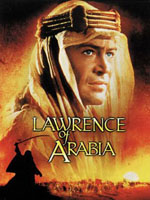
    Lawrence of ArabiaI just finished teaching a class of senior film students and we entered into a terrific debate about their choices for the greatest film ever made. These were not regular students of mine.  Another instructor had taught them film history, but being aware of my work as a historian and writer, they were excited for the chance to debate.
    It was shocking to me that not a single film they mentioned was made before 1980. Not one. My God…not even “Raging Bull.” Now in fairness it could be a fluke and this is a class not willing to challenge themselves by studying in depth the films of the past.  I have taught classes that dove right in and came away loving the work of Chaplin, or Renoir, for instance, without being exposed to it in the past.

    I challenged them in the next week to go and view some of the films on my personal 10 best list in the hopes their eyes would be opened to the great works of the past. Every film unseen is a new release, right?

    Though home entertainment, video and DVD has allowed for entire new generations to become better educated cinematically, I now wonder if that is actually happening? These students have been hammered with film history and film theory, they have screened “Citizen Kane,” “On the Waterfront” and “Lawrence of Arabia,” so they are certainly aware of them.  Yet the film most often chosen as the greatest was “Pulp Fiction.”

    I do not personally share the opinion that “Citizen Kane” is the greatest film ever made. There was a time when perhaps it was, and while it remains the most innovative film of its time, other endeavors have now surpassed it in my opinion, and at least one made before it was always better.

    Is film history being preserved? Are the great films from years gone by being remembered for the sublime works of art that they were? Are young people aware that many films of today are homages to the films of the past? It is among my greatest fears that the generations to come will lose touch with the great films of yesteryear.

    As a critic, I see my job to celebrate the great films and render an opinion of the pictures I see, but as an educator it goes much deeper than that. Film students should live, breathe sleep and eat cinema. I did. I am stunned when a student puts up his or her hand when I ask who hasn’t seen “The Godfather.” It is a fact I cannot simply not fathom that students making the decision to create films for the rest of their life come to a college and are not aware of the classics.

    I do my best to instill that love.  My office is a regular hang out for kids wanting to talk film, wanting an opinion, or hoping for a recommendation. I would not have it any other way. If one or two students per term leaves having seen the films I asked them to see, understood them, understand further why they are historically significant…I am confident I have done my job and my part to keep film history alive. Nothing pleases me more than turning today’s students onto something like the Universal monster legacy and having them come back amazed at the films…it is a thrill.

    For the record, my ten greatest North American films are in order of preference:

    1. “The Godfather Part II”
    2. “The Godfather”
    3. “Lawrence of Arabia”
    4. “The Wizard of Oz”
    5. “Schindler’s List”
    6. “Raging Bull”
    7. “The Searchers”
    8. “On the Waterfront”
    9. “Apocalypse Now”
    10. “The Treasure of the Sierra Madre”

    What about you?  What are your top 10 films of all time — the age-old question.

  • Thrilling Oscar nominees…when the Academy took a chance

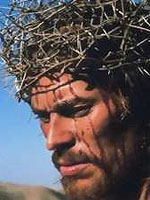
    Willem Dafoe in The Last Temptation of ChristI love it when the Academy steps out and provides us with a genuine shock that is so richly deserved you feel like weeping for joy that they got it…they really got it.
    For all the ranting I do about the Academy’s lack of vision, every so often they pull something out of the air that so defies the odds, so stuns the critics and Oscar forecasters, it is a hearty reminder that these people do love film.

    I think the first time I really stood and cheered a shocking inclusion was Martin Scorsese’s directing nomination for “The Last Temptation of Christ,” a powerful film that it took a great deal of courage to make, and an equal amount for the Academy to acknowledge given the storm of controversy the film faced upon release.

    I remember going to see “Last Temptation” on opening day and asking one of the men picketing the film what he had thought. “Oh I haven’t seen it,” he stated, “my church warned me against it.” It was a clear indication of the power of religion over the masses.

    Two years earlier I championed David Lynch’s being nominated for “Blue Velvet,” a dark and frightening film that Roger Ebert and Gene Siskel dissed at every turn. What would have made the year complete would have been a nomination for Dennis Hopper in the film as opposed to his supporting nod for “Hoosiers.”

    In 1998 as I cheered when Canada’s Atom Egoyan found his way to the Best Director list for his haunting “The Sweet Hereafter.”  The film had been named the year’s best by the Los Angeles Times and finished runner-up for Best Picture and Best Director in the New York Film Critics Circle voting. Not only was this a huge accomplishment for Egoyan, a uniquely gifted director, but for Canadian cinema.

    Just last year, Sarah Polley was nominated for her screenplay “Away From Her,” which also earned Julie Christie a nod for best actress. In my opinion Polley should have been a nominee for Best Director as well.

    I guess I wonder today, in this age of super Oscar campaigns, does the Academy really sit up and take notice of the daring work, or should most of the credit rest at the feet of savvy PR pushes?  I have to think, at least in a number of cases, it has to be the Academy.  The aforementioned films did not have the money to spend on any major campaign, of course.

    So that leaves me feeling good about the AMPAS and what they are doing, despite my moaning.  They are still watching and appreciating art in cinema, and the proof shines through form time to time.

    Any bold choices you can think of to celebrate?

  • Paul Newman will leave us a legacy of greatness

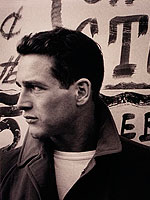
    Paul NewmanIt’s no secret that actor Paul Newman has been on the ropes for a few months, but with reports surfacing that the screen legend has left the hospital to return home and “die in peace” settle the issue in with a painful clarity.

    To me this is devastating news because Newman is truly one of the greats of cinema, a brilliantly gifted actor who grew into that role before our very eyes, and a movie star able to walk that precarious walk. I had the immense pleasure of meeting and interviewing him in 2000 during a junket trip to Los Angeles.

    There was a nightmare of some sort I had been asked not to write about, which gave me time with Newman quite by accident, and we were ablse to discuss his career and performances. What a thrill, talking to the man who gave us so many fine characters, summoning the courage to portray out and out bastards, somehow making them all too human.

    Like Brando before him, Newman made acting look effortless, and though he did not necessarily explode into the industry like so many others, he grew consistently as an actor through the 1950s and became an icon in the 1960s.

    (more…)