In Contention

Tag: The Reader

  • OFF THE CARPET: Come together, right now

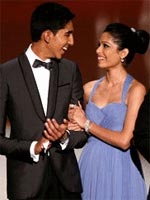
    Dev Patel in Slumdog MillionaireAnyone ready for it to all be over?

    For me, it hasn’t been a painful Oscar season, despite what I may have let on throughout the last five months. After all, my favorite film is and has been primed for the big win since November (well, since we said it was in November…everyone soon followed suit). And for that, I can’t be agitated, can I?

    Obviously I can’t speak for the troops over on Melrose. “Slumdog Millionaire” has to be the worst thing to happen to a lot of those hard-working folks. Blood must be boiling.

    And who can blame them?  It really just sucks when the perfect storm conspires against you. Old timey Hollywood mixed with state of the art digital artistry just hasn’t been enough for industry filmgoers this season. The economy, the new president, the zeitgeist, it was all too much. Fox Searchlight finally moved out of its perennial role as underdog and became the schoolyard bully.

    Of course, it would be nothing more than an upset if “Slumdog” failed to take the prize at this point. And really, besides a scattered few, who’s predicting that with any confidence?

    (more…)

  • ‘Slumdog’ takes 7 BAFTAs as Rourke, Winslet triumph

    For an awards body renowned for its frequently contrarian bent, the most surprising thing about this year’s BAFTA awards was, well, just how unsurprising they were.

    As the evening unfolded, not a single result emerged that could be classified as a major upset, even if the winners (“Man on Wire” helmer James Marsh in particular) occasionally looked more astonished than anyone else. Yours truly got 16 out of 21 predictions correct (a personal BAFTA record, I think) and even then, most of those errors came from trying to second-guess their usually far less predictable tech categories, and slightly underestimating the across-the-board love for “Slumdog Millionaire.”

    For love it they did, awarding it 7 trophies in the biggest BAFTA sweep since “Schindler’s List” matched that tally fifteen years ago. There really is very little to say about the “Slumdog” phenomenon at this stage, other than to admire the grace, modesty and genuinely endearing excitement that Danny Boyle, et al, still manage to convey at these ceremonies, all the while concealing the fact that they can no longer be surprised when their names are called.

    The other major story of the ceremony, however, was Mickey Rourke, whose outrageous but nonetheless slyly self-deprecating speech was the evening’s clear highlight. (His hilarious shout-out to his agent for “telling me who to fuck” is surely a soundbite for the ages.) I think it was clear to anyone in the UK that Rourke would win this – “The Wrestler” appears to be attaining cult status here, while the buzz around “Milk” has been eerily quiet – but it does nevertheless prove that he’s still very much in the Oscar race. Taking his wonderful performance aside for a moment, Rourke has now twice proved that he makes for great TV – and assuming they can handle some salty language, his knockout speech tonight may well win over some undecided AMPAS voters.

    (More thoughts, and a full list of winners, after the cut.)

    (more…)

  • Predicting BAFTA, part two — main categories

    Continuing yesterday’s not-so-educated guesses at tomorrow’s BAFTA Awards, we move on the main categories. In many ways, they’re easier to predict than the frequently confounding technical categories, but that’s no reason to get complacent – as we saw last year with then-unexpected wins for Tilda Swinton and Marion Cotillard, BAFTA is more than capable of throwing a significant spanner in the works in the top races.

    By the way, be sure to tune in tomorrow, when I’ll be liveblogging the ceremony, beginning with the red carpet coverage at 11 a.m. PST (that’s 7 p.m. London time).

    BAFTA bizarrely issues a press release revealing the winners before the ceremony begins. (I told you they haven’t a clue how to organise the event.) I’ll be ignoring that, for my part – the ceremony can be dull enough without having every last drop of suspense extricated from the proceedings. But the info will be available. I leave the choice up to you.

    Moving on to the predictions…

    Best Film
    “The Curious Case of Benjamin Button”
    “Frost/Nixon”
    “Milk”
    “The Reader”
    “Slumdog Millionaire”

    There really is terribly little to discuss here. The truth is that “Slumdog” would likely be a BAFTA favourite even if it weren’t primed for Oscar glory – a true British success story, from a popular but largely unsung hometown filmmaker, featuring a British lead actor from a high-profile Channel 4 TV drama, it’s been a massive local box-office success, and has enjoyed nearly the same level of critical adulation here as in the States. BAFTA has celebrated homegrown product in this category for the last two years, and will do so for a third time running. If anything were to derail the Mumbai express, it would be the very British-flavoured “The Reader” … but it won’t.

    (more…)

  • ‘Dark Knight’ snub puts it in great company

    Christian Bale in The Dark KnightWhile I, too, am tired of the carping and griping about this years Academy Award nominations, I still have not been able to wrap my head around how this group could have snubbed “The Dark Knight” and Christopher Nolan. They obviously liked the film, something akin to “Dreamgirls” two years ago, landing many nominations but lacking best film and director.
    But “The Dark Knight” is in pretty fine company in terms of great films not nominated for the big prize. I have always found it incredible that a group of people so close to the industry (working within it, actually) could miss films that we as critics and audience members know to be great films.  How does that happen? Are the Academy Awards truly elitist? Are they wrong-headed? Or are they that political and so controlled by the studio campaigning system that they really can be swayed like the members of the Hollywood Foreign Press Association?

    Yes I am still smarting about “The Reader,” whether it really was #5 or not, because I share Kris’s opinion of the film: sloppy, not very well put together, not particularly moving, and aside from Kate Winslet, in a SUPPORTING role, the film did not not seem to have very much going for it. Yes I have heard all those nasty rumors and theories about Holocaust films getting nominated, and until now, I have never put much stock in them, but I have to tell you, this one stunned me.

    Would I be so miffed if it was “Gran Torino” or “Revolutionary Road?” No, because with the former I would understand the Eastwood love, and with the latter I believe it should have been nominated, but “The Reader” has left me in a spin.

    Mr. Nolan, you made a great film, something the Directors Guild of America (God bless them) recognized, and legions of admirers anxiously await your next work, Batman or not. And rest assured you are in good company, here are some of the great films that the Academy chose not to nominate for Best Picture:

    (more…)

  • “It’s a shame ‘Slumdog’ is going to come in second.”

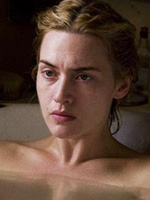
    Kate Winslet in The ReaderYep, those would be Harvey Weinstein’s words right there. EW has an interesting piece positing the theory that “The Reader” is really the film most likely to spoil the party for “Slumdog” on Oscar night — even if the writers admit that it’s unlikely to happen. (I agree on both counts.)

    It’s a handy precis of the comeback narrative that Weinstein has forged this year — both for himself as a major Oscar campaigning force, and for the movie, which some months ago looked like an awards-season casualty after suffering tepid reviews and unwelcome behind-the-scenes controversy.

    How did he do it, given a campaigning budget that’s a mere fraction of the millions he spent back in the “Shakespeare in Love” days? The answer, the article says, lies in Weinstein’s self-professed new “low-key” strategy with an emphasis on simply screening the film, especially in certain well-targeted areas:

    Weinstein’s first salvo was to home in on the Academy’s aging Jewish population. Although he’s been trying to get all voters to see the movie, it’s no coincidence that he has screened The Reader at such Jewish cultural hot spots as the Skirball Center in Los Angeles and the 92nd Street Y in Manhattan, places where one is likely to find older voters with a deep connection to films about the Holocaust. ”When I went to a screening, I was one of about four people who didn’t have blue hair,” says one Academy member and former campaign engineer. ”And I was the only WASP.”

    Weinstein also invited Nobel laureate and Holocaust survivor Elie Wiesel to The Reader‘s New York premiere, and courted an endorsement from the Anti-Defamation League, a group whose mission is to call attention to anti-Semitism … Weinstein says, ”It must have been the hand of Anthony Minghella and Sydney Pollack, because Elie Wiesel asked to see me after the screening and he hugged me and said how much he loved the movie.” (Wiesel, through his agent, declined to comment.)

    Ahem. While there may be a lot of people (Roger Ebert among them) protesting that “The Reader” isn’t a “Holocaust movie” — and beneath the surface, it isn’t really — it doesn’t appear that Weinstein has got that particular memo. The point is that he’s marketing it as a Holocaust movie, and it seems to be working.

    (more…)

  • Winslet’s win a done deal or is there more to consider?

    Kate Winslet in The ReaderWhen Kate Winslet surprisingly popped up in the lead actress category for her performance in “The Reader,” most of us immediately jumped to the conclusion that she’ll win the Oscar walking away.  That is still probably the safest bet, but some folks are disturbing the waters, starting with Winslet herself in a recent AP story:

    Kate Winslet says she is prepared to leave this year’s Oscar ceremony as she has five times in the past — without a golden statue.

    “I’m so used to it, having gone through it before and having lost so many times,” Winslet says. “Being in that losing state is something I’m much more comfortable in, in a funny kind of a way.”

    David Carr, meanwhile, points out that Ray Richmond considers Winslet’s category switcheroo to be a “snag”:

    Winslet’s previous wins for “Reader” came in the supporting category. For reasons known only to its acting branch, the Academy decided to give her more votes in the lead category. Winslet is untested here. While the odds still favor her, don’t rule out the chance of a loss.

    What do you think?  Is the Oscar already in her hand or is Meryl Streep most likely to swoop in and grab statue #3?  (Personally I don’t think Anne Hathaway is going to figure in here.)

  • Denby nails it

    If you saw his TV chat with Charlie Rose and A.O. Scott, you won’t be surprised to read that critic David Denby doesn’t think much of this year’s Oscar crop. (And if you didn’t, you could probably guess.) Anyway, in this very lucid New Yorker piece, he expands on the points he raised on the show, tearing apart every Best Picture nominee but “Milk,” and lamenting the exclusion of “Happy-Go-Lucky” and “Rachel Getting Married.” I don’t agree with everything he says (and I do think he’s unnecessarily cynical about “Slumdog Millionaire”), but he’s bang on-target here:

    In the well-acted “Frost / Nixon,” a nice journalistic coup—David Frost’s pushing Richard Nixon into semi-confessional mode, in 1977—has been elevated to a great transformative moment in history, which, alas, it was not. These two films (“Frost/Nixon” and “The Reader”) may have been controlled more by their directors and their writers than by their studios, but they’re still the kind of middlebrow pictures that the Academy used to nominate in the bad old studio-dominated days—the contemporary equivalents of “Judgment at Nuremburg” and “Guess Who’s Coming to Dinner?” They are “important” pictures that “say” something about public issues. They’re good for the industry’s image.

    Note the quotation marks. The rest here.

  • What does it all mean?

    Kate Winslet in The Reader“Pictures at a Revolution,” Mark Harris’s smart, keen-eyed study of the cultural implications of the 1967 Best Picture race, is without a doubt one of the best books ever written on the subject of the Academy Awards. So it’s hardly surprising that Harris, in a piece for yesterday’s Observer, has provided the most intelligent take on this year’s awards race to date.
    What’s particularly interesting is that, while he just wrote an entire volume on the countercultural meaning of a Best Picture race in a pivotal year in Hollywood history, he’s quick to avoid such a unified reading of this years nominees — effectively and wittily debunking several trends that many Oscar-watchers have attempted to glean from the crop:

    1) The Academy has a new, more global outlook, represented by the 10 nominations given to Danny Boyle’s Slumdog Millionaire. Alternatively, the Academy suddenly has a new, more insularly American outlook, as evidenced by the fact that 17 of the 20 acting nominees are from the US, the most since the early 1990s.

    2) The “gay mafia” in the Academy, outraged by the passage of the anti-gay marriage amendment Proposition 8 in California, powered the gay-rights drama Milk into the race with eight nominations. However, it will never win, because the Academy is hopelessly homophobic, as we all are presumed to have learned when Brokeback Mountain lost to Crash.

    3) In a time of great economic uncertainty for the major studios, Hollywood reasserted its authority by bestowing 13 nominations on the high-grossing, high-budget product of two conglomerates, The Curious Case of Benjamin Button. But the Academy simultaneously renounced any interest in supporting studios or representing popular taste by snubbing Christopher Nolan’s blockbuster The Dark Knight, excluding it from consideration for best picture, director or screenplay.

    (more…)

  • WEEKLY WRAP: ‘Slumdog,’ Sundance, Santa Barbara

    It slipped my mind to do this yesterday, but here’s the week that was:

    • “Slumdog Millionaire” steamrolled through the week’s precursors, taking the Producers Guild Award…

    • … before landing top honours at the SAG Awards, which we live-blogged for your pleasure.

    • Still on “Slumdog,” a potential smear campaign against the film was duly foiled.

    • No surprise, then, that this week’s Off the Carpet column declared the race pretty much over.

    • The Academy settled “The Reader” producers’ dilemma by breaking its ludicrous “three-nominee” rule.

    • Meanwhile, some are wondering whether Harvey Weinstein’s tactics could harm the film’s chances, particularly in the Best Actress race.

    • Away from the Oscar race, gritty urban drama “Push” cleaned up at Sundance.

    • The Santa Barbara fest carried on, with an interesting screenwriters’ forum among the highlights.

    • Still at Santa Barbara, Danny Boyle, Kate Winslet and this year’s six Virtuoso stars were among those celebrated.

    • Could “The Curious Case of Benjamin Button” really go 0-for-13 on Oscar night?

    • Finally, rounding off a very “Slumdog”-flavoured week, be sure to check out our interview with the film’s brilliant craftsmen.

  • In praise of Kate’s … feet?

    I’m not sure where I stand on David Thomson these days. He is surely one of the greatest film writers still at work today; few of his rivals manage such a fine balance of personal appreciation and critical insight, particularly in the area of performance. (As a prose stylist, Thomson at his best leaves Ebert for dust, in my opinion.) His “Biographical Dictionary of Film” is as essential as it is idiosyncratic, while last year’s “Have You Seen … ?” is a bedside-book delight, ideal for dipping in and out of at leisure.

    But in recent years, his work has grown increasingly sloppy and, in some cases, frankly unhinged. His further “Biographical Dictionary” entries for the Guardian have been spotty and back-handed of late, but the clincher was his factually malnourished and unavoidably creepy 2006 “biography” of his long-time cinematic crush, Nicole Kidman, which paid stomach-churning tribute to the Australian’s “commas of breast” and “gingery pubic hair.” An embarrassment for all concerned, it truly has to be read to be believed.

    It’s difficult to say, then, whether it’s good or bad news for Kate Winslet that Thomson appears to have set his sights on her instead, writing an extraordinarily generous tribute to her in today’s Guardian, calling the actress “the finest performer of her generation,” and waxing lyrical about her performance in “The Reader” (“easily the best and most disturbing film of the year”). It is, in fairness, a civil and intelligent appreciation for the most part, after an eccentric opening that focuses on her, er, feet:

    Near the end of The Reader there is a large close-up of two bare feet … The feet are less than lovely – mottled, calloused, the toenails out of shape, everything well-worn. My wife opined, “They can’t be Kate Winslet’s feet – must be a stand-in, a foot-in. Perhaps they are Sam Mendes’s feet, and he did the shot so she could have a lie-in.”

    Not to disparage the consideration and fondness between Mendes and Winslet, husband and wife, director and actor, I preferred to think that Winslet is too much the perfectionist to let false feet into her picture. “She’d have been up at four in the morning,” I said, “getting the make-up people to give her the opposite of a pedicure” … I assume that Winslet would take any trouble, from the tips of her broken toes to the proper split ends in her elderly German hair. “Would Meryl Streep entertain anyone else’s feet?” I asked my wife. She agreed not. And that is the standard here: Kate Winslet is the heir to Meryl Streep.

    (more…)

  • The Bagger finds the meaning

    There are few journalists with as sharp an understanding of the tunnel vision that affects award-season coverage as David Carr.  So it’s with a guard of irony that, in yesterday’s ruminative NYT piece, he describes this year’s race as “somehow less frivolous than it has (been) in recent years.”

    While he acknowledges the comparative slightness of the Oscars against such events as Obama’s inauguration and the global financial crisis, he feels that the awards, and more particularly, the films being awarded, have a clearer collective sense of purpose — and resonance — this year:

    Consumers who are motivated by the laurels heaped on these films to plunk down increasingly scarce disposable income will leave the movie house with the message that circumstance is just that, and no match for the indomitability of human will. The films are built on individual successes — kids from the slums who better themselves, a television celebrity who finds his inner newsman, a newborn who overcomes old age and the midlife closeted man who steps into the light — that accrue to the greater good. That message, that darkness can be overcome by individuals working for the common good, is not so distant from the current collective impulse.

    I think it’s an intelligent point, but a flawed one. Carr may refer to this year’s nominees as “the filmed stories that have captured the public’s attention,” but the fact is that, in at least two cases, they haven’t. Carr already marks “The Reader,” the gloomiest and lowest-grossing of the Best Picture nominees, as an exception to his argument, but “Frost/Nixon” hasn’t fared much better commercially. In his recent chat with Charlie Rose, David Denby astutely pointed out that Ron Howard’s film rather overstates the relevance of an event that amounts to little more than an interesting historical footnote — and its $12 million gross so far suggests the public agrees.

    (more…)

  • Brit critics follow the script

    It seems we really have reached consensus here. The Richard Attenborough Film Awards, a relatively new set of awards voted on by regional UK critics, haved chimed in with nearly everyone else, handing their Film of the Year and Director of the Year honours to Danny Boyle’s “Slumdog Millionaire.”

    They stuck with the well-awarded in the acting categories too, crowning Mickey Rourke and Kate Winslet (for “The Reader”) as Actor and Actress of the Year, respectively, while Dev Patel took the Breakthrough Star award.

    Meanwhile, I’m pleased to see Screenwriter of the Year went to Martin McDonagh for “In Bruges.” That might have been a less expected choice a month ago, before the nearly year-old release achieved a remarkable awards-season turnaround in the last few weeks.

    Four People’s Choice awards were spread between “The Dark Knight,” “Mamma Mia!” and “Slumdog,” completing a very British-leaning set of winners — hardly surprising, given that last year, the Attenboroughs were all about “Atonement.” I expect the BAFTA winners list will look somewhat similar.

    List of winners after the cut.

    (more…)

  • SANTA BARBARA: Virtuosos on the march

    Richard JenkinsUnfortunately, “Happy-Go-Lucky” star couldn’t make it to tonight’s presentation of the Virtuoso Awards at the Lobero Theatre due to surgery recovery, but Viola Davis, Richard Jenkins, Rosemarie DeWitt, Melissa Leo and Michael Shannon were on hand to talk their roles in five of the most critically acclaimed films of the year.  James Cromwell did the honor of presentation.

    It’s a shame DeWitt was the only one on stage lacking (criminally) an Oscar nomination, but moderator Roger Durling kept the conversation away from awards as much as he could.

    A considerably amount of the discussion was spent on the nature of these actors’ careers, floating between the big screen, television and theater with a particular ease.  Many of the Virtuosos swept the comment aside with the usual “we go where the work takes us” rhetoric, which is fine, but Davis made a compelling comment regarding the state of the profession.

    “When you think about actors, you think about Brad Pitt, Angelina Jolie,” she said.  “But most of them look just like us here on stage.”  The indication, of course, is the middle class actor and how often he or she isn’t given the proper credit, be it on television, on stage or, certainly, on the screen.

    “Please, go to New York,” DeWitt said.  “See a play.  Some of the greatest actors in the world are working on stage,” but their names aren’t well-known.  It’s an interesting topic with the SAG dispute of late, which finds middle class actors at the forefront of a fight for credit.  Durling, of course, didn’t pursue that line of questioning.

    (more…)

  • Did Harvey Weinstein cost Kate the Oscar?

    Harvey WeinsteinFor all his marketing and campaigning genius, Harvey Weinstein’s tactics have become — well, have been — a bit thuggish. In Peter Biskind’s extraordinary book “Down and Dirty Pictures,” a stunning look at the independent film world in the late 1980s and all through the 1990s, we are made privy to many of Harvey’s tantrums, eyewitness accounts of his bullying behavior, and crazy belief that because he is rich, he can do whatever he wants.  He can always buy his way out.

    Is there anyone left out there who truly believes that “Shakespeare in Love,” a lovely film, was actually better than “Saving Private Ryan?” Somehow Weinstein convinced the Academy it was, so the best directed, best edited, best shot and best sounding film, lost to a beautifully written work that will be forgotten in time, if it has not been forgotten already.

    Weinstein is a genius at getting his films Academy Award nominations, and some have said he will promise the artists as much when he buys the film or agrees to finance the work. He took Billy Bob Thornton from relative obscurity to an Oscar win for writing “Sling Blade.”  Who did Thornton defeat that year?  No less than the great Arthur Miller for “The Crucible!”

    I had hoped that when Disney dismissed Weinstein and brother Bob from Miramax (a company they founded) that perhaps he had learned something. It seems The Weinstein Company will continue the legacy of Miramax during the Oscar season, however.

    (more…)

  • It shouldn’t be a “rule” in the first place

    (from left) Sydney Pollack and Anthony Minghella at the premiere of Breaking and EnteringI’m sure the Academy will pat itself on the back for having the courage to ignore its own specifications that only three producers be credited for the Best Picture nominations, but the fact remains, this is and has been a stupid, troublesome rule, far too conservative for its own good.  We all remember the unfortunate case of “Little Miss Sunshine” two years ago, but if I were Albert Berger and Ron Yerxa, I’d be calling foul.

    Here’s indieWIRE’s Peter Knegt on the “Reader” news of the day:

    Producer credits for Academy Award Best Picture nominee “The Reader” have been determined by the Producers Branch Executive Committee of the Academy of Motion Picture Arts and Sciences. The official nominees for the film are Anthony Minghella, Sydney Pollack, Donna Gigliotti and Redmond Morris.

    Because four producers were listed on the credits form submitted for Oscar consideration and Academy rules allow for only three producers – except in “a rare and extraordinary circumstance” – to be nominated and potentially receive Oscar statuettes, a meeting of the executive committee was necessary.

    “Rare and extraordinary.”  Just another example of AMPAS allowing for random subjectivity to enter the picture, as we’ve seen in the music branch over and over, for instance.

    The point, however, is that it’s great to see Pollack and Minghella get the notice they deserve.  When I first saw the film back in November, I mentioned that there were “echoes of [Minghella’s] work” throughout the film and that Daldry was perhaps “the only filmmaker with the right doses of prestige and dramatic flavor to take up Minghella’s mantle.”  Looking back, I should have mentioned Pollack’s influence as well.

    I just hope Harvey Weinstein doesn’t milk these credits for all their worth.  We all know the stories about that supposed death-bed visit, pleading with Pollack to give his blessing on a 2008 release for the film…

  • OFF THE CARPET: Welcome to phase two

    Brad Pitt in The Curious Case of Benjamin ButtonThe nominations and all their ghastly reality are behind us.  The first two major guilds have spoken.  “Slumdog Millionaire” continues a long, slow (too slow for Searchlight) march toward Oscar, and ironically enough, the only film to win two awards at last night’s SAG ceremony was the one a lot of people were pissed got the shaft on Thursday.

    Such is the season.

    Phase two is a different game altogether.  Everyone has renewed life.  “Frost/Nixon” and “The Reader” are going to be happy to be there, while Focus and Paramount really think “Slumdog”‘s perch isn’t as water-tight as it could be.  Then again, that SAG ensemble victory had to burst one or two of thsoe balloons keeping their spirits afloat.

    The races of interest to me are lead actor, where a truly deserving Mickey Rourke goes toe-to-toe with an inarguable Sean Penn (maybe a fight to both their deaths as Frank Langella tip-toes past them and nabs the big prize?) and Best Supporting Actress, suddenly there for the taking as Kate Winslet has vacated the field in favor of dashing the hopes of the leading ladies who were all set to duke it out.

    Could Penelope Cruz (so dashing and sweet here in Santa Barbara last night) suddenly be the favorite once more?  Or is this just the moment Viola Davis has been waiting for?  Better yet, could Taraji P. Henson, probably the biggest charmer of the bunch, switch ont he after-burners and leave everyone in the dust?

    (more…)

  • ‘Slumdog,’ Penn, Streep triumph at SAG Awards

    A list of the winners in the film categories. For more commentary and discussion, check out my live-blog here.

    Outstanding Performance by a Cast in a Motion Picture: “Slumdog Millionaire”
    Outstanding Performance by a Male Actor in a Leading Role: Sean Penn, “Milk”
    Outstanding Performance by a Female Actor in a Leading Role: Meryl Streep, “Doubt”
    Outstanding Performance by a Male Actor in a Supporting Role: Heath Ledger in “The Dark Knight”
    Outstanding Performance by a Female Actor in a Supporting Role: Kate Winslet in “The Reader”
    Outstanding Performance by a Stunt Ensemble in Motion Pictures: “The Dark Knight”