In Contention

Author: Guy Lodge

  • WEEKLY WRAP: ‘Dark Knight’ disqualified, Rourke interviewed, ‘Australia’ unwrapped

    Kind of an in-between week, this. Here’s how it went down:

    • In probably the most discussed Oscar news of the week, “The Dark Knight” was dodgily ruled ineligible in the Best Original Score category.

    • On a happier note, we sat down with surefire Best Actor nominee Mickey Rourke.

    • A shortlist of 14 films was announced for the Animated Feature race — not that it’s a “race” at all.

    • “Australia” was revealed to a besotted Oprah… but is it really the Oscar-bait some people think it is?

    • Ahead of “Slumdog Millionaire”‘s Stateside opening, we considered the contributions of DP Anthony Dod Mantle and composer A.R. Rahman.

    • Kris was appreciative of Edward Zwick’s “Defiance” … even if several critics weren’t.

    • The dynamic Italian duo of “Gomorrah” and “Il Divo” led the nominations for the European Film Awards.

    • “Gomorrah,” meanwhile, has designs on more than just the Foreign Film category at the Oscars.

    • Tech Support showcased the frequently surprising Best Makeup category.

    • Entertainment Weekly named Robert Downey Jr. their Entertainer of the Year, which Richard Jenkins among the also-rans.

    • We were charmed by “Last Chance Harvey,” a low-flying contender in the acting categories.

    • And finally, in another biopic-heavy season, we counted down the all-time best examples of the genre.

  • For those of you who care…

    … and I know there are a lot of you, so here’s the trailer for “Harry Potter and the Half-Blood Prince.”

    To quote Maggie Smith’s wonderful Miss Jean Brodie: “For those who like that sort of thing, that is the sort of thing they like.” Enjoy.

  • Standing up for the women

    Kim Voynar has a sharp piece up at MCN in which she decries the absence of female-focused (and female-directed) films from the top line of Oscar contenders.

    Of particular irritation to her is that femme-driven films like “Rachel Getting Married,” “Happy-Go-Lucky,” “I’ve Loved You So Long,” “Frozen River” and “Wendy and Lucy” — the latter two directed by women too — are garnering fawning reviews and plenty of awards attention for their stars, yet for the most part are being written off as Best Picture contenders. The Oscar pundits, she believes, aren’t helping either:

    Twenty-three films on the Gurus of Gold Best Picture chart and of those, not a single damned one is directed by a woman. That’s just sad — both generally speaking, and because I’m rather shocked that Frozen River, at least, hasn’t manbaged to garner even a single vote in its favor. The only femme-helmed film even showing up on the Gurus’ Best Pic chart is … The Secret Life of Bees? Seriously? No offense to that film, but Dakota and the Bees above Frozen River? I honestly cannot imagine an objective version of reality where the former is a better film artistically speaking. And don’t get me started on the mostly dreadful Body of Lies being anywhere on that list when Frozen River is not. Oy.

    She has a point, even if her argument is (I suspect consciously) on the naive side. The truth is that tiny, discomfiting films like “Frozen River” and “Wendy and Lucy” would likely never be deemed Best Picture contenders, no matter who directed them — though I wish that weren’t so, particularly in the latter film’s case.

    (more…)

  • indieWIRE surveys the race, questions ‘Button’

    Lots of conflicting soundbites have been bandied about this week regarding “The Curious Case of Benjamin Button,” but here’s the first one I’ve seen with a credibly named source. In an article on indieWIRE, the site’s editor, Eugene Hernandez, discusses the awards race with colleague Peter Knegt, and offers this carefully-worded take on the still-embargoed film:

    While I feel that “Benjamin Button” is, on first viewing, hardly a lock for best picture, the attention that will justifiably be paid to its considerable technological achievements could sweep it into the higher profile categories. (“Forrest Gump” was popular with the Academy and there are some parallel’s here). But, as I was telling a friend today, for a much more striking and beautiful marriage of technology and ideas, I’d encourage folks to watch “WALL-E” again.

    Knegt, meanwhile, suggests that “Button” might follow a similar course to “Dreamgirls” two years ago, raking in the technical nods, but missing out in top categories.

    Other topics of conversation include “Milk,” which they posit as a clear frontrunner for Best Picture, and a “lock” for acting and screenplay nods. (They also side with Kris in selecting Josh Brolin as the film’s strongest supporting contender.) Meanwhile, they pretty much write off “Doubt” as a Best Picture contender, and go on to suggest some underdogs on the rise. Like me, they think “Gomorrah” could be one to watch:

    (more…)

  • ‘Departed’ sequel sorta, kinda, maybe mooted

    As far as these sort of rumours go, it’s not completely fabricated, but it’s hardly solid either. Still, Mark Wahlberg (perhaps looking towards brighter things than “Max Payne”) has been dropping vague hints concerning a potential follow-up to 2006’s Best Picture. The Guardian tells it like this:

    “They were talking about bringing in a couple of new guys like [Robert] De Niro, maybe Brad Pitt or someone like that playing the bad guy, a corrupt politician or something,” Wahlberg told Digital Spy. “Then, like the Hong Kong trilogy that the movie is based on, come back and do a prequel and bring everyone else back who was in the first.”

    Indeed, “Infernal Affairs,” the Hong Kong thriller from which Scorsese’s film was adapted, inspired both a prequel and sequel, so it’s hardly an outrageous notion. Wahlberg did add that he’d only be on board “if we can make it better than the first,” which is a pretty tall order. I won’t start holding my breath just yet, but it sure sounds like a fun idea.

  • A.R. Rahman: “Danny wanted it loud”

    I have no idea what the Academy’s fussy music branch will make of it, but A.R. Rahman’s busy, boisterous score for “Slumdog Millionaire” is one of my favourite efforts in the field this year. Fusing contemporary Indian pop with more traditional Bollywood motifs and flashes of electronica, it’s an achievement as limber and witty as the film it accompanies.

    Rahman has long been revered, both as a composer and a pop star, in his native India, but he’s only recently begun testing Western waters. I appreciated his elaborately heightened contributions to last year’s “Elizabeth: The Golden Age” more than most, but “Slumdog” should really make his name in this part of the world.

    There’s a brief but insightful interview with Rahman over at Vulture, in which he discusses the considerable differences between working for Bollywood and working for Boyle — a difference over over 100 musical cues, for starters. In the light of a discussion going on a recent comments thread about how a score should operate within a film, I thought this statement rather interesting:

    What’s good about [Boyle] is that he likes how Indian films mix music. You push it and it comes out. We wanted it edgy, upfront. He said every piece of music was going to be a piece by itself. Normally some directors suppress music — they always want the effects to be loud and the music to be softer. Danny wanted it loud.

    (more…)

  • Poor UK reviews for ‘Baader Meinhof’

    With a higher international profile than most of the other submissions in the category, Germany’s controversial “The Baader Meinhof Complex” would appear to be headed for a Best Foreign Language Film nomination — and there is talk that film has screened well for Academy members.

    However, with nominees in this category generally receiving so much less public attention than in others, critical reception can be an important factor in the voting — and it’s in that department that things aren’t quite going to plan for Uli Edel’s film. Trade paper reviews have been lukewarm, with Variety deeming it “long and humdrum,” and Screen International declaring that it “emotionally flatlines, even as it fascinates.” (For my part, I thought it engrossing enough but dramatically opaque.)

    Now, on the eve of the film’s UK release, it has been even more harshly dismissed by critics here. In a severe one-star review, The Independent’s Anthony Quinn writes:

    How far was Germany’s recent Nazi past to blame for the rise of the Red Army Faction? How did a small group of radical left-wing students of the 1960s turn into one of the most feared terrorist units of the 1970s? What was the nature of the disputes that eventually split apart the RAF, and what resonance does their legacy have today? Any one of these questions might have been a useful co-ordinate by which to plot a narrative … But it turns out he hasn’t answered any of them. His approach has simply been to cram everything he knows about the Baader Meinhof years into a running time of two and a half hours. It is really the most unhelpful and unenlightening film on the subject you could possibly imagine.

    (more…)

  • ‘O’ Horten’ trailer

    Bent Hamer’s “O’ Horten,” Norway’s submission for Best Foreign Language Film, has just got the shiny Apple treatment for its trailer. It looks melancholy, sweetly strange and altogether rather winning, as one would expect from the always interesting Hamer, whose Matt Dillon-starring 2005 effort “Factotum” really deserved more notice.

    The trailer comes complete with besotted quotes from Kenneth Turan and Lisa Schwarzbaum, and I’m hearing a fair bit of Oscar buzz around this one — that February 20 release date is auspicious indeed. Two years ago, Sony Pictures Classics released surprise winner “The Lives of Others” around the same time, and it paid off handsomely. Are they planning a similar coup for “O’ Horten”?

    With so many of the presumed frontrunners in the category on the bleak, gritty side, the voters may well gravitate towards a gentler, seemingly more sentimental contender like this.

  • Downey, Jenkins among EW’s Entertainers of the Year

    It’s interesting to note that, in addition to citations for the respective casts of “The Dark Knight” and “Sex and the City: The Movie,” only five film actors made EW’s recently unveiled list of the 25 Entertainers of the Year. (Six if you count their #2 pick, Tina Fey — which I don’t.)

    Perhaps it chimes in with the widespread feeling that 2008 isn’t a vintage year for cinema, perhaps the worlds of TV and music simply had more to offer, or perhaps I’m simply over-analysing. It’s curious to see arguably the year’s two most overexposed stars, Angelina Jolie and Brad Pitt, absent from the list — make of that what you will.

    Nevertheless, the list was topped by a movie star: Robert Downey, Jr. Even with the bumping of “The Soloist” from the 2008 slate, it’s difficult to deny what a great year he’s had — between “Iron Man” and “Tropic Thunder,” he really found his popular touch, and even the most elitist critic had a kind word for him. Whether or not that unlikely Oscar campaign for the latter film takes flight, he has, as EW aptly puts it, “pulled off one of the smartest second acts in showbiz history.”

    Other names present on the list include Meryl Streep, James Franco and Elizabeth Banks — but the most surprising and delightful inclusion is Richard Jenkins. I can’t imagine that the humble 61 year-old character actor ever thought he’d appear on a list alongside the likes of Leona Lewis and The Jonas Brothers, but good for him. It’s an appropriate recognition for a year that saw him supplement a career performance in “The Visitor” with cunning appearances in two mainstream crowdpleasers. Here’s EW’s take:

    Richard Jenkins has had a colorful career, but he never seemed like an actor who’d get interrupted during dinner. After growing up in De Kalb, Ill., he became one of those ubiquitous character actors whom only a few know by name: the gay federal agent in Flirting With Disaster, the psychiatrist in There’s Something About Mary, the deceased patriarch in HBO’s Six Feet Under, and on and on. This year, Jenkins played Will Ferrell’s stepdad in Step Brothers and a gym manager in Burn After Reading. Though Jenkins has worked with just about every big-name filmmaker and actor in Hollywood, The Visitor writer-director Tom McCarthy was still considered brave for elevating him to leading man. ”There was never a question about whether he could do this,” he says. ”Richard has proven himself.’

    Indeed he has. That Best Actor nomination for “The Visitor” looks more and more likely to me.

  • Calling out the Oscar quote whores

    Almost all critics and bloggers are guilty of it at some time or another — when one is suitably impressed by a particular film or performance, they often express their approval in Oscar-related terms. “So-and-so is Oscar-worthy,” “Start the Oscar buzz now for such-and-such,” and so on. It’s a lazy and fate-tempting practice, and I confess I fall into the trap occasionally myself.

    Now over at eFilmCritic, Erik Childress has posted an interesting and rather cheeky piece on the subject, in which he rounds up the worst offenders, and can’t resist taking the odd gleeful dig at certain misguided endorsements. This one particularly amused me:

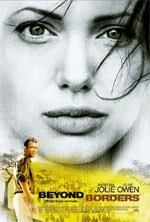
    (2003) Angelina Jolie is brilliant. She gives another Oscar-worthy performance. (“Beyond Borders”) – Paul Clinton

    When you’ve stopped laughing, try these for size:

    (2006) Another powerful Penn performance. Oscar-worthy in every way. (“All the King’s Men”) – Clay Smith

    (2003) This film has more heart than any 100 films released this year. Earns its place in film history within the first hour. A masterpiece of nuance filmmaking. The first Oscar contender of the season. (“Matchstick Men”) – Mike Sargent

    (2004) One of the first serious Oscar contenders of the year. (“The Village”) – Jim O’Brien

    (more…)

  • “The stuff of legend”

    That’s what Jeff Wells is calling Kristin Scott Thomas’ performance in “I’ve Loved You So Long.”

    Strong words, sure, but as I’ve said before, it is a mesmerising piece of work. Not everyone might connect with this very soft, low-key film — but Wells’ response is an indication of how passionate its supporters are. It’s the kind of performance that inspires first-place votes on the ballots of a devoted band of the actors’ branch, even as it may skip the radar of others. In this year’s unusually competitive Best Actress race, Scott Thomas is the one name I feel 100% confident about placing in my projected five.

    I’ve had the pleasure this week of speaking to both Scott Thomas and her equally impressive co-star Elsa Zylberstein who, if there’s any justice, should be in the mix for Best Supporting Actress. Watch out for those interviews on these pages soon, as well as some others — I’m having an actressy week, as it turns out.

  • Is ‘Gomorrah’ this year’s ‘City of God’?

    Since May, based on nothing but a gut feeling following the film’s Cannes reception, I’ve been predicting that Matteo Garrone’s astonishing “Gomorrah” would score nominations for Best Director, Adapted Screenplay and Film Editing — in addition to a Best Foreign Language Film nod. (Garrone has recently slipped from my Best Director predictions, but he’s still on my radar.)

    It may seem a far-fetched proposition, but clearly I’m not alone in thinking it’s possible. The news this morning that distributor IFC Films has shifted the film’s L.A. release to December, in order to qualify for main-category Oscar consideration, is a clear vote of confidence. One wonders if they have “City of God” at the back of their minds — a similarly violent, kinetic foreign-language study of urban social decay that stunned pundits in 2004 when it scooped four Oscar nominations, including Best Director and Best Adapted Screenplay.

    It’s a slightly different situation, of course — “City of God”‘s amazing haul was surely partly motivated by the Academy’s embarrassment over its exclusion the previous year from the foreign-language race. “Gomorrah,” however, is eligible for the gold in that category this year, so the Academy may feel that would be sufficient recognition for it.

    Still, we all know how the directors’ branch of Academy likes to throw arthouse curveballs now and then (in addition to Fernando Meirelles, think Mike Leigh and Pedro Almodovar), while I think a Best Adapted Screenplay nod looks increasingly likely given this year’s sparse slate of contenders in that category. (The Hollywood Reporter agrees that the film’s writing may represent its best shot.)

    (more…)

  • Right to left

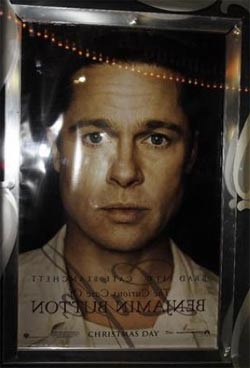
    Thanks to commenter Adam for pointing out this blurry glimpse of the “Benjamin Button” one-sheet on /Film. As Kris anticipated yesterday, it employs the same rather bland artwork that appeared on the film’s Apple trailer page — with the added gimmick that most of the text (save for the release date) reads backwards. Geddit?

    It’s kind of a clever trick, but it still looks like a half-arsed design job to me. What is going on in posterville this year?

  • ‘The Class’ heads Louis Delluc shortlist

    The Cesar may be the most internationally recognised award for French cinema, but the Louis Delluc Prize is arguably the most prestigious. Now in its 73rd year, the prize is awarded annually to a single film deemed by a select jury to represent the year’s finest achievement in French filmmaking.

    Previous winners include Cocteau’s “Beauty and the Beast,” “Les Diaboliques,” “The Umbrellas of Cherbourg” and “Au Revoir, Les Enfants,” so you have an idea of the level of prestige we’re talking about here. In recent years, they have commendably tended to favour underdogs — choosing “Intimacy” over “Amelie” in 2001, for example, or last year selecting “Couscous (Le Graine et le Mulet)” over “La Vie en Rose” or “Love Songs.”

    Now, they have announced their shortlist of seven films vying for this year’s prize. The three most high-profile titles on the list are, obviously, Laurent Cantet’s Oscar frontrunner “The Class,” Olivier Assayas’ delightful “Summer Hours” and Arnaud Desplechin’s “A Christmas Tale.” (Desplechin won the 2004 Delluc for “Kings and Queen.”) All, I think, are wonderful films — “The Class,” in particular, grows richer and deeper the more I think about it.

    Rounding out the list are “La Vie Moderne,” “Seraphine,” “Le Premiere Venu” and “Dernier Maquis,” while their Best First Film award will be fought between “Versailles,” “Le Tueur” and actress Sandrine Bonnaire’s highly personal documentary “Her Name is Sabine” — which I caught on TV the other day and was thoroughly moved by.

    I’m very surprised at the omission of “I’ve Loved You So Long” — still my favourite film of the year to date — from either list, but you can’t have everything.

  • What the… ?

    Insane pre-production news for the day: Charlotte Rampling and Paris Hilton are to appear in the same film. I could make some crack about moving from the sublime to the ridiculous, but… oh wait, I already did.

    If that tidbit isn’t enough to blow your mind, let me put it in context — they have been added to the cast of the new film from Todd Solondz, which is to be a “part-sequel, part-variation” to his boundary-pushing 1998 masterpiece “Happiness.” Also lined up for the ensemble are Allison Janney, Michael Kenneth Williams and Paul Reubens, among others.

    The very idea of it all makes my head swim. I’ve always thought Paris Hilton was destined for an ironic moment of arthouse lunacy some point in her career — a la Shania Twain in “I Heart Huckabees” or, well, the entire cast of “Southland Tales.” This looks like it. Meanwhile, the thought of Rampling and Solondz joining their very intense forces makes me positively tingly.

    Can this year be over already? 2009 sounds so much more exciting.

  • ‘Defiance’ strikes out with the trades

    Ed Zwick may just be one of those directors who will never be in critics’ good graces: a fine technical craftsman and a no-nonsense storyteller, even his best films remain as resolutely unfashionable in execution as they are noble in intention. Nothing wrong with that, of course — I’m no real fan, but films like “Legends of the Fall,” “The Last Samurai” and “Blood Diamond” entertained a lot of moviegoers, even as critics offered a collective shrug.

    Now, early reviews suggest that “Defiance” will continue that pattern. Though Kris had positive words for the film, the trade papers are significantly harsher, tossing out phrases like “dramatically flat” and “an overall lack of creative spark.”

    Todd McCarthy’s review praises the performances (particularly Liev Schreiber’s) and tech contributions, but overall, he is left unmoved:

    A potentially exceptional story is told in a flatly unexceptional manner… Zwick’s version of the grim but inspirational events becomes more conventional as it goes, topped by a climax straight out of countless war pics and Westerns.

    It all becomes pretty standard-issue stuff, filled with noble and tragic heroism, familiar battle images and last-second rescues. None of the suffering, sacrifices, anxieties or tests of heart and soul are rendered with any special dimension or heightened force, nor depicted with anything near the staggering, hallucinatory impact of the two great Russian films to have depicted events in wartime Belorussia, Larisa Shepitko’s 1977 “The Ascent” and her husband Elem Klimov’s 1985 “Come and See.”

    (more…)

  • At least SOMEONE has seen ‘Australia’

    Some people are getting very excited about the gushing praise Oprah Winfrey heaped upon “Australia” in yesterday’s edition of her show, which was entirely dedicated to the movie. She proclaims it “the best movie I’ve seen in a long, long, long, long time,” so I guess she kind of liked it.

    While it’s heartening to hear warm words for the film, I think people may be placing a little too much stock in them — simply because it’s the only opinion of the film that has been expressed so far. I love Oprah, but we all know she’s not the most discerning voice out there.

    On the other hand, this does remind me of a similar show she devoted to “Moulin Rouge,” in which she said something to the effect that the film gave her the same kind of moviegoing rush that she got when she saw “The Wizard of Oz” as a kid. When I saw the film, I knew exactly what she meant. Hopefully, she’s onto something again here.

    Anyway, for those who are interested, here’s a rather haphazardly edited highlights reel of yesterday’s show. You’ve gotta love Oprah’s giddy enthusiasm at the start:

  • THE LISTS: Top 10 biopics

    It’s no real secret that the Academy is partial to the biopic. Big or small, intimate or epic, celebratory or critical, they never seem to tire of the allure of actors channelling real-life figures, past and present. Lately, in the performance categories in particular, biopics have been the surest route to voters’ hearts, with seven of the last nine Best Actress winners falling under the category, and Daniel Day-Lewis having just broken a three-year run of biopic winners in Best Actor.

    The genre is no less prominent this year, with titles like “Milk,” “Frost/Nixon,” “Che” and “W.” all garnering varying degrees of awards buzz, for their star turns in particular. Meanwhile, from the arthouse, European titles like “Hunger” and “Il Divo” are significantly challenging the formal boundaries of the biopic, proving that the genre has far more adventurous terrain to cover than the solid, occasionally stodgy awards catnip the Academy frequently chooses to laud.

    Back in August, I wrote a post about how I was wearying of Oscar’s devotion to the genre; in turn, after my unenthusiastic “Frost/Nixon” review, a friend said to me, “Well, you do hate biopics.” I really don’t. But I am a little bored of the more linear, prosaic examples of the genre that reduce the narrative to CliffsNotes highlights in order to showcase a performance. (Step forward, “Ray” and friends.)

    Real life offers an infinite number of structural and cinematic possibilities, and it is the films that best take advantage of this fact that this week’s list is designed to celebrate. The ten films here take a wide range of approaches in portraying an equally diverse array of lives, but for me, they all pass the principal test of the great biopic: defamiliarizing the familiar. By creating living, breathing characters out of figures best known from history books and pop culture annals, they make real life as revelatory and surprising as fiction.

    It’s interesting to note how few of the films I’ve chosen qualify as the Oscar-bait that biopics are widely perceived to be — we have four Best Picture nominees here, and only one winner. It was by no means a deliberate or elitist move on my part, but the fact remains that a lot of the most interesting and audacious work within the genre doesn’t get the recognition it deserves.

    The biopic is clearly maturing — as I was drawing up the shortlist for this piece, I was surprised by how recent many of my inclusions were, but it’s clear that filmmakers are getting more adventurous with time. For example, in the 1950s, a film like “La Vie en Rose” would have been made as a stolid music weeper in the “I’ll Cry Tomorrow” mold — today it comes in a considerably more fractured form, structurally and stylistically. It’s just one of several recent films, from “The Assassination of Jesse James by the Coward Robert Ford” to “Marie-Antoinette,” to show that the biopic need never be safe cinematic territory. The following ten films prove that.

    10. “American Splendor” (Robert Pulcini and Shari Springer Berman, 2003)
    An ingeniously intertextual account of the life and work of comic book author Harvey Pekar, “American Splendor” goes against the grain of nearly every other biopic of a creative being by revelling in its subject’s ordinariness. Riffing off Pekar’s own autobiographical comics, Pulcini and Berman brought their keen documentarist’s eye to Pekar’s unremarkable world of beige offices and supermarket checkouts, making as much dramatically of the absences in his life as his achievements. Anchored by a quicksilver performance from Paul Giamatti, this achieves the rare biopic feat of matching its subject’s individualism.

    (more…)