
In Contention

Author: Guy Lodge

  • Strong reviews for Haneke’s ‘White Ribbon’

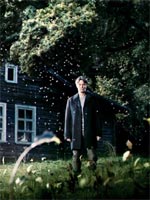
    Michael Haneke's The White RibbonCould this year bring a close to Michael Haneke’s bridesmaid’s run at the Cannes Film Festival? Haneke has come within touching distance of the Palme d’Or before, taking the Grand Prix in 2001 for “The Piano Teacher” and Best Director in 2005 for “Caché,” but the big prize has so far eluded him.

    Now Haneke’s latest, “The White Ribbon,” has screened to largely admiring reviews from the Cannes press. The film, a black-and-white, score-free period drama studying the social disintegration of rural German community, was written with the collaboration of master scripter Jean-Claude Carriere, and is now inspiring repeated comparisons to the work of Ingmar Bergman. Nonetheless, it apparently still serves up the clinical narrative jolts we have come to expect from Haneke. IndieWire’s Eric Kohn raves:

    Pairing visual mastery with a quietly immersive story, “The White Ribbon” plays like a morbid version of “Our Town,” patiently revealing the inward discord beneath the surface of a settled community. It’s a frightening depiction of mortality.

    With this detailed exploration of anonymous retribution, Haneke returns to the haunting terrain he last explored in “Cache,” although in this case, the retribution expands from a personal level to a larger critique of religious zealoutry. As the violent acts cumulate, they expand to the larger world surrounding the village – especially with the political assasination and the eruption of World War I closing the movie. However, these events remain notably off-screen. Absence in “The White Ribbon” is the quality that makes it a harrowing work of art, rather than a historical soap opera.
    (more…)

  • IFC to bring ‘Antichrist’ to U.S.

    Willem Dafoe in AntichristSpeaking of “Antichrist,” while some doubted that the controversial pic would see the light of day Stateside, IFC Films is ensuring that it will. The indie outfit has picked up U.S. distribution rights to Lars Von Trier’s film, and moreover, has announced that no cuts will be made to film ahead of its release. IFC president Jonathan Sehring’s states:

    “Since it premiered at Cannes on Monday, we haven’t been able to stop talking or thinking about ‘Antichrist’ … It is a towering work of cinema by one its greatest directors.  We are incredibly excited to bring this film to America and expect it to have a major impact on audiences not only in America but worldwide.”

    Given that the film will unquestionably land an NC-17 certificate, not to mention further media ire in the States, it’s a courageous move from IFC, and I think they should be commended for it. “Antichrist” certainly stands in stark contrast to IFC’s other Cannes acquisition of the day: Ken Loach’s gentle, well-liked character comedy “Looking for Eric.”

  • Gainsbourg defends Von Trier

    Charlotte Gainsbourg Charlotte Gainsbourg seems so impossibly delicate in person that it’s hard to imagine her mutilating herself on camera. I suspect it’s even harder to watch — part of what makes her a canny choice as one of Lars Von Trier’s notoriously put-upon leading ladies.


    In this excellent video interview with the Guardian’s Xan Brooks (no embed available, unfortunately), given in the wake of the incensed media reaction to “Antichrist,” Gainsbourg intelligently defends her participation in the project, as well as her director’s intentions.

    She politely but firmly dismisses the accusations of misogyny levelled at Von Trier as “stupid,” and laughs off the idea that she was somehow exploited on camera. (“I was willing to do it, and I knew what I was doing.”) Most interestingly, Gainsbourg suggests that her character was intended to be reflective of the director himself:

    The character was called “She,” he was called “He.” So we had no identity, and the way Lars picked me, I had the impression that he knew nothing about me. He never talked about any film that I had done, nothing like that. So I didn’t have a clue why he chose me, but it gave me a kind of mystery of being this anonymous woman.

    I really trusted him, and that’s also a thing that I find unjust when people say that he hates women. Because I really had the impression that I was portraying him. That he was the woman. That he was going through that misery of physical condition and panic attacks and I related to him completely, and I had the impression that he related to me, in that he was understanding my feelings.

    It’s a measured, thoughtful interview in that Gainsbourg still seems to be coming to terms with the film herself. The video also offers some footage from the film that I hadn’t seen before — check it out here.

  • Mixed early reviews for ‘Basterds’

    Inglourious Basterds

    UPDATE: Variety’s Todd McCarthy bucks the trend with a decidedly enthusiastic review. He cites some problems, including first-half tonal inconsistencies, but otherwise finds himself swept up in Tarantino’s self-reflexive games:

    By turns surprising, nutty, windy, audacious and a bit caught up in its own cleverness, the picture is a completely distinctive piece of American pop art with a strong Euro flavor that’s new for the director.

    The best characters are non-Yanks, all of whom speak their own languages and one or two others to boot. But this commendable gesture toward linguistic accuracy is virtually the only realistic aspect of the picture, which otherwise soars on its flights of fancy and deliberate anachronisms — the use of David Bowie’s “Putting Out the Fire” at a crucial point is particularly inispired — and flattens out only when Tarantino gets too carried away with over-elaborated dialogue scenes, a problem that could easily be addressed with some slight trimming between now and the skedded August opening … (It’s) never less than enjoyable and more than that in the second half.

    EARLIER: Blogger reactions to “Inglourious Basterds” may be scattered, but the first two trade reviews (we’re still waiting for  Variety to chip in) read fairly similarly, and not very positively at that.

    The critics agree that there are tasty morsels in the stew — rapid consensus seems to be emerging that Austrian star Christoph Waltz spectacularly outshines the rest of the ensemble — but accusations of overlength, indulgence and narrative inconsistency are to be found.

    Are we talking another “Death Proof,” a specialized item that will have its critical and public champions but doesn’t return its maker to the world-beating crossover status of this earlier work? It’s early days in terms of gauging critical response, but with the Guardian’s Peter Bradshaw crucifying the film (a “colossal armour-plated turkey from hell”), and the Telegraph indifferent (“not so much inglorious as undistinguished”), it seems the detractors will be plentiful.

    (more…)

  • First ‘Inglourious Basterds’ reactions

    Christoph Watz in Inglourious Basterds

    UPDATE: Jeff Wells’s unenthusiastic take lines up with what I had personally feared from reading the script:

    It’s not great. It’s a Quentin chit-chat personality film in World War II dress-up. It’s arch and very confidently rendered from QT’s end, but it’s basically talk, talk, talk. Tension appears in a couple of scenes (especially the first — an interrogation of a French farmer by a German officer looking for hidden Jews) but overall story tension is fairly low. A couple of shootings occur but there’s no real action in the Michael Mann sense of the term except for the finale. No characters are subjected to tests of characters by having to make hard choices and stand up for what they believe — they all just talk their heads off, is what it comes down to.

    EARLIER: Total Film’s two men on the spot are split on the film. Sam Ashurst finds his expectations happily exceeded, and seconds the good word for Christoph Watz:

    This is Quentin’s best film since Jackie Brown. It might even be his best film since Pulp Fiction … QT’s magpie eye has never been sharper, swooping down on Italian cinema and plucking the very best shots, framing and music to create a deserving homage to the spaghetti westerns of my youth.

    Make no mistake, this is Landa’s (Watz’s) film. He is the Blonde Jules of the movie; the stand-out character that will be on everyone’s lips when they’re walking out of the screen.

    (more…)

  • Cougar in a corset

    Michelle Pfeiffer and Rupert Friend in CheriJane Shilling has a piece at the Telegraph about the gender politics of “Chéri” — specifically, the social disruption engendered by a romantic relationship between a middle-aged woman and a young man.

    Describing “Chéri” author Colette, and by extrapolation the character of Léa (played by Michelle Pfeiffer in the film), as “the original cougar,” Shilling suggests that the story of her love for a man half her age is more provocative to a contemporary audience than the first readers of the 1920 source novel:

    A couple of weeks ago in Grazia magazine an article appeared about a fascinating modern phenomenon. “Until recently,” wrote the author, Rita Sangha, “a woman dating a much younger man was likely to be ridiculed. But things have changed. Thanks to stars like Madonna, a ‘cougar’ – an older woman dating a younger man – isn’t seen as desperate: she’s glamorous and in charge of her own destiny.”

    Perhaps, she would have been amused – though not surprised – to discover that the seductive alchemy of a love affair between a middle-aged woman and a boy young enough to be her son would seem even more scandalous in 2009 than it did when she sat down to write it, 90 years ago.

    Shilling’s rather sketchy argument fails to bridge these two contradictory points — how is the so-called “cougar” phenomenon both laudable and scandalous? — though that perhaps accidentally echoes Colette’s own ambiguity on the matter. As I discussed in my Page to Screen article on the novel, Colette both defends Léa and Chéri’s generation-crossing relationship, but condemns a similar dalliance by of one of Léa’s peers as grotesque; the principal difference, it seems, lying in the two women’s levels of physical attractiveness.

    (more…)

  • Overture gets Clooney’s ‘Goats’

    George ClooneyThis strikes me as quite a coup for Overture Films, the young indie outfit that recently made their presence felt with a hard-won Oscar nod for “The Visitor.” In the biggest Cannes acquisition so far, Overture has nabbed the U.S. rights to Grant Heslov’s “Men Who Stare at Goats.”

    The film, a political satire from Heslov and George Clooney’s production company Smokehouse, stars Clooney as a military forces agent who possesses the secret to paranormal war tactics. Ewan McGregor co-stars as a journalist who becomes inveigled into the discovery, while Kevin Spacey and Jeff Bridges round out the powerhouse cast. It’s certainly a lofty-sounding title for the little studio. Good for them.

    Meanwhile, the Clooney updates are coming thick and fast. The actor, who it seems can put nary a foot wrong these days, has just signed on to headline Focus Features’ “A Very Private Gentleman,” an adaptation of Martin Booth’s well-regarded novel about an assassin whose plans for a simple final assignment in a rural Italian village are complicated by a series of personal engagements.

    Which is all well and good, but what’s really interesting about the project is that it is being helmed by Anton Corbijn, the music-video master whose debut feature, “Control,” was one of 2007’s finest. This is a very different proposition for the filmmaker, and I’m looking forward to seeing how he applies his trademark atmospherics to thriller territory.

  • Teaser for Cannes favorite ‘A Prophet’

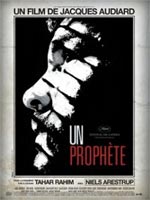
    As I mentioned earlier, Jacques Audiard’s “A Prophet” is the clear critical favorite of the Cannes competition to date, with some calling it the one to beat for the Palme d’Or. If you’re wondering what all the fuss is about, this brief teaser offers a tiny but compelling taste. I can’t say I was expecting something quite so visceral from Audiard.

  • ‘Broken Embraces,’ ‘Vincere’ bow at Cannes

    Penelope Cruz in Broken EmbracesPedro Almodovar’s “Broken Embraces” has just had its Cannes debut, and the notices emerging so far largely supplement the good-but-not-ecstatic slate of reviews the film garnered upon its Spanish release back in March.
    Kirk Honeycutt, in one of THR’s slightly pointless video reviews, labels it “Almodovar lite” and discusses the film’s allusions to “Peeping Tom” (not “an old 50s movie,” by the way). Wendy Ide at the Times coolly calls it a “mixed bag of smart ideas … rather than a coherent, distinct work of art,” while the Telegraph’s David Gritten loves Penelope Cruz’s performance, saying it excels her recent Oscar-winning work, but thinks the film “treads water rather than breaks new ground.”

    The case for the defence comes from Jeffrey Wells, who deems it by far the festival’s standout film at this stage:

    A romantic noir about writing, directing, damage and healing, it’s easily the most fully realized, thematically satisfying, self-assured and purely entertaining film of the festival so far. Not as fully emotional as Almodovar’s best films, but on a very high station in the second tier. Way in front of anything I’ve seen so far. The only thing that could knock it off is the Tarantino.

    Not sure why or how he’s dismissing the other titles he hasn’t seen yet, but anyway. I have a feeling this is one film whose critical consensus could see-saw between now and its eventual U.S. release in November.

    (more…)

  • ‘A Prophet’ leads Cannes race at midway point

    A ProphetWith 12 the 20 Cannes Competition titles out of the way (that’s counting the already critically-examined “Broken Embraces”), a clear favorite seems to have emerged — and I’m both pleased and a little surprised that it’s Jacques Audiard’s “A Prophet.”

    Pleased, because Audiard is a brilliant filmmaker who is owed more recognition. Surprised, because on paper, I didn’t expect an all-male, 2.5 hour prison drama to generate this much excitement. In the event, however, the film has inspired repeated comparisons to “GoodFellas,” and ScreenDaily’s critical panel rates it the best of the fest so far (closely followed by “Bright Star”), an endorsement echoed by a range of critics from Manohla Dargis to the Guardian’s Xan Brooks.

    Of the rest already screened, only “Bright Star” and British film “Fish Tank” really sound like viable Palme d’Or alternatives. Meanwhile, those two films’ respective leading ladies, Abbie Cornish and Katie Jarvis, look to be heading a heated Best Actress contest. (“Vincere’s” Giovanna Mezzogiorno and even “Antichrist’s” Charlotte Gainsbourg are also in the mix.) By contrast, the only actor attracting major buzz at this stage appears to be Tahar Rahim, the young Arab discovery of “A Prophet.”

    Of course, nobody has any idea what the jury is thinking, while jurors are apparently discouraged from reading the press about Competition titles. So when awards are dealt out, surprises are the norm. I’ve thought from the beginning that “A Prophet,” and indeed any other French titles in the lineup, were at a disadvantage; following last year’s winner, jury prez Isabelle Huppert might want to avoid showing too much homeland favor. Meanwhile, can Audiard’s entire male cast win over a mostly female jury? And with critical reactions so scattered, who knows what they make of “Antichrist?”

    So many questions. And with several formidable titles still to bow (including the latest from Michael Haneke and Elia Suleiman, my personal, out-of-thin-air bet for the Palme), plenty more to come.

  • Sean Penn to headline new Sorrentino pic

    Sean PennNow this is an exciting pairing. You might remember that I’m pretty crazy about “Il Divo,” Paolo Sorrentino’s blazing political biopic-thriller that took a well-deserved Jury Prize at last year’s Cannes fest. (Seriously, check it out when you have a chance.)

    Between that triumph and his intricate, super-stylish 2001 noir “The Consequences of Love,” Sorrentino has shown a kinetic narrative sense and visual dynamism that seemed a virtual siren-call to Hollywood, so it’s no surprise to hear that he’ll be making his English-language debut with his next feature.

    Variety reports that Sean Penn — who, coincidentally or not, headed the jury that was so impressed by “Il Divo” last year — is set to star in “This Must Be the Place,” which will see Sorrentino teaming up with his regular producers once more. The thriller-ish pitch runs as follows:

    Penn would play a wealthy rock star who becomes bored in his retirement and takes on the quest of finding his father’s executioner, an ex-Nazi war criminal who is a refugee in the U.S.

    Penn strikes me as a good trans-Atlantic match for Sorrentino, both men having a muscular, showy approach to their respective crafts. I’m not sure what to make of the premise on paper; it seems to allow for quite a pulpy, heightened treatment, but there’s so little to go on. For now, the names alone have me hooked.

  • Polite reception for Loach’s latest

    Eric Cantona in Looking For EricAs I expected, Ken Loach’s “Looking For Eric,” his first Cannes entry since winning the Palme d’Or in 2006, hasn’t exactly set the Croisette alight. Critics seem to agree that the football-themed comedy is a modest charmer, but too slight to really hold its own in the competition. (Probably a welcome shift in pace, what with critics still reeling from “Antichrist.”) Variety’s Derek Elley speaks for most of the critics with his kind but reserved take on the film:

    Loach and writer Paul Laverty’s ninth feature together is a curious hybrid: Three movies — boilerplate, socially aware Loach; personal fantasy; romantic comedy — wrap around a central core of a hopeless soccer fanatic who’s given a second chance to sort out his life. As in many of Laverty’s scripts, problems of overall tone and character development aren’t solved by Loach’s easygoing direction, though when it works, “Eric” has many incidental pleasures.

    The Guardian’s Peter Bradshaw also likes it well enough, drawing comparisons to “Play It Again, Sam,” and describing the presence of football legend Eric Cantona — certainly the film’s biggest commercial drawcard, in France especially — as “excellent comic value.” The word “nice” is used at several points, which seems rather telling.

    As much as I like the 72 year-old director’s work — though it’s been aeons since he made anything approaching the level of “Kes” or “Poor Cow” — one has to once more wonder whether this is the kind of film that really needs to be on the Palme d’Or shortlist, at the expense of bolder, less exposed talent.

  • Back in the spotlight

    Antichrist

    UPDATE: Sorry, my fascination is unending. The Guardian’s Xan Brooks comes out in full support of the film:

    I stumble out in a daze, momentarily unsure whether I loved it or loathed it. Abruptly I realise that I love it. Von Trier has slapped Cannes with an astonishing, extraordinary picture – shocking and comical; a funhouse of terrors (of primal nature, of female sexuality) that rattles the bones and fizzes the blood before bowing out with a presumptuous dedication to Andrei Tarkovsky that had sections of the crowd hooting in fury … Pound for pound, (“A Prophet”) is surely the strongest film of the competition so far. Why, then, is it “Antichrist” that keeps me awake last night, whirling like a dervish in the darkness of the room?

    EARLIER: Somehow I get the feeling that Lars Von Trier went to bed last night a very satisfied man. After the deafening indifference that greeted “The Boss Of It All” and “Manderlay,” he arrived at Cannes with one objective more crucial than any other: to prove that his work could still inspire feeling and discussion. Point proven.

    Whether or not “Antichrist” is as awful as some people seem to think — and indeed, not everyone does think so — is  beside the point. For all his genius (and I do think he is one of the most extraordinary filmmakers of his time), Von Trier shamelessly thrives on attention; when his work is ignored, as has been the case these past six years, his own creative mojo appears to flag. Much has been said about how “Antichrist” is the product of a recent bout of severe depression; perhaps his rediscovered capacity for provocation signals a renewed willingness to engage, and a more fruitful creative period to come.

    (more…)

  • Hahahahahaha

    From this morning’s Telegraph (among other sources):

    Jamie Foxx, the African-American actor, singer and comedian, has been named as a potential contender for the role of Frank Sinatra in Martin Scorsese’s biopic of the entertainer.

    Foxx, who won a Best Actor Oscar for his portrayal of Ray Charles in the 2004 film Ray, reportedly considered to be “perfect” for the role. If he is chosen for the part, it will be one of the most prominent examples of “colour-blind” casting in Hollywood history. Also in the running are George Clooney, Leonardo di Caprio, Harry Connick Jnr and Justin Timberlake.

    They forgot to mention Dakota Fanning.

  • Ebert on ‘Antichrist’

    AntichristCuriouser and curiouser. Roger Ebert is clearly still processing Lars Von Trier’s latest crowd-terroriser, but there appears to be respect in his initial assessment:

    Whether this is a bad, good or great film is entirely beside the point. It is an audacious spit in the eye of society. It says we harbor an undreamed-of capacity for evil. It transforms a psychological treatment into torture undreamed of in the dungeons of history. Torturers might have been capable of such actions, but they would have lacked the imagination. Von Trier is not so much making a film about violence as making a film to inflict violence upon us, perhaps as a salutary experience. It’s been reported that he suffered from depression during and after the film. You can tell. This is the most despairing film I’ve ever have seen.

    What can be said is that von Trier, after what many found the agonizing boredom of his previous Cannes films “Dogville” and “Manderlay,” has made a film that is not boring. Unendurable, perhaps, but not boring. For relief I am looking forward to the overnight reviews of those who think they can explain exactly what it means. In this case, perhaps, a film should not mean, but be.

    There is no film on the planet that I want to see more, right now, than “Antichrist.”

  • American ‘Chéri’ poster

    Unlike the appropriately sober (if aesthetically half-assed) UK poster, this U.S. one-sheet for “Chéri” does much the same thing as the trailer in selling the film as an effervescent romantic comedy.

    The film plays along for its first half, though as I said in my review, the chick-lit crowd may find themselves surprised by the melancholy turn the proceedings take. Still, whatever means necessary, and all that. Meanwhile, you’d never guess that Rupert Friend plays the title character. (Thanks to commenter Red Wine for the tip.)

    Cheri

    [Source: IMP Awards]

  • ‘Antichrist’ causes outrage on the Croisette

    Oh dear — this is turning out to be a pretty rough weekend at Cannes. We’re still awaiting the first official reviews of Lars Von Trier’s “Antichrist,” which just screened this evening, but it seems to have attracted the full ire of the notoriously excitable Cannes crowd. Boos, gasps and laughter reportedly greeted the screening on the gory, sexually explicit film, which apparently throws everything from talking animals to genital mutilation into the pot.

    Jeff Wells pulls no punches in his assassination of the film:

    Easily one of the biggest debacles in Cannes Film Festival history and the complete meltdown of a major film artist in a way that invites comparison to the sinking of the Titanic … It’s an out-and-out disaster — one of the most absurdly on-the-nose, heavy-handed and unintentionally comedic calamities I’ve ever seen in my life. On top of which it’s dedicated to the late Russian director Andrei Tarkovsky, whose rotted and decomposed body is now quite possibly clawing its way out of the grave to stalk the earth, find an axe and slay Von Trier in his bed.

    (more…)

  • Keep hidden

    In trying to disentangle the order of Martin Scorsese’s upcoming projects (in the wake of this week’s news that the master is taking on Sinatra), AwardsDaily’s Ryan Adams takes a peek at the range of titles that IMDB Pro lists on the director’s slate.

    I am mistrustful of IMDB’s information at the best of times, particularly with a director like Scorsese who seems to nurture multiple projects indefinitely. (For how many years has “Silence” been in the conversation, after all?) But I was intrigued and a little puzzled to see an optioned property titled “Cache” at the head of the list, with a projected date of 2011.

    Is this the long-mooted American remake Michael Haneke’s 2005 masterpiece, or is it unrelated? (There’s no accent aigu on the title, after all.) Can anyone enlighten me? I remember recoiling in horror when Ron Howard was mentioned in connection with the project a few years ago. Scorsese is obviously a step up, but a remake — by anyone — of Haneke’s very idiosyncratic film still strikes me as a dicey prospect, given how rooted it is in a very specific historical and political context.