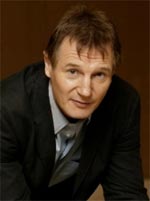
 The Liam Neeson career revival continues apace. Variety reports that the 56 year-old thesp will star opposite Jennifer Connelly in “What’s Wrong With Virginia,” the first directorial effort from “Milk” scribe Dustin Lance Black. The film, which has Gus Van Sant involved as an executive producer, which begins shooting this summer. The pitch goes as follows:
Connelly will play the charming but psychologically disturbed mother of a 16-year-old son. Her 20-year clandestine love with a sheriff (Neeson), who is running for the state senate, is tested when her son begins a relationship with his daughter.
Sounds to me like a return for Black to the quirky domestic territory of “Big Love.” Is this a comedy of sorts? Certain details (that title, for starters) imply that to me, though it isn’t made clear in the report. Either way, Neeson and Connelly aren’t exactly the first pairing I’d think of for an onscreen romance — so, well, interesting.
We’re also reminded that Black and Van Sant are collaborating once more on an adaptation of Tom Wolfe’s “The Electric Kool-Aid Acid Test,” which is an ambitious undertaking to say the least. You may remember that I wasn’t exactly sold on Black’s Oscar-winning efforts on “Milk,” but good on him for using his post-win momentum to get as many irons in the fire as possible.
 I’ve had slight misgivings about Alejandro Amenabar’s much-awaited historical epic “Agora” for a while, and I’m not really sure why. It’s certainly nothing to do with Amenabar’s own track record. For me, “The Others” stands as one of cinema’s great ghost stories, and while “The Sea Inside,” for which he won an Oscar four years ago, wasn’t quite up to his previous film’s immaculate standards, it was a rousing, intermittently stunning effort.
 Thanks to Nathaniel Rogers for
 After surveying the reviews of Johnnie To’s “Vengeance” and Brillante Mendoza’s “Kinatay,” it seems safe to assume that neither film is a contender for the Palme d’Or — in the latter, we may even have our first real critical punchbag of the Competition.

 Ang Lee may have
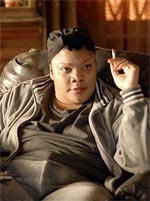 Since it was announced that it would be playing the Un Certain Regard strand at Cannes, I’ve been interested to see how Lee Daniels’ “Precious” would play on this side of the Atlantic.
 Ang Lee’s “Taking Woodstock” appears to have provided Cannes with its first high-profile disappointment. While it doesn’t appear to be a disaster by any means, the general consensus appears to be that it doesn’t meet the very high standard Lee set for himself with his last two features.
 •
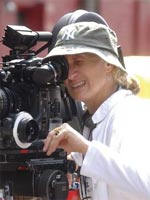 That Jane Campion is one of three female auteurs competing for the Palme d’Or at Cannes this year is seen as a relative step up for the fairer sex compared to years past, though by any logical standards, a 3-to-17 ratio is still an indication of a globally male-biased industry.
 I’ve been wondering what became of “Red Cliff,” John Woo’s lavish historical epic set third century Han Dynasty China. The big-budget project broke Chinese box-office records and was tipped to be a crossover foreign-language hit last year, but never surfaced in the West.
 Of course, the film is very old news to all of you Stateside, but allow me a moment to say how proud I am that my fellow Englishmen — well, the critics among them, at least — have embraced Charlie Kaufman’s stunning “Synecdoche, New York” with open arms.
 Does the comeback begin here? This morning gave critics their first look at Jane Campion’s Keats biopic “Bright Star” — the director’s first feature in six years, and her first foray into period drama since “The Portrait of a Lady” — and early reactions indicate a genuine return to form.
 Here’s some fantastic
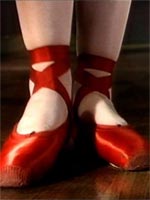 I’m willing to lay a substantial bet that there won’t be a better film screened at this year’s Cannes festival that the brand-new restoration of Michael Powell and Emeric Pressburger’s 1948 ballet-drama-cum-fairytale “The Red Shoes.” Easily one of the most exquisitely designed works ever put to celluloid, and a jewel in the crown of the great (and
 Following its Cannes premiere, Francis Ford Coppola’s “Tetro” has been greeted with something of a collective shrug by the critical community. Most of the reviews appear to follow the lead of Todd McCarthy’s mixed