 LA Times music critic Todd Martens has posted a useful series of short interviews with the men behind some of the year’s most distinctive film scores. Indeed, it’s group of five names that isn’t too hard to imagine mirroring the year’s eventual Oscar slate: Alexandre Desplat for “Fantastic Mr. Fox,” Michael Giacchino for “Up,” Randy Newman for “The Princess and the Frog,” Marvin Hamlisch for “The Informant!” and Elliot Goldenthal for “Public Enemies.”
There are nice quotes and musical snippets peppered throughout all the profiles, but I was particularly drawn to read Desplat’s take on his “Fox” score, given how curiously — yet happily — the jangly Americana and English folk notes in the work sit with his more Euro-flavored oeuvre:
“I just felt that if we found a sound that would belong to these little puppets, it would make them come alive,” Desplat said. “I suggested to Wes that we do a sort of puppet orchestra. I wanted to make everything sound like they were play- ing. I wanted little things — the mandolin, the banjo, the whistle, the recorder and all these little families of instruments. They weren’t toys but kind of toy-ish instruments.”
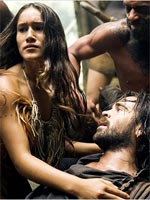 From Nick Davis’s appreciation of Terrence Malick’s
 I took Richard Corliss to task
 Any regular Oscar-watcher is familiar with the finicky rules and regulations that, year in and year out, keep some of the year’s most talked-about foreign-language titles from contending for the Oscar.
 We’re currently in that month where precursors do their utmost to reduce a year’s worth of cinematic achievement to a small handful of oft-repeated names and titles. It’s understandable (if disappointing) when groups or committees compile these identikit lists — but when individuals (and serious critics at that) stick rigidly to the formula, it becomes a little depressing.
 While South Africa’s currently high Hollywood profile is putting smiles on the faces (and much-needed cash in the pockets) of many figures in the country’s film industry, it appears that not all local actors are as pleased.
 The progression of
 We neglected to mention the International Documentary Association Awards happened on Friday night, but happen they did.
 The British Independent Film Awards really spread the wealth this year, with only two films —
 •
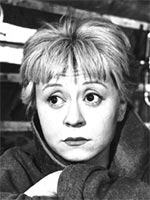 The mark of a true Oscar geek is the self-assignment of nuttily completist viewing exercises. Only a select few understand the drive to track down every Oscar-affiliated titles in existence — however obscure, expensive or awful — all so one can say with absolute authority who should have won, say, Best Actor in 1952. (Alec Guinness, since you ask.)
 Amid the plethora of “best of the 2000s” lists doing the rounds, the London Film Critics’ Circle
 When I begin my phone conversation with Jessica Haines by telling her how insistently I prodded her publicist to set up our interview – the reverse is so often the case – she responds with a bashful laugh. “I can believe that,” she says, in a warm South African drawl. “Not many journalists have bothered tracking me down to Tunis!”
 It goes without saying that New York Times executive editor Bill Keller has a more informed perspective on Nelson Mandela than most of the critics currently assessing Clint Eastwood’s
 I’m always interested to see what cinematic musical achievements the Grammy Awards single out for recognition each year, largely because their pop sensibilities are so different (and their eligibility criteria so much looser) from those of the Oscars that they may as well exist on different planets.
 Here’s something I’ll bet a lot of you wouldn’t have guessed: once upon a time, when my pants were short and my South African accent heavy, I was a very good Oscar pundit. I won every pool going. I beat the lame TV critics’ guesses and laughed in their televised faces. When that got old, I entered a radio “predict the Oscars” contest and won ZAR200 in mall vouchers. (Okay, that’s $26 – it was worth more in the 90s.)