
In Contention

Tag: Matteo Garrone

  • All eyes on left field

    Josh Brolin in WThe nominations announcement is, oh, 18 hours away (yeah, we count minutes at this stage).  Even though I’m well on the record as being a prognosticative pussy this year, I can’t shake the feeling that we’re in for our share of surprises.  I doubt I’m alone.

    You can go back over Oscar history and write a whole book on the nominations that blind-sided everyone.  Sometimes the contender in question might have popped up briefly during the season, though they were forgotten in due time.  Other times, they simply manifested from thin air and smacked Oscar watchers in the face.  But they’re always there, lingering, waiting to plant that seed of doubt in the viewer the next year.  And the year after that.

    It’s enough to pull your hair out.

    Earlier today, John posted an interesting thought about Benicio Del Toro’s chances in the lead actor category, which followed a recent musing on Woody Allen’s chances as a lone director nominee.  This is the kind of stuff I’m talking about.

    So with that in mind, I’ve collected a brief list of four contenders that I legitimately think could pop up tomorrow and join that lineage.  Some of them are certainly more plausible than others, but none of them, I feel, are terribly out of bounds.  I don’t have the cojones to predict them, of course.  But this is what I’m thinking.

    (By the way, if I DO happen to change any of my predictions at the last minute tonight, I’ll be sure to offer a post indicating as much.)

    My thoughts on the left field…
    (more…)

  • ‘Gomorrah’ doesn’t deliver, says AMPAS

    Kris has already given the philistines on the Academy’s foreign-language film committee a deserved telling-off for sidelining Italy’s astonishing entry “Gomorrah,” but I feel compelled to add my voice to his — not least because, if I had my way, Matteo Garrone’s cinematic gut-punch about the Camorra crime syndicate would be in line for a Best Picture nod, not just a puny ghetto-category citation.
    I could be here all day if I decided to go through the innumerable landmark films, from “City of God” to “The Celebration” to “4 Months, 3 Weeks and 2 Days,” that have been similarly mistreated by this ever-disappointing branch of voters, so I shouldn’t have been surprised when they failed us yet again, right?

    And yet I was, because the newly formed executive committee, which added an extra three titles to the list of six elected by the main body, was specifically designed to avoid such travesties. I can believe that they may well have used one of their slots to save France’s masterpiece “The Class” from exclusion, and if that’s the case, I’m most grateful. (Though I still wouldn’t put it past the boneheads to omit it from the final five.) Hell, it’s not inconceivable to me that they coud have stepped in on behalf of a popular favourite like “Waltz With Bashir” — the ignorance of the larger committee knows no bounds.

    But even given that worst case scenario, and speaking as someone who has seen 8 of the 9 shortlisted titles, I can’t fathom how the executive committee didn’t deem “Gomorrah” worthy of their company. What was the rule change for, if not to protect challenging, relevant, widely acclaimed works like Garrone’s film? 

    Well, Jeff Wells has done some digging, and seems to have found the explanation. He spoke to a member of the committee, who had this to say:

    Voices in the foreign branch’s executive elite committee just didn’t think Gomorrah “delivered in the way it could or should have,” he said. “It’s not a matter of it not being heart-warming. It’s a matter of our respecting the film without believing that it really brought the goods home.”

    (more…)

  • INTERVIEW: Matteo Garrone

    Matteo GarroneIn a year that hasn’t exactly wanted for strong European cinema, Matteo Garrone’s “Gomorrah” ranks as one of its most staggering offerings — as reflected by its well-deserved placing on Kris’s top 10 list yesterday.

    A brutal, multi-stranded portrait of daily life within Naples’s notorious Camorra crime syndicate, it brings a keen sociologist’s eye to the terrain of mafia cinema — thanks largely to the minutely detailed research of Roberto Saviano (whom Kris interviewed here), upon whose bestselling exposé the film is based, but also to the humanism and objectivity of Garrone himself.

    The affable Italian, who recently turned 40, is still getting his head around his film’s success.  When we speak, he has just arrived in New York after collecting a bushel of prizes in Copenhagen at the European Film Awards. Although he made his feature debut a decade ago, until now he hasn’t been the best-known name on the Italian cinema scene, and he admits to feeling considerable pressure in taking on the project.

    “Domenico [Procacci, the film’s producer] got the rights to Roberto’s book before it was published and sent it to me,” he explains. “I was shocked, but found it very powerful, very unusual in the characterization. I saw an opportunity to make a very different kind of Mafia movie.”

    However, once the book was actually published, the game changed for Garrone. “I didn’t know it was going to be such a huge bestseller,” he laughs. “Suddenly this movie became a much bigger deal, and there was much more box office pressure. I had made a couple of other movies that had done well with critics, but were disasters at the box office. I was worried that I was now the wrong person to make ‘Gomorrah,’ but it was too late!”

    He needn’t have worried: in addition to the stream of awards talk the film has gathered since taking the Grand Prix at Cannes, “Gomorrah” has stormed the Italian box office and done healthy art house business elsewhere, while expectations are high for its limited U.S. release this Friday. Garrone describes the film’s commercial performance as “a miracle.  It’s such a rigorous film, I was worried audiences might find it too harsh. But I think some people have gone in to see a gangster movie and come out surprised by what an emotional experience it is.”

    (more…)

  • Building a sinister reality

    Matteo Garrone

    “I was interested in showing a different point of view than ‘ The Godfather’ or ‘GoodFellas,’ ” he says. “These movies are the models for these people, but their real lives are different. We wanted to develop the confusion between reality and fiction. They act like they’re in an American action movie”…

    “The movie I think has a kind of anthropological value,” Garrone says. “It was important to reinvent the imagery of the criminal without glamorizing. We chose very carefully every face in the movie.

    From Michael J. Ybarra’s 12/14 story on Matteo Garrone’s “Gomorrah.”  More on Garrone’s film later this morning, I assure you.

  • Golden Globes: the nominees react

    Leonardo DiCaprioThe Hollywood Foreign Press Association tipped its collective hat to a number of the season’s hopeful contenders this morning, so it’s time to hear some reactions. Generally, a piece such as this is bound to consist of a bunch of gushing, perhaps even boilerplate gratitude from the nominees. And one certainly couldn’t fault them for it. But I always enjoy hearing reactions from people whose lives are being changed this time of year, and certainly, those who can’t help but feel humbled by the recognition.

    What can I say? I’m not a grouch all the time.

    Matteo Garrone was first to call this morning. His epic crime saga “Gomorrah” was predictably short-listed in the Best Foreign Language Film category.

    “The movie is going so well and everything is such a surprise,” he said. “We wanted to give the audience the instrument, the information to understand better how the Camorra organization works on the inside, without any glamorizing, but to try to show the real atmosphere, the real location. We wanted to make a movie that was universal, and this result, I think it proves that we achieved that.”

    When I interviewed author Roberto Saviano last month, who penned the original book “Gomorrah” is adapted from, he had similar sentiments to offer. The film is one of the year’s best, a triumphant piece of work that frankly should be getting more recognition than simple relegation to the foreign film fields, but any notice is fortunate, as Garrone is quick to point out.

    (more…)

  • ‘Gomorrah’ sweeps European Film Awards

    Wow. As I said when the European Film Award nominations were announced a month ago, this year offered a pretty vintage slate of contenders. I therefore expected the honours to be spread quite widely, as is often the case with these particular awards.

    But it was not to be. In a spectacular sweep, Matteo Garrone’s riveting Mafia opus “Gomorrah” took home five awards, including Best Film, Best Director, Best Screenwriter, Best Cinematographer and Best Actor for Toni Servillo, who won jointly for “Gomorrah” and his more prominent role in “Il Divo.”

    I must admit the latter award surprises me: terrific as Servillo is in both films, I assumed “Hunger” star Michael Fassbender had that one locked up.

    In a less surprising but richly deserved victory, Kristin Scott Thomas took the Best Actress award for “I’ve Loved You So Long,” her first trophy of the awards season. I suspect it might not be her last; check out my interview with the extraordinary thesp here.

    Elsewhere, “Hunger” inevitably took the Discovery Award for debut director Steve McQueen, while “Waltz With Bashir” was an inspired choice for the Best Composer prize (beating Oscar-winner “Atonement,” no less).

    But beyond that, it was “Gomorrah” all the way, marking an auspicious start to the awards season for a contender generating buzz beyond just the Best Foreign Language Film category. I’m pleased to see this landmark film getting its due, though I do wish such notable fellow nominees as “Happy-Go-Lucky” and Laurent Cantet’s wonderful “The Class” hadn’t gone home empty-handed. Ah well.

    Full list of winners after the cut.

    (more…)

  • INTERVIEW: ‘Gomorrah’ author Roberto Saviano

    Roberto SavianoI’m pretty sure that only in Hollywood can you find publicity mobilized behind a targeted man for the purposes of securing an Oscar nomination (and, of course, prepping a film release).  But there Roberto Saviano was yesterday at the…wait, I probably shouldn’t even mention the hotel should I?

    Saviano has been pegged for assassination (let’s not mince words) by the Neapolitan Camorra organized crime syndicate following the massive success of his book “Gomorrah,” adapted for the screen this year by a swath of writers and entering the Oscar race as Italy’s foreign language film submission.  Peeved at how deep Saviano’s book plunges behind the veil of the wide-reaching organization, the result of “great rage” as the author describes the passion that drove him within its pages, the Camorra has reportedly declared they want Saviano dead by Christmas.

    A highly sincere security guy/bodyguard was my first impression, me waving my iPhone as the only device concealed on my person — I swear.  Moving into the Spartan hotel room, Saviano was seated in the most unassuming manner, feet crossed in front like a child passing the time.  His bald head and dark eyebrows set off a striking complexion, and he certainly looks as young as his 29 years.  Which makes the achievement of “Gomorrah,” written in a style compared to the “non-faction” of Truman Capote, all the more impressive.

    The film adaptation, spear-headed by Saviano and director Matteo Garrone, is an absolute success, managing to steer clear of any modern cliches its multiple narrative structure might have allowed.  It took Cannes by storm over the summer, landed nominations across the board at the European Film Awards and has already been bandied about in this space as a potential Oscar spoiler in more than just the anticipated Best Foreign Language Film category.

    And now, those who can make that kind of thing happen are aiming to do just that.  “Gomorrah,” it seems, won’t be settling for the obligatory tip of the hat in one ghettoized field, nor should it.  And if anything, it ought to be a testament to Saviano’s courage (the guy is in hiding for Christ’s sake) if the film manages to be seen and awarded by more than the already fickle and questionable foreign language film committee.

    I spoke with Saviano, through a translator, for about a half hour.  Rather than piece together an interview article I thought I’d let the exchange speak for itself.  I didn’t realize how much of an honor it was to meet the guy until maybe half-way through, and when I tell him I think he’s a hero, I assure you I mean it.  Have a listen:

    [display_podcast]

  • Is ‘Gomorrah’ this year’s ‘City of God’?

    Since May, based on nothing but a gut feeling following the film’s Cannes reception, I’ve been predicting that Matteo Garrone’s astonishing “Gomorrah” would score nominations for Best Director, Adapted Screenplay and Film Editing — in addition to a Best Foreign Language Film nod. (Garrone has recently slipped from my Best Director predictions, but he’s still on my radar.)

    It may seem a far-fetched proposition, but clearly I’m not alone in thinking it’s possible. The news this morning that distributor IFC Films has shifted the film’s L.A. release to December, in order to qualify for main-category Oscar consideration, is a clear vote of confidence. One wonders if they have “City of God” at the back of their minds — a similarly violent, kinetic foreign-language study of urban social decay that stunned pundits in 2004 when it scooped four Oscar nominations, including Best Director and Best Adapted Screenplay.

    It’s a slightly different situation, of course — “City of God”‘s amazing haul was surely partly motivated by the Academy’s embarrassment over its exclusion the previous year from the foreign-language race. “Gomorrah,” however, is eligible for the gold in that category this year, so the Academy may feel that would be sufficient recognition for it.

    Still, we all know how the directors’ branch of Academy likes to throw arthouse curveballs now and then (in addition to Fernando Meirelles, think Mike Leigh and Pedro Almodovar), while I think a Best Adapted Screenplay nod looks increasingly likely given this year’s sparse slate of contenders in that category. (The Hollywood Reporter agrees that the film’s writing may represent its best shot.)

    (more…)

  • Italy leads the charge at European Film Awards

    Proof positive that 2008 is a banner year for Italian cinema: Matteo Garrone’s “Gomorrah” and Paolo Sorrentino’s “Il Divo,” both masterpieces of a very different stylistic ilk, lead all nominees for the European Film Awards, with five nominations apiece.

    Joing them in the hunt for Best European Film are “The Class” and “Happy-Go-Lucky,” which makes four of my favourite films of the year in the list. Rounding out the nominees in that category are “Waltz With Bashir” and “The Orphanage,” neither film one to be sniffed at either.

    By any standards, that’s one hell of a group — I would be very surprised if the eventual five Oscar nominees for Best Picture match that collective quality. I’d be hard pressed to pick a personal favourite, though my gut says the Italian nominees will split the vote, and the wonderful “The Class” will emerge victorious.

    Four of those six reappear in the Best European Director category, with Steve McQueen (“Hunger”) supplanting Mike Leigh as the British nominee in that race. More puzzlingly, Leigh is also absent in the Best European Screenwriter category — curious, since “Happy-Go-Lucky” strikes me as more of a writerly achievement than the nominated “Waltz With Bashir.”

    More thoughts, and a full list of nominees, after the cut.

    (more…)

  • ‘Gomorrah’ and ‘Changeling’: two that work

    Angelina Jolie in ChangelingIt’s been a while since I’ve committed to a long-form review, and for that, I have to apologize.  Short Takes here and there don’t exactly cut it, but we’ve certainly stayed afloat in this light with Guy’s wonderful work across the pond.  I don’t get a chance to sit down and hammer out some thoughts very often, and I’m hoping that will change in the coming weeks.

    Two films that jumped out this week, however, demanded some attention.  The first is Matteo Garrone’s “Gomorrah,” which I saw recently in preparation for the AFI Fest.  The film was well-received at Cannes and has become Italy’s entry in the Best Foreign Language Film Oscar race.

    I have to say, I’m in agreement with Guy’s assessment for the most part.  Garrone’s patch-work narrative might seem trite and even trendy at first mention, but the menagerie works because it isn’t pretentious.  There is no sense of contrivance or expressed intent to make these five separate narratives comment toward one another or intersect in a nifty manner.

    The assemblage is borderline slap-dash and is more impactful as a result.  In a sense, Garrone has cooked up five tense, detailed short films and simply sifted them together.  All roads lead to nowhere, and a list of sobering Camorra facts at the end of the film really sticks with the viewer — especially that last doosey.

    (More on “Gomorrah,” plus thoughts on “Changeling” after the jump.)

    (more…)

  • WEEKLY WRAP: Newman remembered, Rudin/Weinstein, Foreign film race

    Paul Newman in HudAs we head into the weekend, here’s a quick overview of what we (and you) have been talking about at In Contention this week:
    • Kris paid tribute to the incomparable Paul Newman, as well as rounding up some of the man’s greatest performances.

    • As the Scott Rudin-Harvey Weinstein soap opera continues, Kris wonders where this leaves “The Reader” in the race.

    • John Foote contemplated the screen’s greatest leading ladies, past and present.

    • Matteo Garrone presented his red-hot foreign-language contender “Gomorrah” in London. I was impressed with the film.

    • Speaking of which, all the submissions for Best Foreign Language Film are in.

    • In the wake of a sensational new trailer, Apple takes a mouthwatering look at the tech credits of “Australia.”

    • Continuing the technical conversation, Gerard previewed the runners and riders in the Best Sound Mixing race.

    • Clint Eastwood scooped the first in what could be yet another run of awards for him this season.

    • And finally, in case you weren’t aware awards season has started, the people behind “Frozen River” and “Elegy” would like to remind you otherwise.

  • REVIEW: “Gomorrah” (****)

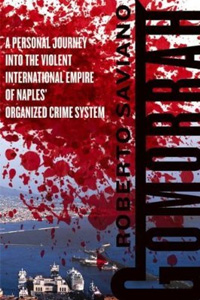
    IFC Films' GomorrahThe title “Gomorrah” is at once metaphorically apt and tonally misleading. In referencing the Biblical city destroyed by God for its sinfulness, Roberto Saviano’s best-selling non-fiction posited its own setting, Naples, as some kind of present-day equivalent.

    A city ruled and consequently ravaged by the Camorra, the notoriously brutal crime syndicate that has reportedly been responsible for over 4,000 deaths since the 1970s, it is also suffering for its sins — though in this case, the destruction comes entirely from within.

    The weightiness of the Biblical allusion, however, implies a fire-and-brimstone subjectivity that is refreshingly absent in Matteo Garrone’s thrilling remixing (adaptation is too cautious a word) of Saviano’s book. Marked alternately — and, in its best moments, simultaneously — by jolting violence, poetic kitchen-sink realism and blacker-than-black humor, this is first and foremost a work of social observation.

    As he repeatedly emphasized in his recent Q&A at London’s ICA, Garrone is more concerned with truth than tract.  Though the film lays the grim consequences of organized crime bare for all to see, his primary interest is in how such horrors complicate the everyday lives of those who live within and without the Camorra’s snare.

    The film’s social consciousness and dense, initially disorienting multi-narrative structure has earned comparisons with such recent crime sagas as “City of God” and “Traffic,” though it’s not as cinematically self-aware as the former, nor as narratively diagrammatic as the latter. (Neither term is meant pejoratively.)

    Garrone instead cites neo-realist doyen Roberto Rossellini as a key influence, and this provides a far clearer reference point: Garrone may have far busier story material here than exists in “Paisan” and “Open City” combined, but he shares Rossellini’s most academic qualities as a filmmaker, patiently following his characters through everyday domestic exchanges, and noting the physical and social textures of his story world with an anthropologist’s eye. In doing so, he further mines territory initially opened by such works as “The Sopranos” to offer up the least glamorous Mafia film ever made.

    (more…)

  • Garrone on ‘Gomorrah’: “It’s not real, but it’s true.”

    Viva Italia, is all I have to say. In the past 48 hours, I’ve been lucky enough to see the two films that have widely been heralded as marking a renaissance for the Italian film industry, a world cinema titan that had been lying dormant for a couple of years. No more.
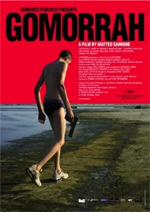
    One of them is Paolo Sorrentino’s blistering, return-to-form political thriller “Il Divo,” which I will discuss closer to its appearance at the upcoming London Film Festival. The other is Italy’s submission for the Best Foreign Language Film race, “Gomorrah.” Possible masterpieces, both of them — and as solid a case as any for abolishing the silly “one film per country” rule that so plagues this problematic Oscar category.

    Walking out of London’s Institute of Contemporary Arts after Sunday’s UK premiere of “Gomorrah,” which was followed by a lively Q&A with director Matteo Garrone, I couldn’t shake the feeling that I might have just met one of next year’s multiple Academy Award nominees.

    Far-fetched, I know, but the film’s achievement is that staggering and far-reaching. Under the foreign-language committee’s new voting system, a nomination in that category should, by rights, be a slam-dunk, while Best Director and, particularly, Best Adapted Screenplay nominations are, to my mind, well within the realm of possibility. I will resist further gushing until I post a proper review in the next day or two, but for now, I want to share some of the thoughts Garrone offered at the Q&A.

    A modest, thoroughly disarming presence, far younger in demeanor than his 40 years suggest, Garrone himself seems a little bewildered by the film he has made and the discussion it has wrought. For those who don’t know, “Gomorrah” is a documentary-style examination of the Camorra crime syndicate that terrorizes Naples, based on the bestselling non-fiction expose by Roberto Saviano.

    (more…)

  • ‘Gomorrah’ is in — do we have a frontrunner?

    Well, as speculated a few hours ago, Italy has announced their submission for Best Foreign Language Film. And, to the surprise of precisely nobody, they have gone with Matteo Garrone’s “Gomorrah” — the sprawling, breathlessly acclaimed portrait of Naples mafia life that was arguably the breakout hit of May’s Cannes festival. (It received the runner-up prize.)

    It’s almost impossible to declare frontrunners in this category, given the foreign film committee’s wilful voting habits. Still, it’s safe to say that “Gomorrah” is the most anticipated and discussed contender to officially enter the race so far.

    Whether it will prove too bleak and violent for the blue-hair voters is difficult to predict — they acknowledged the edgy brilliance of “Amores Perros” in 2001, but since then, they’ve been unable to stomach the likes of “City of God” or last year’s “4 Months, 3 Weeks, 2 Days.”

    Based on the unanimously good word for the film, I’ve long been predicting that “Gomorrah” could even score breakout noms in the Best Director and Adapted Screenplay categories (a la “City of God”), but that was when I imagined Italy picking the more parochial “Il Divo” as their foreign-language entry. As it is, they’ve chosen the title with more crossover potential — it’ll be interesting to see what momentum Garrone’s film can build from its New York Film Festival screening.

    For my part, I’m seeing the film at its UK premiere this Sunday — hopefully to be followed by a Q&A with Garrone. I can’t wait.

  • Cannes: uneducated guesses

    Well, it’s almost over. The competition films have all been screened, picked over and digested by the world’s critics, and now all that’s left to do is that finicky business of handing out some prizes. Sean Penn and his formidable jury (Marjane Satrapi, Alfonso Cuaron and Natalie Portman are just some of those involved) will be deliberating over a crop of films that has generally been deemed a solid selection, with few outright “Brown Bunny”-style disasters.

    (more…)

  • Which film will take the Palme d’Or?

    Wells is already speculating and Foote is ready to move on, but let’s think it out here. In a festival that has been a bit underwhelming to most, both artistically for the critics and fiscally for the buyers, someone’s still gotta win best in show.

    Matteo Garrone’s “Gomorra” and Nuri Bilge Ceylan’s “Three Monkeys” might be the safe guesses, as both were quite well-received. But the Palme has made a habit of being elusive to the films one would expect to claim it.

    Clint Eastwood’s “Changeling” enjoyed a pleasant love-fest for a time, before the director was roughed up by a colleague and then hit a wall of sorts with The New York Times.

    Then there are the fringe possibilities of Steven Soderbergh’s “Che” — mixed on receipt, but that hasn’t stopped efforts in the past — and “Synecdoche, New York” from Charlie Kaufman, which has the benefit of being the last film out of the gate.

    What’s it going to be?

    If I had to bet, I’d say “Three Monkeys.” If I ventured a guess in the midst of rampant unpredictability (which is Cannes in a nutshell), I’d say “Synecdoche, New York.”

    We’ll see how it pans out over the weekend.

  • Cannes update: Italy’s ‘Gomorra’ wows ’em

    (EDITOR’S NOTE: New Cannes poll in the sidebar as of this morning, FYI.)

    We’re at the halfway point now, and this year’s Cannes Festival seems to have been a pretty staid affair so far. With the dust settled, “Blindness” appears to have been labelled an honourable disappointment. Meanwhile, some of the big arthouse names in the competition are widely agreed to be treading water.

    Walter Salles’ “Linha de Passe” appears to be worthwhile, but hasn’t generated the critical heat of “Central Station” or “The Motorcycle Diaries.” “Lorna’s Silence,” the latest from Belgium’s hitherto unimpeachable Dardenne brothers, here aiming for a record third Palme d’Or, has garnered respectable notices (and an outright pan from Jeff Wells), but doesn’t seem to be up to the standard of “Rosetta” or “The Son.”

    There have been some international successes. “Three Monkeys,” the latest from Turkey’s great Nuri Bilge Ceylan, has gathered predictably excellent reviews, of which The Hollywood Reporter’s take (a “brilliant, gorgeously visual film”) is typical. If I were to bet on a Palme d’Or winner (always a silly thing to do), this would be it – though I fear this will have as much trouble crossing over to the US and UK markets as Ceylan’s previous work.

    One of the real breakout films of the festival so far, however, appears to be Italian director Matteo Garrone’s “Gomorra,” an intricate documentary-style look at the Camorra crime empire of Naples, based on a bestselling expose by Roberto Saviano. Amid generally enthusiastic reviews, The Hollywood Reporter states:

    Powerful, stripped to its very essence and featuring a spectacular cast (of mostly non-professionals), Matteo Garrone’s sixth feature film “Gomorra” goes beyond Tarantino’s gratuitous violence and even Scorsese’s Hollywood sensibility in depicting the everyday reality of organized crime’s foot soldiers.

    In his always-worthwhile Cannes roundup, The Guardian’s Peter Bradshaw concurs:

    The competition films have been more than a little upstaged by Matteo Garrone’s Gomorra, a gut-wrenchingly brutal film about notorious Naples gangsters, the Camorra. The title’s twist implies the whole area is sunk in a kind of self-created hell, almost literally, since the mobsters are responsible for unsafe nuclear dumping. Perhaps it tells us nothing we don’t already know about gangsters, but there’s no denying the film’s power.

    I confess I am not very familiar with Garrone’s work, but I, for one, am intrigued by this. It will be interesting to see how this one plays out. From the sounds of things, if the film finds the right buyer, there could be “City of God”-style crossover potential here. Or nothing. You never can tell at Cannes.