In Contention

Tag: Gomorrah

  • INTERVIEW: ‘Gomorrah’ author Roberto Saviano

    Roberto SavianoI’m pretty sure that only in Hollywood can you find publicity mobilized behind a targeted man for the purposes of securing an Oscar nomination (and, of course, prepping a film release).  But there Roberto Saviano was yesterday at the…wait, I probably shouldn’t even mention the hotel should I?

    Saviano has been pegged for assassination (let’s not mince words) by the Neapolitan Camorra organized crime syndicate following the massive success of his book “Gomorrah,” adapted for the screen this year by a swath of writers and entering the Oscar race as Italy’s foreign language film submission.  Peeved at how deep Saviano’s book plunges behind the veil of the wide-reaching organization, the result of “great rage” as the author describes the passion that drove him within its pages, the Camorra has reportedly declared they want Saviano dead by Christmas.

    A highly sincere security guy/bodyguard was my first impression, me waving my iPhone as the only device concealed on my person — I swear.  Moving into the Spartan hotel room, Saviano was seated in the most unassuming manner, feet crossed in front like a child passing the time.  His bald head and dark eyebrows set off a striking complexion, and he certainly looks as young as his 29 years.  Which makes the achievement of “Gomorrah,” written in a style compared to the “non-faction” of Truman Capote, all the more impressive.

    The film adaptation, spear-headed by Saviano and director Matteo Garrone, is an absolute success, managing to steer clear of any modern cliches its multiple narrative structure might have allowed.  It took Cannes by storm over the summer, landed nominations across the board at the European Film Awards and has already been bandied about in this space as a potential Oscar spoiler in more than just the anticipated Best Foreign Language Film category.

    And now, those who can make that kind of thing happen are aiming to do just that.  “Gomorrah,” it seems, won’t be settling for the obligatory tip of the hat in one ghettoized field, nor should it.  And if anything, it ought to be a testament to Saviano’s courage (the guy is in hiding for Christ’s sake) if the film manages to be seen and awarded by more than the already fickle and questionable foreign language film committee.

    I spoke with Saviano, through a translator, for about a half hour.  Rather than piece together an interview article I thought I’d let the exchange speak for itself.  I didn’t realize how much of an honor it was to meet the guy until maybe half-way through, and when I tell him I think he’s a hero, I assure you I mean it.  Have a listen:

    [display_podcast]

  • WEEKLY WRAP: ‘Dark Knight’ disqualified, Rourke interviewed, ‘Australia’ unwrapped

    Kind of an in-between week, this. Here’s how it went down:
    • In probably the most discussed Oscar news of the week, “The Dark Knight” was dodgily ruled ineligible in the Best Original Score category.

    • On a happier note, we sat down with surefire Best Actor nominee Mickey Rourke.

    • A shortlist of 14 films was announced for the Animated Feature race — not that it’s a “race” at all.

    • “Australia” was revealed to a besotted Oprah… but is it really the Oscar-bait some people think it is?

    • Ahead of “Slumdog Millionaire”‘s Stateside opening, we considered the contributions of DP Anthony Dod Mantle and composer A.R. Rahman.

    • Kris was appreciative of Edward Zwick’s “Defiance” … even if several critics weren’t.

    • The dynamic Italian duo of “Gomorrah” and “Il Divo” led the nominations for the European Film Awards.

    • “Gomorrah,” meanwhile, has designs on more than just the Foreign Film category at the Oscars.

    • Tech Support showcased the frequently surprising Best Makeup category.

    • Entertainment Weekly named Robert Downey Jr. their Entertainer of the Year, which Richard Jenkins among the also-rans.

    • We were charmed by “Last Chance Harvey,” a low-flying contender in the acting categories.

    • And finally, in another biopic-heavy season, we counted down the all-time best examples of the genre.

  • indieWIRE surveys the race, questions ‘Button’

    Lots of conflicting soundbites have been bandied about this week regarding “The Curious Case of Benjamin Button,” but here’s the first one I’ve seen with a credibly named source. In an article on indieWIRE, the site’s editor, Eugene Hernandez, discusses the awards race with colleague Peter Knegt, and offers this carefully-worded take on the still-embargoed film:

    While I feel that “Benjamin Button” is, on first viewing, hardly a lock for best picture, the attention that will justifiably be paid to its considerable technological achievements could sweep it into the higher profile categories. (“Forrest Gump” was popular with the Academy and there are some parallel’s here). But, as I was telling a friend today, for a much more striking and beautiful marriage of technology and ideas, I’d encourage folks to watch “WALL-E” again.

    Knegt, meanwhile, suggests that “Button” might follow a similar course to “Dreamgirls” two years ago, raking in the technical nods, but missing out in top categories.

    Other topics of conversation include “Milk,” which they posit as a clear frontrunner for Best Picture, and a “lock” for acting and screenplay nods. (They also side with Kris in selecting Josh Brolin as the film’s strongest supporting contender.) Meanwhile, they pretty much write off “Doubt” as a Best Picture contender, and go on to suggest some underdogs on the rise. Like me, they think “Gomorrah” could be one to watch:

    (more…)

  • Is ‘Gomorrah’ this year’s ‘City of God’?

    Since May, based on nothing but a gut feeling following the film’s Cannes reception, I’ve been predicting that Matteo Garrone’s astonishing “Gomorrah” would score nominations for Best Director, Adapted Screenplay and Film Editing — in addition to a Best Foreign Language Film nod. (Garrone has recently slipped from my Best Director predictions, but he’s still on my radar.)

    It may seem a far-fetched proposition, but clearly I’m not alone in thinking it’s possible. The news this morning that distributor IFC Films has shifted the film’s L.A. release to December, in order to qualify for main-category Oscar consideration, is a clear vote of confidence. One wonders if they have “City of God” at the back of their minds — a similarly violent, kinetic foreign-language study of urban social decay that stunned pundits in 2004 when it scooped four Oscar nominations, including Best Director and Best Adapted Screenplay.

    It’s a slightly different situation, of course — “City of God”‘s amazing haul was surely partly motivated by the Academy’s embarrassment over its exclusion the previous year from the foreign-language race. “Gomorrah,” however, is eligible for the gold in that category this year, so the Academy may feel that would be sufficient recognition for it.

    Still, we all know how the directors’ branch of Academy likes to throw arthouse curveballs now and then (in addition to Fernando Meirelles, think Mike Leigh and Pedro Almodovar), while I think a Best Adapted Screenplay nod looks increasingly likely given this year’s sparse slate of contenders in that category. (The Hollywood Reporter agrees that the film’s writing may represent its best shot.)

    (more…)

  • RIP Mama Africa

    It may not be strictly movie-related — though she did enjoy a couple of screen appearances, most notably in Darrell James Roodt’s “Sarafina!” — but I can’t let the passing of the great Miriam Makeba go unacknowledged. As a Grammy-winning musician, influential political activist and all-round symbol of a country’s hopes, she was treasured not only by South Africans like myself, but by the world at large.

    It is interesting — and not a little fitting — that Makeba died performing for another noble cause: she collapsed on stage after performing at a benefit concert in Italy for Roberto Saviano, the author (and co-screenwriter) of “Gomorrah,” whose work in exposing the workings of the Naples mafia has put his own life in danger. That Makeba, after all she has accomplished for her own people, was prepared to work for this cause too is really a measure of the woman.

    The various obits are full of clips of “Pata Pata” and “The Click Song,” but I love the purity of her voice and urgency of the storytelling on this 1966 performance of “Khawuleza.” If you’re not moved by this, something is wrong with you.

  • 11/9 Oscarweb Round-up

    Warner Bros. Pictures' Watchmen• Steve Weintraub has a sweet four-video series on Ben Burtt’s process for creating the sounds of “WALL-E” and the “Star Wars” films.  Worth a look if you’re into the tech arena like we are. [Collider]

    • Bad news for Baz Luhrmann’s “Australia.”  A forced happy ending. [News.com.au]

    • Cherry Jones gives her approval of Meryl Streep’s turn in “Doubt.” [Gold Derby]

    • But elsewhere, the odds are being stacked against the film. [Vulture]

    • Dave Karger and Missy Schwartz discuss the season’s most unknown commodities: “The Curious Case of Benjamin Button” and “Revolutionary Road.” [Oscar Watch]

    • Brad Brevet finds some striking similarities between the new “Watchmen” poster and an old “Dark Knight” international one-sheet. [Rope of Silicon]

    • In the midst of AFI Fest, John Horn gets some quality time with “Slumdog Millionaire” director Danny Boyle. [Los Angeles Times]

    • Meanwhile, Anne Thompson responds to a second “Slumdog” screening. [Thompson on Hollywood]

    • The new gadgetry of Bond. [New York Daily News]

    • Amy Raphael profiles Kelly Macdonald as “Choke” lands across the pond. [The Guardian]

    • Also in the U.K., Toby Jones continues to stir the waters with below-the-radar portrayals. [The Times]

    • Deborah Solomon cranks out a Q&A with “Frost/Nixon” director Ron Howard. [New York Times]

    • Jeffrey Wells defends the violence of Matteo Garrone’s “Gomorrah” against the potential ignorance of the foreign film committee. [Hollywood Elsewhere]

  • Italy leads the charge at European Film Awards

    Proof positive that 2008 is a banner year for Italian cinema: Matteo Garrone’s “Gomorrah” and Paolo Sorrentino’s “Il Divo,” both masterpieces of a very different stylistic ilk, lead all nominees for the European Film Awards, with five nominations apiece.

    Joing them in the hunt for Best European Film are “The Class” and “Happy-Go-Lucky,” which makes four of my favourite films of the year in the list. Rounding out the nominees in that category are “Waltz With Bashir” and “The Orphanage,” neither film one to be sniffed at either.

    By any standards, that’s one hell of a group — I would be very surprised if the eventual five Oscar nominees for Best Picture match that collective quality. I’d be hard pressed to pick a personal favourite, though my gut says the Italian nominees will split the vote, and the wonderful “The Class” will emerge victorious.

    Four of those six reappear in the Best European Director category, with Steve McQueen (“Hunger”) supplanting Mike Leigh as the British nominee in that race. More puzzlingly, Leigh is also absent in the Best European Screenwriter category — curious, since “Happy-Go-Lucky” strikes me as more of a writerly achievement than the nominated “Waltz With Bashir.”

    More thoughts, and a full list of nominees, after the cut.

    (more…)

  • Still nobody knows anything

    At least, that’s the message I get from Pete Hammond’s latest column, in which he somewhat half-heartedly claims that the Best Picture frontrunners at this stage are “WALL-E,” “The Dark Knight” and “Changeling.” In that order, apparently — with “Slumdog Millionaire” creeping up behind.

    I realize Hammond has access to more Academy members than I do (not hard, since I know none), but I find that hard to swallow. Of the summer blockbusters, “The Dark Knight” looks to me to have more campaigning momentum than “WALL-E,” though I’m still not predicting it as a nominee. And I can’t see “Changeling” making much headway in the race with such a mixed critical reception. Surely, of the seen contenders, “Slumdog Millionaire” is ahead of all three. What I really learn from this is that Academy members clearly need to see more movies.

    More helpful to me is this tidbit Hammond offers on the Best Foreign Language Film race:

    From what we’ve been told only Germany, Japan and Russia have made any significant impact, with Italy’s Cannes Grand Prix winner, “Gomorra,” getting predictions that it will be one of the final five, despite mixed response from some who frowned on its generous amount of violence. And the Portuguese film “Our Beloved Month of August” was apparently so poorly received that some members were trying to leave before they could “officially” exit and still receive credit for seeing it.

    (more…)

  • AFI FEST: ‘Doubt,’ ‘The Good, the Bad, the Weird,’ ‘Gomorrah’

    Song Kang-ho in The Good, the Bad, the WeirdAFI Fest is moving along rather quietly this season.  Most eyes have been turned toward the opening gala “Doubt” and centerpiece screenings like “Che” and “The Wrestler,” while most are probably just waiting for the next big reveal on Sunday as “Defiance” closes us out.  Tonight’s Danny Boyle tribute is sure to draw a crowd, while Michelle Williams and Jeff Goldblum will be here to peddle their Oscar hopes over the weekend.

    The movies are really just last gasps of the festival season at this point, though.  Not a lot of new terrain, but plenty to chew on for a cinephile.  I try to keep up, but I don’t pretend to be as dogged as John and Guy have proved to be.  It takes a special kind of torture.  But AFI is really coming off as a distraction more than anything, what with a number of Oscar hopefuls yet to be unveiled at a time when, generally, all cards are on the table.

    But we’ll push through.  A couple more looks this week:

    (more…)

  • Foreign film watch: 67 entries, but how open is the race?

    Since my last update on the Best Foreign Language Film race, a further ten latecomers have entered films, bringing the number of entries to a record 67. (The full, updated list is here.)

    The new names in the derby are Afghanistan (“Opium War”), Albania (“The Sorrow of Mrs Schneider”), Azerbaijan (“Fortress”), Egypt (“The Island”), Georgia (“Mediator”), Kazakhstan (“Tulpan”), Latvia (“Defenders of Riga”), Lebanon (“Under the Bombs”), Ukraine (“The Illusion of Fear”) and, interestingly enough, the United Kingdom (“Hope Eternal”).

    The last-named title proclaims itself the first ever Welsh-African production, and features dialogue in seven languages — including Swahili and Afrikaans. Beyond that, I haven’t a clue what it is. Incidentally, I saw the Kazakhstani entry “Tulpan” this afternoon, and will review it in my next London Film Festival roundup.

    Reflecting on the race in his Notes on a Season column, Pete Hammond declares the race “wide open,” but I’m not sure I agree. After all, the new voting system — whereby the foreign film committee votes on six of the shortlisted titles, after which a smaller executive will add a further three — is specifically designed to ensure that the most acclaimed (and most expected) films make the cut.

    Under this system, you can bet a film like “4 Months, 3 Weeks and 2 Days” would have made the shortlist last year. Ditto “City of God” in 2002. Consequently, it seems safe to say that even if the general committee snubs high-profile critics’ favourites like “Gomorrah” or “Waltz With Bashir,” the executive committee will get them on the shortlist.

    (more…)

  • ‘Gomorrah’ and ‘Changeling’: two that work

    Angelina Jolie in ChangelingIt’s been a while since I’ve committed to a long-form review, and for that, I have to apologize.  Short Takes here and there don’t exactly cut it, but we’ve certainly stayed afloat in this light with Guy’s wonderful work across the pond.  I don’t get a chance to sit down and hammer out some thoughts very often, and I’m hoping that will change in the coming weeks.
    Two films that jumped out this week, however, demanded some attention.  The first is Matteo Garrone’s “Gomorrah,” which I saw recently in preparation for the AFI Fest.  The film was well-received at Cannes and has become Italy’s entry in the Best Foreign Language Film Oscar race.

    I have to say, I’m in agreement with Guy’s assessment for the most part.  Garrone’s patch-work narrative might seem trite and even trendy at first mention, but the menagerie works because it isn’t pretentious.  There is no sense of contrivance or expressed intent to make these five separate narratives comment toward one another or intersect in a nifty manner.

    The assemblage is borderline slap-dash and is more impactful as a result.  In a sense, Garrone has cooked up five tense, detailed short films and simply sifted them together.  All roads lead to nowhere, and a list of sobering Camorra facts at the end of the film really sticks with the viewer — especially that last doosey.

    (More on “Gomorrah,” plus thoughts on “Changeling” after the jump.)

    (more…)

  • South Africa among the foreign-language stragglers

    Despite the deadline for submissions for the Best Foreign Language Film race ostensibly being October 1st, a further four dawdling countries have been added to the list of contenders that I discussed recently. They are Thailand, Lithuania, Uruguay and my home country, South Africa. I’m guessing none of them will really trouble the race, but as we know, this category moves in mysterious ways.

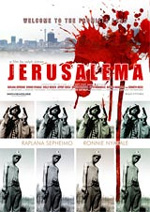
    Great South African films are few and far between — and none of them have yet come within touching distance of an Oscar. No “Tsotsi” fan am I. But in picking Ralph Ziman’s “Jerusalema” this year, the South African selectors are clearly hoping it will strike a similar chord to Gavid Hood’s 2005 Oscar-winner — like that film, it’s another Johannesburg-set crime story, though evidently a less sentimental one.

    Following its appearance at Berlin in February, Variety was moderately impressed:

    A propulsive, glossy, Johannesburg-set actioner charting the rise of an ambitious ne’er-do-well a la “Scarface,” “City of God” and virtually every other rags-to-riches-to-ruins underworld epic, “Jerusalema” overcomes derivative genre cliches and daunting length to punch home its crime-doesn’t-pay message on chutzpah alone.

    To offer a local perspective, our South African friend Nick Plowman has some reservations, but ultimately gives it the thumbs-up:

    “Jerusalema” is a first rate thriller, bursting at the seams with energy. Its vivid ambition is unlike anything I have seen come out of South Africa in ages … It’s too long at times, it drags here and there, (but) it’s gritty, real and ambiguous.

    (more…)

  • WEEKLY WRAP: Newman remembered, Rudin/Weinstein, Foreign film race

    Paul Newman in HudAs we head into the weekend, here’s a quick overview of what we (and you) have been talking about at In Contention this week:

    • Kris paid tribute to the incomparable Paul Newman, as well as rounding up some of the man’s greatest performances.

    • As the Scott Rudin-Harvey Weinstein soap opera continues, Kris wonders where this leaves “The Reader” in the race.

    • John Foote contemplated the screen’s greatest leading ladies, past and present.

    • Matteo Garrone presented his red-hot foreign-language contender “Gomorrah” in London. I was impressed with the film.

    • Speaking of which, all the submissions for Best Foreign Language Film are in.

    • In the wake of a sensational new trailer, Apple takes a mouthwatering look at the tech credits of “Australia.”

    • Continuing the technical conversation, Gerard previewed the runners and riders in the Best Sound Mixing race.

    • Clint Eastwood scooped the first in what could be yet another run of awards for him this season.

    • And finally, in case you weren’t aware awards season has started, the people behind “Frozen River” and “Elegy” would like to remind you otherwise.

  • Foreign film watch: all the contenders

    The race starts here. With the deadline having passed on Wednesday, 53 67 countries have submitted a candidate for the Best Foreign Language Film award.

    Now it’s all in the hands of the Academy’s notoriously obtuse foreign film committee. Under a new system aimed to avoid embarrassing exclusions like last year’s snub of “4 Months, 3 Weeks, 2 Days” and “Persepolis,” the committee will vote on a six-film shortlist, while a smaller executive panel will add three extra titles afterwards.

    Looking down the list of titles, there aren’t any glaring omissions so far — and it’s nice to see left-field festival successes such as “Tony Manero” (Chile) and “Eldorado” (Belgium) in contention. There is still the problem of the ‘one film per country’ rule which means exceptional films such as “Il Divo” and “I’ve Loved You So Long” can’t compete. From a personal perspective, I’m also a little disappointed to see only two African entries: I fully expected Ethiopia to submit the much-acclaimed Venice success “Teza,” but it wasn’t to be.

    As I’ve said before, making predictions in this category is nigh-impossible, but for the hell of it (and so you can jeer at my foolishness come January), I’m hazarding a guess as to what the nine semi-finalists will be. My predictions, and a full list of the contenders, after the jump:

    (more…)

  • REVIEW: “Gomorrah” (****)

    IFC Films' GomorrahThe title “Gomorrah” is at once metaphorically apt and tonally misleading. In referencing the Biblical city destroyed by God for its sinfulness, Roberto Saviano’s best-selling non-fiction posited its own setting, Naples, as some kind of present-day equivalent.

    A city ruled and consequently ravaged by the Camorra, the notoriously brutal crime syndicate that has reportedly been responsible for over 4,000 deaths since the 1970s, it is also suffering for its sins — though in this case, the destruction comes entirely from within.

    The weightiness of the Biblical allusion, however, implies a fire-and-brimstone subjectivity that is refreshingly absent in Matteo Garrone’s thrilling remixing (adaptation is too cautious a word) of Saviano’s book. Marked alternately — and, in its best moments, simultaneously — by jolting violence, poetic kitchen-sink realism and blacker-than-black humor, this is first and foremost a work of social observation.

    As he repeatedly emphasized in his recent Q&A at London’s ICA, Garrone is more concerned with truth than tract.  Though the film lays the grim consequences of organized crime bare for all to see, his primary interest is in how such horrors complicate the everyday lives of those who live within and without the Camorra’s snare.

    The film’s social consciousness and dense, initially disorienting multi-narrative structure has earned comparisons with such recent crime sagas as “City of God” and “Traffic,” though it’s not as cinematically self-aware as the former, nor as narratively diagrammatic as the latter. (Neither term is meant pejoratively.)

    Garrone instead cites neo-realist doyen Roberto Rossellini as a key influence, and this provides a far clearer reference point: Garrone may have far busier story material here than exists in “Paisan” and “Open City” combined, but he shares Rossellini’s most academic qualities as a filmmaker, patiently following his characters through everyday domestic exchanges, and noting the physical and social textures of his story world with an anthropologist’s eye. In doing so, he further mines territory initially opened by such works as “The Sopranos” to offer up the least glamorous Mafia film ever made.

    (more…)

  • Garrone on ‘Gomorrah’: “It’s not real, but it’s true.”

    Viva Italia, is all I have to say. In the past 48 hours, I’ve been lucky enough to see the two films that have widely been heralded as marking a renaissance for the Italian film industry, a world cinema titan that had been lying dormant for a couple of years. No more.

    One of them is Paolo Sorrentino’s blistering, return-to-form political thriller “Il Divo,” which I will discuss closer to its appearance at the upcoming London Film Festival. The other is Italy’s submission for the Best Foreign Language Film race, “Gomorrah.” Possible masterpieces, both of them — and as solid a case as any for abolishing the silly “one film per country” rule that so plagues this problematic Oscar category.

    Walking out of London’s Institute of Contemporary Arts after Sunday’s UK premiere of “Gomorrah,” which was followed by a lively Q&A with director Matteo Garrone, I couldn’t shake the feeling that I might have just met one of next year’s multiple Academy Award nominees.

    Far-fetched, I know, but the film’s achievement is that staggering and far-reaching. Under the foreign-language committee’s new voting system, a nomination in that category should, by rights, be a slam-dunk, while Best Director and, particularly, Best Adapted Screenplay nominations are, to my mind, well within the realm of possibility. I will resist further gushing until I post a proper review in the next day or two, but for now, I want to share some of the thoughts Garrone offered at the Q&A.

    A modest, thoroughly disarming presence, far younger in demeanor than his 40 years suggest, Garrone himself seems a little bewildered by the film he has made and the discussion it has wrought. For those who don’t know, “Gomorrah” is a documentary-style examination of the Camorra crime syndicate that terrorizes Naples, based on the bestselling non-fiction expose by Roberto Saviano.

    (more…)

  • ‘Gomorrah’ is in — do we have a frontrunner?

    Well, as speculated a few hours ago, Italy has announced their submission for Best Foreign Language Film. And, to the surprise of precisely nobody, they have gone with Matteo Garrone’s “Gomorrah” — the sprawling, breathlessly acclaimed portrait of Naples mafia life that was arguably the breakout hit of May’s Cannes festival. (It received the runner-up prize.)

    It’s almost impossible to declare frontrunners in this category, given the foreign film committee’s wilful voting habits. Still, it’s safe to say that “Gomorrah” is the most anticipated and discussed contender to officially enter the race so far.

    Whether it will prove too bleak and violent for the blue-hair voters is difficult to predict — they acknowledged the edgy brilliance of “Amores Perros” in 2001, but since then, they’ve been unable to stomach the likes of “City of God” or last year’s “4 Months, 3 Weeks, 2 Days.”

    Based on the unanimously good word for the film, I’ve long been predicting that “Gomorrah” could even score breakout noms in the Best Director and Adapted Screenplay categories (a la “City of God”), but that was when I imagined Italy picking the more parochial “Il Divo” as their foreign-language entry. As it is, they’ve chosen the title with more crossover potential — it’ll be interesting to see what momentum Garrone’s film can build from its New York Film Festival screening.

    For my part, I’m seeing the film at its UK premiere this Sunday — hopefully to be followed by a Q&A with Garrone. I can’t wait.

  • ‘Three Monkeys’ joins the Foreign Film mix

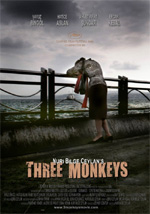
    Nobody who was paying attention at Cannes will be surprised that Turkey has selected Nuri Bilge Ceylan’s “Three Monkeys” as their entry in the foreign-language derby.

    The film was one of the critical sensations of the festival back in May and was many pundits’ pick for the Palme d’Or — it wound up with the Best Director award. Just to jog your memory, here’s a rave from the ever-reliable Jonathan Romney:

    An ostensibly routine noir-style psychological thriller vaults into the realms of high art in “Three Monkeys” … For the first time, Ceylan really involves himself in narrative complexity, spinning a subtly-twisty yarn with echoes of such crime writers as Simenon and James M. Cain … the smallest amount of trimming could well turn an exceptional film into a near-perfect one.

    I have been excited by this for some time. Ceylan’s 2002 film “Uzak (Distant)” is one of my favourite films of the decade so far, a work of visual wonder and immaculate storytelling grace. While wildly acclaimed, his follow-up, “Climates,” did less for me — it was exquisitely rendered, but on a narrative and thematic level, Ceylan seemed to me to be treading water. So I like the idea of this move into more genre-tinged territory. It’s one of my must-sees at the upcoming London Film Festival.

    I suspect the film may prove a little too resolutely arthouse for the frequently auteur-shy Foreign Film committee, but no matter. As when Mexico selected Carlos Reygadas’ bold, beautiful and thoroughly Academy-unfriendly “Silent Light” last year, I applaud Turkey for the bravery of their selection.

    (more…)