In Contention

Tag: Francis Ford Coppola

  • 9/7 Web Round-up

    David Lynch• Jeffrey Wells offers his own mid-year assessment of 2009’s best and worst so far. [Hollywood Elsewhere]

    • How New Line mutated from house of horror to chick-flick central. [The Hollywood Reporter]

    • Memo to “Baywatch: The Movie” producers: it’s about the jugs, not the jokes. [The Guardian]

    • Too lowbrow for you? Here’s David Lynch on his unlikely collaboration with musos Danger Mouse and Sparklehorse. [Sight & Sound]

    • Apparently, Meryl Streep gained 15 pounds making “Julie & Julia.” Wow, she really does want that third Oscar. [Thompson on Hollywood]

    • Francis Ford Coppola talks movies, wine and why he wanted Scorsese to direct “The Godfather Part II.” Really. [Esquire]

    • An “Up” doubter (commercially speaking, anyway) eats his words. [The New York Times]

    • Not movie-related (yet), but a “Catcher in the Rye” sequel without J.D. Salinger’s involvement? Stop the madness. [The Wall Street Journal]

  • Michael Jackson’s filmmaker collaborations

    Michael Jackson in the music video for Billie JeanTomorrow’s installment of The Lists is going to be Michael Mann-centric, but I was all set to write up something brief in the way of qualifying Michael Jackson’s contributions to the movie world until I came across this Christopher Campbell posting at Spout Blog.  It’d be pretty difficult to go much deeper than he has.

    Campbell ranks Jackson’s “filmmaker collaborations,” including music videos directed by the likes of John Singleton, David Fincher, Bob Giraldi and, of course, John Landis and Martin Scorsese.  As expected, the Francis Ford Coppola-directed, George Lucas-produced “Captain EO” is in the mix, as well as Sidney Lumet’s “The Wiz.”  I had totally forgotten about the Spike Lee production “They Don’t Really Care About Us” until I caught it on MTV or the like yesterday.  Campbell places that at #1.

    It’s a shame room couldn’t be made for the “Billie Jean” production, from visionary music video (and eventual so-so film) director Steve Barron (A-Ha’s “Take On Me”).  Promo News recently caught up with Barron for a brief remembrance of the shoot.

    (more…)

  • WEEKLY WRAP: ‘Island’ sighted, ‘Ghostbusters’ quoted

    Leonardo DiCaprio in Shutter IslandA quiet week round these parts — and everywhere else, for that matter:

    • The week’s biggest talking point was the unveiling of the first trailer for Scorsese’s “Shutter Island.” Still mopping the drool from the floor.

    • We celebrated the quarter-century (!) anniversary of “Ghostbusters,” listing the most quotable lines from that eminently quotable film.

    • Our poll of the most influential films of all time finally wrapped … in rather muted fashion. But hey, democracy rules.

    • We had the privilege of interviewing the great Francis Ford Coppola.

    • This week’s Page to Screen examined “Playing the Enemy,” the inspiration for Clint Eastwood’s upcoming “Invictus.”

    • In a rare last-minute coup, “The Hangover” stole “Up’s” thunder at the box office.

    • The 30th anniversary of John Wayne’s passing provided the impetus to wallow in The Duke’s finest screen moments.

    • And finally, yours truly dipped his toe into the murky waters of Oscar predictions.

  • Looking down the nose from across the pond

    Cary Grant in North by NorthwestBoy, the Brits sure are down on Hollywood this afternoon.  First and foremost, perhaps as an off-set to that “here come the franchises” piece linked in this morning’s round-up, David Thomson writes nearly 1,400 words before coming to his fairly reasoned thesis.  If you get through the painful film school lesson (and really, I love a good talk about Hitchcock and his methods as much as the next guy, but come on), you’ll get to the meat of the matter:

    And where has this stylishness gone? As I think about the present range of film-makers I can see very few where one might reliably recognise their work simply from the way it looks – Michael Mann, Martin Scorsese, Paul Thomas Anderson. But who could say there has ever been an evident personal style in Steven Soderbergh, Ron Howard, George Clooney, the Coen Bothers, or even George Lucas, Francis Ford Coppola, Oliver Stone, Barry Levinson, Stephen Frears or Milos Forman?

    It’s not that those people aren’t considerable directors. These may rely on modesty (Howard), a sense of overriding efficiency (Levinson), or a wish not to show off (Frears) or an eclecticism that can do all styles (the Coens). It may be a lack of authorial character or ambition (Lucas). But you can’t tell their style, in the way you could with Antonioni, Bergman, Godard or Fassbinder.

    Probably arguable points all.  And that’s if you can get past the fact that somehow a thumbprint is necessary for “personal passion” to be present in the filmmaking.  Watch “Hearts of Darkness” and tell Francis Coppola his films don’t convey “personal passion.”  But it was a nice excuse to write some pleasant words about Hitch’s best film (in my opinion), “North by Northwest,” which is playing at BFI as part of the director’s retrospective.

    And the hits keep coming.  Over at The Independent, Geoffrey Macnabb bemoans the remakes of classic 1970s films and the subtlty they have discarded in favor of pyrotechnics and unnecessary star power.

    (more…)

  • INTERVIEW: Francis Ford Coppola

    Francis Ford CoppolaThe words sound like they might be spoken by a young up-and-comer experiencing his first big break, someone fresh off the bus with stars in his eyes and the unbreakable, still unsoiled spirit of art coursing through his veins.
    “Here I’ve finished this film and now I can dream up some new adventure that I know I can finance and keep doing that and learning from it and learning how to make movies.”

    Except this isn’t a young up-and-comer experiencing his first big break.  This is a filmmaker whose contributions to the cinema have altered the course of the medium.  And only now is he able to do what he really wants to do.

    At 70 years old, Francis Ford Coppola is embarking on the career he says he thought he was going to have from the start, back when he was a post-UCLA film student training as an assistant to filmmaker Roger Corman.  When he and colleague George Lucas established American Zoetrope in the Bay Area in the late 1960s, the sky was the limit.  But life had other plans.

    “In a sense we never really got it going,” he says.  “We were all there at Zoetrope in San Francisco wanting to make personal films and films that were not usually expensive so they could afford to be more extravagant in ideas and freedom, and yet I was never able to get any money to do ‘The Conversation.’  In the despair of the on-coming poverty I took this job that was offered to me and it turned out to be ‘The Godfather’ and it was like getting hit with a tsunami of success.  I didn’t know that was going to happen to me and that opened up all sorts of possibilities.”

    Possibilities that came with fiscal consequences, of course.  The next thing Coppola knew after a wave of creative successes in the 1970s, he was in debt and “had to make a movie every year for 10 years in a row.”

    (more…)

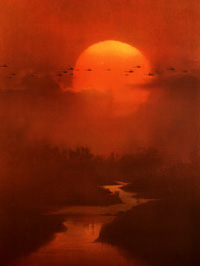
  • ‘Apocalypse Now’ — 30 years later

    Apocalypse NowIt was 30 years ago this summer I stumbled out of the old University Theater on Bloor Street in Toronto in shock, too dazed to speak, to stunned to make human contact. Finding a bench on the street I sat down and tried to collect my thoughts.

    I was 20 years old, an acting student minoring in cinema, quite happy with my life though wondering if acting was for me. Going to movies alone was something I enjoyed, even though my girlfriend at the time did not care for this habit. My feelings were it allowed me to see the films she did not care to see, right? Though I was learning the method, it seemed movies were my first love, and not to perform in them. “Apocalypse Now” defined for me what I wanted to do with cinema and my life.

    In this case I had just seen the first public Toronto screening of Francis Ford Coppola’s long awaited film, and emerging from the theater into the summer sun I knew I had been altered in some way, that this film had galvanized me and changed my life. At the time I had no idea that the film had made this impact, of course, but I knew deep in my gut that something extraordinary had just happened.

    As a film junkie I was aware of the history of the film, and because it was Francis Ford Coppola, who had directed “The Godfather,” “The Conversation” and my favorite of all time, “The Godfather Part II,” I was more than a little anxious to see the film. Coppola could do no wrong in the 1970s, having won Academy Awards for writing “Patton” and co-writing ‘The Godfather.”  He received a Best Picture Oscar nomination for the latter and won the DGA award.  For the film’s 1974 sequel, he won his Oscar for directing.

    That same year his film “The Conversation” was also a Best Picture nominee, a remarkable achievement for the young director. He then made the decision to head into the jungles of the Philippines to bring “Apocalypse Now,” a loose adaptation of Joseph Conrad’s “Heart of Darkness,” to the screen, hoping to entice Steve McQueen, Robert Redford, Al Pacino or Jack Nicholson to take roles in the film. All declined. He eventually cast Marlon Brando as the certifiable Col. Kurtz and Harvey Keitel as Willard (who was fired a few days into shooting in favor of Martin Sheen).

    (more…)

  • Mixed critical response for ‘Tetro’

    Alden Ehrenreich in TetroFollowing its Cannes premiere, Francis Ford Coppola’s “Tetro” has been greeted with something of a collective shrug by the critical community. Most of the reviews appear to follow the lead of Todd McCarthy’s mixed Variety take, in which he praised the cinematography and the performance of relative newcomer Alden Ehrenreich, but largely dismissed it as “a work of modest ambition and appeal … the pale product of an over-tilled field.”

    Screen International’s Lee Marshall is slightly more enthusiastic, crediting the cast with saving “all but the most cringeworthy lines,” and declaring — not entirely in a negative way — that the film has the “melodramatic sweep and overwrought tone of an opera libretto.” indieWIRE’s Eric Kohn also sits squarely in the middle, suggesting the film has the look and feel of a promising debut effort, but is only “mildly interesting” from a director of Coppola’s stature.

    Only Kirk Honeycutt at the Hollywood Reporter sounds really enthused about the film, despite some reservations:

    As a critic, it feels good to write positively about one of the American cinema’s lost directors… “Tetro” erases that memory (of “Youth Without Youth”). It has style to burn, eye-catching acting by an international cast and a story that harkens back to many literary classic with its themes of a family torn apart, brothers in conflict and a son’s rivalry with a towering father figure.

    The film is more than a little self-conscious …Yet somehow the piece comes off as derivative but also original. While living and working in Argentina to make this film, he absorbed enough local color to imagine a fresh, authentic tale of stymied creativity — a subject he certainly would be familiar with — and familial conflict.

    Probably not the comeback that some people were hoping for. But then, some people will consistently hope for the impossible.

  • Lukewarm early notice for ‘Tetro’

    Todd McCarthy apparently posted a review for Francis Ford Coppola’s “Tetro” on the Variety site, but it seems to have mysteriously vanished — I guess embargos stills hold sway in some cases, after all. Still, if you cannot contain your curiosity, Jeff Wells has quoted a juicy chunk of the review, and the prognosis is not terribly positive.

    There’s enthusiastic praise for young actor Alden Ehrenreich, who apparently reminds McCarthy of all three leads of “The Departed” (there’s a curious mental image), but the film, according to the critic, becomes mired in murky theatrical stylistics — which I’m afraid squares with the vibe I personally got from the film’s trailer.

    I don’t really want to requote criticism that was obviously prematurely released in the first place, but I know there’s a lot of interest in this title, so it’s there if you want it. The film screens tomorrow at Cannes.

  • Watch the first three minutes of Coppola’s ‘Tetro’

    Apple has the exclusive on the first three minutes of Francis Ford Coppola’s “Tetro,” which you can check out in standard and HD quality if you like.  Once again, Brad Brevet at Rope of Silicon is quick with an embed, so have a look:

  • Coppola on ‘Tetro’

    TetroYou’ve likely seen the trailer for Francis Ford Coppola’s “Tetro” by now. It seems to be going down well with some bloggerfolk, but I must reluctantly say the trailer didn’t really sing to me. It certainly looks attractive (even if the black-and-white lensing struck me as a tad self-regarding when viewed out of context), but there’s a stilted quality to the character exchanges that I can only hope is the result of heavy-handed trailer-cutting.

    Anyway, Pam Grady at FilmStew is significantly more impressed by what she’s seen, and based upon the trailer and some behind-the-scenes footage, is anticipating something rather special. (Though if any critic declares the film “Coppola’s crowning achievement” upon its release, I will gladly eat my hat and film the act for posterity.)

    I was very interested, however, to read Coppola’s description of his dramatic influences for “Tetro,” which fully supports the hints of heightened melodrama in the trailer:

    “The gods were Tennessee Williams and Elia Kazan,” he says. He insists that Tetro – a story of two brothers whose father is a great classical musician and conductor, not unlike Coppola’s late father Carmine – is only very loosely autobiographical. Likening the father in Tetro to “a mythic Greek tragedy father, Desire Under the Elms, a [Cat Under a Hot Tin Roof] Big Daddy,” he insists his own old men was exactly the opposite. “My father was a wonderful father and a very interesting man.” “I’ve set it in Argentina to disguise it so nobody in the family would think it was about us,” he jokes.

    He also explains his entirely personal rationale for shooting in black-and-white, suggesting a desire to channel the classic cinema that has most resonated with him in his own lifetime — but fully acknowledging it may cause audiences to stay away. Here’s hoping otherwise.

  • Coppola’s ‘Tetro’ gets a trailer

    The trailer for Francis Ford Coppola’s “Tetro,” which will play as part of the Directors’ Fortnight at Cannes later this month, has shown up at the film’s official site.  Brad Brevet at Rope of Silicon has an embed, which I’ve included below.  Beautiful cinematography once again.  Have a look:

  • Coppola goes to Cannes after all

    Francis Ford CoppolaAfter turning down an out-of-competition slot at Cannes earlier this week, it seems Francis Ford Coppola has had a change of heart. Variety reports that his new film, “Tetro,” will open the festival’s Directors’ Fortnight on May 14, marking the much-awaited film’s world premiere.

    The addition of Coppola adds some welcome lustre to a sidebar that frequently gets unfairly neglected in favour of the Official Selection (where “Tetro” was previously offered a place). The Director’s Fortnight may also attract attention for showcasing significantly more US talent than the selection of competition films announced yesterday, which included a mere two American titles (and only one from a Yank filmmaker, at that).

    In contrast, five American features make the Fortnight lineup, including Sundance talking-points “Humpday” and “I Love You, Philip Morris.” (Meanwhile, Lee Daniels’ much-garlanded Sundance sensation “Precious” (AKA “Push”) will appear in the Un Certain Regard strand of competition.

    Though the media focus tends to remain on the 20-odd films up for the Palme d’Or, Cannes runs far deeper than that. Some have complained that yesterday’s competition lineup, with its high quotient of previous winners and established auteurs, feels a bit too safe and insular (though “safe” hardly seems an apt adjective when the likes of Gaspar Noe and Lars Von Trier are involved), but it’s not just new talent lurking in the sidebars.

    (more…)

  • Coppola turns down Cannes

    TetroNow here’s a curious strategic decision. Having been offered the chance to unveil his much-anticipated “Tetro” in an out-of-competition slot at Cannes, Francis Ford Coppola has responded with a polite “thanks, but no thanks”:
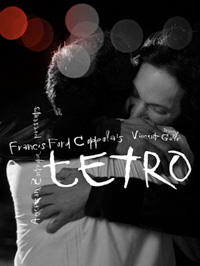
    “While I very much appreciate the invitation, this is an independent film, self-financed and self released, and I felt that being invited for a non-competition gala screening wasn’t true to the personal and independent nature of this film,” Coppola said in a statement released late last week. “More important than Cannes, our team can focus all our time, energy and resources into the US release this June 11th.”

    Coppola is instead opting for a considerably more low-profile bow at the Seattle Film Festival. What gives? Perhaps he just wants to avoid the pressure of a major festival environment: the Cannes crowd can be notoriously hostile towards auteur works that don’t meet certain expectations. (Just ask Coppola’s own daughter.)

    But they can also be welcoming towards veteran filmmakers looking to rediscover form, particularly in the more relaxed out-of-competition strand — Woody Allen has twice benefitted from such platforms in recent years. Considering that “Tetro,” an Argentinian-set family saga headlined by Vincent Gallo and Maribel Verdu, doesn’t sound like the easiest sell in the world, I’d say the Cannes exposure could have done it some good — but maybe Coppola knows something we don’t.

  • Coming in June: Coppola’s ‘Tetro.’ Will it bring him back?

    TetroNo other director in the history of the cinema dominated a 10-year span as Francis Ford Coppola did the 1970s. Beyond directing four of the decade’s greatest films — “The Godfather”, “The Godfather, Part II”, “The Conversation” and “Apocalypse Now” — his name was on “Patton” and “The Great Gatsby” as screenwriter and “American Graffiti” as producer.

    In addition, Coppola created American Zoetrope in the hopes of building a haven for young directors to make small films free of the studios.  But he also believed what the press were saying: he was a genius who would turn whatever he touched into gold.  His ego got in the way and he alienated friend and comrade George Lucas, eventually making up with the director years later when positions of power had been reversed.

    In the years after “Apocalypse Now,” the Oscar-winning Coppola fell on hard times with one failure after another it seemed, his once golden touch lost in the jungles of the Philippines while making his Vietnam epic. There were glimmers of former greatness from time to time, such as the expressionistic brilliance of “Rumble Fish,” the Cab Calloway sequence in “The Cotton Club,” the haunting scene with Kathleen Turner and her grandparents in “Peggy Sue Got Married” and Jeff Bridges’s wonderful work in “Tucker.”

    But “One from the Heart” was a mess.  “The Outsiders” was a sentimental disaster of a film. And then there was “The Godfather, Part III,” a failure because Paramount failed the director, breaking their word after making the promise he would have complete control, refusing to pay Robert Duvall, integral to the story, half of what Al Pacino was making, forcing a major re-write (that cost…?) and casting his daughter (the poor girl) in a key role when she simply lacked the acting chops to work with that ensemble.  On and on.

    (more…)

  • SANTA BARBARA: Mickey Rourke puts a bow on the fest

    Mickey Rourke at the 24th Annual Santa Barbara International Film FestivalMickey Rourke landed in Santa Barbara tonight to accept the final award of the festival, the American Riviera Award.  The on-stage Q&A/career retrospective was moderated by Pete Hammond and presented a swift trip through the actor’s portfolio of impressive performances, making me want to revisit films like “Rumble Fish” and “The Pope of Greenwich Village,” or finally get around to those I’ve never seen, like “Year of the Dragon” and “Animal Factory.”
    Michael Cimino’s “Dragon,” in fact, was the beginning of Rourke’s downward spiral in Hollywood, the actor said.  After reading some lacerating reviews that seemed to be more interested in attacking Cimino (in the wake of the “Heaven’s Gate” disaster) rather than the film, Rourke started to become disenchanted.  The seeds were actually planted when Francis Ford Coppola’s “Rumble Fish” wasn’t well-received here in the states and picked up steam with the critical reception of “Dragon.”

    The conversation was a fascinating one, and really, anyone who spends more than five minutes talking to the guy is bound to hear a couple of great stories or some particularly revealing insights.  Rourke touched on his beginnings at the Actors Studio in New York, where he befriended Christopher Walken and paid the bills working at a transvestite club (an experience that would come in handy when Steve Buscemi would direct him in “Animal Factory” 20 years later).

    He also mentioned, as I believe he’s noted elsewhere, that he believes Adrian Lyne (who directed Rourke in “9 1/2 Weeks”) may be the most underrated actor’s director out there and that Eric Roberts remains one of the best actors he’s ever worked with.  And he offered some nice sentiments for fellow Oscar nominee Michael Shannon, who co-stars with Rourke in the upcoming remake “13.”

    (more…)

  • DGA discrepancies with AMPAS are not uncommon

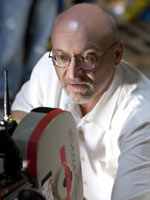
    Frank Darabont on the set of The MistThe announcement of this year’s DGA nominees has left the sense that the races for Best Picture and Best Director are over.  Not so.  While the guild and Academy line up most of the time, and have a decent track record with the directing branch, we must not forget the years that proved otherwise.  This could be such a year.

    Ask yourself how many times the Best Picture category has lined up perfectly with the nominees for Best Director?  Please also be aware that the DGA has awarded their prize sometimes to directors not even nominated for an Oscar: Ron Howard for “Apollo 13” and Steven Spielberg for “The Color Purple” to name a couple.  So while the race is certainly clearer, it is by means over.

    I still believe Woody Allen stands a strong chance for being nominated for “Vicky Christina Barcelona,” just as I believe that Darren Aronofsky could sneak in for “The Wrestler.”  But who gets snubbed?

    Gus Van Sant, Christopher Nolan, Ron Howard, David Fincher and Danny Boyle are worthy nominees all, most deserving of their attention and potential award.  But who of those esteemed five could the Academy allow to slip away?  It’s a tough call.

    I hate to say it, but I think Fincher is the most likely snub.  A stunning film to be sure, and likely the major nominee recipient…just as “The Color Purple” was in 1985.  My gut tells me Fincher might get the shaft only because he’s been on that side of things before, and the others are just too hard to ignore.  That said, let’s not forget that Ron Howard has been a victim of this sort in the past, for his finest work in fact, “Apollo 13.”  And Nolan is in some dicey waters, though I doubt he could be the victim of the blockbuster mentality that haunted Spielberg for “Jaws” (and much of his career).

    (more…)

  • INTERVIEW: Dennis Hopper

    Dennis HopperThe voice on other end of the line sounds nothing like the many wild and somewhat insane characters Dennis Hopper has portrayed throughout his career, which now spans more than 50 years. This is a man who has walked with James Dean (his mentor), John Wayne (who affectionately labeled him a “pinko”) and Francis Ford Coppola.

    As a director, Hopper was part of the movement that would bring the New American Cinema into play, closing the 1960s with his biker flick “Easy Rider,” and though he won prizes at Cannes and was hailed around the world, he has rarely directed since.

    Hopper portrayed perhaps the single most terrifying character in a film with his seething work as Frank Booth in David Lynch’s “Blue Velvet.’  The same year he was nominated for an Oscar for his work as the town drunk seeking redemption with his son through basketball in “Hoosiers.”  Even Hopper was stunned that the Academy failed to nominate him for Lynch’s film instead.  He remembers roaring, “HOOSIERS?  You’re kiddin’ me, man” when being told of the nomination. “Blue Velvet” was a film the Academy obviously feared, allowing a single nomination to David Lynch for his dreamy, surrealistic direction of the classic.

    Currently Hopper is celebrating the upcoming DVD release and a low-key Oscar campaign for Best Supporting Actor in “Elegy,” a fine little film in which he portrays the poet best friend of Ben Kingsley’s introspective professor — Sir Ben as Hopper calls him.

    “I was a big fan of Isabel’s [Coixet, the film’s director] work”, he explains. “So when my agent called and said I had an offer to be in a film with Sir Ben Kingsley and Penelope Cruz, I jumped in. It was a very human story, the sort of film I like to see, and being a big fan of Philip Roth helped me along. The film had comedy and tragedy, and most of all characters I think we can all identify with.”

    (more…)

  • ‘Godfather Restoration’ on DVD generates excitement

    The Godfather RestorationI wonder if any of us really understands the impact of home entertainment, beginning back in the early 1980s with the advent of the VHS and BETA tapes one could rent to play on new machines known as VCRs.

    My parents, God bless them, bought one right away, perhaps a way to get their eldest son (me), away at college, to come home and visit weekends. I did indeed, and after Dad would pick me up at the bus station, we would stop at the video store and grab 10 or so movies for the weekend.

    I rarely went for new releases.  Instead I chose films that I had seen once on the late show, perhaps, or films of interest I might have heard about.  Sometimes I might even have gone for the films I had never heard a thing about but were directed by someone I recognized or featured an actor I knew.

    I was 19 when I hit university and felt I was pretty well educated cinematically, having seen many films at the rep theaters in town.  I would set my alarm for the late shows, attending showings at the libraries and consuming every book I could find on film. So the advent of the VHS tape was a film lover’s wet dream.

    I watched literally thousands of films at home, over and over, studying them and finding something new each time. When I became a professional critic (when someone finally paid me for it) I made it clear that in addition to reviewing new releases in theatres, I must be permitted to review what was out for the home market.

    The generation of film-goers that followed me me (I am 49) are far better equipped with film knowledge than I was as a teen, but they have seen probably thousands more films than I had seen at that age as well. Furthermore, the special features on DVDs provide audiences with extraordinary knowledge that we were simply never privvy to.

    Yes I know there are disadvantages to home viewing.  Perhaps it has bred bad manners in movie theaters — talking, coming and going, cell phone use — but I still believe that films should be seen on a movie screen whenever possible.

    I am thrilled that Paramount and Francis Ford Coppola have gone back to restore “The Godfather” and “The Godfather Part II” in the upcoming “The Godfather Restoration,” which will also include the film that does not exist in my universe, the wretched “The Godfather Part III.”  Entirely new generations will get to see two of the greatest films ever made, enjoy the insightful commentary and documentaries that come with the set, and hopefully, come to understand that art can also be entertainment.
    (more…)