In Contention

Tag: Best Foreign Language Film

  • Foreign film watch: Finland, Serbia … and Cyndi Lauper

    Cyndi LauperThree more to add to the growing pile of official Best Foreign Language Film submissions:

    Finland (a nominee in 2002 for Aki Kaurismaki’s “The Man Without a Past”) has opted for Klaus Hero’s “Letters to Father Jacob,” a reportedly gentle drama about a paroled murderer who finds redemption working as a secretary to a blind rural priest.

    Sounds Academy-friendly so far; Variety’s rave review, which lauds director and cast alike for making “something fresh and heartrending out of predictable material,” further suggests this could be one to keep an eye on.

    Serbia, still seeking a first nomination in the category, has decided to appeal to American sensibilities by picking the partially New York-set “Here and There,” which follows the trials of an American saxophonist and a Serbian immigrant, each struggling to get by in the other’s country. (Is there enough non-English dialogue to qualify?)

    Well-received at the Tribeca fest earlier this year — Variety makes a charitable comparison to “The Visitor” — where it won a pair of awards including Best New Filmmaker for director Darko Lungulov, it also has the unusual distinction of featuring Cyndi Lauper and her real-life husband in the cast.

    (more…)

  • Foreign film watch: Spain snubs Almodóvar again

    Penelope Cruz and Pedro Almodovar on the set of Broken EmbracesKeeping up our watch on the Best Foreign Language Film race, one of the category’s regular players, Spain, has come one step closer to making its official submission — having revealed the final three films in contention for the spot.

    Some will be surprised that Pedro Almodóvar’s “Broken Embraces” — the year’s most globally-discussed Spanish production by a long shot — isn’t on the list. They shouldn’t be. Contrary to what some may expect, Almodóvar and the Spanish Academy selectors have an on-and-off relationship.

    Five of the auteur’s films have previously been submitted for the award — though only two (“Women on the Verge of a Nervous Breakdown” and “All About My Mother”) were ultimately nominated. The latter, of course, won the 1999 race. But Almodóvar has been prominently sidelined before — as in 2002, when the selectors unwisely decided against submitting “Talk to Her,” the film that eventually won the director a screenplay Oscar in spite of the snub. (D’oh!)

    (more…)

  • Chile joins foreign-language fray

    Dawson, Island 10 Chile is the latest country to formally join the Best Foreign Language Film race, having selected true-life political drama “Dawson, Island 10” as their official submission.

    To go by the trailer, the film, which tells the story of a group of political prisoners held captive on the titular island after a 1973 military coup in the country, looks suitably large and ennobling. At the very least, that should make it more to the Academy’s taste than last year’s ballsy Chilean selection, the superb black comedy “Tony Manero.”

    Catching up on older news, we should also add a trio of Eastern European titles to the mix: Slovenia’s “Landscape No. 2,” Hungary’s “Chameleon” and Bulgaria’s imposingly titled “The World is Big and Salvation Lurks Around the Corner.” (I bet Tyler Perry’s mad he didn’t think that one up first.)

    (more…)

  • Catching up on foreign-language Oscar hopefuls

    Prince of Tears

    UPDATE: As I was typing this very post, reigning Oscar champ Japan announced their submission: Ryoichi Kimizuka’s thriller “Nobody to Watch Over Me.” Screen International has details.

    PREVIOUSLY: As you know, I like to keep up with the international submissions for the Best Foreign Language Film Oscar as and when they emerge, and this morning’s Screen International report on the entries from Hong Kong and Taiwan reminded me that I’ve missed a few.

    To deal with those first, Hong Kong has selected Yonfan’s “Prince of Tears,” a lavish period melodrama set around the island’s communist witch-hunts of the 1950s. It premiered last week at Venice to polite, if not exactly passionate, reviews — sadly, it’s one title I missed — but seems to have quite strong international prospects. Said to be both romantic and visually breathtaking, it also has a gay subtext that may or may not be to the branch’s taste.

    (more…)

  • Netherlands, Kazakhstan enter Oscar ponies

    Marco Borsato and Andrew Kintu in The Silent ArmyThanks to regular commenter Jonathan for alerting us to the news that The Netherlands has selected Jean van de Velde’s “The Silent Army” as their entry in the Best Foreign Language Film race.

    The film, which played in the Un Certain Regard strand at Cannes this year, is set in East Africa, and follows the plight of a widower on a quest to rescue his young son’s best friend, after the boy is recruited as a child soldier by a rebel army.

    Extensively recut after receiving a critical drubbing in its home country in 2008 (the casting of local pop star Marco Borsato accounting for much of the jeering), the film’s reception at Cannes was improved but still somewhat tepid, with many critics citing excessive sentimentality and political correctness as major debits. (Not that either of those qualities is a disadvantage with voters in this category.)

    (more…)

  • WEEKLY WRAP: ‘Inception’ unwrapped, ‘Shutter’ unseated

    Leonardo DiCaprio in Inception• One day after the film’s trailer surfaced, we turned up some fresh plot information about Christopher Nolan’s “Inception.” Fan hysteria ensued.

    • Just in case you’d forgotten, “Shutter Island” was booted into 2010. Fan hysteria ensued.

    • To a quieter reaction, Julie Taymor’s “The Tempest” joined Scorsese’s film on the sidelines for next year.

    • In submitting “The White Ribbon,” Germany gave the foreign-language race its first major official contender.

    (more…)

  • Germany submits ‘White Ribbon’ for Oscar

    The White RibbonIt should come as no surprise to anyone that Germany has selected Michael Haneke’s “The White Ribbon” (trailer here) as their official candidate for the Best Foreign Language Film Oscar. No foreign-language Palme d’Or winner has failed to be entered in the race since Japan’s “The Eel” in 1997, and “The White Ribbon” has both breathless critical acclaim and a recognizable auteur name going for it.

    Still, the severe arthouse work remains an adventurous choice for Germany, given that Haneke’s icy formalism hardly sits very comfortably in the Academy’s wheelhouse.

    The Austrian filmmaker has previously had four of his films submitted for Oscar consideration by his home country, each time failing to make the Academy’s grade: most recently, 2005 critical darling “Caché” was controversially disqualified for not being in the submitting country’s own language. (The resulting outcry prompted a revision of the rules.)

    (more…)

  • Korea selects ‘Mother’ for Oscars, bypasses ‘Thirst’

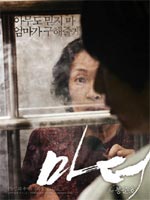
    MotherThanks to The Film Experience for pointing out this news nugget: a month after Sri Lanka kicked off the convoluted, multi-tiered contest for Best Foreign Language Film by selecting their official entry, we have our first relatively high-profile submission, as Korea has entered Bong Joon-ho’s “Mother” into the race.

    Some might be surprised that the country’s selectors passed over Park Chan-wook’s “Thirst” — which won the Jury Prize at Cannes and has received an interesting Stateside promotional push from Focus Features — but they shouldn’t be.

    For one thing, the Koreans are probably as aware as any Oscar-watcher that the chances of the Academy blue-hairs going for an erotic vampire flick with healthy lashings of gore are, to put it gently, minimal. (It appears that “Thirst” was one of six films considered, however.)

    (more…)

  • Sri Lanka kicks off foreign film race

    Flowers of the SkyWow, the Oscar off-season gets shorter by the year. Before we know it, they’ll generously let us have a single night’s sleep after the ceremony before plunging us into campaign hell.

    Of course, I exaggerate — this is hardly news to set pundits’ pulses racing. Still, last year we at least got to wait until late August before the convoluted (and invariably disheartening) process of assembling the contenders for Best Foreign Language Film began with Denmark submitting first. (And promptly sinking without trace.)

    This year, Sri Lanka comes first — and early — out the gate by naming its official Oscar submission as “Flowers of the Sky,” a melodrama from director Prasanna Vithanage than screened earlier this year at the Palm Springs fest. The flim’s site describes it as follows:

    Faded film star Sandhya Rani (Malani Fonseka) unexpectedly sees her profile rise again when she is embroiled in controversy. As a media-crazy nation draws her into its net, she is confronted with a changed, compromised industry – more commercialized, media savvy and value-less. As she faces her new found fame, Sandhya comes to confront her darkest demons – and also herself…

    (more…)

  • WEEKLY WRAP: ‘Invictus,’ ‘Bones’ and a billion remakes

    Matt Damon in InvictusSlipped my mind to do this on Friday, but better late…

    • We broke the news that Clint Eastwood’s upcoming Mandela film finally has a title: “Invictus.” (And if you’re wondering what it means, we explain that too.)

    • And with that, much “Invictus” talk ensued, as we learned that Eastwood directed the film at Morgan Freeman’s request, and that it’s going up against “The Lovely Bones” in December.

    • Speaking of “The Lovely Bones,” this week’s edition of Page to Screen put Alice Sebold’s bestselling novel under scrutiny.

    • Our slightly disappointing (to some, at least) poll of cinema’s most influential films entered its final stage.

    • With the news of a “Total Recall” remake the final straw, we got on Hollywood’s case for being so apparently allergic to original material.

    • This week’s list counted down the all-time greatest champs in the Best Foreign Language Film category. (Hint: The just-released “Departures” ain’t on it.)

    • We considered the wealth of female filmmakers in the mix for awards consideration this year.

    • A bit of respect for the great Elia Kazan.

    • “Up” stormed the box office, as we all knew it would.

    • Finally, in sadder, and much less expected, news, we said goodbye to actor David Carradine.

  • THE LISTS: Top 10 Best Foreign Language Film winners

    John RatzenbergerIt is with a notable silence that Yojiro Takita’s “Departures” – best known to many of you as that film that beat “Waltz With Bashir” to the Best Foreign Language Film Oscar – slipped onto U.S. screens last week. Of course, there are various reasons for the lack of hoop-la surrounding its release.

    The film itself is a decidedly unassuming, low-key effort. The critical reception has been, if hardly hostile, slightly soft. (Sure, Ebert gave it four stars, but what does that mean these days?) Meanwhile, more than three months after Oscar night, it’s likely most people barely remember the film’s victory at all. (Probably a good release strategy, given the dismay with which the win was greeted in many quarters.)

    The less charitable explanation, of course, is that the film isn’t terribly good. Pleasant, certainly, and executed with commendable sincerity, but swaddled in the kind of safe, maudlin cinematic cotton-wool that never threatens any real danger, despite the potentially macabre directions the material could go in. It’s a cozy piece of work that doesn’t dare approach “Waltz With Bashir” for formal invention or “The Class” for storytelling verve.

    As such, it’s a textbook illustration of the Academy’s voting tendencies in this category, which repeatedly favor the safe ahead of the searing: the movie you’d take home to meet Mom rather than the one you’d run away to Paris with. This decade alone, we’ve seen such competent, amiable and relentlessly middlebrow fare as “Nowhere in Africa,” “Tsotsi” and “The Counterfeiters” triumph over infinitely more innovative competition – -or, all too often, films that didn’t even make the nominee list. It’s a situation that inspires annual grumbling, on these pages and innumerable others.

    But it’s not all bad. The running-joke status of the foreign-language award tends to obscure the fact that the Academy has rewarded a number of stone-cold classics in their time too –- never more so than in the earliest days of the award, when titans of film history like Kurosawa, De Sica and Fellini made it to the winners’ podium. And even these days, a gem like “The Lives of Others” can still manages to fight its way to the surface.

    Today’s list seeks to at least partially rehabilitate the reputation of this beleaguered (albeit deservedly so) award, reflecting on the most adventurous –- or simply most resonant -– selections in the 62-year history (including the days when it was merely an honorary citation) of the Best Foreign Language Film award.

    (more…)

  • ‘Prophet’ tops indieWIRE poll

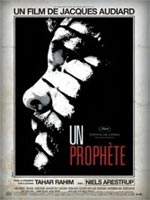
    A ProphetIn case you didn’t get the message while the Cannes Film Festival was running, it’s clear that Jacques Audiard’s Grand Prix champ “A Prophet” is a title we’re going to be hearing a lot this year. True to its preceived status as the critical favorite, the gritty French prison drama has been voted the fest’s best in a mini critics’ poll by indieWIRE, compiled from the votes of a selection of U.S. journos and bloggers (and, oddly, one critic from a UK right-wing rag).

    Runner-up, interestingly enough, was “Antichrist,” which emphasized its divisiveness by also placing second in the category of worst festival film. (What was the worst, you ask? Why, none other than Best Director champ “Kinatay.”) Third-best honors went to Palme d’Or winner “The White Ribbon” and Un Certain Regard darling “Police, Adjective.”

    Although support was clearly scattered, with no film getting the vote of the majority of critics polled, “A Prophet” came out on top in every voting category, including Best Director, Best Screenplay and Best Performance for breakthrought star Tahar Rahim. (Rahim beat the Cannes jury’s Best Actor choice Christoph Waltz into third place, while second was early Best Actress favorite Giovanna Mezzogiorno.)

    (more…)

  • Ebert makes a bold prediction

    Xavier Giannoli's In the BeginningOscar talk hasn’t surfaced that much on the Croisette this year, with “Bright Star” the only competition title prompting much speculation from the pundits. Roger Ebert, however, believes he has spotted an under-the-radar title that we’ll still be discussing come February:

    I think I may have just seen the 2010 Oscar winner for best foreign film. Whether it will win the Palme d’Or here at Cannes is another matter. It may be too much of a movie movie. It’s named “A l’origine” (“In the Beginning”) by Xavier Giannoli, and is one of several titles I want to discuss in a little festival catch-up.

    This is one of those movies that catches you in its spell. It’s a hell of a story. There’s a difference between caring what happens in a movie, and merely waiting to see what will happen.

    As someone who thoroughly enjoyed Giannoli’s gentle character study “The Singer,” I’m pleased to hear good word for the new film. Still, Ebert’s statement is surprising for several reasons, not the least of which is that “In the Beginning,” a comic fable about a con man who devises a plan to build a highway in a small French town, has enjoyed a mixed critical reception so far.

    (more…)

  • Strong notices for Tautou in ‘Chanel’

    Audrey Tautou in Coco Avant Chanel2008’s slate of eventual Best Actress nominees may not have been the strongest of recent years, but it was certainly the most predetermined. Months before anyone had seen even a frame of their films,  it was accepted wisdom that Meryl Streep, Angelina Jolie and Kate Winslet (for something, at least) would be invited to the ball.

    This unusual star-focused stranglehold (in an unusually crowded field) made it that much harder (and ultimately impossible) for critics’ darlings like Sally Hawkins or Kristin Scott Thomas to gain a slot.

    This year, however, sees a return to the usual terrain of questionmarks in the field, with the usual regrettable paucity of female star vehicles on the horizon. (Only “Amelia” smells like Oscar catnip, and it smells a little funny to me.) Can Michelle Pfeiffer and Meryl Streep score veteran nods for comedy vehicles? Could either Gabourey Sidibe or Saoirse Ronan become only the second teenaged nominee in the category’s history? Which film, if any, will turn out to be Helen Mirren’s awards pony?

    With the most early buzz centred on an ingenue few have yet heard of (that would be Carey Mulligan), it’s looking like a year of few sure things from a distance, which is the way I like it. (Of course, I could be completely wrong — I bow to certain other folks’ expertise in this field.)

    So with the race so delicately poised at this early point, it’s interesting to see one of the few supposedly baity contenders passing the initial critical test. On paper, Audrey Tautou’s performance in “Coco Before Chanel” has a lot going for it. Nobody needs to be reminded of the Academy’s fondness for biopics (but just for the record, 7 of the last 10 Best Actress winners played real-life figures), and they aren’t exactly averse to pretty period pieces either.

    (more…)

  • ‘Departures’ trailer debuts

    Remember “Departures,” that little Japanese film that everyone (almost everyone) expected to be an also-ran for the foreign language film Oscar last year?  Well the film is finally going to see a domestic limited release on May 29.  The new trailer has premiered over at Apple.  Here’s an embed:

    “[‘Departures’] deals with death in a really affecting way, at once eerie, humorous and, ultimately, moving,” I wrote of the film back in February.  “When it threatens to pass into trite territory, it finds a way to stay fresh and alive, very human and absolutely satisfying.”

    “Departures” is also set to play the Tribeca Film Festival later this month and the Los Angeles Asian Pacific Film Festival in May.

  • INTERVIEW: Jan Troell

    Jan TroellAfter taking a backseat to younger, scrappier film industries in recent years, 2008 marked a defiant resumption of the throne for a number of traditional world-cinema stalwarts – Italy was the talk of May’s Cannes festival, while France churned out one masterwork after the other. Joining them at the top, meanwhile, was Sweden, with a pair of exquisite, acclaimed titles that otherwise couldn’t be more diametrically opposed.

    While Tomas Alfredsson’s dreamy, disturbing awards-guzzler “Let the Right One In” announced the arrival of a startling new guard in Swedish cinema, the country’s official Oscar submission was the work of a decidedly gentler, more practiced hand.

    “Everlasting Moments,” a lyrical account of the life of Maria Larsson and her journey from abused housewife to accomplished photographer at the turn of the 20th century, is but the latest in a long line of works by esteemed 77 year-old veteran Jan Troell.

    The film, which opened Stateside on Friday, has been a humble yet not inconsiderable presence throughout this past awards season. Greeted enthusiastically at the Telluride and Toronto festivals, it went on to score a Golden Globe nod, and only narrowly missed the cut at the Oscars, having made the 9-strong shortlist in the foreign-language category.

    Troell, however, dismisses the whole awards business with good humor. “I was nowhere near as disappointed as people would like me to be,” he chuckles, speaking on the phone from his family home in Sweden. “They expect you to be depressed when you don’t make it, but that’s not the reason you make films. It would have been nice to go to the Oscars, but I’ve been there before, and I know not to take it all too seriously.”

    (more…)

  • More than one ‘right’ choice

    Waltz with BashirIn the largely good-natured responses to a largely good-natured Oscar ceremony, only one result has been greeted with any real rancour from critics or pundits –- the “upset” (anticipated by some clever folks at the eleventh hour) in the Best Foreign Language Film category. But as much sympathy as one feels for the disappointed team behind the upended frontrunner, “Waltz With Bashir,” I can’t help feeling a little bad for the ultimate victor, “Departures,” whose moment in the sun is being somewhat tainted by the amount of resentment being cast its way.

    David Carr describes “Bashir’s” loss as “the biggest miss of the year,” adding that the Japanese film’s victory signals a triumph of convention over innovation. Meanwhile, Sasha Stone, who is usually at pains to be the most disinterested of Oscar bloggers, suggests that the win is “the worst of this year.” But these are mild jabs compared to Scott Foundas’ furious rant over the affair, in which he dismisses “Departures” as a “relentlessly mediocre tearjerker” and rages that “Bashir” was simply too sophisticated for the voters:

    Folman’s film was simply too innovative for the Academy’s notoriously calcified tastes … While Waltz builds to a conclusion that many (including this critic) counted among the most emotionally devastating in movies last year, it is a moment that is earned by the film rather than cheaply calculated, and which raises more questions than it answers. That’s something that many viewers of Folman’s film have found thrilling to behold, but which may well have inspired paroxysms of rage in Academy voters who stand by the belief that a movie should have a clear beginning, middle and end and send people out of the theater feeling better about “humanity.”

    I must admit to having mixed feelings about the whole business. I must emphasise that I have yet to see “Departures,” so I can make no statement about whether or not it’s an undeserving winner –- though I confess I’d be surprised if it’s as striking or provocative a piece of work as “Bashir.” And while I’m not as ardent a devotee of Folman’s film as many critics, I can’t deny that I was excited by the possibility of an animated documentary breaking new ground in a frequently conservative category. (On another tack, as I’ve said before, I agree with Foundas that the film’s omission from the ceremony’s ‘Animation 2008’ montage was inexplicable.)

    (more…)

  • More on ‘Departures’ and a potential foreign upset

    DeparturesUPDATE: Well, it seems Tom has pulled the post down.  Perhaps, as commenter Josh notes, he got his info a bit twisted.  I’ll leave this here for now but check Josh’s explanation of the process.  The waters were muddied there for a bit.

    EARLIER: Tom O’Neil writes the following over at Gold Derby:

    A few days ago Gold Derby reported exclusively that “The Class” got nominated thanks to the new procedure that permits the academy’s internal foreign-film committee to overrule voters and add as many as three titles to the five in the category. (EDITOR’S NOTE: This seems to be the misinterpreted information.) The new rule was instituted to dispel the kind of outcry that followed last year’s omission of previous Cannes winner “4 Months, 3 Weeks, 2 Days” (Romania).

    Now Gold Derby can tattle a bit more. An excellent source tells us that the committee used its prerogative fully, bumping three films nominated by normal procedure in order to add their own choices. (EDITOR’S NOTE: This, too.  It seems the added films came during the first shortlisting process.) What were the other two? We don’t know for sure, but it seems logical to assume that they were other art-house darlings beloved by film critics who’d probably raise a ruckus if they were overlooked…

    How utterly screwed up this element of the Oscar process is.  It’s already pathetic that a special committee has to be there for oversight in the event that a film is snubbed that might cause some outcry, but hey, if there’s outcry over your choices, don’t bend to the will of the people and/or the critical fraternity.  Have the balls to stand by your own shitty taste.

    Anyway, it’s more and more obvious that, as I’ve been saying, the members that tend to vote in this category simply have it out for non-traditional filmmaking, end of story.  This band-aiding of the situation is just folly and, truthfully, there needs to be an entire re-working of the category’s process from the ground up.