In Contention

Tag: Best Foreign Language Film

  • ‘The Class’ trailer

    Apple has a shiny new trailer for “The Class,” the Cannes Palme d’Or winner that was my favorite film of the London festival, and is surely one of the frontrunners for Best Foreign Language Film. (In a rather barren Best Adapted Screenplay field, I wouldn’t discount its chances of a nomination there either.)

    For me, the trailer doesn’t quite convey the film’s quickfire conversational energy, but it’s a difficult film to sell in two minutes. Watch it in gorgeous HD here, or YouTubed below:

  • LONDON: Gongs for ‘Mice,’ ‘Tulpan’ … and my own awards

    My last post on the London Film Festival brings some happy news, as one of my favourite festival titles was justly rewarded last night. The festival is not a competion-based one, but three prestigious awards are still handed out before the final screening.

    One of these is the global festival staple, the FIPRESCI International Critics’ Award. I’m thrilled to see it went to Australian multi-hyphenate Matthew Newton for his superb debut feature “Three Blind Mice,” which I already gushed over here. At only 31 years of age, I predict big things for Newton, both before and behind the camera.

    Meanwhile, the Sutherland Trophy for best debut feature went to “Tulpan,” the Kazakhstani entry for Best Foreign Language Film, beating such heavyweight contenders as “Ballast” and “Hunger.” It’s an auspicious award with a 50-year history: previous winners include “L’Avventura,” “In the Realm of the Senses,” “The Fabulous Baker Boys,” “You Can Count on Me” and “Persepolis.” I was rather taken with “Tulpan,” so I’m pleased to see this underdog come through — it’s a dark horse to crack the Oscar shortlist.

    Other winners included the Italian character drama “Mid-August Lunch,” which took the Satyajit Ray Award for “artistry, compassion and humanity” in a debut film, and “Victoire Terminus,” a study of female boxing in the Congo that took the Grierson Award for best documentary. I’m afraid to say I missed both films, though I particularly wanted to catch the latter.

    And with that, bearing in mind that I couldn’t see everything, I thought I’d hand out my own inaugural (and no doubt much-prized) awards for the best that I saw at the fest, starting with my own personal Top Ten:

    TEN BEST FILMS OF THE FESTIVAL: 1. “The Class”; 2. “Synecdoche, New York”; 3. “Il Divo”; 4. “Slumdog Millionaire”; 5. “Three Blind Mice”; 6. “Wendy and Lucy”; 7. “The Good, The Bad, The Weird”; 8. “The Wrestler”; 9. “Sugar”; 10. “La Belle Personne”

    (more…)

  • SHORT TAKE: “The Baader Meinhof Complex” (***)

    The Baader Meinhof ComplexGermany has hit something of a sweet spot with the Academy of late, having won Best Foreign Language Film twice in seven years, and scoring two additional nominations — all with somber, rock-solid takes on aspects of the country’s fascinating 20th-century history. (Last year’s winner, “The Counterfeiters,” may have been from Germany’s neighbor Austria, but it was a clear continuation of the trend.)

    So I’m not at all surprised to hear whispers that this year’s German entry, “The Baader Meinhof Complex,” is going down well at Academy screenings. A weighty, expansive and absorbing study of the war of terror waged against the state by the radical Red Army Faction in 1970s Germany, as well as the personal conflicts raging between its three leaders, it ticks any number of Academy boxes: it feels ‘important’ yet accessible, exotic in subject but familiar in form. Intelligently structured and immaculately crafted, its initially daunting 150-minute running time fairly zips by.

    Yet it isn’t quite a great film. Where Florian Henckel von Donnersmarcks’s stunning “The Lives of Others” managed to filter volumes of political context through a finely wrought personal narrative, “The Baader Meinhof Complex” — admittedly working within the bounds of non-fiction — occasionally struggles to locate the human complexity within the history.

    The three protagonists speechify to rousing effect, but their psychological motivations and vulnerabilities remain frustratingly opaque to the end. Fine actors like Martina Gedeck and Moritz Bleibtreu consequently can’t find enough notes to play in the portrayals of the title characters; more compelling is Johanna Wokalek, who, as Baader’s wife Gudrun, colors her political passions with a fierce sexuality.

    Uli Edel directs with a sure, selfless hand, placing story before style, which makes sense with story material this rich. While his approach borders on the prosaic at points (I could do without such literal music cues as “Blowin’ in the Wind”), this is still robust meat-and-potatoes filmmaking: not as innovative or as challenging as other fare on offer, but nutritious nonetheless. The density of incident and detail crammed into the film’s frame is impressive, but it’s hard not to come away wishing one knew the people at its centre a little better.

  • LONDON: ‘Tony Manero,’ ‘The Other Man,’ ‘Awaydays,’ ‘Seamstresses’

    Before I continue my roundup of films from the last few days of the London Film Festival, I received an email asking why I haven’t mentioned such major festival titles as “Rachel Getting Married” and “Religulous.”

    There is little point in me reviewing titles that have already opened in the States (and which Kris has already discussed, in my opinion rather accurately), with so much coverage already available. But to deal briefly with three such films, I enjoyed “Rachel Getting Married” (***) for Jonathan Demme’s loose, funky aesthetic, but found the script disappointingly glib beneath the flashy surface wit. “Religulous” (**1/2) is entertaining but not as penetrating as it imagines itself, with Bill Maher claiming to stand for doubt, but showing precious little thereof in his one-sided argument. Meanwhile, the less said (from me, at least) about the fatuous trifle that is “Nick and Norah’s Infinite Playlist” (**), the better. Moving on:

    TONY MANERO (***)

    Chile’s official Academy Awards submission is a stark, studied and ultimately rather unsettling black comedy that provides a particularly bleak spin on the familiar character of the fame-crazed non-talent. Set in the late 70’s, against the ominous (and fascinating) political backdrop of the Pinochet dictatorship, the film centres on Raul (Alfredo Castro), a dour, dysfunctional middle-aged man whose chief pleasure in life is regular viewings of “Saturday Night Fever” at the local cinema.

    Obsessed with the John Travolta character for whom the film is named, Raul begins modelling himself on Manero, going so far as to enter a Manero lookalike contest on national TV, and leading a shabby dance troupe in meticulous pastiches of “Fever” dance numbers at a local bar. However, the startling lack of moral boundaries Raul shows in his quest to inhabit Manero leads him into a spiral of theft, lies and murder.

    (more…)

  • LONDON: ‘Incendiary,’ ‘A Christmas Tale,’ ‘Blind Loves’

    I’ve been swamped with screenings at the London Film Festival, so between watching the films, maintaining some semblance of a day job and occasionally remembering to sleep and eat, my review updates have got a bit behind track.

    Hopefully, I can make up some of the distance tomorrow, when I have a lighter screening schedule, so expect a compilation of capsule reviews shortly, as well as some more in-depth evaluations of titles like Steve McQueen’s fascinating “Hunger.” In the meantime, here are some thoughts on three notable (if not necessarily successful) titles that made their London bow on the weekend:

    INCENDIARY (**)

    Steadily, and with very little fuss, Michelle Williams is growing into a remarkable young actress, as this, the first of three films she has in the festival, makes clear. It’s one thing to shine in a film as immaculately crafted as “Brokeback Mountain,” but it’s quite another to shoulder a project as problematic as Sharon Maguire’s “Incendiary.”

    A wildly confused, schizophrenic film based on a controversial novel, it stars Williams as a working-class London mother whose life is thrown into turmoil when her husband (a bomb disposal officer) and young son are killed in a (fictitious) terrorist attack on Arsenal football stadium. A low-key study of grieving ramps up into convoluted thriller territory when a journalist (Ewan McGregor), with whom the woman is having an affair, senses a cover-up and brings her into the investigation.

    (more…)

  • REVIEW: “The Class” (***1/2)

    Sony Pictures Classics\' The ClassLondon Film Festival

    “We could have ended up making a leftwing ‘Dead Poets Society,’” states star and co-writer François Bégaudeau in the press notes for “The Class,” Laurent Cantet’s exhilarating Palme d’Or winner ( and a surefire frontrunner for the Best Foreign Language Film Oscar). “That didn’t seem amusing to us at all.”

    Too right. Few settings are as simultaneously overworked and under-thought in cinema than the psychological (and occasionally physical) battleground of the high school classroom. From “The Blackboard Jungle” and “To Sir, With Love,” through to “Dangerous Minds” and that aforementioned Peter Weir schmaltzathon, the ‘inspirational teacher’ movie has become a sub-genre in itself, generally characterized by diagrammatic characterization and comfortable liberal homilies.

    Two years ago, Anna Boden and Ryan Fleck’s “Half Nelson,” about a dedicated history teacher who just happened to be a crack addict, introduced some darker notes to the formula, which has now been completely reconfigured by “The Class,” an astonishing, one-of-a-kind work that is effectively the last word in the classroom genre.

    Seamlessly meshing documentary-style observation with a loose fictional script from the Mike Leigh school of work-shopping, Cantet’s richly layered film is a return to the masterful form of “Human Resources” after the curious misstep that was “Heading South.” With an organic, unhurried sense of scene construction and a keen eye for behavioral detail, “The Class” emerges not only as a highly entertaining piece of one-off storytelling, but as an urgent (yet unforced) microcosm of the sociopolitical tensions running through modern-day France.

    (more…)

  • WEEKLY WRAP: ‘Road,’ ‘Soloist’ out, ‘Frost’ stumbles, Ledger buzz

    Busy week, this. Here is how it went down:

    • In the biggest story of the week, the pool of contenders narrowed as “The Road” got bumped to 2009…

    • … followed, in quick succession, by “The Soloist.”

    • The London Film Festival kicked off with “Frost/Nixon,” which got off to a middling critical start. We were underwhelmed.

    • More London coverage here, here and here.

    • As Tech Support ran down the Visual Effects contenders, we got an angle on the tantalising FX for “The Curious Case of Benjamin Button.”

    • Heath Ledger’s buzz remains as solid as ever — word went round that a lead campaign was in the works, but they’re staying put in supporting. Good move.

    • More (and still more) foreign film contenders bring the field to a record tally of 67.

    • We responded to the bad “Changeling” buzz with a kinder view, but like everyone else, are looking ahead to “Gran Torino.”

    • And finally, we solve your sartorial dilemmas in time for Halloween.

  • Foreign film watch: 67 entries, but how open is the race?

    Since my last update on the Best Foreign Language Film race, a further ten latecomers have entered films, bringing the number of entries to a record 67. (The full, updated list is here.)

    The new names in the derby are Afghanistan (“Opium War”), Albania (“The Sorrow of Mrs Schneider”), Azerbaijan (“Fortress”), Egypt (“The Island”), Georgia (“Mediator”), Kazakhstan (“Tulpan”), Latvia (“Defenders of Riga”), Lebanon (“Under the Bombs”), Ukraine (“The Illusion of Fear”) and, interestingly enough, the United Kingdom (“Hope Eternal”).

    The last-named title proclaims itself the first ever Welsh-African production, and features dialogue in seven languages — including Swahili and Afrikaans. Beyond that, I haven’t a clue what it is. Incidentally, I saw the Kazakhstani entry “Tulpan” this afternoon, and will review it in my next London Film Festival roundup.

    Reflecting on the race in his Notes on a Season column, Pete Hammond declares the race “wide open,” but I’m not sure I agree. After all, the new voting system — whereby the foreign film committee votes on six of the shortlisted titles, after which a smaller executive will add a further three — is specifically designed to ensure that the most acclaimed (and most expected) films make the cut.

    Under this system, you can bet a film like “4 Months, 3 Weeks and 2 Days” would have made the shortlist last year. Ditto “City of God” in 2002. Consequently, it seems safe to say that even if the general committee snubs high-profile critics’ favourites like “Gomorrah” or “Waltz With Bashir,” the executive committee will get them on the shortlist.

    (more…)

  • South Africa among the foreign-language stragglers

    Despite the deadline for submissions for the Best Foreign Language Film race ostensibly being October 1st, a further four dawdling countries have been added to the list of contenders that I discussed recently. They are Thailand, Lithuania, Uruguay and my home country, South Africa. I’m guessing none of them will really trouble the race, but as we know, this category moves in mysterious ways.

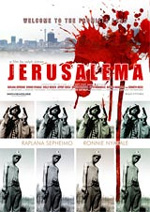
    Great South African films are few and far between — and none of them have yet come within touching distance of an Oscar. No “Tsotsi” fan am I. But in picking Ralph Ziman’s “Jerusalema” this year, the South African selectors are clearly hoping it will strike a similar chord to Gavid Hood’s 2005 Oscar-winner — like that film, it’s another Johannesburg-set crime story, though evidently a less sentimental one.

    Following its appearance at Berlin in February, Variety was moderately impressed:

    A propulsive, glossy, Johannesburg-set actioner charting the rise of an ambitious ne’er-do-well a la “Scarface,” “City of God” and virtually every other rags-to-riches-to-ruins underworld epic, “Jerusalema” overcomes derivative genre cliches and daunting length to punch home its crime-doesn’t-pay message on chutzpah alone.

    To offer a local perspective, our South African friend Nick Plowman has some reservations, but ultimately gives it the thumbs-up:

    “Jerusalema” is a first rate thriller, bursting at the seams with energy. Its vivid ambition is unlike anything I have seen come out of South Africa in ages … It’s too long at times, it drags here and there, (but) it’s gritty, real and ambiguous.

    (more…)

  • 10/7 Oscarweb Round-up

    Kat Dennings and Michael Cera in Nick and Norah's Infinite Playlist• David Poland writes up a mini-reaction to “W.”  Yours truly will get a crack this morning. [The Hot Blog]

    • Jeffrey Wells, meanwhile, can’t wait to see it. [Hollywood Elsewhere]

    • Jeremy Piven in “Speed the Plow?”  Best…casting…ever? [The Daily Beast]

    • Yet another article wondering how “Body of Lies” will fare in the ghetto of Irag war cinema. [Risky Biz Blog]

    • Robert Deutsch gets some face time with Clint Eastwood. [USA Today]

    • More on EW’s Oscar revote. [Pop Watch]

    • In honor of “Nick and Norah’s Playlist,” 10 favorite “one night out” movies. [Vulture]

    • Christopher Campbell thinks Sony Classics should aim for Best Animated Feature Film with “Waltz with Bashir,” over Best Foreign Language Film.  Why not both? [Spout Blog]

  • Foreign and doc predix

    FYI, the predictions for Best Foreign Language Film and Best Documentary Feature have been added to the sidebar. No charts for these categories, as they aren’t given to the shift and slide in buzz like the rest. You just take a stab and go with it. These seem to make sense for now, but I’ll probably make some changes down the line.

  • WEEKLY WRAP: Newman remembered, Rudin/Weinstein, Foreign film race

    Paul Newman in HudAs we head into the weekend, here’s a quick overview of what we (and you) have been talking about at In Contention this week:

    • Kris paid tribute to the incomparable Paul Newman, as well as rounding up some of the man’s greatest performances.

    • As the Scott Rudin-Harvey Weinstein soap opera continues, Kris wonders where this leaves “The Reader” in the race.

    • John Foote contemplated the screen’s greatest leading ladies, past and present.

    • Matteo Garrone presented his red-hot foreign-language contender “Gomorrah” in London. I was impressed with the film.

    • Speaking of which, all the submissions for Best Foreign Language Film are in.

    • In the wake of a sensational new trailer, Apple takes a mouthwatering look at the tech credits of “Australia.”

    • Continuing the technical conversation, Gerard previewed the runners and riders in the Best Sound Mixing race.

    • Clint Eastwood scooped the first in what could be yet another run of awards for him this season.

    • And finally, in case you weren’t aware awards season has started, the people behind “Frozen River” and “Elegy” would like to remind you otherwise.

  • Foreign film watch: all the contenders

    The race starts here. With the deadline having passed on Wednesday, 53 67 countries have submitted a candidate for the Best Foreign Language Film award.

    Now it’s all in the hands of the Academy’s notoriously obtuse foreign film committee. Under a new system aimed to avoid embarrassing exclusions like last year’s snub of “4 Months, 3 Weeks, 2 Days” and “Persepolis,” the committee will vote on a six-film shortlist, while a smaller executive panel will add three extra titles afterwards.

    Looking down the list of titles, there aren’t any glaring omissions so far — and it’s nice to see left-field festival successes such as “Tony Manero” (Chile) and “Eldorado” (Belgium) in contention. There is still the problem of the ‘one film per country’ rule which means exceptional films such as “Il Divo” and “I’ve Loved You So Long” can’t compete. From a personal perspective, I’m also a little disappointed to see only two African entries: I fully expected Ethiopia to submit the much-acclaimed Venice success “Teza,” but it wasn’t to be.

    As I’ve said before, making predictions in this category is nigh-impossible, but for the hell of it (and so you can jeer at my foolishness come January), I’m hazarding a guess as to what the nine semi-finalists will be. My predictions, and a full list of the contenders, after the jump:

    (more…)

  • Garrone on ‘Gomorrah’: “It’s not real, but it’s true.”

    Viva Italia, is all I have to say. In the past 48 hours, I’ve been lucky enough to see the two films that have widely been heralded as marking a renaissance for the Italian film industry, a world cinema titan that had been lying dormant for a couple of years. No more.

    One of them is Paolo Sorrentino’s blistering, return-to-form political thriller “Il Divo,” which I will discuss closer to its appearance at the upcoming London Film Festival. The other is Italy’s submission for the Best Foreign Language Film race, “Gomorrah.” Possible masterpieces, both of them — and as solid a case as any for abolishing the silly “one film per country” rule that so plagues this problematic Oscar category.

    Walking out of London’s Institute of Contemporary Arts after Sunday’s UK premiere of “Gomorrah,” which was followed by a lively Q&A with director Matteo Garrone, I couldn’t shake the feeling that I might have just met one of next year’s multiple Academy Award nominees.

    Far-fetched, I know, but the film’s achievement is that staggering and far-reaching. Under the foreign-language committee’s new voting system, a nomination in that category should, by rights, be a slam-dunk, while Best Director and, particularly, Best Adapted Screenplay nominations are, to my mind, well within the realm of possibility. I will resist further gushing until I post a proper review in the next day or two, but for now, I want to share some of the thoughts Garrone offered at the Q&A.

    A modest, thoroughly disarming presence, far younger in demeanor than his 40 years suggest, Garrone himself seems a little bewildered by the film he has made and the discussion it has wrought. For those who don’t know, “Gomorrah” is a documentary-style examination of the Camorra crime syndicate that terrorizes Naples, based on the bestselling non-fiction expose by Roberto Saviano.

    (more…)

  • Foreign film watch: ‘Correction,’ ‘Ploning’

    Two days to go until the deadline for Best Foreign Language Film submissions, and the latest nation to enter the fray is Greece. Seeking their first nomination since 1977 — that’s right, no Theo Angelopoulos film ever made the cut — the Greeks have selected Thanos Anastopoulos’ “Correction,” a racially charged drama about the country’s Albanian immigrant population.
    By all accounts a challenging, defiantly minimalist work, the film bowed at Berlin in February to middling reviews, with both Variety and Screen International predicting it would have a hard time crossing over.

    On another note, The Philippines is seeking their first ever nomination in this category for “Ploning.” This was announced some time ago, and I listed it in one of my updates last week. However, following an enthusiastic recommendation for the film from a reader (see, we do listen), I thought I’d mention it again.

    (more…)

  • Foreign film watch: Spain and Mexico go period

    Just recently, the strongly linked film industries of Spain and Mexico were the talk of the world cinema scene, with auteurs like Almodovar, Del Toro, Amenabar and Inarittu enjoying an unprecedentedly high profile in the US, and picking up awards left, right and centre.

    This past year, however, has a seen a shift back to more traditional cinematic sources, with rejuvenated European stalwarts Italy and, in particular, France churning out the critical hits and festival sensations.

    The Spanish-speaking countries’ slight (and no doubt temporary) loss of momentum is arguably reflected in their recently announced submissions for the Best Foreign Language Film race: both have selected sober-sounding period dramas with relatively low international profiles.

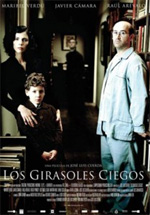
    Spain’s choice, “The Blind Sunflowers,” takes place in the aftermath of the Spanish Civil War, and tells the story of a presumed war widow harbouring her left-wing husband in the family home. It’s a period that has proved fertile ground for great Spanish cinema, and the cast, including the wonderful Maribel Verdu and Javier Camara, is exciting, but Variety was decidedly unimpressed by the film at Toronto:

    Brimming with ideas it fails to galvanize, “The Blind Sunflowers” reps an unhappy swan song for late, great screenwriter Rafael Azcona. As a portrait of the dullness of life in provincial postwar Spain, the pic is fine, but much of that dullness spills over into the treatment, which fails to do justice to Alberto Mendez’s dark novel … Top-notch cast feels wasted, with most of the content rerun from previous Civil War dramas.

    (more…)

  • Russia, Argentina, Slovenia enter the derby

    This morning brings three more entries in the Best Foreign Language Film race. KIcking things off, Russia has selected Anna Melikyan’s “The Mermaid,” which won the Directing Award in the World Cinema section at Sundance, before going on to scoop a FIPRESCI prize at the Berlin fest.

    A modern-day fairytale about a teenage girl’s coming of age in Moscow, the film has inspired comparisons to “Amelie” from a number of critics. Variety praises it for its “abundant charm,” “bravura visuals” and “a winning personality all its own.” I’ve been intrigued by this one for a while.

    Meanwhile, Argentina has also gone with a success from the festival circuit: Pablo Trapero’s “Lion’s Den,” a story of a young woman’s imprisonment for accidental murder. The film played in competition at Cannes this year to enthusiastic reviews, including this rave from Andrew O’Hehir:

    “Lion’s Den” is marvelously shot and acted, constantly surprising, and completely focused on Julia’s struggle to get from one moment, or one day, to the next one rather than through some formulaic story arc … Martina Gusman (Trapero’s wife in real life) gives a vivid, ferocious, almost animalistic performance.

    Finally, Slovenia’s selection is “Rooster’s Breakfast,” a gentle study of small-town life that has been wildly popular in its home country but has virtually no international profile to speak of.

    Once again, feel free to share any further information or perspective on these (or other) foreign-language entries in the comments below.

  • Two from The Film Experience

    Nathaniel Rogers is having a bit of fun with marketers in charge of Angelina Jolie’s mug this year.  He’s also cooked up a Google map for your foreign film Oscar-watching pleasure.