In Contention

Blog

  • REVIEW: “The Tree of Life” (***)

    Cannes Film Festival

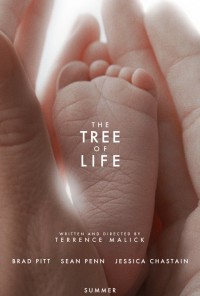
    Landscape has always been character in the films of Terrence Malick. The even, rolling fields of “Days of Heaven,” the sweatily green hill ladders of “The Thin Red Line,” even the dry-toast mesa of “Badlands”: all expansive, overwhelming environments that dictate the behavior of the films’ human occupants through sheer force of presence, for it’s often all they have to live in and live with. It’s an approach that, across 33 years of widely-spaced work, has drawn as many accusations of vacant pictorialism as it has rapt devotion — without the mystique Malick has accrued through his slow-loris work patterns, it’s difficult to say which camp might have emerged dominant — but it’s made for an oeuvre with a stylistic and textual throughline that belies its scattered production.

    Until, that is, “The Tree of Life,” Malick’s long, long delayed fifth feature that is at once his most interior work and his most grandiosely conceived. A fractured, impressionistic memory album documenting the roots of familial estrangement in a middle-class 1950s household in the director’s hometown of Waco, Texas, it arrives on the screen surrounded by bookends within bookends: scenes depicting the present-day social alienation of the family’s grown eldest son (Sean Penn), bracketed by vastly scaled sequences addressing more generalized concerns of theology, evolution and mortality.
    (more…)

  • ‘Showrunners’ to explore the making of modern American TV

    I think it’s fair to say, with top name talent from Martin Scorsese to Michael Mann, Gus Van Sant to Neil Jordan rushing to the arms of the small screen, not to mention the general lift in quality programming of the past half a decade, television could be on the precipice of a new renaissance.

    This is before we really sit back and analyze and consider the impact, already felt, of On Demand services that will no doubt take off with the standardization of at-home delivery. Episodic entertainment may well spring to new, invigorating life. And those smart enough to see what’s coming are already testing those waters, like Netflix’s recent, potentially game-changing deal with Kevin Spacey to launch “House of Cards” (directed by David Fincher) exclusively on its streaming service.

    In a nutshell, it’s an exciting time for television, and with the rise of the showrunner in full swing, at what could be a bellwether moment for the industry, it’s the perfect time for a filmmaker to pull back those layers.

    (more…)

  • SHORT TAKE: “The Artist” (***1/2)

    Cannes Film Festival

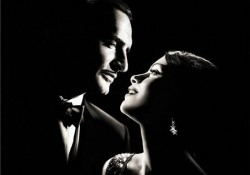
    “Please be silent behind the screen,” requests a sign in the cinema where silent movie star Georges Valentin’s latest work is screening, near the beginning of “The Artist,” Michel Hazanavicius’ semi-sweet paean to pre-talkie cinema.

    It’s a witty clue as to how Hazanavicius is going to run the ship in his own not-quite-silent movie: swooping strings accompany the film-within-a-film’s finale as Valentin (Jean Dujardin) waits confidently in the wings, only for sound to cut out just as the audience bursts into thunderous applause. It’s a neat trick, one the director pulls and reverses a few times in 100-odd minutes that follow, and one that cunningly aims to replicate in negative the disorientation 1920s picturegoers might have felt when films suddenly started speaking.

    If “The Artist” never quite becomes the ingeniously self-reflexive cinematic essay this scene promises, it succeeds on several warmer, more immediate levels: as an infectiously affectionate reminder of a lost art form’s joys, as a lushly imagined exercise in style, and most crucially, as a funny, emotionally connected entertainment in its own right. As in his pair of hit “OSS 117” films — droll spoofs of 1960s spy cinema, the casual pleasures of which his latest considerably builds upon — Hazanavicius’ approach to pastiche is exacting but not academic: story remains the top priority here, and he has settled on one that is snugly predicated on the film’s very own formal conceits.

    (more…)

  • Tell us what you thought of ‘Bridesmaids’

    The summer movie season keeps moving along this weekend with the release of Paul Feig’s “Bridesmaids,” looking to cash in on a little of that left over “Hangover” love before that film’s sequel comes along and devours what’s left in a few weeks. Honestly, though, by most accounts, this one’s a winner (I haven’t seen it). If you get around to it this weekend, feel free to speak up on your thoughts.

  • On painful ‘Tides’

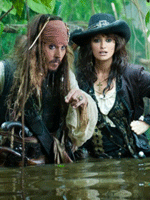
    Guy was balancing two options in Cannes this morning: Take in the press screening of Rob Marshall’s “Pirates of the Caribbean: On Stranger Tides” or catch up on some much-needed rest. Given that I had already suffered the experience, I suggested he spare himself the 130-odd minutes of anguish and, I don’t know, lie in a park and eat a baguette or something.

    Truly, this film is the embarrassing, excruciating fourth installment of a franchise that bottomed out somewhere in the middle of the second. I wanted it to end the minute it started, and knowing there were over two hours to come, it was a trying, trying experience. The only thing that kept my attention was the placement of Penélope Cruz’s crucifix necklace.

    But no one is pretending this is anything beyond a paycheck for talent and a conservative money-grabbing maneuver on the studio’s part. I guess you can’t blame them. Opening weekend will be huge. Nevertheless, I don’t think I’ve ever wanted to stand in the streets and scream, beg for consumers not to spend their money on a film so badly. Hopefully the final receipts will fall short of the marks reached by the other entries.

    (more…)

  • CANNES: ‘Polisse,’ ‘Habemus Papam’

    “Polisse” (***) That the title for “Polisse” reportedly derives from writer-director-star Maïwenn’s misspelling of the word “police” aptly summarises both the charms and weaknesses of her third feature, a garrulous, chaotic, intermittently hot-wired ensemble soap braiding the personal and professional lives of officers in the Paris police department’s Child Protection Unit.No doubt the product of much earnest first-hand research into that environment — the numerous individual cases portrayed here are all rooted in fact — the film nonetheless feels creatively informed to a greater degree by the rhythms and structures of TV procedural drama.

    If that reads as a slight, it is and it isn’t: Maïwenn (the tearaway French star who had Luc Besson’s child at 17 and was allegedly the inspiration for Natalie Portman’s character in “The Professional,” so perhaps she knows more about CPU than most) gets what makes such shows propulsive, as she restlessly scurries between multiple crises rendered in cinematic shorthand, patly completing some strands and leaving others hovering for future episodes that will never get made. Casually bed-hopping and entering volcanic shouting matches at the drop of a hat, her characters don’t behave quite like human beings so much as the heightened reflections of them dictated by short-form storytelling; in some respects, Maïwenn’s writing is as phonetic and overheard as her spelling.

    (more…)

  • SHORT TAKE: “Restless” (*1/2)

    Cannes Film Festival
    Un Certain Regard

    “What can you say about a 25 year-old girl who died?” Written by Erich Segal before being plaintively voiced by Ryan O’Neal, this presumably rhetorical question is the opening gambit of “Love Story,” the simple but phenomenally successful weeper in which a young couple’s relationship is prematurely halted when the girl contracts leukemia — a bummer at any stage of life, but particularly so when you’re young and in love and have Ali MacGraw’s very nice hair.

    As it turned out, the film didn’t have an awful lot to say about the 25 year-old in question, beyond the indirect observations that love is sweet, death is sad and that neither one of those truths alters the other. Gus Van Sant’s new film “Restless,” meanwhile, asks the same question — just with a slightly lower number replacing the 25 — and, as laws of both algebra and Hollywood would have it, asks it to somewhat lower returns.

    (more…)

  • ‘Straw Dogs’ trailer

    Some call the idea of remaking Sam Peckinpah’s “Straw Dogs” sacrilege. Others understand the film is hardly untouchable. Whatever your take, Rod Lurie’s re-imagining in the bayou (held up due to ratings issues, among other things) is finally on the way, dropping in September. Yahoo! Movies dropped the trailer recently. Check it out by clicking the image below or check out an embed after the jump.

    (more…)

  • Weinstein acquires ‘The Iron Lady’ for 2011 release

    When I get around to updating Oscar predictions in a couple of weeks, I will, as usual, refrain from including any films that don’t yet have domestic distribution. But one title can be taken off of that list, and may have just thrust Meryl Streep to the top of the lead actress race (though she’ll certainly find competition from Tilda Swinton when “We Need to Talk About Kevin” inevitably finds a home).
    The Weinstein Company has stolen a little thunder from the Cannes whirlwind, announcing today its acquisition of Phyllida Lloyd’s Margaret Thatcher biopic “The Iron Lady.” In the wake of “The King’s Speech,” it seems Harvey is sticking to proven material, and Brit biopics are still a solid play in the awards season. Jim Broadbent could also be someone to watch for in supporting as Thatcher’s husband.

    For a number of years now, the cult of Streep has demanded further awardage for the undeniably prolific actress. Two Oscars over 20 years ago just aren’t enough. In my opinion, nothing she’s done since last winning in 1982, save for maybe 2002’s “Adaptation,” has warranted a win over her competition. But 16 nominations is nothing to sneeze at, and it seems a 17th could be on the way, further extending her record.

    Check out the full press release after the jump.

    (more…)

  • REVIEW: “We Need to Talk About Kevin” (****)

    Cannes Film Festival

    Lionel Shriver’s 2003 bestseller “We Need to Talk About Kevin” is a rare pop novel indeed: a nippy, low-comfort social essay that lures readers into messily untied arguments on topical subject matter the talk-show circuit would have far less trouble resolving. It might have made for a cluttered, stentorian film about things, particularly as the novel’s candid, epistolary format — a series of unreturned letters from an emotionally paralyzed wife and mother to her absent husband — lends itself to reams of dense, subtext-securing voiceover.

    That knowledge makes the already graceful cinematic language of Lynne Ramsay’s film adaptation (the Scottish director’s third feature, and her first in a regrettable period of nine years) all the more remarkable: altering not a jot of narrative detail, Ramsay and co-writer Rory Kinnear have ingeniously hollowed out Shriver’s wordy text into a largely tacit, imagistic memory collage that substitutes sound and vision for dialogue as extensively as possible. The woman who had a similarly unlikely literary hit, Alice Sebold’s “The Lovely Bones,” taken out of her hands by commercially-minded producers has exacted her revenge in the most rewarding of ways.

    (more…)

  • “We’re grown men, right?”

    I didn’t realize there was a Michael Keaton retrospective at the American Cinemateque right around the corner — as in, this weekend — until I read about it in this Geoff Boucher profile of the actor at the LA Times.

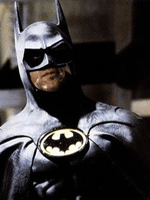
    Reading the unique look back at Keaton’s career, in his own words, I was reminded how much I genuinely love every performance he’s given and wish we could see more from him than we do these days. Maybe it’s residual admiration from the “Batman” days, as that film is, after all, the first event film that had me (and I’m sure millions of others) obsessing over a release date that couldn’t come soon enough. But Keaton has a spark and a charm that is singular, regardless.

    Anyway, the best part for Bat nuts is his recount of the 1989 blockbuster, which saw the actor in a personal funk that he says may have been good for the character.

    (more…)

  • Turning up the Malick

    Monday brings the Cannes reveal of the most anticipated movie of the festival, and for many, of the year: Terrence Malick’s “The Tree of Life.” Screenings will also be held throughout the day in LA (and, I assume, New York as well).

    We’ll know then whether the film measures up to perhaps the most inflated sense of expectation this side of — hell, I don’t know what film has held this sort of insular captivated pre-release awe, yet remained a bit of an unknown amongst general moviegoers.

    In the meantime, the atmosphere on both coasts is that of the second coming, as a Malick film is clearly an event. He’s a filmmaker entering his fourth decade of work but only has five (highly influential) films to show for himself. Tonight, The Elemental Cinema of Terrence Malick kicks off here in LA at the Los Angeles County Museum of Art with a screening of 1973’s “Badlands.” Actors Sissy Spacek and Jim Caviezel, production designer Jack Fisk and costume designer Jacquline West will be on hand at their respective screenings to add to the aura of Malick in Q&As.

    (more…)

  • SHORT TAKE: “Sleeping Beauty” (***1/2)

    Cannes Film Festival

    “My vagina is not a temple.” So says terse, inscrutable college student Lucy, her dry conviction belying an edgeless china-doll face, immediately after being told (instructed, even) otherwise by an employer with a less-than-honorable stake in the matter. It’s a loaded line, one that reveals she knows much more than her elders think she does — yet much less than she thinks she does — and it’s one of several moments in “Sleeping Beauty,” Australian novelist Julia Leigh’s unnervingly precise directorial debut, that denude sex of any movie mystique it usually carries.

    If that makes the film sound explicitly carnal, it isn’t: the words “no penetration” are repeated so often in the script as to became a mantra, and it sticks to that promise. But in telling the story of a girl falling into the most eerily art-directed prostitution ring this side of a Freemason hazing ceremony, Leigh’s way revisionist fairytale bluntly points out the ways in which our society has over-designed sexual experience even as it has undervalued raw human contact; “Everything You Always Wanted To Know About Sex, But Were Afraid to Touch” might have been a more specific title.

    (more…)

  • REVIEW: “Midnight in Paris” (**1/2)

    Cannes Film Festival
    Opening Night

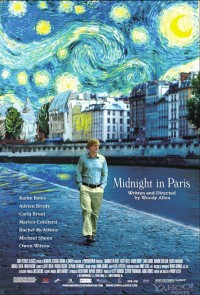
    “The past is a foreign country: they do things differently there.” Nobody actually quotes L.P. Hartley in “Midnight in Paris,” Woody Allen’s often charming if largely over-explicated ode to the healing and deceiving properties of nostalgia. If they don’t, however, that could just be because a spring breeze stole the last few pages of the script at some point on the shoot of this amiably unfinished choux-pastry film, and Allen didn’t feel much like rewriting them.

    Up until that point, Allen hasn’t exactly shied away from obvious references or externalized subtext — this is a film that trades in emphatic cultural and historical caricature, a picture-book approach that will delight some viewers even as it strikes others as aggravatingly twee, but one Allen commits to with the take-it-or-leave-it dispatch of a 75 year-old master working in quick-sketch mode.

    Either way, the tourist-style filmmaking that surfaced in such recent Allen films as “Match Point” and “Vicky Cristina Barcelona” feels more thematically motivated in “Midnight in Paris,” a study of a character not merely a traveller in his physical surroundings, but his generational ones too. I kept wondering if the film’s narrowness of perspective was that of Allen or Owen Wilson’s Allen-substitute protagonist, and what textual difference the distinction even makes.

    (more…)

  • Cannes kicking off

    I’ve been in Cannes less than 12 hours and already I can feel the sleep deficit kicking in, so I’ll keep this post short. It’s been an administrative day, anyway: unpacking, registering, collecting my press badge (in the rigid Cannes class system, I’ve been upgraded from a yellow badge to a blue one, so I guess Thierry Frémaux received my muffin basket) and moving into the apartment (improbably named Villa Romance) that I’ll share for the next 12 days with US critics James Rocchi and Aaron Hillis. (Karina Longworth joins our household tomorrow. There’s a decidedly niche sitcom waiting to be made here, folks.)

    You may have noticed that this evening, and not a moment too soon, I completed my Cannes Check series breaking down the individual titles in Competition — you can catch up with all 20 entries here.

    One more plug, while I’m about it: I’m taking part in Ioncinema’s 2011 Cannes Critics’ Panel, in which a selection of 16 international critics will rate the festival’s major films on a daily basis. Like an expanded version of Screen Daily’s traditional poll, it’s a handy way to monitor the consensus hits and misses; check out the full panel here.

    (more…)

  • CANNES CHECK: ‘Drive’

    The director: Nicolas Winding Refn (Denmark)
    The talent: Ryan Gosling and Carey Mulligan — the latter making her first significant foray into multiplex territory — are the star attractions here, but the supporting cast isn’t too shabby, either: Albert Brooks, Ron Perlman and current TV darlings Christina Hendricks and Bryan Cranston are all on board. The screenplay, adapted from a James Sallis novel, has a rather unexpected name attached to it: Hossein Amini, an Oscar nominee for 1997’s “The Wings of the Dove.” Reliable Hollywood workhorse Newton Thomas Sigel (“Three Kings,” “X-Men”) is the DP; Cliff Martinez, best known for his collaborations with Steven Soderbergh, did the score.

    The pitch: The most overtly mainstream film in Competition this year, “Drive” seemingly marks subversive Danish genre stylist Winding Refn’s shift into the realm of slam-bang Hollywood action, via the classic subgenre of the car-chase thriller. Gosling plays a movie stunt driver moonlighting as a hired getaway driver for assorted Los Angeles criminals. After one botched job for the husband of his attractive neighbor (Mulligan), he is forced to drive for his life and hers. The synopsis (and indeed the little footage we’ve seen) promises an old-school, hard-boiled entertainment in the vein of early Walter Hill or Michael Mann; not the sort of thing we usually expect to see vying for the Palme d’Or, and no less welcome for that.

    (more…)

  • CANNES CHECK: ‘Melancholia’

    The director: Lars von Trier (Denmark)

    The talent: After the lonesome two-hander that was “Antichrist,” von Trier is back to the all-star ensemble form of “Dogville” — and an eclectic ensemble at that. Taking on the traditionally punishing duties of von Trier’s female lead (though the man maintains she got off lightly) is Kirsten Dunst. Previous von Trier alumni in the cast include Charlotte Gainsbourg, John Hurt and Stellan Skarsgård, while Charlotte Rampling, Skarsgård’s son Alexander and, most unexpectedly, Kiefer Sutherland join in the fun. (Plus, Udo Kier is credited as “Wedding planner,” which sounds like very good value indeed.) Below the line, the most important thing to note is the switch from von Trier’s regular DP Anthony Dod Mantle to the less familiar Manuel Alberto Claro (“Videocracy”).

    The pitch: The film’s official one-line synopsis may well be one of the most brazenly off-balance I’ve ever read, so I see no need to paraphrase: “Two sisters find their relationship challenged as a nearby planet threatens to collide into the Earth.” (Well, yes — planetary collisions have a way of complicating things.)

    (more…)

  • Be truthful

    Hate to spoil the one that gave me the biggest laugh (full version after the jump), but it’s applicable here. I think the “X-Men: First Class” is probably my favorite, though. More at The Shiznit.

    (more…)