With the recent announcement of Paul Gross’s “Passchendaele” as the opening night film at this year’s Toronto International Film Festival (and honor traditionally handed to a Canadian endeavor), I thought I’d dedicate some space to the best of Canadian cinema. But first, a history of sorts.
Growing up in Ontario, Canada, I fell in love with cinema at a very young age. I loved watching those old Universal monster movies on Friday nights, or the Sunday afternoon Big Show of the Week, which was usually yet another showing of “Man of a Thousand Faces” or “Red River.” Essentially, I grew up on American films, and I believe American cinema is the most exciting on the globe.
I say this as a Canadian who loves our national cinema, as a critic who has access to Canadian films that are often never released, and as a huge supporter of the Canadian film industry. As long as the government controls what is happening with the money that makes these films, we will never have as strong an industry as we could, and it will be forever difficult to get a film made in this country.
Ask Sarah Polley, a national treasure and world-reknowned actress who struggled to get funds to make “Away from Her,” one of the best reviewed films of last year. The reason films get made at all is through government grants and funding. It is a dangerous catch 22.
The first Canadian that mad an impact on me was “Goin’ Down the Road,” a wonderful picture made in 1970 by director Don Shebib (who attended film school with Francis Coppola). His picture was about Canadians, for Canadians made by Canadians and dealt with plights recognized by Canadians. But of course one did not have to be Canadian to enjoy it. In fact, the film played for more than a year in New York City in 1970 when films lasted longer than two months in theaters. More than the great documentaries from the National Film Board, this film seemed to announce to the world that Canada had a filmmaking community waiting to be unleashed.
 The first press conference of the 2008 Toronto International Film Festival was held yesterday for the announcement of the Opening Night film, traditionally given to a Canadian film.
 Lots of talk about deserving (and undeserving) directors in the Oscar chatting this week. Let’s take it to specifics with one race that stood out to a few commenters.
 Alfred Hitchcock, Charlie Chaplin, Howard Hawks, Stanley Kubrick, Preston Sturges, Ernest Lubitsch, Hal Ashby, Alan J. Pakula, Sidney Lumet, Spike Lee, Paul Thomas Anderson.
 Continuing the conversation on great years for movies (1974 being
 Trained as an actor at Sanford Meisner’s famed Neighborhood Playhouse — the stomping grounds of Robert Duvall — Sydney Pollack connected to actors because he was one of them…and a damned fine one at that.
 As film junkies, we all know it happens. Usually every single year there are one or more films the Academy passes over for Best Picture consideration, in some cases because there are, after all, just five slots available, but in others because, well — they blew it.
 It has been more than 30 years since Al Pacino gave his career-defining performance as cold blooded Michael Corleone in “The Godfather Part II.” He radiated quiet danger the moment he appeared on screen without ever raising his voice or allowing his mouth to wrap its way around words and spit them out like venom.
 With Cannes on the downswing, it becomes time to to start making preparations for the annual Toronto International Film Festival, for which screening announcements begin next month. I have been covering Toronto for more than 15 years and can safely say it is Christmas to a film critic.
 Continuing the conversation from a few days ago on actors that are more than icons, only one name comes to mind: JACK.
 Though best known as the fedora-wearing, bull whip-cracking hero of the Indiana Jones films, Harrison Ford has forged a strong career as an actor, with an impressive filmography that has, in many quarters, gone sadly unnoticed.
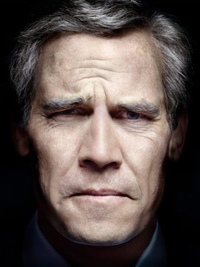 I like the films of Oliver Stone, though I am acutely aware he tends to pound us over the head to get his message across, is known to bully his actors and audiences, and from time to time has bent history to suit himself and the film he is making.
 He was nominated for an Oscar just once for his riveting performance in “Coming Home” as a vet who cannot wait to go to Vietnam, and once there cannot wait to get home, horrified by what he sees, betrayed by the dream of what he believed war should be.