In Contention

Author: Guy Lodge

  • Predicting BAFTA, part two — main categories

    Continuing yesterday’s not-so-educated guesses at tomorrow’s BAFTA Awards, we move on the main categories. In many ways, they’re easier to predict than the frequently confounding technical categories, but that’s no reason to get complacent – as we saw last year with then-unexpected wins for Tilda Swinton and Marion Cotillard, BAFTA is more than capable of throwing a significant spanner in the works in the top races.

    By the way, be sure to tune in tomorrow, when I’ll be liveblogging the ceremony, beginning with the red carpet coverage at 11 a.m. PST (that’s 7 p.m. London time).

    BAFTA bizarrely issues a press release revealing the winners before the ceremony begins. (I told you they haven’t a clue how to organise the event.) I’ll be ignoring that, for my part – the ceremony can be dull enough without having every last drop of suspense extricated from the proceedings. But the info will be available. I leave the choice up to you.

    Moving on to the predictions…

    Best Film
    “The Curious Case of Benjamin Button”
    “Frost/Nixon”
    “Milk”
    “The Reader”
    “Slumdog Millionaire”

    There really is terribly little to discuss here. The truth is that “Slumdog” would likely be a BAFTA favourite even if it weren’t primed for Oscar glory – a true British success story, from a popular but largely unsung hometown filmmaker, featuring a British lead actor from a high-profile Channel 4 TV drama, it’s been a massive local box-office success, and has enjoyed nearly the same level of critical adulation here as in the States. BAFTA has celebrated homegrown product in this category for the last two years, and will do so for a third time running. If anything were to derail the Mumbai express, it would be the very British-flavoured “The Reader” … but it won’t.

    (more…)

  • WEEKLY WRAP: ‘Slumdog’ stays happy, Bale gets angry

    A slower news week, this, but that doesn’t mean we didn’t find plenty to discuss. Here’s what was on our (and your) minds:
    • In the week’s biggest precursor news, Danny Boyle won the Directors’ Guild Award. Hollywood is still reeling from the shock.

    • Oh, and “Slumdog Millionaire” nabbed the USC Scripter award too.

    • Speaking of scripters, we say “WALL-E” is taking Best Original Screenplay. Here’s why.

    • We take a detailed look at this year’s Oscar-nominated shorts.

    • The Santa Barbara fest wrapped, with a tribute to Mickey Rourke among the highlights.

    • Two London critics’ groups acquitted themselves well this week, giving long-overdue Best Picture honours to “Hunger” and “The Wrestler” respectively.

    • Does “The Curious Case of Benjamin Button” have a prayer in the Best Picture race after all?

    • Sticking with “Button,” Tech Support interviewed composer extraordinaire Alexandre Desplat.

    • We finally laid eyes on an Oscar season institution: the Vanity Fair Hollywood issue.

    • We contemplated what constitutes a genuine ‘upset’ in the Best Picture category.

    • BAFTA is taking a long hard look at their own voting process.

    • Away from the awards beat, you probably didn’t know this, but Christian Bale said some bad words.

  • “It’s a shame ‘Slumdog’ is going to come in second.”

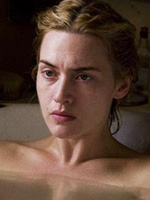
    Kate Winslet in The ReaderYep, those would be Harvey Weinstein’s words right there. EW has an interesting piece positing the theory that “The Reader” is really the film most likely to spoil the party for “Slumdog” on Oscar night — even if the writers admit that it’s unlikely to happen. (I agree on both counts.)
    It’s a handy precis of the comeback narrative that Weinstein has forged this year — both for himself as a major Oscar campaigning force, and for the movie, which some months ago looked like an awards-season casualty after suffering tepid reviews and unwelcome behind-the-scenes controversy.

    How did he do it, given a campaigning budget that’s a mere fraction of the millions he spent back in the “Shakespeare in Love” days? The answer, the article says, lies in Weinstein’s self-professed new “low-key” strategy with an emphasis on simply screening the film, especially in certain well-targeted areas:

    Weinstein’s first salvo was to home in on the Academy’s aging Jewish population. Although he’s been trying to get all voters to see the movie, it’s no coincidence that he has screened The Reader at such Jewish cultural hot spots as the Skirball Center in Los Angeles and the 92nd Street Y in Manhattan, places where one is likely to find older voters with a deep connection to films about the Holocaust. ”When I went to a screening, I was one of about four people who didn’t have blue hair,” says one Academy member and former campaign engineer. ”And I was the only WASP.”

    Weinstein also invited Nobel laureate and Holocaust survivor Elie Wiesel to The Reader‘s New York premiere, and courted an endorsement from the Anti-Defamation League, a group whose mission is to call attention to anti-Semitism … Weinstein says, ”It must have been the hand of Anthony Minghella and Sydney Pollack, because Elie Wiesel asked to see me after the screening and he hugged me and said how much he loved the movie.” (Wiesel, through his agent, declined to comment.)

    Ahem. While there may be a lot of people (Roger Ebert among them) protesting that “The Reader” isn’t a “Holocaust movie” — and beneath the surface, it isn’t really — it doesn’t appear that Weinstein has got that particular memo. The point is that he’s marketing it as a Holocaust movie, and it seems to be working.

    (more…)

  • Predicting BAFTA, part one — the techs

    It’s no secret that the BAFTA awards, which unfold at London’s Royal Opera House on Sunday evening, can be one of the most contrarian and surprising events on the awards calendar – but nowhere are they more unpredictable, and occasionally inscrutable, than in their technical awards.

    Year in, year out, anybody trying to predict the BAFTAs is foiled in the tech categories, which they tend to spread far more generously than the American Academy, throwing up one (occasionally head-scratching) shocker after another. Who could foresee “Almost Famous” beating “Gladiator” to Best Sound, or “Vera Drake” getting the better of “The Aviator” in the Costume Design race?

    What few people realize is that, unlike at the Oscars, BAFTA’s tech categories (in addition to the directing and writing awards) are voted on by branch members only, rather than the entire membership – and peers can have a very different take from ours on their own craft. This makes predictions a rather thankless task, but I’m forging ahead anyway.

    (On a side note, it’s worth bearing in mind that they anticipated some tech upsets at last year’s Oscars, such the “The Bourne Ultimatum” for Best Sound and the jaw-dropping VFX win for “The Golden Compass.”)

    Best Cinematography
    “Changeling,” Tom Stern
    “The Curious Case of Benjamin Button,” Claudio Miranda
    “The Dark Knight,” Wally Pfister
    “The Reader,” Chris Menges and Roger Deakins
    “Slumdog Millionaire,” Anthony Dod Mantle

    (more…)

  • What about Melissa Leo?

    Yesterday, Kris pondered whether Kate Winslet’s Best Actress Oscar is quite the sure thing it appears to be on paper, or whether Meryl Streep can surf in on a tide of veteran goodwill and spoil the Brit’s party yet again.

    I’ve been saying since nomination day that I can’t imagine Winslet losing yet again, least of all for a performance in a Best Picture nominee (the first time she’s had that luxury since her non-starter nomination for “Titanic” in 1997). If she wins the BAFTA on Sunday, as almost everyone suspects she will, her campaign stays comfortably on course; if, however, Streep manages to pull off an upset, I may well change my mind.

    But allow me to play devil’s advocate for a minute. Why has the competition been reduced to two performances that are by no means necessarily the strongest in the lineup? Let’s perform a process of elimination. Streep’s performance has been polarising from the get-go, with the reverberations of Variety’s notably harsh review still being felt in the critical community. (As “Doubt” opens today in the UK, a number of critics find themselves bewildered, with the Guardian describing her work as “beyond absurdity.”)

    Of the competition, Angelina Jolie has drawn even less critical consensus than Streep, so it’s safe to say she’s out of the running. Anne Hathaway looked to be a frontrunner at one point, and barely anyone has a bad word to say about her performance, but judging from the tepid Academy reaction to her divisive film, I can’t help feeling that her ship has sailed. Kate Winslet’s performance has also been widely praised, and it’s clear that a large faction of the Academy appreciates “The Reader” — but it’s still a film with some notable detractors, and not everyone likes the way Harvey Weinstein muscled it into the race.

    And so we arrive at Melissa Leo. In many ways the odd woman out in this year’s star-heavy Best Actress race, she is arguably the one nominee whose performance — and film — have attracted the least criticism from any quarter. Critics have showered superlatives upon Leo’s raw, career-defining performance, with the venerable Roger Ebert singling her out as his favourite of the nominees.

    (more…)

  • Berlin fest gets under way

    As far as press coverage goes, the Berlin Film Festival tends to get a bit drowned in the flurry of Oscar season, so you could be forgiven for failing to notice that it actually kicked off last night, with the world premiere of Tom Tykwer’s corporate thriller “The International.”

    Sadly, as I suspected, the film doesn’t seem to be much to write home about. Screen International describes it as “ploddingly talky,” describing stars Clive Owen and Naomi Watts as “leaden” and “struggling,” respectively. Variety is no more enthusiastic, deeming it a “mostly ho-hum” exercise. As a fan of both stars and the director, it’s disheartening to see them all punching so far below their weight; Owen, in particular, needs to have a word with his agent. (Why is one of the best actors of his generation stuck in a rut of identikit thrillers? Is “Inside Man 2” really called for?)

    Anyway, onwards and upwards. Tonight sees the premiere of “Ricky,” the new one from François Ozon, who is always interesting even when he misses the mark. (And I must admit that, after the unholy mess that was Ozon’s recent “Angel,” I don’t have the greatest of confidence in this new fantasy-comedy experiment.)

    The weekend will shed some light on two very intriguing titles. Sally Potter’s “Rage,” which features (amongst other things) Judi Dench, Eddie Izzard and Jude Law in drag, promises to live up to the batty eccentricity of Potter’s best work — check out Nat Rogers’ illustrated preview here. Meanwhile, Lukas Moodysson’s “Mammoth,” a seemingly “Babel”-flavoured story of families in crisis, stars Gael Garcia Bernal and Michelle Williams, and has long been one of my most anticipated films of the year. Fingers crossed.

  • Define ‘upset’

    Let’s get this straight: an upset and an injustice are two very different things. When a nominee that isn’t widely expected to win beats one that is, that’s an upset. When a highly deserving underdog loses to a less deserving favourite, that’s an injustice. The latter arguably happens more frequently in Oscar history than the former, but that’s no reason to blur the line.

    I mention this in connection with a poll that Sasha Stone spotted yesterday, in which the following were named the biggest Oscar upsets of all time in the Best Picture category:

    1. “Shakespeare in Love” over “Saving Private Ryan” (1998)
    2. “Crash” over “Brokeback Mountain” (2005)
    3. “Dances With Wolves” over “GoodFellas” (1990)
    4. “Rocky” over “Taxi Driver” (1976)
    5. “How Green Was My Valley” over “Citizen Kane” (1941)

    Now I remember the 1990 awards clearly — I was 8 years old, and it was the first Oscar season that I followed keenly from beginning to end. And even I, at that tender age, knew that “Dances With Wolves” was a gimme, a slam-dunk, a no-brainer. However critically acclaimed Scorsese’s masterpiece was, it hadn’t a prayer against the film that swept the Guilds and the Globes — Kevin Costner enjoyed as great a stranglehold on the Oscar as Danny Boyle does today. “GoodFellas” winning would’ve been the upset, not the other way round.

    (more…)

  • ‘Young Victoria’ surfaces

    A lavishly mounted biopic of the eponymous British monarch that boasts Martin Scorsese among its producers, “The Young Victoria” seemed primed for Oscar consideration last year. Sandy Powell’s typically elaborate costumes were an apparent shoo-in, and some pundits had star-in-waiting Emily Blunt as a dark horse on their Best Actress lists — until the film was unceremoniously yanked from the 2008 schedule.

    Now, ahead of its UK release on March 6, the Telegraph offers an extensive profile of the film, declaring it “a vibrant celebration of a joyous and passionate Queen.” The film certainly has an interesting pedigree, pairing a quintessentially British writer (Julian Fellowes of “Gosford Park” fame) with a very adventurous choice of director, French-Canadian auteur Jean-Marc Vallée. Vallée’s last film, the funky gay-oriented family drama “C.R.A.Z.Y.,” has become something of a cult item, so it’ll be interesting to see what he brings to the table here.

    The cast, as you would expect, is mighty impressive, with Paul Bettany, Miranda Richardson, Jim Broadbent, Mark Strong and Rupert Friend (soon to be seen in “Chéri”) supporting Blunt, whose lead turn Fellowes describes as “one of those wonderful meetings of part and actress that doesn’t happen very often.” The trailer below is, I think, a little dourly cut, but with the level of talent involved, this could be one to watch.

  • He’s just not that f***ing into you

    Okay, so Kris promised there would be no more Bale-related posts. But as the guys at Vulture pointed out, this is too good to ignore. In any case, it’s about another movie altogether.

  • Weinstein + Garland = Oscar?

    OK, so some actress just won an Oscar. We don’t know who she is yet, or when exactly she’ll receive it, but is there anyone willing to bet against the lucky thesp who winds up getting cast in the Harvey Weinstein-produced biopic of Judy Garland that has just been announced?

    It seems the Brothers Weinstein have just optioned “Get Happy: The Life of Judy Garland,” the bestselling, apparently definitive biography by Gerald Clarke (who, incidentally, also wrote the volume from which “Capote” was adapted). No director or cast are attached yet, but this is surely an awards-season gimme.

    A grim childhood, drug and alcohol abuse, multiple unhappy marriages, singing, performing, drastic premature aging, mental instability … Garland’s story is essentially “La Vie en Rose” minus the subtitles, plus the allure of Hollywood legend. It represents everything the Academy swoons over in a performance. If some actress knocks it out the park, backed by Weinstein’s apparently renewed campaigning muscle, woe betide the other four ladies nominated alongside her.

    Some of you may remember that Judy Davis nabbed every TV award going for playing Garland in miniseries form a few years back. It’ll be interesting to see what age range Weinstein looks toward for the casting here. One actress or two? Anne Hathaway seems like a neat fit, but is she too young? Is Cate Blanchett too old? If Kate Winslet loses again this year, I suggest she gets on the phone with Weinstein immediately.

  • Thank you

    Since I was talking about original screenplays earlier today, I was interested to see that Jeff Wells is also on the topic. He offers a brief rundown of the nominees for Saturday’s WGA Awards, and offers this theory on why Jenny Lumet missed out on both Guild and Oscar nods for “Rachel Getting Married”:

    Lumet’s screenplay didn’t render enough bombast and sword thrusts in the big-money confrontation scene between Anne Hathaway and Debra Winger. They start to get into the “why did you leave me with him?” issue, Winger freaks and slaps and then Hathaway runs out — not satisfying!

    I’m not sure ‘bombast’ is the word I’d use (I rather think more subtlety was called for), but I’m glad to see that scene singled out — for me, it was a lazy, artificial bit of dramatic shortcutting that caused the film’s whole emotional construction to fall apart somewhat. Anyway, old news and apropos of nothing really, but I’m glad someone else said it.

    As for the WGA, we all know Simon Beaufoy is taking the adapted category. Does Dustin Lance Black win original by default, since he’s the only Oscar nominee of the bunch? I guess so — barring a surge of peer affection for four-time winner Woody Allen. But if Black does lose — not likely, of course — I wouldn’t fancy his Oscar chances much. Just an idle thought.

  • ‘Wrestler’ rules London crix awards

    The London Film Critics’ Circle have just announced their winners, and I have to say they’ve done a pretty terrific job. (I discussed the nominations here.) The really heartening news is that “The Wrestler” finally has another Best Picture award to its credit, five months after taking the Golden Lion at Venice — who would have thought that it’d be left to the Europeans to give this quintessential piece of Americana its due?

    Naturally, Mickey Rourke took the Best Actor award too, while Kate Winslet added yet another trophy (awarded jointly for both her 2008 films) to her crowded mantlepiece. David Fincher was a somewhat surprising winner of the Best Director award, and “Waltz With Bashir” took yet another foreign-language gong.

    If you’re wondering where “Slumdog Millionaire” features in all of this, it ruled the roost in the British Film categories, taking Best British Film and Director, and also landing Screenwriter of the Year for Simon Beaufoy. In the British races, the Londoners like to have their cake and eat it — for example, Kristin Scott Thomas took a richly deserved award for Best British Actress, but beat Best Actress winner Winslet in the process.

    Meanwhile, I’m thrilled to see Michael Fassbender getting some hardware for his staggering work in “Hunger” (which also took the Breakthrough Filmmaker prize), while in the supporting race, Eddie Marsan is another thoroughly deserving victor. Good work all round, London critics.

    Full list of winners below the cut.

    (more…)

  • Best Original Screenplay: The case for ‘WALL-E’

    I think it was some smart person on Nat Rogers’ most recent podcast who remarked that if you really want to get a picture of what was going on cinematically in any given year, you’d be better off bypassing Oscar’s Best Picture category and heading straight for the Best Original Screenplay nominees – a category that has a far higher tolerance for eccentricity, controversy and the occasional foreign tongue than any other.
    Case in point: 2002. When the top categories were splintered between the respectable but less-than-relevant likes of “Chicago” and “The Pianist,” Original Screenplay afforded voters the luxury of choosing between Pedro Almodovar, Todd Haynes and Alfonso Cuaron. Two years later, the category gave recognition to the otherwise shamefully sidelined “Eternal Sunshine of the Spotless Mind,” just as, a decade earlier, “Pulp Fiction” fans sought refuge there from a merciless shower of Gump. As I’ve said before, from “Citizen Kane” to “The Crying Game,” Best Original Screenplay tends to be the connoisseur’s favourite Oscar category.

    And so it is this year, when the writers’ branch really demonstrated admirable ingenuity and adventurousness in their selections, in the face of some otherwise uninspired voting. For me, it’s by far the most exciting of this year’s major Oscar categories, both for the calibre its competition and the unpredictability of its outcome. It’s one category where the Guild award is of little to no use to prognosticators, as only one title (“Milk”) features on both the Oscar and WGA lists.

    Like Kris, I’m placing my money on Andrew Stanton, Jim Reardon and “WALL-E” emerging triumphant here, and thus becoming the first animated film in Oscar history to win a major category. This morning, meanwhile, I was interested to see that the majority of the Gurus of Gold are thinking the same way. It’s a healthy vote of confidence for a prediction that, let’s face it, would represent a significant leap for Academy voters. Just last year, the Reel Geezers (AMPAS members both) immediately discounted “Ratatouille” from consideration in the category because it was a “cartoon.” How do we know that most of the notoriously conservative Academy voters won’t feel the same way?

    (more…)

  • Gilliam to receive BAFTA Fellowship

    In one of the few good decisions BAFTA has made this year, Terry Gilliam will receive the Academy Fellowship (yes, that’s a lifetime achievement award to you and me) at Sunday’s ceremony in London. That’s a pleasantly inspired choice, if you ask me. Here’s an extract from the press release:

    Awarded annually by the Academy, the Fellowship is the highest accolade bestowed upon an individual in recognition of an outstanding and exceptional contribution to film. Previously honoured Fellows include Charlie Chaplin, Alfred Hitchcock, Steven Spielberg, Sean Connery, Elizabeth Taylor, Julie Christie, John Barry, Stanley Kubrick and Judi Dench. Last year’s recipient was Anthony Hopkins.

    Finola Dwyer, Chair of BAFTA’s Film Committee, said:  “We’re delighted to make Terry a fellow of the Academy: he is one of the most original, imaginative and innovative directors working in the industry today.”

    Terry Gilliam adds: “This is a great honour for someone who needs so many other people to do his job.”

    Because they’re genuinely clueless about how to stage an awards telecast, BAFTA tends to place the Fellowship award right at the end of the ceremony — you know, after Best Film has been presented and most viewers have flipped channels. I suspect they’ll make the same error this year, but stay tuned. Gilliam ought to be worth watching.

  • Fly on the wall

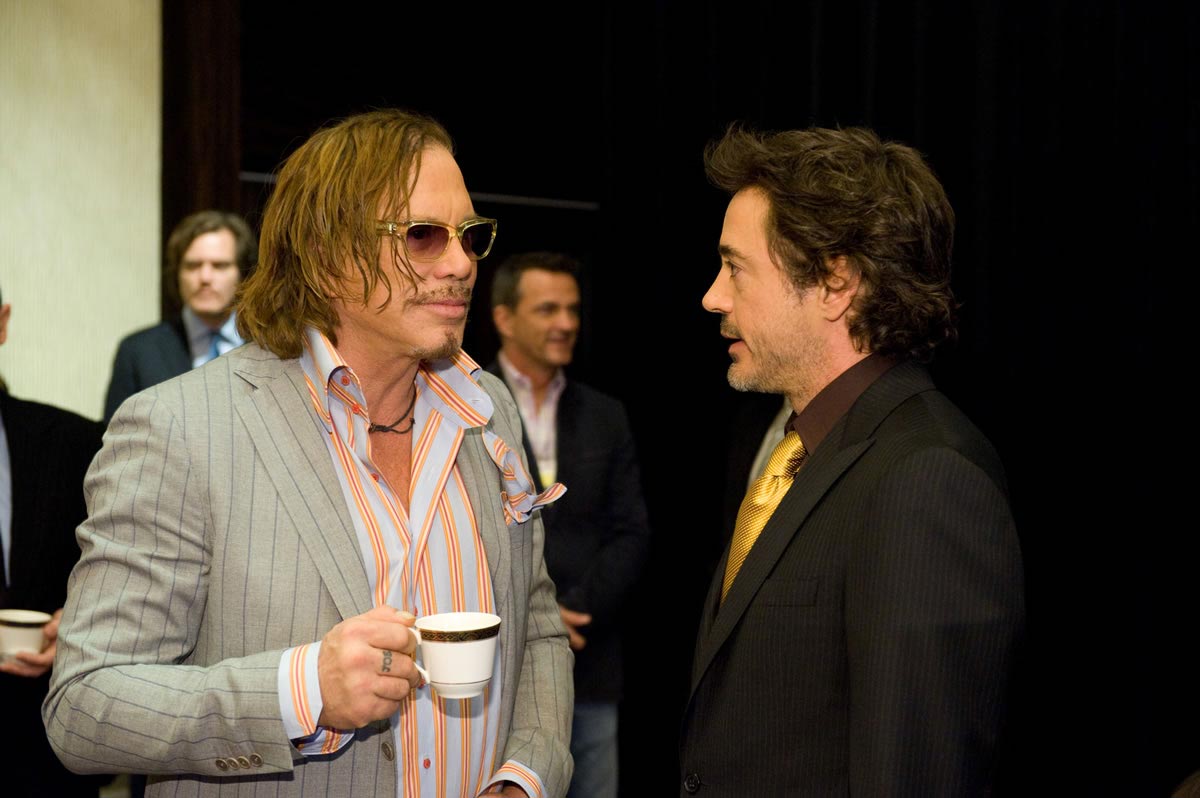
    Come on, who wouldn’t want to listen in on this particular conversation? Rourke’s way with the dainty teacup makes me smile. And his outfit (loving that pocket square) is strangely awesome.

    Sasha Stone has a bunch of nice pics from yesterday’s nominees luncheon, including the Class of 2008 shot. Check ’em out here.

  • Denby nails it

    If you saw his TV chat with Charlie Rose and A.O. Scott, you won’t be surprised to read that critic David Denby doesn’t think much of this year’s Oscar crop. (And if you didn’t, you could probably guess.) Anyway, in this very lucid New Yorker piece, he expands on the points he raised on the show, tearing apart every Best Picture nominee but “Milk,” and lamenting the exclusion of “Happy-Go-Lucky” and “Rachel Getting Married.” I don’t agree with everything he says (and I do think he’s unnecessarily cynical about “Slumdog Millionaire”), but he’s bang on-target here:

    In the well-acted “Frost / Nixon,” a nice journalistic coup—David Frost’s pushing Richard Nixon into semi-confessional mode, in 1977—has been elevated to a great transformative moment in history, which, alas, it was not. These two films (“Frost/Nixon” and “The Reader”) may have been controlled more by their directors and their writers than by their studios, but they’re still the kind of middlebrow pictures that the Academy used to nominate in the bad old studio-dominated days—the contemporary equivalents of “Judgment at Nuremburg” and “Guess Who’s Coming to Dinner?” They are “important” pictures that “say” something about public issues. They’re good for the industry’s image.

    Note the quotation marks. The rest here.

  • Standard crowns ‘Hunger’ best film

    I have to hand it to the Evening Standard Awards: they are a breath of fresh air in a suffocating awards season. While their choices can have a bit of an over-democratic, drawn-from-a-hat feel to them (Stephen Daldry for Best Director? On what planet?), they are never afraid to veer from the herd.

    And so they have done this year, justly and imaginatively handing their Best Film prize to Steve McQueen’s magnificent “Hunger” at last night’s London awards dinner. It’s a small but prestigious citation for the film, voted as it is by a panel of leading British critics, including Standard stalwart Derek Malcolm and the Telegraph’s excellent Tim Robey.

    If you ask me (which no one did, but I’ll say it anyway), they royally fluffed Best Actor, curiously settling on a tie between Michael Sheen and the admittedly very good Pat Shortt, which rather embarrassingly left Michael Fassbender — easily the most deserving nominee — the lone loser.

    They redeemed themselves, however, with an inspired choice in Best Actress. Bypassing the obvious Kate Winslet option, they instead honoured Tilda Swinton for her extraordinary, bruising work in “Julia,” which I’m beginning to think may well be the thesp’s finest performance to date. (No mean feat, that.) The fact that BAFTA essentially handed Swinton a nod for just showing up in “Burn After Reading,” but failed to even longlist her for “Julia,” is yet another reason why we shouldn’t even be paying attention to that particular shindig this year. (But hey, tune in for my BAFTA live-blog on Sunday!)

    Elsewhere, Martin McDonagh racked up another screenplay win, filmmaker Joanna Hogg deservedly took the Newcomer award (beating Dev Patel in the process), and the wonderful Sally Hawkins pipped co-star Eddie Marsan (now wouldn’t that have been a good tie opportunity?) to the Peter Sellers Award for Comedy. (I still wouldn’t quite call “Happy-Go-Lucky” a comedy, but let’s not split hairs.) Yep, the best performance of 2008 still won’t go away, no matter what the Academies on either side of the Atlantic think.

    Mike Leigh, meanwhile, bagged a career achievement award. Full list of nominees and winners (in italics) after the cut.

    (more…)

  • ‘Sugar’ trailer

    I’ve already expressed my admiration for “Sugar,” the wonderful new baseball-oriented social drama from “Half Nelson” creators Ryan Fleck and Anna Boden. So has Kris. This trailer possibly makes the film look a little broader and more conventional than it really is, but I can assure you it’s going to be one of the year’s finest. (Thanks to Nick for the tip.)