 “Pictures at a Revolution,” Mark Harris’s smart, keen-eyed study of the cultural implications of the 1967 Best Picture race, is without a doubt one of the best books ever written on the subject of the Academy Awards. So it’s hardly surprising that Harris, in a piece for yesterday’s Observer, has provided the most intelligent take on this year’s awards race to date.
What’s particularly interesting is that, while he just wrote an entire volume on the countercultural meaning of a Best Picture race in a pivotal year in Hollywood history, he’s quick to avoid such a unified reading of this years nominees — effectively and wittily debunking several trends that many Oscar-watchers have attempted to glean from the crop:
1) The Academy has a new, more global outlook, represented by the 10 nominations given to Danny Boyle’s Slumdog Millionaire. Alternatively, the Academy suddenly has a new, more insularly American outlook, as evidenced by the fact that 17 of the 20 acting nominees are from the US, the most since the early 1990s.
2) The “gay mafia” in the Academy, outraged by the passage of the anti-gay marriage amendment Proposition 8 in California, powered the gay-rights drama Milk into the race with eight nominations. However, it will never win, because the Academy is hopelessly homophobic, as we all are presumed to have learned when Brokeback Mountain lost to Crash.
3) In a time of great economic uncertainty for the major studios, Hollywood reasserted its authority by bestowing 13 nominations on the high-grossing, high-budget product of two conglomerates, The Curious Case of Benjamin Button. But the Academy simultaneously renounced any interest in supporting studios or representing popular taste by snubbing Christopher Nolan’s blockbuster The Dark Knight, excluding it from consideration for best picture, director or screenplay.
 Interesting. Variety
 The BBC Four World Cinema Award is an endearingly unassuming, low-fi ceremony — so unassuming and low-fi, in fact, I’d forgotten it took place until I happened upon the TV broadcast earlier this evening. (It seems nesting on a Saturday night has the odd advantage.)
 It slipped my mind to do this yesterday, but here’s the week that was:
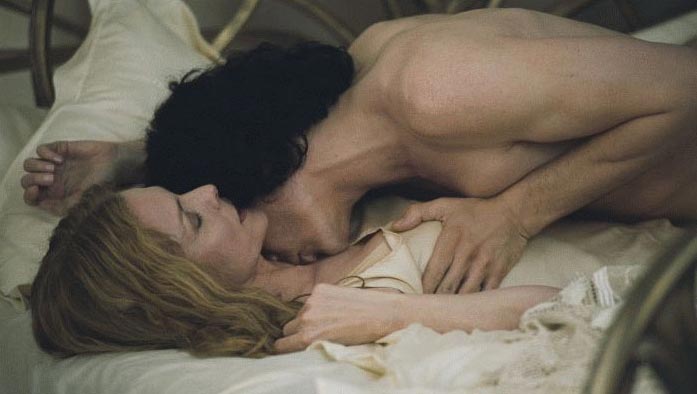
 I’m not sure where I stand on David Thomson these days. He is surely one of the greatest film writers still at work today; few of his rivals manage such a fine balance of personal appreciation and critical insight, particularly in the area of performance. (As a prose stylist, Thomson at his best leaves Ebert for dust, in my opinion.) His “Biographical Dictionary of Film” is as essential as it is idiosyncratic, while last year’s “Have You Seen … ?” is a bedside-book delight, ideal for dipping in and out of at leisure.
 Today’s Telegraph carries an
 There are few journalists with as sharp an understanding of the tunnel vision that affects award-season coverage as David Carr. So it’s with a guard of irony that, in yesterday’s
 Thanks to Nat Rogers at
 Jeff Wells has
 Roger Ebert has yet to weigh in with his formal Oscar predictions, but for now, he’s trying something