In Contention

Author: Guy Lodge

  • THE LISTS: Top 10 Cannes runners-up of all time

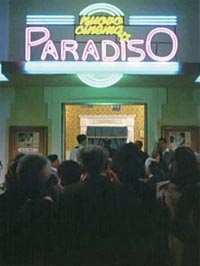
    Cinema ParadisoI’ll be honest with you, readers. Struck with the idea of waking (after its winter nap) our weekly lists feature with something suitably Cannes-themed, I started with the obvious: the 10 greatest Palme d’Or winners of all time. Simple, snappy, uncomplicated.

    Or so I thought. But as I began whittling down the titles, I came to the disheartening realization that my list looked pretty much like that of everyone else who has had a go. By the time you’ve included the inarguable likes of “Apocalypse Now,” “The Leopard,” “The Third Man” and “Taxi Driver” (and hell, that’s before I even reached 1980), there’s precious little room for idiosyncratic argument, however obtuse you may be.

    (It also leaves a sadly narrow window for personal favorites: it was when I was balancing the numbers and realized that I had to boot either “The Umbrellas of Cherbourg” or “The Knack” that I began to have doubts about the enterprise.)

    The thing is, unlike the Academy Awards, the Palme d’Or goes to a genuinely great film more often than not. Sure, there are errors of judgment now and then. (“The Child” over “Cache?” What were they thinking?) And some years present a slate so rich there are bound to be slights however you deal the cards. (I certainly wouldn’t have wanted to choose between “Pulp Fiction” and “Three Colors: Red” in 1994.) But Cannes is a festival that, an impressive amount of the time, gets it right in hindsight. Too right — for my list, anyway.

    And so it was that I decided to turn my attention to the runners-up. Cannes has always awarded a silver medal of sorts, under various monikers over the years: the Special Jury Prize, the Grand Prix du Jury and, currently, the simply but sweetly named Grand Prix. A significant number of future classics have been handed this accolade, but it’s a sadly undersung one: as with so many things in life, first place is all that counts in the history books.

    So I’m taking a moment to give this honorable category of winners their due. What follows is my selection of the 10 greatest runners-up in Cannes history. There’s a daunting range of films to choose from (check out the full list here and here), so this list turned out to be pretty agonizing too. (No “L’avventura?” Mon dieu!) A couple of titles here were robbed, but many of them were simply unlucky to come up against formidable competitors. All of them, however, deserve to recognized as the Cannes champs they are.
    (more…)

  • Cannes: sizing up the Competition, part two

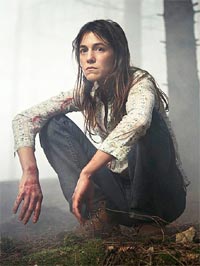
    Charlotte Gainsbourg in AntichristContinuing yesterday’s survey of the runners and riders in the race for the Palme d’Or…

    “ANTICHRIST” (Lars Von Trier)

    The pitch: You’ve seen the trailer. Charlotte Gainsbourg and Willem Dafoe star as bereaved parents who retreat to a remote woodland cottage to nurse their grief, only to be terrorised by unnamed forces of evil. (English dialogue)

    The history: Over his seven previous Competition appearances, Von Trier has enjoyed a gradual ascent from the Technical Grand Prize for 1984’s “Element of Crime,” to the Jury Prize for 1991’s “Europa,” to the Grand Prix for 1996’s “Breaking the Waves” (1996) to, at last, the Palme d’Or for 2000’s “Dancer in the Dark.” Nothing since then, however, with his masterful “Dogville” coming up surprisingly (and undeservingly) empty-handed.

    The outlook: The film may appear to be familiar (albeit bloody terrifying) horror fare in the trailer, but we should know by now never to presume what a maverick like Von Trier has up his sleeve. Cannes is usually averse to the genre, so whether the film made the lineup because it’s something more subversive, or simply because it’s directed by one of their favourite sons, remains to be seen. Either way, the film will need to be something special to get Von Trier back in the winner’s circle – after all, “Dancer in the Dark” proved so polarising, juries have been unwilling to take a chance on him since. He tends to put his actresses through the wringer, so perhaps there’s a chance for Charlotte Gainsbourg here – but who knows?

    “SPRING FEVER” (Lou Ye)

    The pitch: Erotic drama follows a young man hired to survey a married man’s homosexual affair; tangled relationships ensue as the spy and his girlfriend become sexually drawn to the adulterous couple. (Mandarin dialogue)

    The history: Not counting an unfortunate 2006 withdrawal after his “Summer Palace” fell foul of Chinese censors, this is Lou’s second Competition appearance.

    The outlook: There is a great deal of goodwill in the world-cinema fraternity for Lou, who has fought a continuous battle with the Chinese censorship board. His last film, the politically charged “Summer Palace,” resulted in the director receiving a five-year ban from filmmaking – a ruling Lou is flagrantly flouting by screening his new film (which was shot in secret on handheld cameras) at this year’s festival. It’s a courageous move, and I think there’s a strong chance the jury might like to demonstrate their support for the embattled auteur with a prize of some variety.

    (more…)

  • Early rave for Cannes entry ‘Thirst’

    ThirstPark Chan-wook’s erotic vampire film “Thirst” opened over a week ago in its native South Korea, but it will soon make its international bow at Cannes, where it’s one of several adventurous-looking films in the competition. Screen International, however, has got a head start and offered this review — and the news is good.

    Park has been in the wilderness for a few years, but critic Darcy Paquet (awesome name, by the way) calls the film a return to the award-winning form of his 2004 hit “Oldboy.” He raves:

    Since his breakthrough with Sympathy For Mr. Vengeance in 2002, Park’s work has been characterised by its visual inventiveness, dark humour, intense acting performances, and strange but compelling shifts in tone. The first 90 minutes of Thirst is a robust display of these talents, but it is anchored in a melancholic lyricism that is new to Park’s oeuvre. Although the focus of its narrative movement is not always clear, in its best moments, Thirst offers something of the poetic force of cinema’s timeless masterpieces.

    He also adds the interesting (to me, anyway) factoid that the film — about a Catholic priest who becomes a vampire following a botched medical experiment — is a loose adaptation of Emile Zola’s 1867 novel “Therese Raquin.” Well, there you go. I must admit I’ve never really connected with Park’s work before, but the current spate of contemporary vampire tales is an intriguing trend. This could be one to keep an eye on at the fest.

  • Troublemakers united

    IrreversibleYours truly began a two-part Cannes preview this morning, but there is plenty more such coverage around if you’re beginning to get festival fever. I particularly liked Jonathan Romney’s rundown in the Independent, in which the critic points out an interesting trend in this year’s lineup: namely the convergence of several renowned enfants terribles in one year.

    There’s almost always one title in contention whose extremities — whether of sex, violence or other — set tongues wagging along the Croisette, but this year looks to be particularly hard on the faint-hearted. Quentin Tarantino’s bound-to-be-grisly “Inglourious Basterds” looks positively milquetoast compared some of the other fare on offer, including “Oldboy” director Park Chan-Wook’s decidedly adult vampire tale “Thirst” and Lars Von Trier’s seemingly unnerving foray into horror territory, “Antichrist.”

    Michael Haneke’s new effort doesn’t look like a box of kittens either, but as Romney writes, none of these filmmakers instil quite as much fear in mild-mannered filmgoers as Frenchman Gaspar Noé:

    These days, the shocks come a little stiffer. A hardened colleague of mine walked out of Gaspar Noé’s Irréversible (2002) after the opening salvo of 13 blows to the head with a fire extinguisher – thereby missing considerably worse to follow … With Enter the Void, it’s more than likely that he’ll attempt to up the ante on Irréversible. Touted as “a hallucinatory maelstrom”, it involves a stripper’s brother who reviews the violent circumstances of his death, from the afterlife. Laden with special effects and screeching neon colours, Noé has promised it will be more psychedelic than violent – but at two-and-a-half hours, it certainly won’t be an easy ride.

    I’m interested to see whether Noé can build more critical cache this year beyond the controversy that greeted his previous work — for all its look-at-me theatrics, “Irréversible” is a much better film than it’s usually given credit for. With several other title jostling for the attention of the more excitable media outlets this year, perhaps there’s more of a chance people will find the film beneath the fuss.

    And as Romney points out, if anyone can handle it, it’s a jury that includes such notably fearless figures as Isabelle Huppert and Asia Argento. Bring it on.

  • Cannes: sizing up the Competition, part one

    Penelope Cruz in Broken EmbracesWith the Cannes Film Festival only two days away, it’s time to take a long hard look (or just a look, if you prefer) at the 20 films in contention for the Palme d’Or, a typically eclectic bunch married by only one factor: all but one are from directors who have been in the race before. (And people accuse the Oscars of playing favorites.)
    Cannes is a notoriously tricky (and often well-nigh impossible) contest to predict: partly because the voting body is an ever-changing template, but largely because there’s been no time ahead of the festival for any kind of critical or popular consensus to build around the mostly unseen films on the shortlist.

    This may mean that in some cases the jury is susceptible to a film’s auteur cache — think “The Wind That Shakes the Barley” in 2006 — but it also allows for surprise attacks by less heralded titles on the basis of quality alone. Though it may seem an obvious winner in retrspect, few were talking about “The Class” last year before it snuck up on the last day and slayed the competition.

    With those caveats on the table, here’s a film-by-film (10 today, 10 tomorrow) rundown of this year’s lineup, detailing the Cannes credentials of each director, and offering some thoughts as to where they may sit in the competition. I make no promises — except that at least half my speculation will likely be proved wildly wrong in a fortnight’s time.

    “BROKEN EMBRACES” (Pedro Almodovar)

    The pitch: Already widely seen and reviewed, the film marks a return to film noir territory for the Spanish master, a complex melodrama headed by Penelope Cruz as an actress trying to rid herself of an aging lover. (Spanish dialogue)

    The history: On his two previous Competition appearances, for “All About My Mother” in 1999 and “Volver” in 2006, Almodovar entered the race as the bookies’ favourite, only to land the consolation prizes of Best Director and Best Screenplay, respectively.

    The outlook: Reviews so far have been kind, if reserved; several critics appear to delight in Almodovar’s trademark color-saturated visuals and off-kilter humor, but few have suggested that this ranks among his finest works. Almodovar is surely overdue for the festival’s top honor, but if a more unanimously lauded work like “Volver” couldn’t do the trick, my guess is that “Broken Embraces” won’t either. I think the jury may pass altogether.

    (more…)

  • The long haul

    Patrick Goldstein has already covered this matter in some detail, but I must admit the news that Judd Apatow’s “Funny People” is due to clock in at 150 minutes in length gives me some pause.

    Editing is a sensitive and flexible art, and one shouldn’t presume to have a better sense than the director of the rhythmic requirements of an unseen film. And as Goldstein points out, if James L. Brooks-style dramedy really is Apatow’s creative touchstone here, a languid running time is par for the course.

    But as someone who found both “Knocked Up” and “The 40 Year-Old Virgin” on the over-extended side of things, I’ll just say that the film will have to be very sharp indeed for me to enjoy two-and-a-half hours in the company of Adam Sandler.

  • All over it

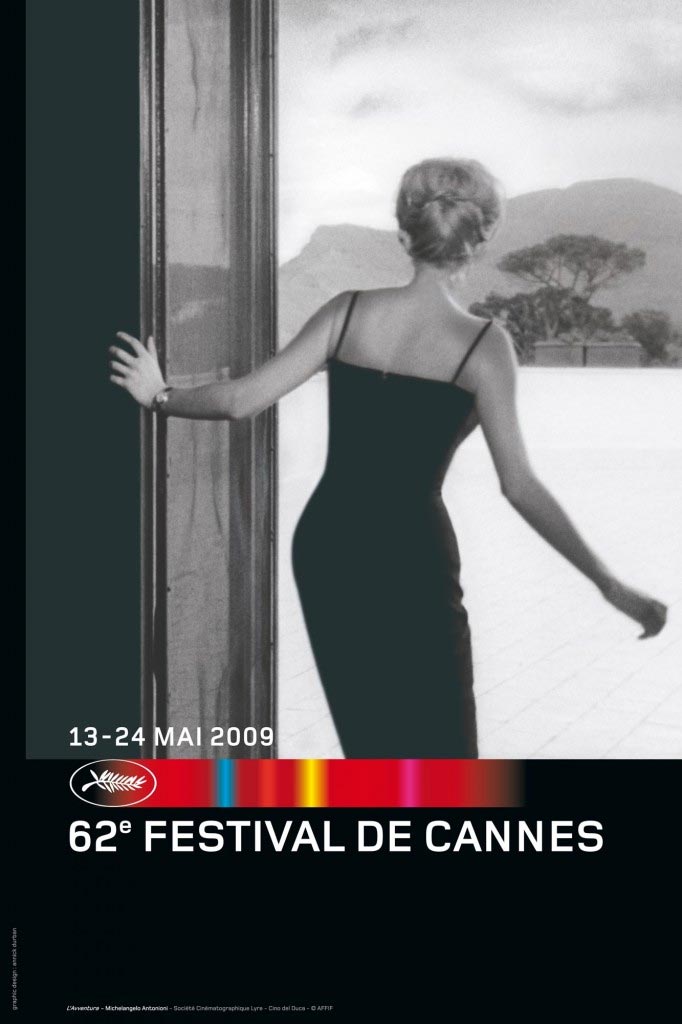
    It’s been around for a few weeks now, but since next week is going to be pretty Cannes-heavy (the fest kicks off on Wednesday), this is as good a time as any to say that I want to buy this year’s official, Antonioni-referencing festival poster, frame it, and stick it on my living room wall. Forever. Sheer perfection.

    Official Cannes 2009 poster

  • REVIEW: “Chéri” (***)

    CheriMy first thought on leaving the theatre after watching Stephen Frears’ crisp, elegantly turned new effort is that it is, in many ways, a consummate Frears film. My second thought, however, ran counter to the first: it has, over the years, become increasingly difficult to define what “a Stephen Frears film” might be.

    We are talking about a filmmaker, after all, who deals in polarities, following up the broad music-hall frivolity of the ghastly “Mrs Henderson Presents” with the austere docu-realism of “The Queen,” or a glib studio bauble like “Accidental Hero” with the jagged domestic comedy of “The Snapper.”

    The uncharitable could call Frears something of a dilettante, subsuming his own long-term artistic preoccupations beneath a veneer of versatile professionalism. That, however, would be to miss the keen emotional detail and bone-dry irony that lace themselves through all of Frears’ best work.

    Whether he finds them in a Chicago record store or an 18th century French chateau, Frears dissects his characters with an amused, academic precision that inevitably reveals the Oxbridge intellectual he is – and it’s a sensibility that meshes beautifully with the prose of Colette, who in 1920, wrote “Chéri” in much the same tartly tragic register that Frears and screenwriter Christopher Hampton tell it. (I discussed the novel in greater depth here.)

    Contrary to the shrill period rom-com that the trailer appears to be pitching it as, “Chéri” remains a cutting, economic study of love thwarted by the twinned obstacles of aging and social expectation. Painstakingly mapping the end of the affair between the eponymous 25 year-old playboy (Rupert Friend) and Léa (Michelle Pfeiffer), the world-weary courtesan twice his age, it becomes something of a dual coming-of-age story, as the lovers are forced to accept the indignities of adulthood and middle age, respectively.

    (more…)

  • WEEKLY WRAP: Loving ‘Trek,’ reading ‘Chéri,’ awaiting ‘Basterds’

    Anton Yelchin in Star Trek• In a bumper season for the sci-fi genre, Kris was thoroughly impressed by both “Star Trek” and the lower-profile “Moon.”

    • Meanwhile, we kicked off this year’s Page to Screen series with a look at the literary origins of “Chéri’.”

    • In a sad week for the business, we bade farewell to both actor Dom DeLuise and filmmaker Marc Rocco.

    • Quentin Tarantino declared “Inglourious Basterds” a masterpiece. (And Eli Roth a bastard.)

    • Following “Angels and Demons,” could cinema be the wrong medium for Dan Brown’s storytelling?

    • Continuing our new Sunday Cents feature with a breakdown of “Wolverine’s” box office performance.

    • Speaking of which, the “X-Men” franchise continues to grow new limbs. This time, a Deadpool spinoff.

    • We got a taste of Francis Ford Coppola’s “Tetro” with both a trailer and the opening minutes of the film.

    • Yours truly admitted to some reservations about Christian Bale’s recent work, and lost further cool points by fessing up to his Jennifer Garner weakness.

    • Finally, our contentious quest for the most influential films of all time continues apace.

  • ‘Whatever Works’ trailer

    Well, it certainly works for me — it’s been a while since a trailer made me laugh out loud. Larry David’s and Woody Allen’s respective brands of neurosis seem to mesh together nicely, while Evan Rachel Wood looks unexpectedly comfortable doing the guileless simpleton thing. Patricia Clarkson is obviously having a good time too. I’m in.

  • IFC nabs Sundance winner ‘Five Minutes of Heaven’

    Liam Neeson in Five Minutes of HeavenFor whatever reason, it completely slipped my mind to mention Oliver Hirschbiegel’s superb “Five Minutes of Heaven” when it premiered on UK television last month. The film, which won directing and writing honours at Sundance in January, is an exemplary return to form for the “Downfall” director, a grim but riveting account of two men seeking closure 30 years after one murdered the other’s brother in the darkest days of the Irish Troubles.

    As the reformed killer, Liam Neeson offers up his most nuanced, affecting work in several years, but it’s really British TV regular James Nesbitt who breaks the heart as a man stuck in agonised limbo between release and revenge. It’s taut, impeccably written and realised drama, comparable in many ways to Paul Greengrass’s similarly disquieting “Bloody Sunday” — between this and the “Red Riding” trilogy, it’s an odd truth that the best filmmaking of the year so far has only appeared on the small screen on this side of the pond.

    Happily, Screen International reports that the film will get the theatrical platform it deserves Stateside. IFC Films has acquired US rights to the film, and is planning a multi-format August release:

    IFC’s Arianna Bocco negotiated the deal with Pathe International and UTA and the distributor will release the film through its IFC In Theatres VOD day-and-date platform.

    Five Minutes Of Heaven, which premiered in Sundance, will also go through the company’s exclusive deal with Blockbuster in stores, by mail subscription and digital downloading at Blockbuster.com.

    Great plan. The film’s not the easiest sell in the world, so the more accessible they make it to the viewing public, the better. Keep an eye out — I can imagine this one landing on a few ten-best lists comes the year’s end.

  • Ain’t too proud to beg

    Nicky Bell and Liam Boyle in AwaydaysIt’s foolish to make any “best” claims before the year is halfway through, but if any 2009 release has a greater soundtrack than Pat Holden’s upcoming “Awaydays,” I will be very surprised indeed. A vividly atmospheric portrait of teenaged football hooligans in 1979 Liverpool, the film throbs to a propulsive playlist of post-punk gems from Joy Division, early Ultravox, The Cure, Echo and the Bunnymen, et al.

    I liked the film a great deal upon seeing it at last year’s London Film Festival (my capsule review is here). As I was watching, however, I kept wondering how such a low-budget effort had managed to afford such a top-flight soundtrack. It’s a question that the film’s writer, Kevin Sampson, answers in an entertaining piece in today’s Guardian. With a music clearance budget of just £10,000, and the average price for a single song standing at about £4,000, apparently sometimes it just pays to plead:

    Halfway through there’s a stripped-down, home-recorded demo of 10.15, Saturday Night. It features little more than Robert Smith and a guitar, and it’s one of the most devastating and heartbreaking love songs I’ve ever heard. I told (Universal Music’s) Marc Robinson as much, but knew we could never afford the Cure. He agreed, but suggested I wrote a letter to Robert Smith, which he would forward. It was worth a shot. I wrote honestly and passionately about seeing the Cure at Eric’s in May 1979, then thought nothing more of it. Robert Smith came back and said we could use the song for £500. I fainted.

    Good on them. Trailer (featuring one of the film’s key tracks, Ultravox’s “Young Savage”) after the cut.

    (more…)

  • Jeunet and Tautou reunite for Chanel ad

    In a neat (and surely not entirely coincidental) turn of events, Audrey Tautou succeeds Nicole Kidman as the face of Chanel No. 5, in the same season that she’s attracting positive notices for playing Chanel herself. Her tenure begins with this typically lush commercial, directed by Jean-Pierre Jeunet with the same burnished color palette and stylised compositions that characterised “Amelie” and “A Very Long Engagement.”

    Pure fluff, of course, but very pretty fluff, and tossing in a bit of Billie Holiday never hurts. It’s more restrained than Baz Luhrmann’s expensive Kidman-starring effort a few years back. (The one which handed the actress the cringe-worthy line, “I’m a dancer, I love to dance!”) Joe Wright also joined Chanel’s directors’ club last year — the label has taste.

  • Is Bale slacking?

    Christian Bale in Terminator SalvationThe first evaluations of “Terminator Salvation” are slowly creeping in (here’s AICN’s reasonably positive take if you’re interested), but I was more interested in something the Film Experience’s Nathaniel Rogers had to say about Christian Bale’s performance, which mirrors a grievance I’ve had with the actor’s work of late.
    Rogers likes the film well enough, but finds Bale’s contribution distinctly lacking:

    I am happy to report that unless Christian Bale’s eyes are particularly sensitive to bleached colors and shadowy sets, Shane Hurlbut’s lensing didn’t intrude on his thespian process at all. But Bale intruded on Bale’s thespian process.

    I liked Salvation a lot more than this next statement will imply but… John Connor was a dud. [editor’s note: Isn’t he always?] Christian Bale bored me silly. He used to be a thrilling and unpredictable actor. Now I feel like I’m seeing the same performance over and over again. It’s like he’s lipsynching to his own Arias of Intensity.

    I couldn’t agree more. Admittedly, I’ve never quite learned to love Bale — his most impressive performances (“The Machinist,” “American Psycho”) have a mannered quality that keeps me at arm’s length, while he has an unfortunate tendency to get outshone in talent-laden ensemble pieces (“Laurel Canyon,” “I’m Not There,” even “The Dark Knight”) — but he’s an undeniably accomplished and courageous actor.

    So it’s disappointing to see him applying the same shade of opaque intensity to one impenetrable hero after another recently. Here’s hoping he finds more notes to play in “Public Enemies.”

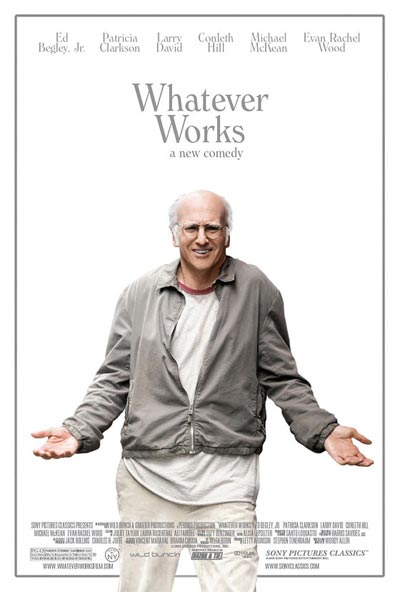
  • ‘Whatever Works’ poster

    The sexy, teasingly framed artwork for “Vicky Cristina Barcelona” was one of my favorite posters of 2008. Suffice to say I cannot offer similar approval of this dreary new one-sheet for “Whatever Works.” Just how much time did they spend on it? And at no point did anyone on the design team meekly suggest, “Hey, Evan Rachel Wood is a hot young actress, and you know, the film’s biggest talking-point is the May-December thing she has going on with Larry David. Maybe, just maybe, it might be worth sticking her on the poster too?”

    Sigh.

    Whatever Works

    [Source: Vulture]

  • Space oddity

    MoonIt’s hardly the only intriguing thing about “Moon” — the oddball sci-fi effort that Kris greatly admired earlier this week — that director Duncan Jones is in fact the rather more infamously named Zowie Bowie. Still, you must admit that an intimate space epic directed by the son of Ziggy Stardust has a certain symbolic cache to it; clearly, if the reviews are to be believed, visionary eccentricity (not to mention otherworldly interests) runs in the family.

    I must admit I wasn’t aware of this fact until I read this profile of Jones and his leading man, Sam Rockwell, in the New York Observer. It’s a fun piece, in which the two kindred spirits essentially try to outperform each other in the quirky loner stakes — loneliness being, they agree, the core theme of the film. It also offers some insight into the process behind Rockwell’s reportedly extraordinary dual performance:

    “It became part of this ingredients list of how do I make a film that Sam wants to be in? I know, I’ll make him play all the roles … and write the theme music, too,” Mr. Duncan joked.  It was indeed a challenge for Mr. Rockwell, who had to shoot each scene multiple times, either with a body double or using a Motion Control camera that can replicate body movements identically. Mr. Rockwell would act out the scene, go to hair and makeup to differentiate between the two characters, and then come back to set and do it all over again. It became what the two men described as a kind of dance, having to stick to precise moments to make the scene work—action scenes when the two Sams fight or play Ping-Pong were particularly difficult.

    (more…)

  • An unkind cut

    Scarlett JohanssonPoor Scarlett Johansson can’t seem to catch a break these days. With her acting talents currently experiencing a bit of a fallow period (I’m being gentle, I’m a fan), the snark patrol have now seized on her burgeoning directorial ambitions too.

    The source of their glee is the news (a few days old, but I only saw it now) that the short film Johansson directed for the upcoming portmanteau movie “New York, I Love You” (a follow-up to 2006’s “Paris, je t’aime”) has been dropped from the thematically linked collection, which features contributions from such oddly matched talents as Fatih Akin, Natalie Portman and, uh, Brett Ratner.

    Unnamed “sources” (yeah, I’ll bet) claims it’s because the film is “unwatchable,” while others say the film — which stars Kevin Bacon as an obsessive-compulsive on a day out in Coney Island — simply doesn’t fit the project’s romantic brief. Producer Emmanuel Benbihy, meanwhile, offers this diplomatic explanation:

    The story did not specifically involve an interpersonal relationship, and it was conceptualised to be filmed in black and white – both of which were extreme departures from the other films. Scarlett presented me with an extremely compelling, albeit unconventional, narrative that appeared as though it would not necessarily conform to the overall approach of the entire collective.

    The Guardian’s Peter Bradshaw, citing the suffocating preciousness of the Paris instalment, thinks she’s better off out of it. I have no idea, except that I’m more curious to see another facet of Johansson’s creative personality (shoot me, I kinda liked her Tom Waits album) than Brett Ratner doing a love story. Oh well.

  • PAGE TO SCREEN: “Chéri” by Colette

    Cover of Cheri by ColetteMerely casual acquaintances of French literature will likely associate the name Colette with her short story “Gigi” – or rather, the flouncy musical film adaptation thereof that swept the board at the 1958 Academy Awards. A sunny, sanitized interpretation of an intricate study in sexual politics, it captured the author’s sensibility in its lavish set-dressing, but little else.

    I doubt 1950’s Hollywood would have known where to begin with “Chéri,” a darker portrait of the louche demimonde of Parisian courtesans – and we are close to finding out if they do even now. Certainly, those who approach the novel with the jolly peals of laughter from the meringue-light trailer for Stephen Frears’ upcoming film still ringing in their ears, may be taken off-guard by the elegiac, often cruel comedy of manners that awaits them.

    Though “Chéri” is a slender, subtle volume, it’s easy to see what drew Frears and screenwriter Christopher Hampton to the material. Much like their previous collaboration, 1988’s “Dangerous Liaisons” (and other Hampton works such as “Atonement” and “Total Eclipse”), this is a story of sexual awakening gone awry — which is not to say that the novel lacks for romance. Amid the rueful cynicism lies a rather tender love story between two people who only realize they are in love a full six years into their relationship.

    The affair between Fred, an aimless 25 year-old dandy known to all by his family nickname Chéri, and Léa, a wealthy courtesan twice his age, is introduced in the novel as a pragmatic transaction: the beautiful yet increasingly insecure Léa feeds vicariously off her lover’s youth, offering material rewards and a sexual (if not sentimental) education in exchange.

    As such, “Chéri” is truly a coming of age story, a gender-reversed “Pygmalion” even, in which an older, more worldly woman grooms a boy for marriage, before releasing him into gentlemanly society. The twist comes when, the ink barely dry on the certificate of his marriage to sweet, shy debutante Edmée, Chéri discovers that carnal and sensual affections are not merely transferrable between different women. Léa, meanwhile, having undertaken this schooling for multiple men in her career and living by the philosophy that “being disinterested is its own reward,” realizes that she’s more emotionally invested in Chéri’s maturation than she knew at the time.

    (more…)