In Contention

Tag: True Grit

  • OFF THE CARPET: King…for the moment

    Tom Hooper’s “The King’s Speech” is on top of the world right now.  Telluride buzz was hot and it carried all the way through the Toronto International Film Festival to a coveted People’s Choice award.  The race is already being boiled down in some quarters to this old school Academy play versus a Gen-Y instant classic opening in just under two weeks.  You couldn’t ask for more if you were The Weinstein Company with this film as your prize pony…

    …except maybe a season half as long as it actually is.  Hooper’s film finds itself in a very precarious spot right now.  Just ask awards consultants at Paramount Pictures.

    After coming out strong with the of-the-moment “Up in the Air” last season, taking the same Telluride-Toronto crowd-pleasing path, their film slowly boiled down to an also ran and even came up short in the one category it seemed assured going into the Academy Awards.

    It’s easy to peak early in an Oscar season.  It takes tactical endurance to really come out on the other side with something to show for yourself and “The King’s Speech” is burning fuel fast and early.  But I imagine if anyone understands this it’s Harvey Weinstein, who, if he does find himself in a battle with “The Social Network” for the big prize, will be going toe-to-toe with one of his former Miramax executives, Cynthia Swartz (who has overseen Best Picture marches for “Crash,” “No Country for Old Men” and “The Hurt Locker” in recent years).

    (more…)

  • Schemers trying to control their little worlds

    It’s intriguing that two of the most press shy entrepreneurs of the internet age – Mark Zuckerberg and Sean Parker – have suddenly participated in two dense magazine profiles this month.  It’s almost as if there was a film depicting key moments in their lives set for imminent release and they want to set the record straight.  Oh…

    Really, though, I was struck reading this Vanity Fair profile of Parker that the character described is perhaps a bit more interesting than the more simplistic character Aaron Sorkin wrote in “The Social Network.” In the film, Parker is portrayed by Justin Timberlake as a paranoid, mean-spirited misfit.  A misfit (and party animal) he may be, but Parker is lauded in the piece as a “higher being,” “generous” and “loyal,” and frankly comes off as something of a saint.

    The writer does mention that Parker reached out to potential sources to smooth out his image, but even still, the accounts of generosity become a bit too consistent to ignore.  Parker works well as an antagonistic figure in the film, mind you, but I think an instance of some of this would have added a nice layer of depth to the character.  After all, Zuckerberg sure is dealt with in complex hues, and is all the more fascinating for it.

    (more…)

  • TECH SUPPORT: Best Sound Mixing — Volume I

    Last week, while discussing the sound editing category, I explained the difference between that art form and sound mixing.  The Oscar for the latter is shared between two (or more) persons who construct the soundtrack of a movie.  The re-recording mixers bring together everything – dialogue, sound effects, music – into what we hear in the theater.  The production sound mixer is also awarded for capturing the sounds during shooting, an undoubtedly arduous task.

    Many of the films nominated here are also nominated for Best Sound Editing.  In fact, rarely is there more than one film showcased for only one field.  Both categories like loud films, blockbusters and, as always, being a Best Picture contender certainly helps.

    That said, some trends are noticeable between the two categories.  Firstly, the branch has a love of musicals when it comes to sound mixing.  That makes sense, of course, because a musical is fully made by its mix.  Meanwhile, animated films consistently fare better in the sound editing category, which also makes sense given that so much of the sound scape is created separately from production.

    (more…)

  • 8/30 Oscarweb Round-up

    • Rooster Cogburn must be a leftie this time out, because his patch covers his right eye!  See! [American Thinker]

    • Naturally, Thomas Friedman goes to bat for “Waiting for Superman.” [New York Times]

    • Lane Brown points out a strong season of lead actress contenders on the horizon. [Vulture]

    (more…)

  • TECH SUPPORT: Best Sound Editing — Volume I

    Now matter how many times I watch the Oscars, someone will always ask, “So what is the difference between the two sound categories?”

    The difference is quite significant.  It is so important that the sound branch is only one of two “tech” branches in the Academy (the other being music) that gives out two separate awards.  Best Sound Mixing awards the individuals who bring the entire soundscape – music, dialogue, effects – together into a balanced mix.

    Best Sound Editing, on the other hand (perhaps better described by its previous name, Best Sound Effects Editing), rewards the artificial creation of sounds to be inserted into the film, but were not captured during the shoot.

    The category, despite its very specific nature, is nevertheless like many other “tech” categories.  Both “loud” films (often war films) and blockbusters are among this category’s favorite fetishes.  And like virtually all categories, being a Best Picture contender can be a big help.

    (more…)

  • First still from ‘True Grit’ and a plea on the western’s behalf

    A few weeks ago I was having coffee with a director, a recent awards season success story who shall remain nameless, who told me in meeting after meeting with acting talent, it seems one thing is consistent: actors want to make westerns.  The obvious catch?  Studios don’t.

    It’s hardly new news that Hollywood brass shies away from period budget, low-yield filmmaking.  It’s partly the reason the genre all but completely died out, that and a failure of western filmmakers to shift with changing socio-political climates and see the genre as one of flux, not stagnated morals and Americana.  But given tax incentives in neighboring states and any number of ghost towns ready and willing to play host to Hollywood crews, the number-crunchers have stayed away.

    It says a lot that a masterpiece of the medium (decade’s best “The Assassination of Jesse James by the Coward Robert Ford”) was left to fight alone at a time when it needed help the most, while second and third string comic book franchises are greenlit daily.  To me, the fiscal bottom line on westerns has become more of a self-fulfilling prophecy than anything else.  Granted, the public isn’t showing up, but a little shove couldn’t hurt.

    (more…)

  • TECH SUPPORT: Best Makeup — Volume I

    Makeup and hairstyling builds characters by transforming actors with realism or imagination that would otherwise be lacking on the screen. With the announcement that the Best Visual Effects is expanding to include five nominees this year, Best Makeup now remains the sole category to have three nominees, chosen from a “bake-off” of seven finalists which are revealed in advance of the January nominations announcement.

    This award tends to cite so many different aspects that it is difficult to pin down exactly what the branch looks for. However, aging and illness are certainly well regarded, as are the creation of blood and injuries, disfigurement and turning actors into monsters and other fantastical beings.

    It should be remembered that this category awards both makeup and hairstyling. However, last year’s nomination for “The Young Victoria” is a rare example of where the hairstyling portion of the category apparently played a significant role. Traditionally, facial and body makeup is far more important.

    (more…)

  • TECH SUPPORT: Best Costume Design — Volume I

    Costume design in many ways represents much about the Oscars: glitz, glamor, beauty. But obviously threads do much more than make movie stars look attractive.  They build character, set mood, define period and serve as a defining design aspect of a film.

    Like art direction, the nominees for here overwhelmingly fall into one of two categories: period or fantasy. Indeed, when two contemporary films (“The Queen” and “The Devil Wears Prada”) were nominated in 2006, it was a rare occasion.

    It’s not an exact science, but while a fantasy film is almost always nominated every year, there is usually only one as four films tend to be period. It also should be noted that recent winners in the category have all highlighted British or French royalty and high society.

    Being a Best Picture contender does not hurt with this branch (same with any), but the branch also does a great deal of thinking for itself. Last year, for instance, both “Bright Star” and “Coco Before Chanel” managed nominations here, the only ones for their respective films. In the last four years, four other films (“Curse of the Golden Flower,” “Marie Antoinette,” “Across the Universe” and “Australia”) have also managed the feat, rare for crafts categories.

    (more…)

  • TECH SUPPORT: Best Cinematography — Volume I

    Of the so-called “tech” categories, Best Cinematography is one of the most popular, certainly for me. The invention of the camera took us beyond radio and literature and set modern art on a path aimed toward the moving picture, and this field recognizes those behind the lens.
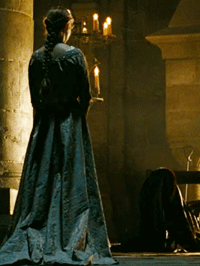
    Cinematography obviously has a massive impact on a film, everything unfolding within a frame and any nuance specific to the tone, atmosphere and theme of the piece.  It is unimaginable to think of a good movie not having a good Director of Photography (DP).

    “Pretty” films with beautiful landscapes and memorable, postcard-like shots shots are a regularity (and tend to win).  But war films also show up regularly.  And being a Best Picture contender never hurts. Innovative lighting that creates unique mood is frequently rewarded, at least with nominations, as well.

    While this branch does at times play favorites (Robert Richardson and Roger Deakins being the most notable), it always tends to find room for one, two or three first-time nominees every year. From this vantage point, I’m curious who they will be because, the way I see it, most of the obvious contenders have been nominated before.

    (more…)

  • TECH SUPPORT: Best Art Direction — Volume I

    As we like to point out in this space each year, the Academy Award for Best Art Direction is presented to two individuals who have different but key roles in designing a film’s sets and props.

    The first of these, the production designer, is the director of the film’s art department, responsible for the supervision of those in it and the overall architecture of the film’s design. The set decorator, on the other hand, is responsible for filling up those sets with proper scenery to fully bring them to life.  When these individuals, and those who work alongside them in the art department, do their jobs well, we can be fully immersed into the story.

    Historically, the nominees in this field fit into one of two categories: historical or fantastical. At least two – usually three or four – of the nominees every year are set in the past. This is not surprising. Being set outside of day-to-day life, such films require a different sort of research and, moreover, draw attention to themselves by not appearing to be what we encounter every day.

    At the same time, fantasy titles show up at least once, often more, every year as well. Last year’s winner, “Avatar,” is a good example of this.  Rick Carter and Robert Stromberg created a completely different world strictly from imagination.

    (more…)

  • Carter Burwell on musical inspiration for ‘True Grit’

    Amid his coverage of the Nashville Film Festival, Nathaniel Rogers at The Film Experience served up a nice little nugget on composer Carter Burwell, the subject of a much-deserved individual tribute at the fest. Naturally, there was much emphasis on his ongoing collaboration with the Brothers Coen, which will continue this year with “True Grit.”
    His score for the film is still in the conceptual stages, but his current source of inspiration suggests something typically singular is in the works:

    “We don’t always see eye to eye.” Burwell noted when discussing his 14th collaboration with Joel and Ethan Coen. But when it came to the conception of the True Grit score “We both had the same idea at the same time: Protestant hymns.” The composer went on to explain that the lead character, Mattie Ross (to be played by Hailee Steinfeld) was so convinced of her own righteousness that they all thought Protestant hymns would be a fine way to play with her misplaced rectitude … He’s currently looking for appropriate hymn recordings but griped that “they all sound too sweet.”

    (more…)

  • 1/20 Oscarweb Round-up

    Helen Mirren in The Last Station• Melena Ryzik chats with “The Last Station” star Helen Mirren. [The Carpetbagger]

    • On the breakthrough performances of 2009. [The Playlist]

    • Dave Karger tries to suss out the three slots that seem u[ for grabs at the bottom of Oscar’s 10. [Oscar Watch]

    (more…)

  • Do the Coens have their eyes set on a singing cowboy?

    singing cowboyA few hours ago I sat down with T Bone Burnett and Ryan Bingham to talk about the songs from “Crazy Heart.” I’ll be cooking up that piece as the introductory installment of our Tech Support interview series with below-the-line and craft personnel tomorrow, but Burnett mentioned something that totally caught my attention about a potential Coen brothers film..

    Of course, the Coens have had a number of projects stall out over the years, or more to the point, they’ve managed to leave some things on the back burner.  Everyone is still waiting for stuff like “To the White Sea” and “Hail Caesar,” after all.  But Burnett told me that it was actually the Coens who told him about Ryan Bingham, the singer/co-writer of “The Weary Kind,” who they were exposed to while filming “No Country for Old Men” in Marfa, Texas a few years back.

    “One of the things they have on the horizon includes a singing cowboy and they were thinking Ryan Bingham would be good,” Burnett said.

    (more…)

  • Fox Searchlight looks to salvage season with potential 2009 release for ‘Crazy Heart’

    Jeff Bridges in Crazy HeartJust when you thought last year’s Best Picture victor was down for the count, Fox Searchlight goes and shakes things up in November. First, some background…
    When we kicked off our coverage of the 2009-2010 Oscar season a year in advance, one of the more anticipated titles was Scott Cooper’s “Crazy Heart,” based on the novel by Thomas Cobb about an alcoholic country music singer on the road to redemption. The film stars Jeff Bridges in the leading role, along with Colin Farrell, Maggie Gyllenhaal and Robert Duvall.

    In July, Searchlight picked the film up, touting Bridges’s “performance of a lifetime,” but the studio slated the release for the spring of 2010. It seemed a shame at the time given the fact that the film was shaping up to be a potential awards vehicle for Bridges at the very least, perhaps more. But with “Amelia” on the way, a (so we thought) potentially major player in the race with its typical AMPAS tropes. But that ship has sailed, leaving the studio with only the animated “Fantastic Mr. Fox” and Marc Webb’s summer entry “(500) Days of Summer” to hawk for awards consideration.

    Until now. Maybe.

    (more…)

  • The Duke’s greatest hits

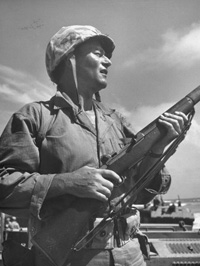
    John Wayne in Sands of Iwo JimaAs Kris mentioned Wednesday, this week marks the 30th anniversary of John Wayne’s death.  I’ve always respected Wayne’s performances and have for a long time, long before it was fashionable, to be sure.

    It was considered somewhat ridiculous for an acting student to admire Wayne’s work in the 1970s and 1980s. My God, we were supposed to be worshipping at the altar of Marlon Brando, Robert De Niro and Al Pacino! Our professors hammered home the importance of truth in a performance, which I of course believe to be essential.  But I’ve always felt that Wayne’s finest performances were as truthful and as real as anything Brando did.

    Wayne could not do Shakespeare, and was horribly out of place in certain genres, but in his element — the American western, the war film, high adventure or romantic comedy — he was as good as anyone working in movies. There were some critics who appreciated his work while he was alive, but most came around after his death in 1979, which to me is rather sad.

    I have proposed a book on Wayne, slightly different from those out there already, that would focus on his best work on film. There are 11 performances in the Wayne filmography that were truly outstanding, in my opinion.  Here is perhaps a primer for Wayne fans, new, old and emerging — a list of his best performances and some comments as to why I think they deserve to be remembered forever. Let me know what you think.

    (more…)

  • And now for something completely different

    Never let it be said that the Brothers Coen are predictable in their choice of projects. Having had their greatest crossover success to date with a film that dabbled in elements of the genre, Variety reports that they are set to make their first all-out Western — a remake of that hoary 1969 oater “True Grit,” best known today as the film that finally won John Wayne his gold-watch Oscar.

    On the surface, this isn’t the most promising of prospects — the story of a teenaged girl joining forces with a crotchety, aged US marshal to avenge her father’s death, the original “Grit” was a creaky, sentimental work that must have appeared dated even in its own time.

    But the Coens, obviously, are promising an interpretation far removed from that of Henry Hathaway’s film. Their intention is apparently to hew closer to Charles Portis’ source novel, telling the story from the girl’s perspective and placing less emphasis on the veteran character — which sounds like an improvement to me already. I admit I’ve never read the novel, though I gather it’s got harder edges than the 1969 adaptation.

    Encouragingly, the Paramount production will reteam the brothers with “No Country” producer Scott Rudin. Apparently, this project takes priority over their Rudin-produced adaptation of Michael Chabon’s “The Yiddish Policeman’s Union” that was being mooted — which, frankly, I’d have been more interested in seeing. But the Coens work in mysterious ways, so my mind is open.

    Finally, here’s a good omen: the last time they attempted a remake, they took on a masterpiece (“The Ladykillers”) and fell on their faces. Perhaps tackling a lesser work should reap greater rewards.

  • THE LISTS: Top 10 ‘right actor, wrong film’ Oscars

    As we head into the thick of awards season, one of the biggest “will-they-won’t-they” questions about this year’s Academy Awards concerns one of their most favored sons, Clint Eastwood. Specifically: despite wildly polarized responses to the film, and a widespread perception that he has already been amply rewarded in other categories, can Eastwood ride the wave of sentiment to a first acting victory for “Gran Torino?”
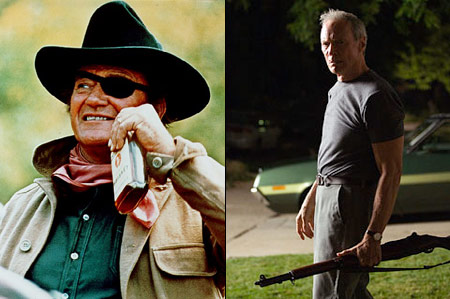
    That sneaky National Board of Review award last week suggests it’s still very much a possibility, whether or not people believe that it’s a performance for the ages — and, more to the point, whether or not it ranks with the best of Eastwood’s own onscreen work.

    It’s no secret that, in the acting races, the Academy frequently bases their vote less on the performance at hand than the actor delivering it — one can point to any number of Oscar victories determined less by merit than by personal affection for an already rewarded star (let’s say Michael Caine in “The Cider House Rules”) or industry guilt over an under-rewarded one (most recently, Alan Arkin in “Little Miss Sunshine”).

    Meanwhile, recent victories by the likes of Russell Crowe and Cate Blanchett point to the familiar “deferred-Oscar” syndrome, where an actor widely believed to have been snubbed in the recent past is hastily handed a statuette as a kind of cumulative acknowledgment of their recent strong work, frequently for a performance that doesn’t represent any particular breakthrough. (Kate Winslet might be vying for one of those this year.)

    All are variations of the oft-lamented “right actor, wrong film” Oscars that are peppered throughout Academy history — a solution generally deemed more credible (though I’m not sure why) than the honorary “quick, before they die” lifetime achievement gongs doled out to the likes of Peter O’Toole and Kirk Douglas, actors who continually slip through the cracks in Oscar voting.

    Age isn’t always the determining factor, though.  The Academy has shown in recent years by passing over Lauren Bacall and Ruby Dee — both of whom would have been exemplary “right actor, wrong film” honorees — they’re not always in a sentimental mood.  As the following list shows, reasons for rewarding actors for lesser work are many and varied: genre bias on the Academy’s part, mainstream emergence on the actor’s, or simply the voters’ collective nostalgia for a familiar face at the podium.

    The one thing all these names have in common is that they’re distinguished, even great actors who deserve to have “Academy Award winner” forever attached to their monikers — just not necessarily for that performance. Will Clint Eastwood be the latest name to join their ranks? The jury is out.

    (more…)