In Contention

Tag: Reviews

  • REVIEW: “Up in the Air” (****)

    Up in the AirTelluride Film Festival

    Jason Reitman began adapting Walter Kirn’s novel “Up in the Air” five or six years ago (in the wake of an earlier draft by Sheldon Turner).  The country was on better economic turf, he wasn’t married, he didn’t have a child.  He was drawn to a book jacket with a quote from his friend, “Thank You for Smoking” author Christopher Buckley, enchanted by a lead character obsessed with collecting frequent flyer miles who lives a single-serving lifestyle from airport to airport.

    Today, unemployment rates are skyrocketing, tangible human connectivity is becoming a relic of another century, Reitman has settled down with a wife and daughter and futures all around are uncertain.  But in some ways, there is hope, a sense of turning an all important corner.  By the end of “Up in the Air,” that is just where Reitman has left his protagonist.

    Meanwhile, Kirn’s novel has been transformed from an otherwise unremarkable example of corporate comedy into a piece at once deeply personal and serendipitously relevant.  This is one of the year’s finest films.

    George Clooney stars in perhaps the role of his career (one certainly drawing parallels to his own lifestyle) as Ryan Bingham, a career transition counselor who zips from hub to hub 270 days a year.  In a nutshell, he is part of a third party firm hired out to corporations for the purposes of firing discontinued clientele.   He lives a life of isolation, a stranger to his Midwest family, who sees him rarely and kills his commitment-less buzz anytime they call with an update.

    He has airport check-in down to a science, stereotypically zeroing in on those who are quickest to follow behind at security, Moonwalking out of his shoes as he does so, his luggage immaculately packed, his system a work of streamlined art.  When he isn’t letting people go in the name of other companies, he gives motivational addresses meant to steer attendees clear of the extra baggage in their life, their commitments, extraneous relationships, anything that keeps them from living a life as he believes it is meant to be lived: in motion.

    (more…)

  • REVIEW: “Capitalism: A Love Story” (***)

    Capitalism: A Love StoryVenice Film Festival

    It was well before Michael Moore dropped an extensive archive-footage chunk of a Franklin D. Roosevelt speech into the last reel of “Capitalism: A Love Story” that the following thought entered my head, but the appearance of FDR and his homespun common sense crystallized it: Michael Moore is this generation’s Frank Capra.

    By that token, “Capitalism: A Love Story” – an artlessly effective slice of rah-rah rhetoric more sincerely idealistic than anything the director has yet put his name to – represents Moore’s “It’s a Wonderful Life.”

    A film made in the infant stages of vast social healing (substitute the end of WWII for the beginning of the Obama presidency), it uses its transitional timing to examine alternately the America that was, could have been and hopefully will be.

    As with the prototypical Capra film, “Capitalism” places its faith in the American everyman, while blanketing evil as a vaguer collective, defending the rights and ability of the former with unashamed sentimentality and sledgehammer subtlety.

    The bait for the filmmaker’s multiple critics to seize upon is left prominently and deliberately exposed – the film is a veritable compendium of all Moore’s most manipulative muckraking tactics, whether it’s the wilfully decontextualized use of vintage news clips or the breathtaking exploitation of having an ordinary Joe tearfully read a love letter to his deceased wife on camera. No button is left unpushed in the service of an argument that already doesn’t have to work very hard to win over the liberal public, but Moore isn’t one to leave much to chance.

    (more…)

  • VENICE: Swinton in ‘I Am Love,’ Gainsbourg in ‘Persecution’

    Tilda Swinton in I Am LoveIs any other actor today building as diverse a filmography as Tilda Swinton? After serving studio time last year in the one-two shot of “Burn After Button,” this year has seen hear frighten off the purple-rinsed Academy crowd that seemingly first noticed her in “Michael Clayton” with a defiant return to arthouse “difficulty” in “Julia” and “The Limits of Control.”

    Not content with that, it seems, she now shows off her linguistic skills with the wholly Italian-language lead in Luca Guadagnino’s extravagant family melodrama “I Am Love” — handily announcing herself as the film’s sole raison d’être in the first place. If the subtitles don’t unnerve her newfound mainstream following, the loving close-ups of her nipples just might. Good on her.

    Coincidentally enough, it’s been a morning of language-flipping crossover stars, as Charlotte Gainsbourg’s first post-“Antichrist” venture unspooled in the shape of Patrice Chéreau’s Competition entry “Persecution,” a Paris-set romantic drama that soothes the wounds inflicted upon the actress by Lars Von Trier, if not to terribly exciting effect. Short reviews after the jump.

    (more…)

  • VENICE: ‘My Son, My Son, What Have Ye Done?,’ ‘Lourdes’

    Michael Shannon and Chloe Sevigny in My Son, My Son, What Have Ye Done?Another sweltering day on the Lido, though rainclouds are forming and things look set to break any moment now. Hopefully a change in climate will also bring about an upswing in the collective quality of films on display, as the first three days have served up a few well-liked titles, several misfires and nothing yet resembling a sensation.

    At this stage, the Competition title with the most buzz appears to be Todd Solondz’s “Life During Wartime,” which I took a shine to yesterday — though others I spoke to seemed less enthusiastic. However, as the reviews pour in, the film looks more and more like a success: Screen International editor Mike Goodridge is a fan, while Todd McCarthy has labeled it the director’s best work yet.

    Bookending a morning that began with the first sighting of “The Bad Lieutenant,” this evening opened the not-that-well-guarded secret of the Competition’s surprise film — and, as luck (or otherwise) would have it, it turned out to be a second helping of Herzog.

    “My Son, My Son, What Have Ye Done?” (*)

    It feels odd, and slightly improper, to beat up on Werner Herzog twice in one day, but sadly, the David Lynch-produced “My Son, My Son” leaves me very little choice.

    (more…)

  • TELLURIDE: ‘An Education,’ ‘Bright Star,’ ‘London River’

    London RiverThis year’s Telluride fest is slowly gearing up.  There are a handful of press screenings this afternoon and the opener, Marco Bellochio’s “Vincere,” is set to play at 5:00pm.  I’ll probably miss that in order to take in “The Last Station,” which if it picks up a buyer, could make good on awards potential for Christopher Plummer and James McAvoy.

    Before things get going, though, I though it best to clear the slate with a few reactions to films playing here which I’ve already seen.  More to come later this evening, I’m sure.

    “An Education” (****)

    Few films are likely to have the refined air of artistry that Lone Scherfig’s “An Education” offers.  Based on a memoir by Lynn Barber, the story is, in a nutshell, that of a young girl eager to grow up but unprepared for the disappointments of adulthood.  But the film is, of course, so much more than that.

    (more…)

  • VENICE: ‘The Road,’ ‘Life During Wartime,’ ‘Great Directors’

    Ciaran Hinds in Life During WartimeSorry to duck out there for the whole morning — a combination of wireless misbehavior and delayed screenings has played havoc with my planned writing time. As a festival, Venice has multiple charms, but smooth organization is not among them.

    This morning’s glitch-bedeviled  screening of Todd Solondz’s “Life During Wartime” is a case in point: after starting 20 minutes late (leaving journalists waiting outside in sunstroke-inducing heat), the projector broke down during the opening credits. A second quarter-hour delay followed,  only for the film to restart with severely mistimed Italian subtitles — the vocal protests from Italian audience members drowning out the dialogue in the film’s opening scenes. Oh, well.

    Anyway, enough kvetching and on to the movies.

    Kris will have a more detailed take on “The Road” (**1/2) up later today, but given that it’s one of the Lido’s biggest drawcards, I feel it necessary to take a moment to discuss the film, which seems to have left several journalists I’ve spoken to disappointed, or at least mildly befuddled — and with good reason.

    (more…)

  • REVIEW: “Inglourious Basterds” (**1/2)

    Inglourious BasterdsQuentin Tarantino’s “Inglourious Basterds” isn’t as indulgent as “Death Proof” or “Kill Bill: Vol. 2,” but it doesn’t have the filmmaking panache and wit of the moving image to forgive it its sins like “Kill Bill: Vol. 1,” either.  It’s a slightly more contained bout of silliness, but it’s silliness nevertheless.

    The film is trademark bloated Tarantino, featuring scene after scene that could have been curtailed or expedited, which might have significantly affected an off-putting 150-minute running time.  But Tarantino lost his “no” men years ago, while distribution honcho Harvey Weinstein continues to serve as an enabler of sorts.

    So more of the same is what we get.

    But to look deeper at “Inglourious Basterds” is to find a world that might appeal to an angst-ridden child, perhaps.  The rage that courses through its veins is pure, concentrated tantrum, and somewhat passé at that.  After all, what thematic purpose is served by a film — however brazen and even “fun” in its historical revisionism — that takes relentless aim at the Nazis, of all foes?

    The director might have found suitable commentary with a sense of parallel or metaphor, something, anything connecting the on-screen carnage to our own state of pent-up hatred toward foreign aggressors, for instance.  But that doesn’t seem to be visceral enough for Tarantino, who takes glee at a prolonged take of a human head being scalped, or the rat-a-tat obliteration of another under a hail of gunfire.

    Boys will be boys, I guess.  But when will that cease to be enough for Tarantino apologists?

    (more…)

  • REVIEW: “Public Enemies” (***1/2)

    Public EnemiesLos Angeles Film Festival

    There is a moment very early in Michael Mann’s “Public Enemies,” featured today as the centerpiece exhibition of the Los Angeles Film Festival, when Depression-era criminal John Dillinger (Johnny Depp) stares into the dying eyes of friend and mentor Walter Dietrich (James Russo) as his band of cohorts flees the scene of a somewhat botched prison escape attempt. The sequence is at once curiously beautiful and unmistakably somber, of a piece with the filmmaker’s coldly calculated vision of a man caught up in the freedom of his rebellious lifestyle, yet haunted by the specter of his own obsolescence.

    The film marks an exciting return to muscular, patient storytelling form for Mann. After dubious stabs at commercial appeal in “Collateral” and “Miami Vice,” films that certainly have followers and admittedly plumb thematic depths no other filmmaker would have reached, the director has painted his most resonant character study since 1995’s “Heat.”

    Headlined by an emotive, at times unsettlingly internalized performance by Depp, the film amplifies Mann’s penchant for nuance while marrying it with a well-exercised gift for staging unique if not inimitable action set pieces. But for all the director’s classic cinematic accoutrement, the film nevertheless stands apart from Mann’s portfolio for its fully realized vision of a doomed romance highlighted by, rather than merely peripheral to, the machismo on display.

    (more…)

  • SHORT TAKE: “Drag Me to Hell” (***)

    Drag Me to HellIt only occurred to me this week that I have yet to write about Sam Raimi’s “Drag Me to Hell,” which I saw weeks ago and never got around to reviewing in a timely fashion.  I’ve had the artwork for whatever piece I was to conjur sitting here on my desktop, waiting for me to, you know, write the friggin’ words, but for whatever reason, the inspiration hasn’t hit.

    Knowing me and my curmudgeonly self, you’d think that would be the result of the film not registering for me.  After all, I pretty much dislike everything Raimi has ever done, save for “Spider-Man 2” and “For Love of the Game.”  And yes, that includes the precious “Evil Dead” series that established his committed fan base over two decades ago.  It’s that very same following that will no doubt flock to “Drag Me to Hell,” and they’re going to love what they see.

    But no, my writer’s block has nothing at all to do with an aversion to the film.  On the contrary, I was thoroughly entertained by nearly every minute of “Drag Me to Hell.”  I think, perhaps, it has more to do with the idea of reviewing a film this fun being a real drag (pardon the pun).  Who wants to ruin it with the usual analysis?  But here I go…

    (more…)

  • SHORT TAKE: “Terminator Salvation” (*1/2)

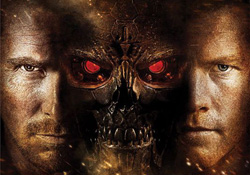
    Terminator SalvationI knew five minutes into McG’s cumbersome, misguided, lifeless “Terminator Salvation” that I would be writing a short take rather than a full review.  The film sucks inspiration out of the viewer in a staggering fashion.  It disavows intriguing ideas explored in the franchise to date and renders a potentially exciting re-launch of the material impotent and meaningless.  It is frankly difficult to give the film a whole lot of thought.

    This glossy new installment is splintered with the shrapnel of smart and at times visionary ideas, both narratively and visually.  But it has no idea which way is up.  It is a video game, not a piece of cinema.  It is the accomplishment of a filmmaker smitten with the work of people far more talented and far more dedicated to realizing something that endures, rather than something that capitalizes on pre-existing framework.  And it is a nightmare to anyone who cherished James Cameron’s now 25-year-old creation.

    And that might be a key statement.  Not everyone holds that creation dear.  And for them, a compelling film might be in store.  But I wanted more.  I certainly wiped my brow with relief in the summer of 2003 when Jonathan Mostow’s largely misunderstood “Terminator 3: Rise of the Machines” managed to bridge two philosophies under the same umbrella, but I knew something bigger and more thematically powerful was needed to recharge the dimming light on the “Terminator” series.  Something with a particular blend of creative ingenuity and allegiance was necessary.  “Terminator Salvation” substitutes confused storytelling for the former and eye-rolling winks and nudges for the latter.

    (more…)

  • SHORT TAKE: “Moon” (***1/2)

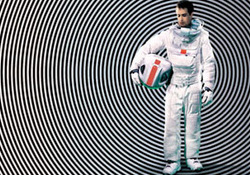
    MoonIn the harrowing finale of Alejandro Amenábar’s “Abre Los Ojos,” actor Chete Lera screams in defiance at the unthinkable events unfolding around him: “I’m real and I have two daughters!”  Falling to his knees, he slowly accepts the gut-wrenching realization that is the film’s final twist.  That idea is front and center in Duncan Jones’s “Moon,” an all-too-rare instance of sci-fi entertainment that understands the value of human emotion in a genre that can often eschew it.

    In what might not be a too-distant future, given the nature of Earth’s depleting resources, energy companies have sought out the cosmos for further profit and power stability.  The film opens with a typical advertisement from one such company called Lunar Industries that sets the scene: mining the planet’s primary source of energy Helium-3 on the far side of the moon is the answer to sustaining our delicate existence.  “Sleep in comfort knowing you’re in our hands,” that kind of thing.  And the sight of giant combines harvesting lunar soil for the isotope is quite an alarming one indeed.

    Sam Rockwell stars as astronaut Sam Bell, a Lunar contractee nearing the end of his three-year stint overseeing the harvesting in what has to be the loneliest job in the universe.  He wakes up, he jogs on his treadmill, he might take a trip out to the combines if something goes awry, but mostly he chats it up with his only company at the outpost: GERTY, a computer system know-it-all voiced by Kevin Spacey in an obvious tip-of-the-hat to Douglas Rain’s HAL 9000 in Stanley Kubrick’s “2001: A Space Odyssey.”  Only the ominous red orb is replaced by a yellow emoticon that gets played up for a laugh or two throughout.

    However, something’s not quite right (but of course).  Sam keeps seeing things: an odd blip of his former self barking out commands on a monitor here, the vague vision of a woman floating out near the combines there.  After a lunar crawler accident sends the plot’s mysteries on an inevitable course, Sam discovers he and GERTY are not alone after all.  The unfortunate realities this new visitor represents are the ideas “Moon” smartly concerns itself with.

    (more…)

  • SHORT TAKE: “The Girlfriend Experience” (***)

    The Girlfriend ExperienceSteven Soderbergh really gets back to what he’s good at in “The Girlfriend Experience,” a look at five days in the life of Chelsea, an upscale Manhattan escort (adult film star Sasha Grey, in her mainstream debut).

    The film is intimate (no pun intended) but also keeps the audience at arm’s length, forcing a voyeuristic quality to the goings-on.  Soderbergh employs long takes throughout, allowing his characters to steadily reveal their intentions, desires and simple thought processes.  But what he ultimately conveys is a portrait of some alien being, seemingly out of touch with all human feeling and emotion.

    Perhaps this is Grey’s downfall as an actress (since Soderbergh goes to great lengths to establish her as a thoughtful person), or perhaps it is the filmmaker’s point.  Whatever the case, “The Girlfriend Experience” represents Soderbergh at his most compelling, asking questions with his work behind the camera, probing the reality of relationships and bringing his audience along on a journey that ultimately gives no answers, offers no revelations and abruptly concludes after a brisk 77 minutes.  It doesn’t work completely but it is a preferable road to the “Ocean’s” series for the filmmaker to be on, of that we can be sure.

    (more…)

  • REVIEW: “The Young Victoria” (**)

    The Young VictoriaSomewhere out there, wherever such souls reside, Anne of Great Britain must be wondering what she had to do during her reign to merit her own prettily mounted biopic. She may be the last relatively untapped figure in British heritage cinema’s well-worn library of queenly narratives, but she has once more been passed over for the privilege of fronting the latest middlebrow, true-life royal drama, fast becoming an annual fixture on the UK film calendar.

    Instead, the powers that be (noting with reluctance that the lives of both Elizabeths have been sufficiently plundered of late) have returned to that old stalwart, Queen Victoria, for inspiration. Marginal inspiration, at that –- that “young” inserted in the title is intended as the film’s creative and commercial trump card, promising a sprightlier, sexier take on the figure more frequently depicted in her latter years as a stern, cabbage-faced matron.

    Indeed, from the sly casting of impish Emily Blunt in the title role to the Easter-egg hues of Sandy Powell’s typically immaculate frocks, Jean-Marc Vallee’s film works overtime to convince us that the 18-year-old Victoria could be very amused indeed: as Blunt barely suppresses laughter at a stiff royal function, or skips down a corridor after being informed of her impending coronation, she effectively severs any connection or comparison with Judi Dench’s Oscar-nominated interpretation of the role in “Mrs Brown.”

    Meanwhile, in depicting its subject as a modern woman suffocated by her surroundings and dated gender trappings, complete with adorable lapdog and an accent that is decidedly more Sloane Square circa 2009 than House of Hanover circa 1837, the film pulls a similar trick of characterization to last year’s “The Duchess.” Working, however, in an even softer register than that already lightweight film, “The Young Victoria” plays down court intrigue in favor of dewy-eyed first love; if “Elizabeth’s” populist coup was restyling royal history as political thriller, this lands squarely in rom-com territory, with Rupert Friend’s Prince Albert the dreamy yet ever-deferred suitor.

    (more…)

  • REVIEW: “The Wrestler” (***1/2)

    Mickey Rourke in The WrestlerAFI Fest

    Darren Aronofsky went back to the drawing board on “The Wrestler,” a film that wallows in nuance, spearheaded by a performance of grace and subtle charisma.

    After “The Fountain” failed to catch on in any meaningful way (though this viewer considered it one of the best films of 2006), the director ravaged by a studio system that condensed his vision to an essence he wasn’t fully comfortable with, Aronofsky took up the reins of the most modest, straight-forward project he’s tackled in 10 years.  The result is as affecting as it is numbing.

    Mickey Rourke stars as Randy “The Ram” Robinson, a one-time head of the class professional wrestler who makes his living (barely) working in the independent circuit.  His body as beat up as Aronofsky’s confidence must have been two years ago (he wears a hearing aid as a result of his work description and the look of a broken mare across his face), Randy is in some ways the ultimate blue collar guy.

    Forget Joe the plumber, we’ve got Randy the wrestler.

    He gets by on what little income he can manage from his stake of this event gate or that, sleeping in his big Dodge van (a Ram, of course) when he isn’t able to meet the rent on his trailer.  His afternoon hang-out is the local dive strip club where he is friendly with Cassidy (Marisa Tomei), over the hill but with a goddess’s body and a heart of gold to match.  She becomes even more attractive, somehow, with the revelation that she has a 9-year-old son, a point of connection for Randy, who has been estranged from his daughter Stephanie (Evan Rachel Wood) for many years.

    After an extreme match with a Mick Foley-esque contender leaves Randy a bloody mess, the wrestler suffers a heart attack, the truth tossed into his face like a cold bucket of water: stop wrestling or you’ll die.  That puts a damper on the road to a rematch with The Ayatollah, rekindling the good ole’ days with a former foe who sells cars now in Arizona.  Think Hulk Hogan taking on The Iron Sheik today, 24 years after the electrifying Madison Square Garden showdown that ushered Hogan to stardom.

    (more…)

  • REVIEW: “The Assassination of Jesse James by the Coward Robert Ford” (****)

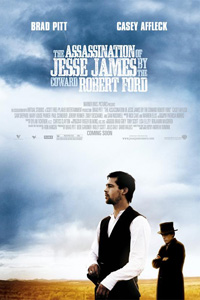
    The Assassination of Jesse James by the Coward Robert FordIn 1983, author Ron Hansen crafted a novel that ought to be considered mandatory reading for anyone fancying himself or herself attracted to the western as a genre and as a conveyor of essential truth. A Shakespearean account of betrayal in the old west, Hansen’s masterful sketches revealed deep and vibrant characters that transcended the nickel-book mythology into which they inevitably found themselves woven.

    Twenty-four years later, filmmaker Andrew Dominik has accomplished a visual telling of that story as close to cinematic perfection as you could hope for. At the risk of sensationalism, I would call “The Assassination of Jesse James by the Coward Robert Ford” the most accomplished work of moving imagery committed to film in nearly a decade. It is a staggering piece of true cinematic art.

    The tale is as simple as it is complex, a trait shared by the greatest of western storytelling. Jesse James (Brad Pitt), the infamous outlaw of old, found himself the subject of obsession, fascination and idolatry by the young and ambitious Robert Ford (Casey Affleck). A yearning to touch greatness, or even reside in similar territory, drove Ford to seek out acceptance amongst James and his gang of outlaws in the waning years of the 19th century. A lethal combination of angst, envy, hubris and government sanctioning brought Ford to a place on April 3, 1882 where firing a bullet into the back of James’ skull seemed the logical course of action. And so it was.

    Dominik and director of photography Roger Deakins have framed the legend of James in some instances by blurring the outer edges of the frame. Perhaps the intention is to convey a legend we know little about, given the cloud of mythology that surrounds actuality. But there are depths of reality here that speak to some fairly grandiose truths, and that, I think, is what Dominik is driving at.

    With all the sensationalized accounts, all of the larger-than-life depiction, there is true poetry in the life and death of the outlaw. And there is true poetry in his assassin’s regret. Myth is born out of realism, and Andrew Dominik, an Australian, seems to understand the American western better than any contemporary, and many who paved the way before him.

    (more…)

  • REVIEW: “Sunshine” (**1/2)

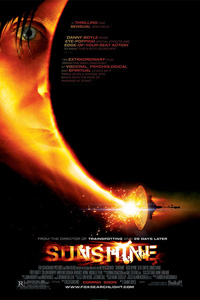
    Fox Searchlight Picutres\' SunshineI really wanted to like Danny Boyle’s latest mind-bending cinematic excursion. The elements were in place for the talented genre director to crank out one of the great science fiction films of our time. Writer Alex Garland was on board, a certifiable genius of the narrative form. A decent cast of actors were assembled. Technical achievements seemed to be lining up to pitched perfection.

    But as I watched the film unfold, I soon stumbled upon that most sickening discovery every filmgoer feels at some point or another: the sense that I needed to let hope slip away. “Sunshine,” I had to admit to myself, was a colossal miss.

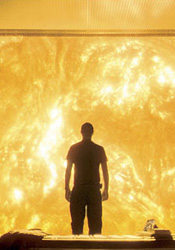
    The film tells the story of a last-ditch effort in a future society to save our dying sun. Earth has plunged into an ice of sorts age in the year 2057. One mission to essentially reboot the giant star’s core with a massive bomb explosion has already failed as of seven years ago.

    And now, a new, likely final attempt has been launched with an eight-member crew aboard the Icarus II, a vessel dwarfed by the gargantuan payload it pushes through the cosmos toward an uncertain end. It is the mission or nothing at all, and that is the reality the film embosses at every turn.

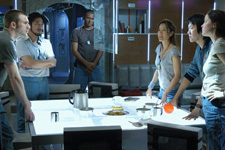
    The Icarus II’s octet serves as the film’s ensemble throughout. Front and center are Mace (Chris Evans), a hard-boiled military mind (though he is the resident engineer) who embodies the spirit of “failure is not an option,” and Capa (Cillian Murphy), a physicist who has to be the most important member of the crew, given the events of the narrative. Also sticking out is Searle (Cliff Curtis), a psychologist losing himself to the wonder of that which the crew seeks to save, as well as Corazon (Michelle Yeoh), a botanist charged with maintaining the vessel’s oxygen garden, the crew’s primary source of oxygen and food.

    Ship captain Kaneda (Hiroyuki Sanada) and navigation officer Trey (Benedict Wong) serve their plot points well enough. Mostly they just fade into the background with second in command Harvey (Troy Garity) and pilot Cassie (Rose Byrne).

    SunshineThe ensemble performance is a solid one. Chris Evans especially proves again that even amidst artistic turmoil he is a charismatic presence. But if this bevy of crusaders sounds similar to “Sphere,” the Michael Crichton novel butchered in cinematic form by Barry Levinson in 1998, it should. It seems a staple of the genre has become the busload of specialists. But that’s not what “Sunshine” does to implode on itself.

    You see, there is a lot of beauty in “Sunshine”’s visual realizations. Danny Boyle is a filmmaker who specializes in elevating that which should be seen in brighter intellectual and emotional hues to operatic levels. And this is certainly a Danny Boyle experience in that light.

    But on the page, in the confines of story, Alex Garland has managed to mangle what might have been a more than passable sci-fi experience by resorting to tactics we’ve already seen in zingers like “Event Horizon,” “Mission to Mars” or the aforementioned “Sphere.”

    To further expound upon this requiem for Garland’s talents, as they relate to “Sunshine,” never have I witnessed a deus ex machina so blatantly employed and so confusing in its existence. As the third act begins to clumsily unravel, one can’t help but furrow the brow and struggle to comprehend the direction, indeed the point of the narrative – if even on the terms of the story itself, which seem to fly out the window at this crucial juncture. The cinematography even seems to unnecessarily disorient at this stage.

    Cliff Curtis in SunshineThere are elements worthy of praise. As noted, Boyle is a visual technician without parallel. The visual effects are beautiful and seamless. Most especially, the sound work in the effects and mixing stages is another character unto itself, as necessitated by a film taking place in the vacuum of space. And the score offered up by John Murphy and Underworld is original and enjoyable. However, I can’t venture much further out onto the limb of commendation, I’m sorry to say.

    The question “Sunshine” is posing is a valid one, and most important in the science fiction genre, it is a meaningful one. What if the planet’s solitary source of nourishment – in all its phases – were to lose its steam, lose its power? What if the sun were to die?

    Basically, what if the giant light bulb went out? What the film does with that question, most especially in its third act, is somewhat artistically infantile at best.

    It has been respectfully requested by the filmmakers that none of the film’s surprises be revealed through reviews, which is fair enough. If I knew where “Sunshine” was going prior to screening it, I might have waited for DVD.

  • REVIEW: “Children of Men” (****)

    Universal Pictures' Children of MenAlfonso Cuarón’s is one of the most singular voices in the filmmaking community. Along with longtime collaborator, cinematographer Emmanuel Lubezki, the director has ushered forth textured visions of skewed fairytales for over a decade.

    With “A Little Princess,” he took audiences into the mind of a little girl and her trying tenure at a miserable boarding school. In perhaps his most underrated work, “Great Expectations” (a loose adaptation of the Charles Dickens novel), he unveiled the mysterious and fateful journey of a dreamer.

    “Y tu mamá también” brought the director’s choice of material into a more mature light, still keeping the exuberance of youth, while “Harry Potter and the Prisoner of Azkaban” became one of the most adult installments in a series aimed at a younger market.

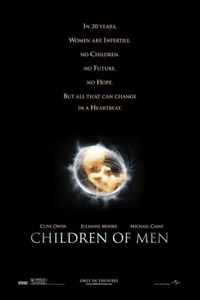
    “Children of Men” fits rather paradoxically into these otherwise whimsical endeavors. Another sort of fairytale altogether, one cloaked in the mystique of dystopia, it is a film as unflinching in its bleakness as it is penetrating in its deep-seeded sentimentality. And in manifesting one of the most horrific visions of the future yet committed to film, Cuarón has given us his masterpiece, the crowning achievement of 2006.

    Adapted from the P.D. James novel of the same name (and, through much arbitration, crediting some five writers on the screenplay), “Children of Men” reveals the hellish world of 2027. Baby Diego has died, the affectionately labeled youngest person in the world -– 18 years old. Fertility is an aspect of the past, and humanity’s time is clearly borrowed. The world’s nations have crumbled to apocalyptic ruin. England remains the last refuge for potential stability and order…but those days are quickly slipping away.

    Theo Faron (Clive Owen) is a man lost in this sea of chaotic apathy, sliding amongst the beleaguered masses, one of the hordes, most concerned about his morning coffee and skipping out on work than with finding something of considerable happiness. His best friend, Jasper Palmer (Michael Caine), is a stoned hippie who listens to the oldies and laughs away the final years of human existence in the woods, surrounded by marijuana and nostalgia.

    An immigrants’ rights terrorist organization headed by the mysterious Julian Taylor (Julianne Moore) kidnaps Theo in broad daylight one day in order to attain transport papers for an unnamed woman. Julian and Theo, we learn, once had a child together, a child they lost and whose memory haunts them equally.
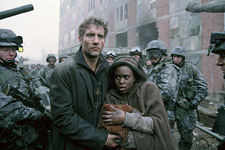
    Clive Owen and Clare-Hope Asitey in Children of MenThe unnamed woman is soon revealed to be Kee (Clare-Hope Asitey), a refugee holding the potential key (I feel as though I’ve just discovered the point of the character’s name) to the future of man: miraculously, she is pregnant, waiting to give birth to the first baby the earth has seen in 18 years.

    It soon falls to Theo to protect Kee and her unborn child, a veritable political football, and smuggle her to the Human Project, a scientist organization bent on curing the world’s infertility crisis.

    Through sheer drama and brutal tension, Cuarón sets about weaving a blistering yarn that draws parallels to current political climate. Truly penetrating visual cues bring the viewer’s mind to everything from ground assaults in Iraq to conditions at Abu Ghraib prison.

    Clive Owen’s portrayal is largely physical, as Theo is an elusive character (even by the actor’s own admission). Even still, this is one of the year’s great performances, an immediately believable portrait of a hero called to unconscionable task. Asitey is equal parts preciousness and irreverence as Kee, and Caine has far too much fun for his own good in the role of Jasper. Moore’s turn is fleeting, but elevated by her own angelic screen presence.

    Elsewhere, Peter Mullan has a great second act performance in store as one of Jasper’s amigos, while Chiwetel Ejiofor offers up yet another controlled supporting turn, this time as part of Julian’s terrorist organization. It is, however, the technical elements of the film that propel it head and shoulders above anything else in the market place this year.
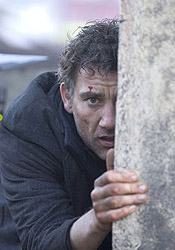
    Clive Owen in Children of MenSome of the set pieces Cuarón orchestrates are the most electrifying, living and breathing sequences ever imagined in the history of cinema. Much credit here is due to Lubezki and camera operator George Richmond, not to mention a meritorious technical and stunt crew who must have rehearsed these moments into the ground.

    You’ll hear it for the rest of the year, the cinematography on display in “Children of Men” is God-like in its skill and quality.

    Equally impressive is the production design of Jim Clay and Geoffrey Kirkland. Dreary, decaying urban landscape spans the frame. Graffiti and bullet holes decorate sets constructed with a defining clarity of intent, and ultimately the world envisioned on the drafting table becomes a character in its own right.

    The most interesting aspect of the mise-en-scène, however, has to be the director’s decision to litter the frame with various animals, usually dogs and cats. Representative of humanity’s longing and desperate need to replace children with something else, it is one of the more subtle aspects that isn’t brought out into the open for inspection, but upon examination is all too brilliant an element in the director’s arsenal for this, his finest film to date.

    “Children of Men” is a shocking portrait, indeed. From an opening scene that grips you by the collar and never lets you turn away, it is stomach-churning in its abjection, and it is resonant in its refusal to buckle under the cynicism with which Cuarón paints his canvas. It is stark and it is pointed, but it is warm and full of hope all the same. It is a miraculous achievement.

  • REVIEW: “Munich” (**1/2)

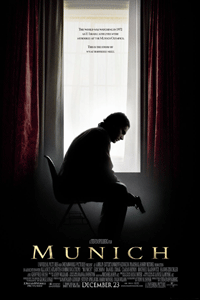
    MunichSteven Spielberg’s “Munich,” the big, mysterious player in this year’s Oscar game, has come. And as anyone could have expected, no film could have held up to the expectation.

    Not only, however, does the film fail to reach the spot reserved for it in everyone’s mind throughout the summer and fall shoot, but it settles in as a slightly misguided and confused tale oblivious to its own potential.

    The screenplay, by Tony Kushner and Eric Roth, is based on the extremely provocative book titled “Vengeance” by George Jonas. These two tyrants of storytelling bravado are a wet dream for those hoping for potent, pointed commentary mixed with fascinating storytelling. The mixture is, in effect, not so potent. Not so pointed.

    A story about the fallout of the Palestian execution of Israeli athletes at the 1972 Munich Olympics is a thematically risilient one to be committed to film in today’s times. Mossad agents seeking out – vengeance – for the heinous murders in retaliation is an eye-for-an-eye and we’d all be blind sort of reality that deserves more than the boilerplate of a squad of assassins and their tasks at hand, intricacies and all.

    These men could have served as such lighting rods as to bury any writing effort ever attempted, to be blunt, but they are rather characters to fill the void of plot instead.

    (more…)