In Contention

Blog

  • TIFF: ‘Brighton,’ ‘Rabbit,’ ‘Debt,’ ‘Whistleblower,’ ‘Boating’ reactions

    A quick round-up this morning.  First, we already offered some reactions to Rowan Joffe’s “Brighton Rock,” which is still looking for a distributor.  But things aren’t looking great for awards prospects should it land a buyer, as Movieline’s Michelle Orange says the film “extends the Graham Green adaptation curse.”

    Meanwhile, John Madden’s “The Debt” could still be in play.  Rope of Silicon’s Brad Brevet calls it “a satisfying thriller that is almost so subtle it feels like it’s based on a true story.”  He later singles out Helen Mirren’s performance as “striking,” noting that she “brings a commanding and competent presence to her character.”

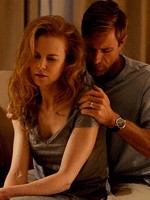
    One hotly anticipated title is John Cameron Mitchell’s “Rabbit Hole,” also still seeking distribution.  Showbiz 411’s Roger Friedman Tweets that star Nicole Kidman is “back in Oscar form,” while Deadline’s Pete Hammond gets a bit more substantial, adding Dianne Wiest to the mix.  “Should it find a distributor this week and get an end-of-year berth,” he writes, “past winners Kidman and Wiest both become bonafide Oscar contenders again.”  He does warn that it could be perceived as too much of a “downer,” though.  Nathaniel Rogers does a much better job of rounding up responses at The Film Experience, though.
    (more…)

  • 9/14 Oscarweb Round-up

    • Ben Affleck discusses “The Town” across the pond. [Daily Telegraph]

    • The Best Picture race begins to take shape for Sasha Stone. [Awards Daily]

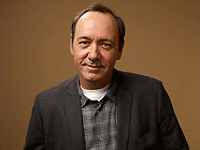
    • Michael Cieply talks to Kevin Spacey about his work as “Casino Jack” and his involvement with “The Social Network.” [New York Times]

    (more…)

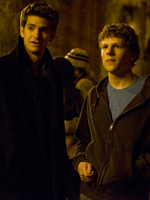
  • Fincher’s ‘Social Network’ nails human frailty

    The best films are rarely about just one thing, but rather that one thing as reflected through a variety of narrative prisms.  And there is something to be said about a film that manages to distill an era while profoundly conveying a character study within.

    David Fincher’s “The Social Network” may be the quintessential story of young Machiavellian entrepreneurship in an age of streamlined communication, but it is also a story of the social disconnect that can be as galvanizing as any other source of ambition…for better or worse.  The Mark Zuckerberg of Fincher’s film uses the sting of that disconnect to spark a fire of creativity, and the film very much concerns itself with the gauntlet of his motivation.  (The New Yorker’s profile, culled from rare extensive interviews with the 26-year-old billionaire, is a wonderful primer for the dramatization.)

    In some sense, the film could be viewed as a distant cousin of Darren Aronofsky’s “Black Swan,” both presenting protagonists flawed by their own aggressive drive.  But while Nina is a tragic figure of self-destruction, Zuckerberg is a tragic figure of self-alienation.

    (more…)

  • ‘Life, Above All,’ ‘Uncle Boonmee’ enter Oscar race

    I lost track of the foreign-language Oscar submissions while I was away in Venice, so the entry of my own favored horse into the race seems like a good occasion to catch up. If you kept up with my Cannes coverage, you might remember that I made a slightly off-center prediction while reviewing the South African AIDS drama “Life, Above All” — that it would secure a Best Foreign Language Film nod next year, and could even be the film to beat for the Oscar.
    I stand by that call, and it remains on track: South Africa, seeking its third nomination and second win in the category since 2004, has predictably submitted Oliver Schmitz’s film to the Academy. (Thanks to Bianca Jacobsohn for notifying me.) The film recently had its North American premiere at the Toronto fest, where it seems to have been warmly received, and has already been adopted by Sony Pictures Classics — the studio that dominated last year’s foreign-language race with three of the five nominees, including the eventual winner.

    I maintain that the film’s child’s-eye focus and heart-tugging issue drama place it squarely in the Academy’s wheelhouse — that it’s also a strong film only helps matters.

    (more…)

  • TIFF: Eastwood is either patient or lazy, depending…

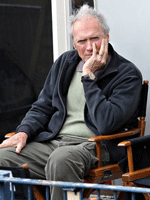
    Traditional media are responding to Clint Eastwood’s “Hereafter” even if early-bird web folks smacked it down after the first press screening of the film this weekend.  I think it’s safe to say that Richard Corliss and Roger Ebert rarely meet an Eastwood film they don’t like, but raves in Time magazine and the Chicago Sun-Times can go a long way in an awards season.
    Corliss seems to feel that “if you go with his new picture’s slow flow, and stick around for its rapturous resolution, you’ll see this as a summing up, a final testament of so many Clint characters, from The Man With No Name to Dirty Harry, from Million Dollar Baby’s Frankie Dunn to Gran Torino’s Walt Kowalski, for all of whom facing down death was a natural part of life.”

    Ebert, meanwhile, notes that the film “is made with the reserve, the reluctance to take obvious emotional shortcuts, that is a hallmark of Eastwood as a filmmaker” and that “Eastwood and his actors achieve a tone that never forces the material but embraces it.”

    (more…)

  • A note on Chabrol

    I wouldn’t even know where to start writing an obituary for Claude Chabrol, the French nouvelle vague master who passed away yesterday at the age of 80. His filmography is so vast — spanning 52 years and 54 features, many of which I have yet to see — and his influence so extensive that formal tributes are best left to those more learned than I.
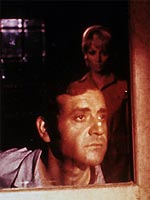
    Still, that’s not to say he hasn’t made a number of films that mean something to me, chief among them 1970’s “Le Boucher,” a character-study-as-thriller so perfectly and precisely formed it hurts a little to watch it. It was my first Chabrol, and indeed one of my first forays into the French arthouse canon, introduced to me in childhood by my dad — who counts it among his favorite films.

    I’ve inherited his affection: the film’s simple set-up — shy young schoolteacher  strikes up a friendship with a lonely village butcher who may or may not be a killer — is an undercoat for a deeply compassionate study of emotional repression and moral judgment, with a for-the-ages lead turn by his then-wife Stéphane Audran.

    (more…)

  • OFF THE CARPET: The year of the woman, take two?

    It wasn’t by coincidence that the three photos decorating the season’s introductory installment of this column two weeks ago represented lead actress contenders in the 2010 Oscar race. After all the talk of 2009 being “the year of the woman,” owing much to the number of female directors who found themselves in the mix (and inevitably leading to Kathryn Bigelow’s history-making moment at the Kodak), I’m sensing an even better argument for 2010 as a singular season for the fairer sex.
    Let’s start with the performances. By my count, there are already eight nominatable offerings from lead actresses this year (which contrasts drastically with a dearth of supporting hopefuls).  This is just going by what I’ve seen, mind you.

    For starters, Natalie Portman has dazzled the early festival season with her work in “Black Swan.” Lesley Manville, meanwhile (should she remain a lead focus), sets a high bar in “Another Year.” Despite my feelings on the film, Carey Mulligan really settles into a next-level groove in “Never Let Me Go,” and Jennifer Lawrence, of course (like Mulligan last year), has already become the year’s star-in-the-making story in “Winter’s Bone.”

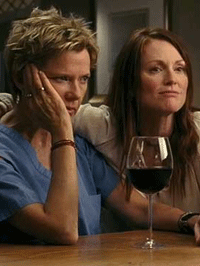
    Dovetailing with the performances themselves, there are also films that seem to reflect the theme in narrative. In “Secretariat,” for instance, Diane Lane capably (if a bit histrionically) portrays headstrong Penny Chenery, a woman of virtue in an era when she was expected to keep her head down and clean house. Similarly, Sally Hawkins absolutely kills as the Norma Rae-ish Rita O’Grady in “Made in Dagenham,” fighting for equal pay in a similar time (and she’s likely to be joined in the hunt by co-star Miranda Richardson for a fiery supporting turn). And we can’t forget the palpable feminism apparent in summer indie “The Kids Are All Right,” where Annette Bening and Julianne Moore both bring their “A” game.

    (more…)

  • ‘Mildred Pierce’ trailer

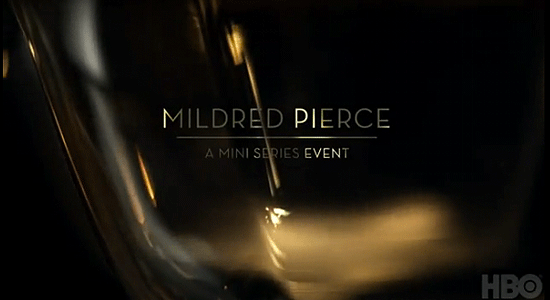
    Okay, this isn’t theatrical coverage, but one of the projects I’ve had my eye on for some time is Todd Haynes’s remake/re-adaptation of “Mildred Pierce.” It has been developed as a mini-series and looks incredibly striking, if viewed through a much different prism than Michael Curtiz’s original film.  Check out new trailer for the event after the jump.

    (more…)

  • 9/13 Oscarweb Round-up

    • Richard Corliss, clearly irritated by early Oscar buzz, comes down hard on “The King’s Speech” and seems to think it is “bad enough” to win the Oscar for Best Picture. [Time]

    • Colin Firth, meanwhile, responds to said Oscar buzz. [The Hollywood Reporter]

    • Regarding “Let Me In,” Stephanie Zacharek contends “like a piece of great music, a strong movie can withstand multiple interpretations.” [Movieline]

    (more…)

  • TIFF: ‘Barney’s Version’ returns home, raves for Giamatti

    Last night’s North American premiere of “Barney’s Version” in Toronto was something of a homecoming for the Canadian production — it was, of course, first unveiled on Friday at the Venice Film Festival, where its soft-centered middlebrow appeal rather stood out against the more rigorous auteurism of its fellow Competition titles.

    If Richard J. Lewis’s film proved too MOR to impress Quentin Tarantino’s jury (even Paul Giamatti, much fancied for the Best Actor prize, left empty-handed) it was nonetheless enthusiastically received on the Lido, earning sustained applause, and even a few whoops, at the industry screening I attended. You’d expect, then, its home audience to be similarly receptive, though word seems pretty quiet so far.

    Via Twitter, Anne Thompson echoes a view I expressed in my own positive review, saying that “if [Sony Picture Classics] play their cards right, Paul Giamatti could get an Oscar nom” for his performance as a dissolute, thrice-married TV producer. (She later adds that the film’s after-party was “lame,” but I’m sure she won’t hold that against him.)

    (more…)

  • TIFF: ‘Hereafter’ reviews reflect split opinions but indicate a potential Oscar player

    Yesterday’s knee-jerk reactions to Clint Eastwood’s “Hereafter” fell in the overwhelming negative following an afternoon press screening.  At the time, I noted that festival quick takes should be taken in context and that perhaps more measured responses could tell another tale.

    Well, the embargo lifted roughly 45 minutes ago.  Variety’s Justin Chang has fired off a mostly positive assessment that admits the film’s triptych of stories comes together “creakily” and that the film is “uneven,” but he seems to be willing to cut the filmmaker a little slack by appreciating the lax approach conveying the narrative.  The film is “a beguiling blend of the audacious and the familiar,” he writes, “but is armored against risibility by its deep pockets of emotion, sly humor and matter-of-fact approach to the fantastical.”

    Screen Daily’s Mark Adams, meanwhile, calls the film “a bold change of pace” for Eastwood, praising him for not “resort[ing] to any clever editing to tell the three parallel stories…those interested in a shrewdly made and well-scripted drama about loss and compassion will be intrigued and impressed.”

    (more…)

  • TIFF: ‘Brighton,’ ‘Virginia’ bow, ‘Super’ picked up

    At Toronto today, a hand handful of distribution-seeking films hit and one potential cult favorite found a home.  Let’s dig in…

    One film looking for a distributor that we’ve had an eye on as a potential awards play for supporting actress Andrea Riseborough is Rowan Joffe’s Graham Green’s  “Brighton Rock.” But The Hollywood Reporter’s Ray Bennett largely criticizes a “bloated score” that he says “overwhelms” the narrative.  But he had nice things to say about Riseborough by noting that she “adds to the film’s appeal.”  (See a new clip from the film after the jump.)

    The Jennifer Connelly-starrer “What’s Wrong with Virginia,” from “Milk” writer (and Oscar-winner) Dustin Lance Black, also screened.  Jeffrey Wells “didn’t give a damn about the angry rurals in Black’s world” and walked out of the screening.  The Film Stage’s Jordan Raup, meanwhile, called it “Solondz-lite,” and despite good things to say about Connelly’s performance, said the film “didn’t really come together.”  And Salon’s Andrew O’Hehir found it to be an unstable mix of “American Beauty” and “Blue Velvet.”

    And in the acquisitions department, James Gunn’s “Super” (which was well received at a midnight screening Friday night) has been picked up by IFC Films for its IFC Midnight banner.

    (more…)

  • VENICE: Arrivederci, and notes on the winners

    (Updated list of Venice award winners here.)

    If you were on the Lido to the bitter end of the festival — and closing with “The Tempest” made it a very bitter end indeed — last night’s Golden Lion win for Sofia Coppola’s “Somewhere” didn’t come as the shock it did to everyone else. In the closing days of the festival, a Chinese-whispers style rumor started circulating that Quentin Tarantino and many of his fellow jurors were besotted with the film from the get-go; at Friday night’s party for Tom Tykwer’s “Drei,” word that Coppola had been asked to stay in town for the awards ceremony spread fast. (I tweeted as much — don’t say I left you out of the loop.)

    But even if some of us got wind of it earlier than others, the news was still surprising when it landed. On the one hand, Venice has long been more receptive to more mainstream arthouse names than Cannes or Berlin — recent winners of the top prize include Darren Aronofsky, Ang Lee (twice) and Mike Leigh. On the other, “Somewhere,” which screened on the festival’s third day, didn’t seem to have much staying power in the critical mindset: I appreciated the film more than most, but the general consensus was that it was a likeable marking-time effort that seemed more likely to be recognized for Stephen Dorff’s breakout performance than the filmmaking itself.

    (more…)

  • TIFF: ‘Conspirator,’ ‘Everything Must Go’ bow, praise for ‘Dagenham’

    More from Toronto tonight, so let’s dive in…

    Robert Redford’s “The Conspirator” bowed this evening at a packed gala screening.  At Hollywood News, Sean O’Connell brings up the already-getting-tired 9/11 parallels (which started with Patrick Goldstein earlier).  He calls Redford’s casting decisions “questionable” but considers the film “a solid effort, a compelling legal drama and a determined character study that will please students of American history, modern and otherwise.”

    The Hollywood Reporter’s Kirk Honeycutt says it “feels like a television film” but that Redford “does a good job in developing the drama” and “the film largely rests on a character played with considerable emotional energy by James McAvoy.”  It’s a measured approval, in any case.  The film is still seeking domestic distribution.

    (more…)

  • TIFF: ‘Passion Play’ inspires vitriol, ‘127 Hours’ keeps it steady, Estevez/Sheen back again, ‘Dagenham’ screens

    Moving along at Toronto, it seems Mitch Glazer’s “Passion Play,” which was as much for the director since he spent 20 years trying to get it made, was hung right out to dry and that Mickey Rourke can be knocked off of anyone’s list of awards hopefuls.

    David Poland calls the film “epically bad” and even suggests that the potential for a Megan Fox nude scene was probably the only thing keeping people from walking out.  Cinematical and eFilmCritic’s Erik Childress did just that, however.  He couldn’t take it.  Meanwhile, at Voice Film, Karina Longworth says “it’s hard to imagine that anyone will take [the film] nearly as seriously as it takes itself.”  What can you say?  It’s never a happy moment when someone works so hard at something so quickly and summarily dismissed.

    On the other end of the spectrum, Danny Boyle’s “127 Hours, continues to be welcomed with open arms.  Filmmaker Magazine called it “typically bravura filmmaking from Boyle. Both a celebration and a critique of solitude.”  MTV’s Josh Horowitz says it’s “an emotional wallop,” the LA Times’ Steven Zeitchik thinks it “elevated far above [a] typical rescue story by Boyle’s eye for detail and strategically deployed flash” and The Playlist’s Kevin Jagernath calls it “one of the best films of the year.”

    (more…)

  • TIFF: ‘Hereafter’ underwhelms, ‘Let Me In’ bests original?

    I’ve been hearing for a couple of months now that Matt Reeves’s “Let Me In” is as good if not better than Tomas Alfredson’s original film (and a top 10 effort in my book), “Let the Right One In.” I won’t see it for another week or so, but early word out of Toronto dovetails with what I’ve been hearing.

    Jeffrey Wells says the film is “at least as good” as the original and that it is “carefully copied with a meticulous, unhurried, highly absorbing style.”  In fact, he eventually admits he liked it better this time around, largely because he was more impressed with Chloe Moretz than with Lina Leandersson.  MTV’s Josh Horowitz, meanwhile, Tweets, “It’s breathtaking and yes I think it’s better than the original.”  Variety’s Peter Debruge concurs, offering that the film “commands respect for not dumbing things down, offering classy, ‘Sixth Sense’-style crossover potential as it lures both genre suckers and fresh blood.”  And by the way, I’ve also been hearing that Michael Giacchino’s score could be something to watch for this season.

    Elsewhere, Clint Eastwood’s “Hereafter” had a press screening at the festival this afternoon in what I imagine was a claustrophobic 139-seat setting.  Official reviews are embargoed until tomorrow’s public screening, but I’ve got some disheartening reactions after the jump.

    (more…)

  • Underdog ‘Dagenham’ may have the AMPAS touch

    In Friday’s Oscar Talk, Anne and I pondered the Oscar potential of Sony Pictures Classics’ typically robust stable of contenders.  So far the best bet to have already hit theaters is Aaron Schneider’s “Get Low,” which could be a below-the-line play as well as a Best Actor possibility for Robert Duvall.

    Films from Rodrigo Garcia, Atom Egoyan and Jean-Pierre Jeunet all came and went, while Woody Allen’s didn’t inspire much at Cannes.  And that’s fine, by the way.  The business isn’t all about awards, obviously, and Sony Classics knows how to make money.  (There’s a reason the dependent is still standing tall.)

    If we properly assume “The Illusionist” will have its day in the animated feature category, while “Inside Job” will be relegated to the documentary field, that leaves three possibilities for Oscar success: Mike Leigh’s “Another Year,” the recently acquired “Barney’s Version” and Nigel Cole’s “Made in Dagenham.” The latter is perhaps the one to watch out for.

    This isn’t a revelation, of course.  Guy’s first stab at predicting this year’s Oscar set noted that “the Academy frequently likes its Britpics chirpy and digestible” and that Cole’s film was “getting ‘next Full Monty’ buzz on its way to a prominent launch at Toronto.”  Having seen the film last week, I have to say, I see his point.

    (more…)

  • VENICE: Sofia Coppola’s ‘Somewhere’ wins Golden Lion

    Festival jury president Quentin Tarantino announced that Sofia Coppola’s “Somewhere” was the unanimous choice for Venice’s top honor.

    The full list of festival winners (with commentary to follow later):

    Golden Lion (Best Film): “Somewhere” (review)
    Silver Lion (Best Director): Alex de la Iglesia, “A Sad Trumpet Ballad” (review)
    Special Jury Prize: “Essential Killing” (review)
    Coppa Volpi (Best Actor): Vincent Gallo, “Essential Killing” (review)
    Coppa Volpi (Best Actress): Ariane Labed, “Attenberg” (review)
    Osella (Best Screenplay): “A Sad Trumpet Ballad” (review)

    (more…)