In Contention

Author: Guy Lodge

  • Get a haircut and get a real job

    OK, so this story of Daniel Day-Lewis becoming the first person to receive the freedom of County Wicklow, Ireland, isn’t really of immense interest to anyone outside, perhaps, breathless followers of the Wicklow social scene. (My apologies to those of you reading.)

    But this photo of Day-Lewis certainly grabbed my attention, if only because of just how unnervingly normal he looks in it. He’s barely recognisable as the floridly coiffed bohemian dude who rocked up at the Academy Awards last February. I’m hazarding a guess that the cropped hair is for his Jesuit priest role in Scorsese’s “Silence,” but where are the pirate earrings? The oddball Paul Smith tailoring? And we can’t see them, but I’ll bet his shoes even match.

    I feel strangely let down. What next, Mickey Rourke in simple black tie? Let your freak flag fly, sir.

    from left: Wicklow council chairman Derek Mitchell and Daniel Day-Lewis

  • The professional

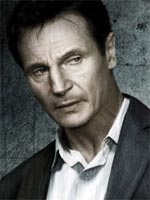
    Liam NeesonIt’s not as if we were short of reasons to admire Liam Neeson in the first place. The man is a remarkable actor, by all accounts an intelligent, decent human being, and even in the face of his wife’s untimely passing, has always managed to keep his private life laudably, well, private.

    But even by his own stand-up guy standards, Neeson went above and beyond the call by returning to the set of Atom Egoyan’s new thriller “Chloe” to complete his scenes, a mere week after Natasha Richardson’s death. A deeply impressed Egoyan says:

    “He was very committed to the film and finishing his role, and he didn’t need to come back that soon … But he really thought it would be best for the film, and it was just such an unspeakably generous thing for him to do. And he’s an extraordinary, extraordinary person.”

    As for the film itself, I must say I’m intrigued. Egoyan, Neeson (who co-stars with Julianne Moore and Amanda Seyfried) and ultra-left-field scripter Erin Cressida Wilson (“Secretary”) occupy very different artistic spheres in my mind — given the auteur’s patchy form of late, the combination could get messy. Still, together with Sundance winner “Five Minutes of Heaven” (in which he does sterling work), it indicates a move into the kind of gutsy arthouse territory Neeson hasn’t entered much in recent years.

    In any case, Neeson’s recent mini-comeback has been one of the more pleasantly surprising developments of the past year. “Taken,” for all its sleeper success, was a rote effort, while you may recall I was none too impressed with “The Other Man” — but it’s encouraging to see a 56 year-old thesp (and one who has always seemed more comfortable as an actor than a star) getting major leading-man roles. Meanwhile, “Lincoln” and “Clash of the Titans” await him. Score one for the good guys.

  • New stills and trailer for ‘Antichrist’

    Chances are it won’t net him the same level of mainstream kudos as “Slumdog Millionaire,” but a series of newly released stills for Lars von Trier’s “Antichrist” confirms that we can expect some pretty special work from Academy Award winner Anthony Dod Mantle. (How great does it feel to read those last six words, by the way?)

    You can view more stills here, but it’s the milky lighting and Brothers Grimm-style atmospherics of the following shot that really got my attention. Whether the film is straight-up, balls-out horror fare or not (and given Von Trier’s ever-defiant track record, I can’t help wondering if we’re being wrong-footed by the marketing here), it’s clearly going to be a thing of considerable beauty. Cannes can’t come soon enough.

    A second gorgeous still after the cut, plus a new (presumably European) trailer: the latter isn’t significantly different from the first, but it quickens my heart nonetheless.

    AntiChrist

    (more…)

  • The trouble with ‘Margaret’

    Anna Paquin in MargaretLast month, I discussed my frustration over the terminally delayed status of Kenneth Lonergan’s sophomore feature “Margaret,” while sharing a slender hope that linking of composer Nico Muhly to the project might bode well for its eventual completion.

    Unfortunately, an extended LA Times investigation into the matter suggests that “Margaret” is a long way from seeing the light of day — if that ever happens at all. John Horn’s interesting piece provides by far the most comprehensive breakdown to date of the factors delaying the film, and it doesn’t make for encouraging reading. With Lonergan apparently incapable of completing an edit that satisfies him and/or the film’s backers, “Margaret” is now deeply tangled in legal limbo.

    A number of producers and editors — including (Scott) Rudin, (Sydney) Pollack and Martin Scorsese’s legendary editor, Thelma Schoonmaker — have tried but failed to help Lonergan complete his movie, court documents and interviews show. With his financing from (Gary) Gilbert and Fox Searchlight cut off, Lonergan borrowed more than $1 million from actor and close friend Matthew Broderick (who has a small part in “Margaret”) in an attempt to complete the editing of the movie, according to a person close to the production.

    The film’s lengthy post-production sparked two lawsuits, which are scheduled to be tried in June and September. Last July, Fox Searchlight sued Gilbert and his production company, claiming he failed to pay the studio half of the film’s production costs. Two months later, Gilbert’s Camelot Pictures sued Fox Searchlight and Lonergan, alleging that the studio and Lonergan thwarted Gilbert’s many attempts to finish the movie, forcing Camelot to pay for “a clearly inferior and unmarketable film” that Lonergan, several people say, will not support.

    There’s a lot more messy detail where that came from, and the article lays it out better than I can. Horn also offers the bittersweet revelation that the troubled film buried beneath these unfortunate circumstances may well be worth saving.

    (more…)

  • Best Actor watch: Hal Holbrook

    Hal Holbrook in That Evening SunIn his roundup of highlights from the Nashville Film Festival, Nathaniel Rogers chalks up a highly plausible contender for Best Actor honours this awards season: Hal Holbrook in “That Evening Sun,” an indie debut feature from Scott Teems.

    Playing an 80 year-old farmer desperately trying to hang on to his land, Holbrook’s performance has already drawn praise at last month’s SXSW  fest, where the film won an ensemble award. Amid a rave for the film itself (“an exceptionally fine example of regional filmmaking”), Variety declared Holbrook’s turn the best of his career, calling it “a vividly detailed yet subtly rendered performance.” Rogers clearly agrees:

    It’s based on the short story by William Gay about a farmer who escapes the old folks home and returns to his beloved farm only to find it occupied by new tenants. The film is well directed by Scott Teems, graduating from short films to his first feature, and an Oscar campaign could materialize for Holbrook if this movie gets a solid enough release. Holbrook plays a stubborn old ornery codger… one could say it’s an Eastwoodish role with less of Clint’s squinty menace and more of Hal’s weary sensitivity.

    There’s a theory I can absolutely buy into. From Richard Farnsworth to Richard Jenkins, the Academy has shown a soft spot for veteran character actors in gentle independent dramas, while their affection for Holbrook was made clear last year when they nominated him for a film they otherwise couldn’t have cared less about. Hell, in a weaker year, he could easily have won. (On a trivial note, the 84 year-old thesp could beat his own record as the oldest male acting nominee.)

    No indication yet of what kind of release the film might enjoy, but it sounds like one to keep an eye on. Powerful trailer after the cut.

    (more…)

  • Switching channels

    Women on the Verge of a Nervous BreakdownIt’s been a full two decades since “Women on the Verge of a Nervous Breakdown,” Pedro Almodovar’s engagingly ramshackle, day-glo farce with a baldly self-explanatory title, garnered the then enfant terrible of European art cinema his first Oscar nomination and put him on the road to crossover respectability.

    Twenty years, ten films and two Oscars later, the auteur’s mainstream gentrification is complete, with the rather bizarre news that an Almodovar-produced TV drama series based on “Women” is in the works for Fox. Completing one of the odder talent pairings in recent memory, a pilot is being penned by “Grey’s Anatomy” scribe Mimi Schuir. Allow me a moment for that to sink in.

    It’s not that I mind Almodovar being embraced by a broader medium — to do so would be akin to those tiresome underground music fans who turn on their favourite bands the second they receive a smidgen of radio play. I’m actually pretty thrilled to see such a challenging, eccentric filmmaker finding this level of pop influence; if it brings new audiences to his rougher, earlier work, so much the better.

    Moreover, Almodovar’s ascendancy to the title of ‘America’s favourite Euro auteur’ has, by and large, been achieved by audiences adjusting to his sensibility rather than the other way round. (I would venture that “Talk To Her” is the most quietly subversive Best Original Screenplay of all time.) That he continues to alternate warm, humanist audience-pleasers like “Volver” with more probing, sexually contentious fare like “Bad Education” proves he’s no less audacious a filmmaker than he was in his early days — just a more mature and technically proficient one.

    (more…)

  • ‘Funny People’ an ‘award-level thing?’

    Adam Sandler in Funny PeopleI don’t mind admitting that I wasn’t entirely won over by the trailer for Judd Apatow’s “Funny People,” which, for all its smartness, seemed to me a little too calculated in its bid for laughing-through-the-tears pathos. Like pretty much everyone else, James L. Brooks struck me as an obvious point of reference — but whether we were talking Brooks on a good or bad day was unclear to me. It’s just a (very long and over-expository) trailer, after all.

    Now Jeff Wells has chatted to a couple of folks who have seen it, and is passing along the word that Apatow has seemingly channeled Brooks on a very good day indeed. Awards-season good, even:

    Possibly an award-level thing, a director friend said this morning, although he was just passing along the chatter. It’s more in the realm of Sandler for Best Actor and Apatow’s script for Best Original Screenplay, he speculated, than a Best Picture shot…but you never know.

    So I called a non-vested guy who’s seen it, and here’s what he said: “Really funny, a really sweet movie, a lot of veracity…really a brilliant film. Everybody’s game goes up a lot. It’s a James L. Brooks-level thing and a great role for Adam. It’s a perfect blend of everything Sandler has done in a serious vein. The film could be a bit of a marketing problem because it’s about show business but it’s so real.. It’s about a famous guy, a comedian, having to deal with the fact hat he has no life and nobody to turn to. But he gets better [through a relationship with a younger comic]…it’s basically a love letter to having a family.”

    No specific mention of Leslie Mann, who struck me on paper as the film’s likeliest awards prospect, but that was a shot in the dark. Anyway, I seem to recall hearing near-identical chatter about “Spanglish” before it finally surfaced, so I’ll remain guarded. (I’m expecting something better than that fiasco, of course, but I’m just sayin’.) Encouraging buzz, nonetheless.

  • Visions of ‘The Road’

    Out there was the grey beach with the slow combers rolling dull and leaden and the distant sound of it. Like the desolation of some alien sea breaking on the shores of a world unheard of. Out on the tidal flats lay a tanker half careened. Beyond that the ocean vast and cold and shifting heavily like a slowly heaving vat of slag and then the grey squall line of ash.

    No adaptation this year is as dependent on matters of location and production design as John Hillcoat’s take on Cormac McCarthy’s “The Road,” a novel in which landscape is the narrative’s dominant antagonist. If the film can’t visually evoke McCarthy’s tangible sense of the familiar made alien through desolation, then it’s dead in the water.

    On the other hand, the sparsity of McCarthy’s prose leaves a lot of room of visual interpretation — contrary to what some have suggested, the novel is a highly cinematic work. So I’m intrigued by this gallery of conceptual “style frames” for the film, a collection of paintings, sketches and photo montages that give a vivid sense of the story world Hillcoat and his team have come up with. And on this evidence, at least, it looks to me like they’ve nailed it:

    The Road

    A couple more of my favourites after the cut. Check out the full collection here.

    (more…)

  • Coppola goes to Cannes after all

    Francis Ford CoppolaAfter turning down an out-of-competition slot at Cannes earlier this week, it seems Francis Ford Coppola has had a change of heart. Variety reports that his new film, “Tetro,” will open the festival’s Directors’ Fortnight on May 14, marking the much-awaited film’s world premiere.

    The addition of Coppola adds some welcome lustre to a sidebar that frequently gets unfairly neglected in favour of the Official Selection (where “Tetro” was previously offered a place). The Director’s Fortnight may also attract attention for showcasing significantly more US talent than the selection of competition films announced yesterday, which included a mere two American titles (and only one from a Yank filmmaker, at that).

    In contrast, five American features make the Fortnight lineup, including Sundance talking-points “Humpday” and “I Love You, Philip Morris.” (Meanwhile, Lee Daniels’ much-garlanded Sundance sensation “Precious” (AKA “Push”) will appear in the Un Certain Regard strand of competition.

    Though the media focus tends to remain on the 20-odd films up for the Palme d’Or, Cannes runs far deeper than that. Some have complained that yesterday’s competition lineup, with its high quotient of previous winners and established auteurs, feels a bit too safe and insular (though “safe” hardly seems an apt adjective when the likes of Gaspar Noe and Lars Von Trier are involved), but it’s not just new talent lurking in the sidebars.

    (more…)

  • Mixed-to-positive notices for ‘Whatever Works’

    Evan Rachel Wood in Whatever WorksEven with the success of “Vicky Cristina Barcelona” having partially righted the course of Woody Allen’s career, I can’t help holding my breath when the reviews roll in for his latest effort. Few auteurs inspire more haphazard uses of the term “return to form” (roughly applied to anything that doesn’t go completely off the rails from the word go), with so many critics seeming to forget that Allen’s best form is, well, anyone’s best form. (“Vicky” was a delight, to be sure, but Barcelona is a long way away from “Manhattan,” if you will.)

    In the case of “Whatever Works,” which just opened the Tribeca fest, the trade reviews — while uniformly encouraging — vary between gently disciplining expectations and wildly inflating them. Performing the latter task is David D’Arcy’s all-out rave in Screen International,which declares the film Allen’s best in over a decade:

    Writing a New York story and shooting at home has given Allen a sureness to his voice. The dialogue here has a familiar ring yet a crackling freshness … Whatever Works transcends Allen formulas thanks to David, who is taller, balder and more foul-mouthed than the usual types Allen himself has played. Spitting out his lines, David finds a deeper nastiness here than the everyday bile of his character on the autobiographical Curb Your Enthusiasm. Allen does wonders with a character who isn’t seeking to be loved.

    (more…)

  • Almodovar, Campion, Lee in Cannes lineup

    Abbie Cornish in Jane Campion's Bright StarThe official list of films competiting for the Palme d’Or at next month’s Cannes Film Festival is out, and while it’s not a very surprising list — it’s been a given for some time that “Inglourious Basterds,” “Broken Embraces” and “Antichrist,” among others, would be in the mix — it still an exciting one, packed to the gills with auteur works from both regular visitors (Michael Haneke, Ken Loach) and long-absent ones (Jane Campion, Alain Resnais).

    I’ll dig into the selection in more depth later, but for now, here’s the list:

    “Broken Embraces” (Pedro Almodovar)
    “Fish Tank” (Andrea Arnold)
    “Un Prophete” (Jacques Audiard)
    “Vicenre” (Marco Bellocchio)
    “Bright Star” (Jane Campion)
    “A L’Origine” (Xavier Giannoli)
    “Map of the Sounds of Tokyo” (Isabel Coixet)
    “The White Ribbon” (Michael Haneke)
    “Taking Woodstock” (Ang Lee)
    “Looking for Eric” (Ken Loach)
    “Spring Fever” (Lou Ye)
    “Kinatay” (Brillante Mendoza)
    “Enter The Void” (Gaspar Noe)
    “Thirst” (Park Chan-Wook)
    “Les Herbes Folles” (Alain Resnais)
    “The Time That Remains” (Elia Suleiman)
    “Inglourious Basterds” (Quentin Tarantino)
    “Vengeance” (Johnnie To)
    “Face” (Tsai Ming-liang)
    “Antichrist” (Lars Von Trier)

  • Ma belle

    Michelle Pfeiffer in CheriWhile I’m on the subject of Gallic-flavoured Best Actress contenders, I usually try not to get too invested in an individual’s awards hopes before I’ve seen the film carrying them, but I must admit to one sentimental wish this year: that Michelle Pfeiffer and “Chéri” will live up to the delicate beauty of their source material, and in that event, that Pfeiffer will be duly rewarded for her pains.

    Not to step on Nat Rogers’ toes, but we all have a fantasy list of people we want to see receive an Oscar one day — and nestled among the diverse likes of Mike Leigh and Samantha Morton, Pfeiffer is near the top of mine. Partly, I confess, because she was my first cinematic crush (I was nine, and our first date was “Frankie and Johnny”), but more because of the hope that an overdue career celebration might coerce her into working more often, and casting directors into offering her more tempting bait. (Why should Meryl Streep be the only woman headlining films in her fifties?)

    2002’s undervalued “White Oleander” offered an intriguing glimpse of how the actress’s advanced years actually added nuance and fragility to her trademark froideur; “Chéri,” if played right, should do the same, and then some.

    All of which is a long-winded way of pointing you towards this excellent interview with Pfeiffer in today’s Guardian, in which Geoffrey Macnab pays due tribute to her skill and versatility (I love his suggestion that she venture into the Western genre), and the actress explains that “Chéri” is a more complex beast than the bonbon depicted in the trailer:

    “The scope of the movie turned out to be bigger than any of us had realised at the beginning. We were on a limited schedule, but when you see the film, the scope of it is huge. Usually, you have a couple of scenes where you might have pages of dialogue – but this film, every scene was five, six, seven or eight pages of dialogue. It took a tremendous amount of concentration.”

    (more…)

  • Strong notices for Tautou in ‘Chanel’

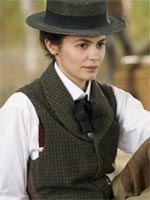
    Audrey Tautou in Coco Avant Chanel2008’s slate of eventual Best Actress nominees may not have been the strongest of recent years, but it was certainly the most predetermined. Months before anyone had seen even a frame of their films,  it was accepted wisdom that Meryl Streep, Angelina Jolie and Kate Winslet (for something, at least) would be invited to the ball.

    This unusual star-focused stranglehold (in an unusually crowded field) made it that much harder (and ultimately impossible) for critics’ darlings like Sally Hawkins or Kristin Scott Thomas to gain a slot.

    This year, however, sees a return to the usual terrain of questionmarks in the field, with the usual regrettable paucity of female star vehicles on the horizon. (Only “Amelia” smells like Oscar catnip, and it smells a little funny to me.) Can Michelle Pfeiffer and Meryl Streep score veteran nods for comedy vehicles? Could either Gabourey Sidibe or Saoirse Ronan become only the second teenaged nominee in the category’s history? Which film, if any, will turn out to be Helen Mirren’s awards pony?

    With the most early buzz centred on an ingenue few have yet heard of (that would be Carey Mulligan), it’s looking like a year of few sure things from a distance, which is the way I like it. (Of course, I could be completely wrong — I bow to certain other folks’ expertise in this field.)

    So with the race so delicately poised at this early point, it’s interesting to see one of the few supposedly baity contenders passing the initial critical test. On paper, Audrey Tautou’s performance in “Coco Before Chanel” has a lot going for it. Nobody needs to be reminded of the Academy’s fondness for biopics (but just for the record, 7 of the last 10 Best Actress winners played real-life figures), and they aren’t exactly averse to pretty period pieces either.

    (more…)

  • A friendly recommendation

    I’m not in the habit of imploring people to go see things — much like organic breakfast cereal, specialist cinema is tastier when you haven’t persistently been reminded how good it is for you — but I must make an exception on behalf of Paolo Sorrentino’s cracking political bio-thriller “Il Divo,” which opens Stateside on Friday (and is still on limited release across the pond).

    I feel it necessary to mention the film because, for all its widespread acclaim, the press for the film tends to depict it as a far harder sell than it really is. I’ve lost count of the number of critics I’ve read referring to the film’s intense grounding in the intricacies of Italian politics, hardly a surefire way to lure even the subtitle-schooled crowd.

    What they largely fail to mention, however, is that this wildly paced, darkly comedic film requires little to no previous knowledge of — or interest in — the figures at its centre to register as entertainment; it’s actually a more accessible, populist work than its ethnic and aesthetic peer “Gomorrah.” “The Consequences of Love.” As I wrote in my October capsule review (and my “Best of 2008” roundup, where it narrowly missed my Top 10), prime Oliver Stone is the closest point of reference here.

    The following trailer is fairly crudely assembled (the film itself is a technical dazzler), but it captures “Il Divo’s” whip-smart energy rather better than much of the media has. As a South African yogurt brand once advertised: “Try it. You might love it.”

  • You said it, not me

    Sandra Bullock in CrashSo, what does Paul Haggis have to say about the recent revelation that “Crash” (not the 1996 Cronenberg film, surprisingly enough) has remained the most rented film on Netflix since September 2005?

    “I have no idea why anyone went to see the movie in the first place, let alone rent it.”

    Truer words, etc, etc. But snarkiness aside, Haggis has a fair point here: the film was never meant to be any kind of phenomenon. Whether by calculation, alchemy or sheer good fortune, it happened to resonate with certain audiences upon its spring release four years ago — and if those Netflix numbers are anything to go by, it still does. Credit where it’s due.

    Academy voters thrust a weighty reputation onto this slender film that forever altered the way audiences would approach it, and I’ve long been unsure how it would support that weight. For my part, I disliked “Crash” immensely when I saw it in the summer of 2005, but I didn’t resent it the way I do today — though the fault there lies with me, not the film.

    “Crash” is a fascinating case study of the way the public’s relationship with art can shift with time, but the film’s evident popularity on DVD suggests that the relationship is more in flux than its detractors may have guessed.

    (more…)

  • Coppola turns down Cannes

    TetroNow here’s a curious strategic decision. Having been offered the chance to unveil his much-anticipated “Tetro” in an out-of-competition slot at Cannes, Francis Ford Coppola has responded with a polite “thanks, but no thanks”:

    “While I very much appreciate the invitation, this is an independent film, self-financed and self released, and I felt that being invited for a non-competition gala screening wasn’t true to the personal and independent nature of this film,” Coppola said in a statement released late last week. “More important than Cannes, our team can focus all our time, energy and resources into the US release this June 11th.”

    Coppola is instead opting for a considerably more low-profile bow at the Seattle Film Festival. What gives? Perhaps he just wants to avoid the pressure of a major festival environment: the Cannes crowd can be notoriously hostile towards auteur works that don’t meet certain expectations. (Just ask Coppola’s own daughter.)

    But they can also be welcoming towards veteran filmmakers looking to rediscover form, particularly in the more relaxed out-of-competition strand — Woody Allen has twice benefitted from such platforms in recent years. Considering that “Tetro,” an Argentinian-set family saga headlined by Vincent Gallo and Maribel Verdu, doesn’t sound like the easiest sell in the world, I’d say the Cannes exposure could have done it some good — but maybe Coppola knows something we don’t.

  • Far from heaven

    Ever since it was announced that Peter Jackson had succeeded Lynne Ramsay at the helm of “The Lovely Bones,” I have been hopeful that the project would see him veer closer to the eerie understatement of “Heavenly Creatures” than the extravagant kitsch of “The Lord of the Rings.”

    The premise of Alice Sebold’s novel may indicate delicate drama, but its fantastical elements need a light touch to avoid tipping over into gauzy sentimentality. (We will, of course, be discussing the novel in our Page to Screen series, which starts next month.)

    So I’m pleased to read, in USA Today’s chat with the filmmaker, that restraint appears to be high on his agenda. Though he rightly picks up on the redemptive aspects of Sebold’s narrative (“Susie holds on to love, and by doing so, she transcends the horror of her murder”), he’s wisely taking an open-ended cinematic approach to the issue of the afterlife:

    “It’s God-less in the sense that when Susie dies, she finds herself caught in a place between Earth and heaven — she is in an ‘In-Between,’ as Alice Sebold calls it.” When she moves on, “we’re happy for audiences to imagine this new world in whatever way makes them comfortable.”

    Empire, meanwhile, offers a still that provides an intriguing glimpse of this ‘In-Between’ world. I’m feeling more and more optimistic about this.

    Saoirse Ronan in The Lovely Bones

  • Rock me gently

    Anvil! The Story of AnvilAlong with a lot of viewers, it seems, Jeff Wells has fallen hard for the sweetly sad rock documentary “Anvil! The Story of Anvil” — and demands that the Academy take notice:

    How can Sacha Gervasi’s Anvil! The Story of Anvil not wind up being nominated for Best Feature Documentary Oscar? It’s got heart, it’s about over-the-hill, down-on-their-luck artists getting their groove back, it’s well made, it’s connecting with audiences, it’s funny, it’s lowbrow-highbrow. How can Academy’s doc committee ignore it?

    Who doesn’t love Anvil!?

    Yours truly, for one — though I wish I did. Much like Ramin Bahrani’s “Goodbye Solo,” which I discussed recently, I saw “Anvil!” in a festival context last autumn, kinda liked it, completely forgot about it, and am now a bit befuddled by the rapturous critical reception it has received.

    I’m not completely resistant to its charms — as I wrote back in October, it’s a witty, compassionate piece of work with a keen eye for absurd detail. What it didn’t succeed in doing was to make me care more than fleetingly about the affably deluded, self-oriented figures at its centre; not having much interest in their music, I didn’t find the band members particularly compelling as personalities either, which for me meant the film never rose above the anecdotally diverting.

    Perhaps I need to give it another go. But if there aren’t five better documentaries released in the course of 2009, I’ll be both surprised and a little disappointed. In the meantime, feel free to tell me what I’m missing.