And it’ll blow past $100 million. Already noted, but hooray for the genre. Also, the “Black Swan” haul cannot be understated.

(Courtesy: Exhibitor Relations)
And it’ll blow past $100 million. Already noted, but hooray for the genre. Also, the “Black Swan” haul cannot be understated.
(Courtesy: Exhibitor Relations)
 Catch up with the idea behind these weekend posts here.
Welcome to 2011.
I’m back in Los Angeles (missed the crazy weather on this side of the country) and happy to be home after a two-week vacation that really turned out to be anything but. Such is life. And the season is waiting to take hold once more with guild announcements starting Tuesday, so I better put my game face back on.
There isn’t much to offer in this space today, though if you’re interested, I took a number of Jack and Cokes straight to the face on my flight last night, celebrated the new year three times (time zone changes) and took to Twitter to live-Tweet “Inception” for a solid two and a half hours. Twas fun.
I revisited the “Alien” franchise during the holiday, taking in the glorious Blu-ray box set. That’s a must own, I have to say. And there’s this “Aliens vs. Predator” video game on PS3. If you haven’t played it, give it a whirl. There’s something badass and ninja about creeping around as an alien taking out marines. You can play as the Predator, too. Awesome.
 [Guy’s updated predictions here.]
Okay, I won’t lie to you: I initially conceived this column in my head last week as a Christmas Eve wishlist, but then got too busy mulling wine and Christmas shopping in Dublin snowdrifts to actually write it.
So a New Year’s Eve wishlist it is, then. Under either name, with the season currently in stasis until January’s Guild awards usher in the next phase of competition, here’s a list of ten open requests (or distant hopes) for Academy members currently hemming and hawing over their ballots.
Go forth into the world: Okay, I’ve given up my fight for a foreign-language Best Picture contender for yet another year. And despite a banner year for the form, a documentary nominee ain’t happening either. But is it too much to ask the Academy to recognize that not all notable filmmaking happens within U.S. borders? We’re looking at the sad likelihood of 90% of the Best Picture race being given over to American productions, with the lone exception, “The King’s Speech,” about as authentically British as a “Mind the Gap” T-shirt. Wouldn’t “Another Year” or “Animal Kingdom” be slightly more interesting stamps in Oscar’s passport?
 I gave the Coens’ “True Grit” another look last night with the family. Hailee Steinfeld’s commanding presence alongside a scenery-chewing Jeff Bridges was as striking as ever. I’d be lying if I didn’t say my biggest Oscar wish this year is that the Academy’s acting branch sees the performance for what it is: a leading lady showcase. But we’ll just have to see.
As for the film, it’s as rich as ever and takes on more textures each time I give it another look. I can easily see it ultimately being more of a fixture in my DVD player than most other 2010 entries, but it’s really the reverence for Charles Portis that continues to be so rewarding. There is no question in my mind that the Coens found the thematic pulse of the material more absolutely than Henry Hathaway’s original hokey take.
Writing in The New York Times, literary theorist and legal scholar Stanley Fish seems to be in total agreement. And of all the items I’ve come across in response to the film these last few weeks, I’d have to say, for me, it has the most complete understanding of what’s lurking between the lines.
 • Your favorite Pixar characters soon to grace postage stamps. [USPS]
• “Inception” tops 2010’s list of most-tweeted movies. [The Independent]
• Neville Page on his part in designing “TRON Legacy.” [The Wrap]
 • Golden Globes tension as Dick Clark and HFPA fued over contract. [The Wrap]
• Justin Timberlake gets a prestigious Harvard award. [Pop Eater]
• Anne Thompson on the obstacles her #2 film of the year, “The Kids Are All Right,” will face with the “steak eaters.” [Thompson on Hollywood]
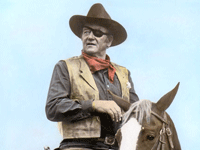 • The Duke or The Dude? Which Rooster has more true grit? [Entertainment Weekly]
• Russ Fischer has the music video for Jonsi’s “Sticks & Stones” from “How to Train Your Dragon.” [/Film]
• Brendon Connelly runs down all of the “Toy Story 3” ads so far featuring the “Not since…” campaign. [Bleeding Cool]
 • Steve Pond offers his perspective on the Best Original Song race. [The Odds]
• Jack Giroux talks “Rabbit Hole” with star Sandra Oh. [Film School Rejects]
• Michael Cieply reveals how a shrewd publicity executive rigged the game in the favor of “True Grit” the first time around. [New York Times]
“True Grit” looks to end up the highest-grossing western since “Unforgiven,” and hopefully a box office bump from a number of Oscar nods will be nice. Whew.
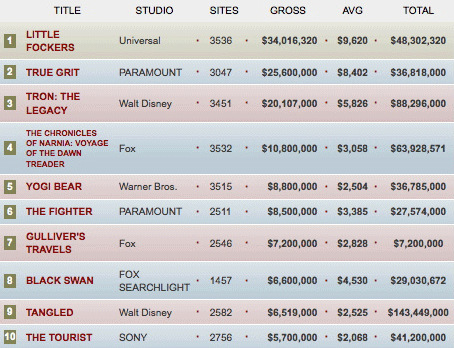
(Courtesy: Exhibitor Relations)
 Catch up with the idea behind these weekend posts here.
Granted, Christmas isn’t universal, but is anyone making it to this page between the turkey and ham and mistletoe and Darlene Love? If so, we thank you for squeezing IC into your holiday craziness (though we all know you’re just ducking the relatives for a few minutes).
I don’t have much to chew on for you, though I suppose 2008’s collective of my favorite Christmas films is always good fodder around this time of year. I just watched “Jingle All the Way” again earlier this week. Every time, I can only ask myself, “Why did I do that?”
BUT, if you haven’t delighted in this one, I suggest you Netflix Instant watch that sucker NOW.
Anyway, I’m in snow-covered Ohio with the future in-laws (and having grown up as an only child, seeing a tree with four kids’ worth of presents underneath is a unique sight to say the least). I was stoked to be met with a White Christmas for, I think, the first time in my life. And the drive up from North Carolina: GORGEOUS.
 We’re wrapping things up today with a final look at the below-the-line of Joel and Ethan Coen’s “True Grit” and a chat with production designer Jess Gonchor.
You might recall our interview with Gonchor from last year when he mentioned how he first came to work with the Coens (on 2007’s “No Country for Old Men”). The brothers had been very impressed with what they saw on Bennett Miller’s “Capote” and liked what he brought to the table. Gonchor had already shown his value as art director on films like “Kate & Leopold” and “The Last Samurai,” but “Capote” was his first stab at being the head of the art department as production designer.
Four films later the collaboration is still going strong as Gonchor has settled in nicely with the Coens’ family of craftsmen and women, and “True Grit” might be the apex of that work so far. Any designer would delight in working on a western, but the attention to detail in Gonchor’s work, and particularly in the work of his set decorator, Nancy Haigh, is truly wonderful.
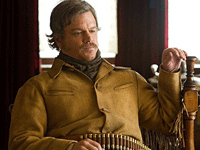 • The 15 greatest mustaches in Coen brothers history. [Vulture]
• The Gurus o’ Gold get their last licks in before the new year. [Movie City News]
• Betsy Sharkey writes up the 10 most overlooked films of 2010, and yes, it’s a valid point to put the nearly $300 million worldwide grosser “Shutter Island” on there. [Los Angeles Times]
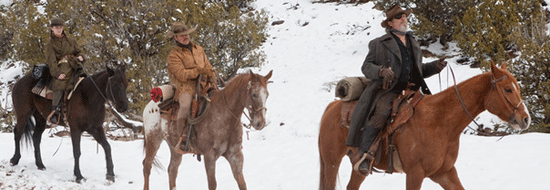
I had no time to post this up yesterday, but it’s time you had your say on the Coen brothers’ latest. I am a big fan, of course, and a bit predisposed, given my love for the genre. But rattle off your thoughts in the comments section below if you get a chance to see it over the holiday.
 Nearing the end of our week-long series of interviews with the below-the-line talent of Joel and Ethan Coen’s “True Grit,” we’re talking today with the film’s composer Carter Burwell.
Of the entire Coen crafts family, Burwell is one of the true veterans. He goes way back with the brothers — all the way back, in fact, to their directorial debut, “Blood Simple,” in 1984. Save for “O Brother, Where Art Thou?,” which featured an assemblage of pre-existing musical selections, Burwell has contributed an original score to each of their films.
With “True Grit,” the task was unique despite music having always been quite integral to the genre. Rather than whip up a completely original score from beginning to end, Burwell and the Coens decided to base a lot of the music on hymns of the period (though there is still a good deal of original music in the film — music unceremoniously ruled ineligible for Oscar consideration by the music branch of the Academy this year).
 • Anne Thompson talks with “The Way Back” director Peter Weir. [Thompson on Hollywood]
• Nathaniel Rogers charts Oscar’s age preferences. [The Film Experience]
• Melinda Newman sits down with “True Grit” and “TRON Legacy” star Jeff Bridges. [Awards Campaign]
 The Coen brothers’ “True Grit” opens nationwide today. And we’re continuing right along with our daily look at the below-the-line talent of the film with director of photography Roger Deakins.
Deakins has been with the Coens for nearly 20 years, going all the way back to “Barton Fink” in 1991. It’s fair to say his style and tendencies as an artist have become married to the Coens’, forging an identifiable texture to their work together.
But a lot of that general stylish flourish took a backseat on “True Grit,” allowing for a much more simplified rendering of the film’s imagery. I’ve talked to Deakins a couple of times over the years and he’s rarely one to pour sound bytes onto an interview, but it’s always a great and enlightening discussion regardless. I keep linking to last year’s interview with these guys regarding “A Serious Man” to hopefully shed more light on their process working with the Coens.
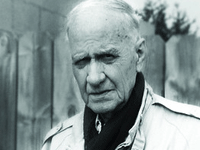 • On the language, cult following and press-shyness of reclusive “True Grit” author Charles Portis. [Speakeasy]
• Mike Leigh discusses “Another Year” and why he’ll never make a superhero movie. [Movieline]
• “Avatar” tops list of 2010’s most pirated movies. [New York Post]
 Continuing today with our week-long look at the below-the-line elements of the Coen brothers’ “True Grit,” we’re chatting with sound re-recording mixer Skip Lievsay.
Along with Carter Burwell, Lievsay is one of only two of the individuals we talked to who goes all the way back to “Blood Simple” with the Coens. What that says to me is that these filmmakers have maintained a sense of sonic consistency in their films over the years and put plenty of thought into the overall sound experience.
Lievsay was finally recognized by the Academy in 2007 for his and his collaborators’ work on “No Country for Old Men,” an understated piece of work that was fortunately not overshadowed completely by large scale productions that year. This year he delighted in tackling one of his favorite genres: the western.