 When I first addressed the race for Best Art Direction in August, I spoke of how the branch tends to favor period pieces and fantasy films. Considering the research involved in the former and the often showy creativity on display in the latter, this is hardly surprising.
That said, I often feel badly for exceptional contemporary films that have been slighted here in the past. Examples from this decade immediately popping to mind include David Wasco’s tremendously clever sets for “The Royal Tenenbaums” and Alex McDowell’s ultra-realistic airport design on “The Terminal.”
While many of the titles in contention are the same over two months later, the race has nevertheless undergone some significant changes. Primarily this is because many of the films have opened, been unveiled at festivals and/or revealed glimpses via trailers and other materials.
At the top of the list, still, is Rob Marshall’s “Nine.” John Myhre won this category on both of his previous two collaborations with Marshall. Dabbling in the world of Fellini seems like the perfect opportunity to grab his fifth nomination.
While the “Sherlock Holmes” trailer has been around for a while, the verdict is still out on the latest film from Guy Ritchie – a director whose work to date has hardly been typical AMPAS fodder. Nevertheless, Sarah Greenwood has been nominated twice before for capturing period England, Joe Wright’s “Pride & Prejudice” and “Atonement” doing the trick. She’ll be doing the same here, albeit on a much larger scale. A nomination seems a distinct possibility in my opinion.
 As I
 As more films have been unleashed, the race for the visual effects Oscar now appears clearer than it did
 Since I last analyzed the costume design category
 Back in July, I took an
 •
 Almost three months ago, I described how our cinematographers bring movies to life, by lensing the director’s vision, the actors’ performances, the production designer’s and the writer’s mood, just to begin. In the absence of these talented individuals, there would truly be no cinema.
 With Venice and Toronto behind us, the time has come to re-evaluate where the race stands in the crafts categories.
 “Make me look good.” While this might seem a vain phrase, in the context of a movie, makeup cannot only make an actor “look good” but it can capture the character and transform the performer, providing invaluable assistance in reaching the “truth” in the portrayal.
 As long as humanity has been recording history, music has been immensely important in society. Not only can it be joyous and entertaining, but it can capture the mood and feel of a time and a place. Cinema has been no exception in this regard.
 A few weeks ago I analyzed the Best Sound Editing category, which awards the creation and integration of artificially created sound effects. Today, we look at sound mixing – the overall composition of all the elements of a movie’s soundscape into a singular soundtrack. The re-recording mixers, who do this work during post-production, are rewarded alongside the production sound mixer, who captures the sound on set.
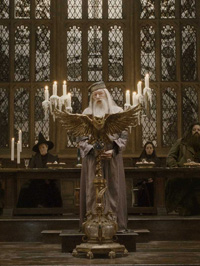 Sets and props can create a time period, an era or simply the feel of a scene. And the individuals involved in this process are awarded by the Academy in the category of Best Art Direction.
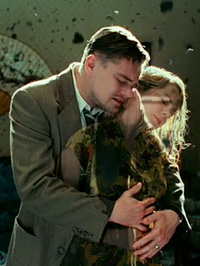 Best Achievement in Film Editing. It’s a difficult phrase to define. To a large extent, excellence in film editing can be editing which blends into the film, allowing the director’s vision, screenwriter’s story and actors’ performances to shine without interference. But equally, a film that stands out as a showcase for flashy but motivated construction deserves recognition as well.
 “How did they do that?” Movie-goers often ask this in response to spectacular visual effects, one of few elements of a film, apart from acting, directing or story, that a studio might choose to sell a film directly on.
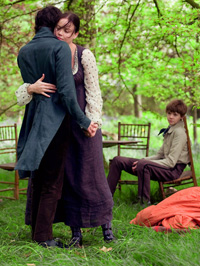 Movie stars are often given much attention for the fashion that they sport off-screen. Seldom does the on-screen attire garner as much publicity.
 •
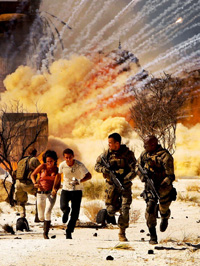 Zoom. Smash. Bang. Grunt. Zap. Splash. Screech.
 •