It was June 29, 2001. I was in film school. I opened the local paper, read my friend, the film critic’s, review of “A.I.: Artificial Intelligence,” Steven Spielberg’s distillation of a project he and legendary filmmaker Stanley Kubrick had developed together for years.
I was nervous. I had, for one, hit a post-adolescent anti-Spielberg stretch (which I fully own as childish, but attribute in part to my feelings on the “Saving Private Ryan” vs. “The Thin Red Line” situation of a couple of years prior). Like any cliched film school student, I was a Kubrick obsessive. I wanted this to come off without a hitch.
The review was positive. Not an all-out rave, but enough to really get my hopes up. I hit the first matinee of the day, bells on, ready. The film washed over me and it didn’t connect. Something felt off. I heard the film, but I didn’t listen to it (to paraphrase, of all things, “White Men Can’t Jump”). So I adopted early on an attitude toward the film that I soon would understand as limited even if it wasn’t ill-considered.
Fist to the table with granite resolve, I demand the final screen of these animated visions of Stanley Kubrick’s long list of milestone works (cleverly mounted by Martin Woutisseth) be whipped up into classy, large-ish posters, particularly the one below. Everyone else can have their Tyler Stout geek-out works (also nice, but if you’ve seen one…). I want these puppies. Bummer about the typos, though.
Click the image below for a unique trip down memory lane.
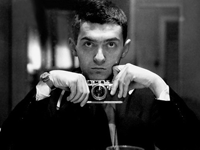
It was interesting this morning to see Robert Duvall’s recent comments on Stanley Kubrick’s process with actors making the rounds. Duvall chimed in with trademark candor at The Hollywood Reporter’s Actors Round Table when the issue of exhaustive takes came up. “The Social Network” director David Fincher is known for doing quite a few, and Kubrick was infamous for it.
The actor called the work of Kubrick actors “the worst performances I’ve ever seen in movies” and even went so far as to call the director an “actor’s enemy.” I’d maintain that Kubrick’s films have rarely been about performance above formalism, but that’s me. Though the comments did remind me of a similar aside I had with actor Leonardo DiCaprio.
I sat down with the “Inception” and “Shutter Island” star over the weekend to discuss, mainly, the latter and his work with director Martin Scorsese over the years. In the midst of detailing his on-set process with the director, DiCaprio went off on a small tangent about the potential value of exhaustive takes and I thought it would make a nice rebuttal to Duvall’s point of view. Check out the audio after the jump.
I had the loveliest time last night at a reception in honor of “Toy Story 3” writer Michael Arndt hosted by the great Robert Towne. The night began to wrap up and with nearly all guests having left, things segued to the hotel bar as USA Today’s Anthony Breznican, director Lee Unkrich, composer Michael Giacchino, Arndt and I ended up hunkered down talking the night away.
It’s a conversation that remains happily off the record, but spending a solid hour or two talking with Arndt about the craft and mechanics of screenwriting is something I’ll always cherish. Firstly, here is a guy (we first met four years ago during the “Little Miss Sunshine” ride) well aware of the luck he’s stumbled into and so modest and borderline embarrassed by his success that you just can’t help but root for him. But the passion he has for the form is an absolute treat for anyone interested in being a writer.
Unkrich, meanwhile, has the most undying passion for Stanley Kubrick and, specifically, “The Shining” (his favorite film, and one referenced a number of times in the film). He flashed a number of photos on his iPhone of collectibles from the film that he’s been accruing as of late (one of them being the axe Jack Nicholson wields in the film’s most famous sequence) and recalled his trip to London’s Stanley Kubrick Archive.
1955. The year my father was born and the year the Oscars threw the biggest curveball in their short history. A tiny, 91 minute romantic comedy that made no money at the box office and was initially just meant to be a TV movie won the Best Picture award. The film, of course, is “Marty” and it’s also the second, and to this day last, film to win both Oscar’s top prize and the Palm d’Or at Cannes. Unassuming, pleasant and genuine, Delbert Mann’s directorial debut is one of my favorite choices the Academy has ever come up with. Only downside? Borgnine’s lifetime membership in the Academy begins here.
Fellini kicked off the official Best Foreign Langauge film category in 1956 with a win for “La Strada.” He’d win it again the next year and remains one of the most obtuse filmmakers ever wholly embraced by the Academy. Lest you think the Academy was all of a sudden into personal, independent filmmaking, the Best Picture prize went to straight up stinker “Around the World in 80 Days.” Old habits die hard. If only they made room for the following stone cold classics.
1955 – “Pather Panchali” (Satyajit Ray)
There must be some kind of outstanding rights issues, because Satyajit Ray’s debut feature is almost impossible to find on DVD, despite consistently being cited as one of the greatest films ever made. I was lucky enough to catch a 35mm print at the Aero a few years back and the film was able to live up to the hype. The title translates to “Song of the Little Road” and the languid pace of the film matches the lyrical insinuation of that moniker. The film premiered at Cannes and single-handedly put Indian film on the map and has influenced everyone from Kurosawa to Spielberg to Wes Anderson.
“Aryan Papers” is a title that is probably familiar to keen students of the great Stanley Kubrick, representing as it does a sadly missed opportunity in his abruptly curtailed career.
For the uninformed, however, it’s the name of a Holocaust-themed Kubrick screenplay that he was due to direct for Warner Bros. in early 1990s, before the arrival of Steven Spielberg’s similarly targeted “Schindler’s List” compelled director and studio to shelve the project.
Now it appears that Kubrick’s family is seeking to resurrect the project, which is still owned by Warner Bros., with Kubrick’s brother-in-law (and executive producer on his last four features) Jan Harlan leading the charge.
Yesterday we celebrated the 10th anniversary of “Eyes Wide Shut.” I wanted to put the ole’ Blu-ray in for another look. Maybe I’ll get around to it today. Anyway, I came across this YouTubed audio interview with Kubrick (in three parts) and thought it was worth posting. Great insights into the man. I feel like I’ve heard it before, but can’t place it. Here’s part one. Parts two, three and four after the jump:
Today marks the 10th anniversary of the US theatrical release of Stanley Kubrick’s “Eyes Wide Shut.” It was, of course, to be his final film, the last statement from what so many agree to be the finest filmmaker to ever try his hand at the trade. It was daring, it was unique…it was a Kubrick film through and through. It was a 20-month-long shoot that had film enthusiasts chomping at the bit for nearly two years, and when it finally landed, the reaction was, again, classic Kubrick: divisiveness.
I touched upon the film and its impact back in March on the anniversary of Kubrick’s untimely passing, so I’ll leave it at that from my end. But Jamie Stuart over at The Mutiny Company has re-published his 2002 essay on the film to mark the occasion. It is a thorough, passionate, committed dissection of the film, paying particular attention to aesthetic choices and the director’s color palette. It’s fascinating stuff for Kubrick and film buffs the world over and deserves a glance.
By far the boldest, baldest expression of auteur identity I’ve seen in recent times came in the opening credits of Lars von Trier’s “Antichrist.” It’s a sequence that consists of precisely two emphatically scrawled title cards — “Lars von Trier” and “Antichrist” — in that order. No actors, no production credits, no “a film by,” nothing. Lars von Trier. Antichrist.
It’s an insistent, slightly tongue-in-cheek declaration of full creative ownership — the film that follows is entirely the product of his own imagination, and all other collaborators are merely at the service of his vision. It may strike some as an arrogant, even hostile, approach, but it drives home the point that he’s one of the few contemporary filmmakers who can legitimately claim the title “auteur” — the term coined by New Wave doyen Francois Truffaut to assert the rise of directorial control in a previously producer-centered artform.
How many directors in the current film lanscape can boast that kind of brand-name power? It’s a question raised by critic Kaleem Aftap in an interesting — and highly debatable — piece in today’s Independent, in which he argues that, in America at least, the notion of auteurism is on the way out:
Films directed by Truffaut himself, Jean-Luc Godard, Martin Scorsese and Francis Ford Coppola (used to be) must-see events. At its height, the draw of the auteur was such that films by the Italian modernist Michelangelo Antonioni would regularly appear in the top 25 box-office hits of the year. The right director’s name on a poster was enough to sell tickets and what the directors would do next was something to be genuinely excited about. Now barely any film is sold on the director’s name alone.
I only yesterday picked up the new Bluray of Stanley Kubrick’s “Dr. Strangelove,” one of those canonical classics that becomes almost a cliched entry in any number of all-time-best-films lists. I haven’t had a chance to dive in yet, though the recent mini-controversy (wholly on the web) concerning the grain levels doesn’t worry me all that much.
In a real coup over at The Auteurs’ Notebook, Glenn Kenny has managed a detailed exchange with the film’s editor (and later a director himself) Anthony Harvey. There is some intriguing discussion regarding Kubrick’s post-production process, his philosophy on editing performances, etc. But the most engaging bit is obviously the paragraph devoted to the film’s notorious unused denouement that featured a pie fight preceding the end of the world rather than the title character’s painfully ironic miracle moment.
The original ending was meant to be much more in line with Terry Southern’s brand of absurdist stylings. As the iconic “war room” of the film descends further into madness in the light of oncoming nuclear holocaust, an epic pie fight erupts as the final act of bedlam from some of the world’s foremost political figures. But tragic history ultimately stood in the sequence’s way.
For all of his technical brilliance, Kubrick had no discernable sense of humor and many of the gags in “Strangelove” — from the broad puns of the character names to the overdrawn figures of Peter Sellers’s Strangelove and Sterling Hayden’s Gen. Jack D. Ripper — seem less funny as their audacity has drained away. Lines like “Gentlemen, you can’t fight in here! This is the War Room!” now seem more labored than deliciously droll.
Steeped in the improvisational ethic of the early ’60s (Nichols and May, the Second City) the film may be at its best in those low-key moments when Sellers, playing the American president Merkin Muffley, chats nervously on the hot line with the unseen Soviet premier — moments that owe everything to Bob Newhart’s classic telephone routines. “Strangelove” is a rare case of a film that has become a classic more for marking the end of an era (of high cold war paranoia) than initiating a new one.
Somehow the 10-year anniversary of director Stanely Kubrick’s death completely flew under my radar over the weekend (the day was Saturday). Between painting a bedroom, dealing with server issues and the usual day-to-day, I guess forgetfulness can get the best of us. But Kubrick was (and remains), to my mind, the greatest filmmaker to ever try his hand at the cinematic form. I’m a bit ashamed to be coming to the table two days later.
In any case, Jeffrey Wells saw the anniversary as a nice time to run a Kubrick trash piece that is itself nine years old. Classy. Noah Forrest over at Movie City News, meanwhile, has put together a more appropriate remembrance. Here’s a taste:
By watching his films, I got to understand what an “auteur” is and how filmmakers can have themes that stretch over the course of their filmographies like Kubrick’s ongoing analysis of dehumanization. I got to see how music can be used to wonderful effect in everything from 2001’s spaceship ballet to Barry Lyndon’s final duel to Full Metal Jacket’s end credits to the haunting and heartbreaking finale of Paths of Glory and to, of course, his use of “Singin in the Rain” in A Clockwork Orange. I saw how lighting could effect mood and how important camera placement could be to how the audience feels about a scene, like when Jack Nicholson is locked in the pantry in The Shining and he’s shot from below. Basically, watching Kubrick films helped to give me a baseline for which I would judge not just all great films, but all great works of art in general.
Ray Pride also has a mess of links up for your Kubrick perusing pleasure, including lots of interesting stuff at Jamie Stuart’s Mutiny Company site.
Of course, a moment such as this should give everyone a chance to reassess their feelings of Kubrick’s swansong, “Eyes Wide Shut,” which hit theaters 10 years ago this July. When I walked away from it (I was freshly graduated from high school and set to enter film school in the fall — this was the movie event of the year), I knew I needed more time to turn it over, but I also knew that somewhere, deep down, I truly loved it, even if it wasn’t what I expected or wanted. It was something else, something deeper, something with more nuance than the beefiest of reviews could begin to address. It was also one of the first films I found myself defending in the face of consistent disapproval (and there was plenty vitriol), but I never wavered. I still love the film, love the man, love the legacy.
TO: Members of the Academy of Motion Picture Arts & Sciences FROM: Kristopher Tapley
RE: The ballot you recently received
Ladies and gentleman,
As you sit to ponder the year’s best in your various fields of professional expertise, you might find yourself strong-armed into the consensus view 2008’s film product has been whittled down to over the last 30 days. You might even find yourself at a loss, cramming as much as you can after a year of constantly working with nary a moment to spare a trip to the cinema. Such last minute jitters can yield an unconsidered and, certainly, lackadaisical approach to your annual responsibilities as AMPAS members. But I implore you to take your time with this, be measured, and above all, take pen to paper with a level of seriousness.
While I would never presume to tell you how to go about filling in your respective ballots, I hope you don’t find it too bold of me to offer a few closing words of encouragement and suggestion as we close the book on 2008. The glut of film awards season fades into a numbing hum you’d perhaps rather ignore until the holidays have run their course, so come back to these words at a later date if you must. They merely represent the humble opinion of one passionate film lover who believes in the potential of your organization and the ideals it stands for.
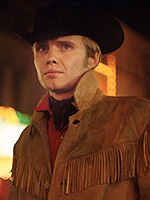
In 1969, the Academy saw fit to give “Midnight Cowboy” the award for Best Picture — a first ever for an X-rated film. Some saw the moment as a bellwether signaling a new dawn for the group, that they were developing a growing acceptance for the films that would start coming at them around this time of creative invigoration in the cinema. But was it really?
I remember somewhere that a high-ranking Academy official stated that if “A Clockwork Orange” won the Oscar for Best Picture they would resign their membership! The film had already won top honors from the New York Film Critics Circle and was nominated for four Academy Awards, among them Best Picture and Best Director. A ground-breaking work, the best of Kubrick’s career, still looking futuristic 37 years later, the film is an obvious masterpiece. But it frightened the Academy for whatever reason.
A year later Bernardo Bertolucci’s “Last Tango in Paris” came along with a galvanizing performance from Marlon Brando and was certainly a better film than at least two of the pictures nomination int he top race, “The Sting” and “A Touch of Class,” yet as expected, the Academy backed away from the film, nominating only Brando and Bertolucci.
What is it in the makeup of this esteemed organization of artists that makes them steer clear controversial films, films that push the envelope, that go further out on a limb than most in exploring dark and sometimes daring subject matter?
 It was June 29, 2001. I was in film school. I opened the local paper, read my friend, the film critic’s, review of “A.I.: Artificial Intelligence,” Steven Spielberg’s distillation of a project he and legendary filmmaker Stanley Kubrick had developed together for years.


 It was interesting this morning to see Robert Duvall’s recent
 I had the loveliest time last night at a reception in honor of
 Catch up with the idea behind this series
 “Aryan Papers” is a title that is probably familiar to keen students of the great Stanley Kubrick, representing as it does a sadly missed opportunity in his abruptly curtailed career.
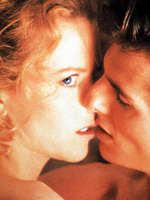 Today marks the 10th anniversary of the US theatrical release of Stanley Kubrick’s “Eyes Wide Shut.” It was, of course, to be his final film, the last statement from what so many agree to be the finest filmmaker to ever try his hand at the trade. It was daring, it was unique…it was a Kubrick film through and through. It was a 20-month-long shoot that had film enthusiasts chomping at the bit for nearly two years, and when it finally landed, the reaction was, again, classic Kubrick: divisiveness.
 By far the boldest, baldest expression of auteur identity I’ve seen in recent times came in the opening credits of Lars von Trier’s
 I only yesterday picked up the new Bluray of Stanley Kubrick’s “Dr. Strangelove,” one of those canonical classics that becomes almost a cliched entry in any number of all-time-best-films lists. I haven’t had a chance to dive in yet, though the recent
 Don’t hurt yourself,
 Somehow the 10-year anniversary of director Stanely Kubrick’s death completely flew under my radar over the weekend (the day was Saturday). Between painting a bedroom, dealing with server issues and the usual day-to-day, I guess forgetfulness can get the best of us. But Kubrick was (and remains), to my mind, the greatest filmmaker to ever try his hand at the cinematic form. I’m a bit ashamed to be coming to the table two days later.
 –MEMO–
 In 1969, the Academy saw fit to give “Midnight Cowboy” the award for Best Picture — a first ever for an X-rated film. Some saw the moment as a bellwether signaling a new dawn for the group, that they were developing a growing acceptance for the films that would start coming at them around this time of creative invigoration in the cinema. But was it really?