 Whether it’s on blogs like this one or in loftier film publications, there appears to be a general consensus that 2008 hasn’t been the best year at the movies, particularly in terms of American cinema. Lots of promising projects, ambitious ideas, isolated moments of genius, but very few bull’s-eyes — especially when compared to last year’s bumper crop.
Well, one person disagrees. Roger Ebert, in fact. He believes 2008 has been “a great year for movies, even if many of them didn’t receive wide distribution.” Indeed, he thinks it so great that he can’t limit himself to a standard year-end Top Ten, instead listing his 20 favourites in alphabetical order:
“Ballast,” “The Band’s Visit,” “Che,” “Chop Shop,” “The Dark Knight,” “Doubt,” “The Fall,” “Frost/Nixon,” “Frozen River,” “Happy-Go-Lucky,” “Iron Man,” “Milk,” “Rachel Getting Married,” “The Reader,” “Revolutionary Road,” “Shotgun Stories,” “Slumdog Millionaire,” “Synecdoche, New York,” “W.” and “WALL-E.”
He rounds out the last with his own “Special Jury Prize” winner, Guy Maddin’s “My Winnipeg,” which I’ve been itching to see for a while. And of equal standing, he says, is his list of the five best documentaries (which actually reads like a plausible Oscar slate): “Encounters at the End of the World,” “I.O.U.S.A.,” “Man on Wire,” “Standard Operating Procedure” and “Trouble the Water.”
Of course, it’s hard to argue with a personal list. Each to their own, and all that. But I must confess to feeling dismayed that only two foreign-language films made Ebert’s cut in a year where, for me, the likes of “Gomorrah” and “The Class” showed more conceptual breadth and storytelling verve than almost anything to emerge from Hollywood (or Indiewood) this year. And with so many included, I find the absence of “Hunger” and “The Wrestler” hard to fathom, particularly when something like “W.” is there.
 Sorry it’s a day late, but here’s the week that was. Awards and nominations left, right and centre — the season is officially under way, folks:
 Wow. As I said when the European Film Award nominations were
 When interviewing Kristin Scott Thomas, the woman who for many audiences represents the living portrait of English upper-crust serenity, Led Zeppelin isn’t exactly the first name you expect to crop up in the conversation. And yet, halfway through our Transatlantic chat, that is exactly what happens.
 I must say, I thoroughly enjoyed Variety’s recent series of articles in which prominent actors champion some of their personal favourite performances of 2008, including many of the most discussed contenders of the season. It’s a simple idea, but executed with real thought and sincerity.
 Though still in her 30s, Elsa Zylberstein’s career has been so rich and multi-stranded — in addition to two decades of screen performances, she has also worn the hats of a classical dancer and a United Nations Goodwill Ambassador in the past — that it’s odd to think she is only now achieving Stateside recognition for a role in one very modest film.
 Kim Voynar has a sharp
 The Cesar may be the most internationally recognised award for French cinema, but the Louis Delluc Prize is arguably the most prestigious. Now in its 73rd year, the prize is awarded annually to a single film deemed by a select jury to represent the year’s finest achievement in French filmmaking.
 Proof positive that 2008 is a banner year for Italian cinema: Matteo Garrone’s “Gomorrah” and Paolo Sorrentino’s “Il Divo,” both masterpieces of a very different stylistic ilk,
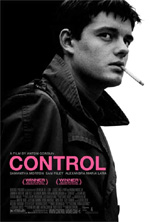 Chances are it’s not a prize that studios are going to mount furious campaigns for, but the Guardian First Film Award has the classiest
 The British Independent Film Awards are an odd, under-the-radar institution that frequently like to avoid the obvious and champion the underdog. Last year, for example, they bypassed the starrier likes of “Eastern Promises” and “Notes on a Scandal” to award their top prize to Anton Corbijn’s magnificent, under-rewarded “Control.” The previous year, they were even more daring: Best Film justly went to “This Is England” over “The Queen,” while Helen Mirren and Forest Whitaker — gasp — lost to the unknown leads of Andrea Arnold’s “Red Road.”

 Everyone has a favourite Oscar category, and Best Original Screenplay is mine. It’s partly because I’m a screenwriter myself, so I feel a little more invested in the outcome. My evaluation of the category often comes down to the question: “Which screenplay do I most wish I’d written first?”
 One big question mark floating around since the foreign language film submissions started trickling in has been which film France would submit, the Cannes sensation (and Palm d’Or winner) “The Class” or Philippe Claudel’s “I’ve Loved You So Long.”
 A quietly extraordinary debut from French novelist and screenwriter Philippe Claudel, “I’ve Loved You So Long” interweaves so many narrative strands familiar from various other domestic dramas it’s hard to believe this particular story hasn’t been told on screen before.
 10. Richard Jenkins, “The Visitor”