In Contention

Tag: festivals

  • Alexander Payne tapped as Telluride’s guest director

    Alexander PayneFrom Screen International:

    Festival co-directors Tom Luddy, Julie Huntsinger and Gary Meyer have invited Payne to select a series of films to show at the prestigious Colorado-based festival. The festival chooses a guest director each year, with past participants including Salman Rushdie, Peter Sellars, Don DeLillo and Slavoj Zizek.

    As with the rest of the programme, Telluride will keep Payne’s selections top secret until the festival kicks off on September 4.

    “I have had the pleasure of knowing Alexander for many years – from the time he was a Stanford student who came to see rare films at the Pacific Film Archive in Berkeley and throughout his career,” Luddy said. “I have long admired his work and his obvious love of the art of film. Our partnership with him on this year’s Festival has been seamless.”

    “Alexander has succeeded in programming a group of films with both rarity and variety,” added Meyer. “We have a sophisticated audience at Telluride and he has met the challenge and exceeded our highest expectations.”

    We anticipate covering the Telluride fest here at In Contention for the first time this year.  More as it comes.  The season’s right around the corner…can you believe it?

  • EDINBURGH: Away they go

    John Krasinski and Maya Rudolph in Away We GoTuesday dawned gray, gusty and rain-spattered here in Edinburgh – the kind of morning where there’s nothing for it than to bury oneself in the comforting recesses of a dark movie theater – which, handily enough, is all that I had on my agenda for today.

    After formulating a strategy over breakfast as to which films could be caught at a later date, I ended up deciding morning’s viewing with a coin-toss, a concession to fate that happily led to the droll delights of Australian animation “Mary and Max,” before my afternoon was given over to the festival’s rather more glossy opener, “Away We Go.”

    As I write, Sam Mendes and cast members John Krasinski and Maggie Gyllenhaal are treading the red carpet to formally christen this year’s festival. (Not joining them is female lead Maya Rudolph, who, in an irony apparent to anyone who has seen the film, was unable to fly to Edinburgh because she is eight months pregnant.)

    It’s a fitting opener, in the sense that its carefully negotiated balance between indie outsiderness and cozy Hollywood warmth reflects the transitory state of the Edinburgh Film Festival as a whole. Symbolic neatness aside, however, I see no context in which “Away We Go” (**1/2) can’t be regarded as a major disappointment from Sam Mendes.

    (more…)

  • EDINBURGH: Animated pleasures

    Mary and MaxToday’s Edinburgh talk may have centered on festival opener “Away We Go” (more on that to come), but the day’s real delight was “Mary and Max” (***1/2), an alternately disarming and disconcerting feature debut from claymation maestro Adam Elliot, who won a 2003 Academy Award for his short “Harvey Krumpet,” and carries that film’s decidedly adult-level cuteness into his new effort.

    As “Up” continues accumulating valentines from critics across the board, “Mary and Max” forms some interesting parallel points to Pixar’s mega-hit, with both films employing the gentleness of the animated form to address difficult themes of loneliness and social isolation, and doing so via an unlikely friendship between misfits young and old.

    Of course, the relationship at the core of “Mary and Max,” which details the accidental but long-enduring friendship of correspondence between a neglected 8 year-old girl in Australia and a middle-aged New York man emotionally crippled by Asperger’s Syndrome, will likely raise far more eyebrows than “Up,” which is probably why the film is still seeking a U.S. distributor months after its warm reception at Sundance.

    (more…)

  • REVIEW: “The Hurt Locker” (****)

    The Hurt Locker(Edinburgh International Film Festival)

    Put in the most glib possible terms, the longstanding industry perception of Kathryn Bigelow is that she’s something of an artistic tomboy: the girl who likes to play in the boys’ sandbox — and play roughly, at that. While true to a large extent, it’s a reputation that is rooted in the belief that genre filmmaking is principally a male preoccupation.

    Never mind that a number of her films — from vampire tale “Near Dark” to female-fronted cop thriller “Blue Steel” (to say nothing of the curious anomaly that was the brooding Elizabeth Hurley drama “The Weight of Water”) — aren’t exactly testosterone-fests; the fact that she frequently foregrounds the physical ahead of the emotional is enough to qualify her as a male-centric storyteller in most viewers’ eyes.

    So it’s somewhat surprising, upon closer inspection, to note that Bigelow has heretofore never made a film explicitly about masculinity. Yes, “Point Break” and her misfiring last feature, “K-19: The Widowmaker,” may have revolved exclusively around men, but the characters in these films were mere facilitators of action, not freestanding psychological subjects. For a woman who purportedly makes movies for men, Bigelow has never seemed particularly interested in the male experience.

    All that has changed spectacularly with “The Hurt Locker,” a formally simple but startlingly layered, savage war film that, in localizing its conflict to the internal battles between three unmoored soldiers, marries her dazzling staging abilities with a newfound level of human interest and compassion.

    (more…)

  • EDINBURGH: ‘Antichrist’ added to lineup, and first day jitters

    Willem Dafoe in AntichristAfter wrestling with dodgy wireless setups for the better part of the evening, I am happy to tell you that I’m comfortably installed in an Old Town coffee shop with an immaculate connection, so I can fill you in on the day’s doings.

    Outside, it’s one of those balmy Scottish summer evenings with woozy, disconcertingly long daylight hours (the upside of coming in this season) while hordes of kilted, tourist-baiting middle-aged men parade the streets playing popular tunes adapted for the bagpipes (the considerable downside).

    Anyway, I’m even happier to tell you the big festival news of the day. In a major get for a festival that usually deals in more low-key fare, Lars Von Trier’s “Antichrist” has made a last-minute appearance on the programme. Edinburgh likely benefited from the film’s unexpectedly early UK release date of July 24 — otherwise you can bet the London Film Festival’s Sandra Hebron would have been all over it. Score one for the little guys.

    The film will have its public screening next Wednesday, June 24. However, I’ll be seeing it at the press screening on Monday, and will do my level best to have a review for you shortly afterwards. Apologies to the Von Trier haters who thought the distraction of a festival might stem the “Antichrist” talk from my end for a while. I now await Monday with a mixture of breathlessness and extreme nerves.

    (more…)

  • Edinburgh calling

    EdinburghIn a little over an hour, I’ll be hopping on a (very) early morning train and making the 300 mile journey up north to Edinburgh. Ordinarily, this alone would be cause for excitement — for me, Scotland’s capital, with its curious combination of twisty Medieval quirk, stately academia and cooler-than-thou cultural swagger, is one of the most delightful cities in Europe. On this occasion, however, it boasts an extra drawcard — the Edinburgh International Film Festival.
    It may lack the glamor of Cannes or the breadth of Toronto, but the EIFF has been modestly chugging along since 1947, making it one of the most senior of all international film festivals. It doesn’t necessarily get the glitzy international premieres that the London fest now commands, but it’s an essential date on the calendar for burgeoning UK and international filmmakers. Meanwhile, it supplements its sizable showcase of new talent with a scattering of classic retrospectives as well as new works from more established filmmakers.

    Like its London counterpart, Edinburgh takes a similar “cherry-picking” approach to programming, selecting a number of proven successes from other festivals, as well as international markets. As a result, this year’s festival brings us the UK premieres of Sundance hits such as “Sin Nombre,” “Humpday” and “The Maid,” while the event I am most anticipating is the first post-Cannes screening of Andrea Arnold’s Jury Prize winner, “Fish Tank.”

    (more…)

  • Pixar’s ‘Up’ to open Cannes

    Old news now but I’m just resurfacing on the east coast.  From the press release:

    UP, the new animation film from the Disney•Pixar studios, produced under John Lasseter’s supervision, will be the Opening Ceremony film of the 62nd Festival de Cannes in Disney Digital 3-D on Wednesday May 13th, 2009…

    This is the first time that an animation film, in 3-D, will be the Opening Ceremony film at the Festival de Cannes.

    Animations distinguished by their participation in the Official Selection are, DUMBO (1947), THE FANTASTIC PLANET (1973), FRITZ THE CAT (1974), SHREK (2001), THE TRIPLETS OF BELLEVILLE (2003), SHREK 2 (2004), OVER THE HEDGE (2006), KUNG-FU PANDA (2008) and WALTZ WITH BASHIR (2008)

    UP will be released in the United States on Friday, May 29th and in France on July 29th.

  • SANTA BARBARA: That’s a wrap

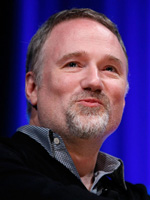
    David Fincher at the 24th Annual Santa Barbara International Film FestivalToday is the last day of the Santa Barbara International Film Festival, which I have had an absolute blast covering for the past nine days.  It was a great breather after the build-up to the Oscar nominations (which exhausts us all), but I’m back in Los Angeles and ready to round out the season properly.

    I didn’t catch as many films as I’d have liked, even though Santa Barbara isn’t your typical dusk-till-dawn film-watching festival.  I didn’t even see the majority of the films that won prizes (collected for you from the press release after the jump), but most of what I’ve seen, I’ve commented on.  There were a few I never got around to discussing, however, like the Jeremy Irons-narrated “Eye of the Leopard,” which was hardly the derivative nature doc I expected.  It was, in fact, an exhilarating experience, crafted with all the knowledge of what makes fine drama.  It’s also cool to hear Scar narrating a documentary about leopards.

    Staying in the nature vein, the PBS documentary “Lobo: The Wolf That Changed America” wasn’t exactly a good film, but it really piqued my interest to read more about Ernest Thompson Seaton and the lessons he learned hunting wolves a century ago in New Mexico.

    I briefly mentioned “The Informers” last night.  It’s a mind-bender that might be terrible, but like I said, I couldn’t stop watching.  And I want to see it again.  And “$9.99” is a stunning accomplishment in stop-motion animation that I expect we’ll hear about throughout the year.

    (more…)

  • SANTA BARBARA: Mickey Rourke puts a bow on the fest

    Mickey Rourke at the 24th Annual Santa Barbara International Film FestivalMickey Rourke landed in Santa Barbara tonight to accept the final award of the festival, the American Riviera Award.  The on-stage Q&A/career retrospective was moderated by Pete Hammond and presented a swift trip through the actor’s portfolio of impressive performances, making me want to revisit films like “Rumble Fish” and “The Pope of Greenwich Village,” or finally get around to those I’ve never seen, like “Year of the Dragon” and “Animal Factory.”

    Michael Cimino’s “Dragon,” in fact, was the beginning of Rourke’s downward spiral in Hollywood, the actor said.  After reading some lacerating reviews that seemed to be more interested in attacking Cimino (in the wake of the “Heaven’s Gate” disaster) rather than the film, Rourke started to become disenchanted.  The seeds were actually planted when Francis Ford Coppola’s “Rumble Fish” wasn’t well-received here in the states and picked up steam with the critical reception of “Dragon.”

    The conversation was a fascinating one, and really, anyone who spends more than five minutes talking to the guy is bound to hear a couple of great stories or some particularly revealing insights.  Rourke touched on his beginnings at the Actors Studio in New York, where he befriended Christopher Walken and paid the bills working at a transvestite club (an experience that would come in handy when Steve Buscemi would direct him in “Animal Factory” 20 years later).

    He also mentioned, as I believe he’s noted elsewhere, that he believes Adrian Lyne (who directed Rourke in “9 1/2 Weeks”) may be the most underrated actor’s director out there and that Eric Roberts remains one of the best actors he’s ever worked with.  And he offered some nice sentiments for fellow Oscar nominee Michael Shannon, who co-stars with Rourke in the upcoming remake “13.”

    (more…)

  • SANTA BARBARA: Clint Eastwood hailed as a Modern Master

    Clint EastwoodSo Clint Eastwood arrived in town tonight without all the pizazz you might have expected, as I reported from this evening’s Arlington Theatre event.  But inside the place was bananas.  Every single seat in the theater was filled, many of the locals vocalizing their shock on the way down the aisles.  “I’ve never seen it this packed before,” many of them said as they found a place to settle in and behold the career the festival was honoring.

    Moderator Leonard Maltin seemed to bite off a little bit more than he could chew.  Seriously, an hour and a half in and we were just getting to 1971.  I figured the 1980s would be a blur and indeed they were — Who wants to remember “Heartbreak Ridge” and “Firefox?” — but I would have liked some discussion on “Bird,” maybe, or “Pale Rider.”  But Maltin warned at the top that if he didn’t get to your favorite film, please understand.  We’re talking about six decades here.

    Early in the discussion Maltin spent a lot of time picking Eastwood’s brain on his early career — a contract player at Universal, roaming around the lot soaking up what information he could, getting the gig on television’s “Rawhide” and, of course, Sergio Leone’s spaghetti Westerns that didn’t find release in the states until rights were cleared up regarding Akira Kurosawa’s “Yojimbo.”  On the whole it was one of those kiss, kiss sessions, but the crowd was pumped.

    Every film that might be mentioned briefly in passing seemed to find this pocket of applause or that.  The “Dirty Harry” stuff was an obvious favorite (of course we were treated to the infamous “I gots ta know” sequence), but “Gran Torino” really brought the house down, especially the old guy vs. the homies scene that might have been Eastwood’s Oscar clip had the performance been nominated a week ago.

    (more…)

  • Reasons Clint Eastwood is cool, #246

    He drives himself to his own tribute, eschews the big to do of a red carpet arrival, hops the metal barricade and slides into the fray minutes before anyone notices. Classic Eastwood.

  • SANTA BARBARA: Virtuosos on the march

    Richard JenkinsUnfortunately, “Happy-Go-Lucky” star couldn’t make it to tonight’s presentation of the Virtuoso Awards at the Lobero Theatre due to surgery recovery, but Viola Davis, Richard Jenkins, Rosemarie DeWitt, Melissa Leo and Michael Shannon were on hand to talk their roles in five of the most critically acclaimed films of the year.  James Cromwell did the honor of presentation.

    It’s a shame DeWitt was the only one on stage lacking (criminally) an Oscar nomination, but moderator Roger Durling kept the conversation away from awards as much as he could.

    A considerably amount of the discussion was spent on the nature of these actors’ careers, floating between the big screen, television and theater with a particular ease.  Many of the Virtuosos swept the comment aside with the usual “we go where the work takes us” rhetoric, which is fine, but Davis made a compelling comment regarding the state of the profession.

    “When you think about actors, you think about Brad Pitt, Angelina Jolie,” she said.  “But most of them look just like us here on stage.”  The indication, of course, is the middle class actor and how often he or she isn’t given the proper credit, be it on television, on stage or, certainly, on the screen.

    “Please, go to New York,” DeWitt said.  “See a play.  Some of the greatest actors in the world are working on stage,” but their names aren’t well-known.  It’s an interesting topic with the SAG dispute of late, which finds middle class actors at the forefront of a fight for credit.  Durling, of course, didn’t pursue that line of questioning.

    (more…)

  • SANTA BARBARA: ‘Fallujah’ soars, Thomas Vanguarded

    The Road to FallujahSomething of a slow day today at the festival — well, I purposely put the breaks on in favor of some quality time with you guys throughout the day and to put my feet up for a spell at the ole’ homestead.

    Anyway, I was really taken with Mark Manning’s “The Road to Fallujah,” an Iraq war documentary that played at Sundance last week and had its California debut this evening at the Arlington Theatre.  There was a nice turn-out, largely because Manning is a local (the first Santa Barbaran, in fact, to bring a film to Park City and then back the hometown fest).  But what I expected to be a derivative analysis of “what we did wrong” slowly revaled itself as perhaps one of the very best docs on the conflict we’ve seen yet.

    A former oil platform worker who up and decided one day to take a documentary course and shoot over to the middle of hell and find out what was going on, Manning only commits one sin that tends to irk me in non-fiction filmmaking: he put himself in the film.  If this is done to dramatically impacting effect (like in, say, “Dear Zachary”), it’s generally forgiveable at the start.  But it actually didn’t get to me as the film went on because the portrait Manning paints is immediate, penetrating and emotional.

    In essence, the film is a “what do the Iraqi people do now?” think-piece, littered with depictions of collateral damage and, of course, an extended look at the build-up to the Battle for Fallujah, the horrors of war during it, and the repercussions both Iraq and the U.S. are left with as a result.  Manning makes great use of his string of talking head experts, grabbing the key lines at the right times.  It’s amazing all this came from a night class education.

    (more…)

  • SANTA BARBARA: ‘Three Monkeys,’ ‘C’est pas moi, je le jure!,’ ‘War Against the Weak’

    Antoine L\'Écuyer in C\'est pas moi, je le jure!And a few more…

    “THREE MONKEYS” (**1/2)

    I was left scratching my head yesterday afternoon after a screening of Nuri Bilge Ceylan’s “Three Monkeys.”  I can’t for the life of me comprehend what all of the Cannes fuss was about.  It’s a solid exploration of mood and atmosphere, to say the least.  And there are some penetrating performances.  But…?

    The bleakness of the narrative likely appealed to festival jury members looking to reward a filmmaker for “going there,” but there’s a big “So what?” residue to the film and its themes.  The story, in a nutshell, revolves around a family playing blind, deaf and dumb (hence the title) to a time of hardship, and for that, I give it some respect.  There aren’t many films willing to pull back the veil of complacency that settles into families in crisis.

    The cinematography is subdued, and striking as a result.  And like I said, the performances — particularly from Yavuz Bingol and Rifat Sungar — are superlative.  But the whole comes up short of the sum of the film’s parts.  I’ve been impressed by Ceylan’s work so far, but I’m sure he’s got something better, more akin to “Distant” inside him somewhere, so I’ll wait for it.

    (more…)

  • SANTA BARBARA: Danny Boyle reflects on his career

    Cliff Curtis in SunshineThere are a number of ambitious films that fascinate me despite their level of failure.  “Syriana” and “Hancock” are recent examples, but the quintessential exhibit has to be Danny Boyle’s “Sunshine,” which I caught once more today in the middle of career retrospective for the filmmaker.

    I still stand by every word I wrote about the film nearly two years ago.  It flakes apart swiftly in a final act that may have been doomed on the page, but damn if it isn’t a magnificent, near-masterpiece for about an hour and 15 minutes.  We’re talking true magisterial work from Boyle that has me chomping at the bit, anxious to see him tackle a deep space saga once more.  When I interviewed the director back in November, he said the process of making “Sunshine” made him understand why filmmakers only ever seem to make one space film.  “It’s merciless, the demands on you,” he said at the time.  “The precision you have to bring is migraine-inducing.”

    But this thing came close to top-of-the-genre material, and I hope and pray he has another one in him.  Something less boiled in genre like this one eventually is, perhaps.  Something ethereal, reaching for philosophical heights he and screenwriter Alex Garland clearly had in mind.  I’d be front row center.

    Anyway, Boyle was in town this evening to talk about his career once more, an eight-film stretch that seems, by all accounts, to be headed for an Oscar next month for his work on “Slumdog Millionaire.”  He sat down with festival director Roger Durling after the film screened at the Lobero Theatre tonight to discuss the fairytale story of the film, both on screen and off, and he was met with a massive standing ovation from the packed theater.

    (more…)

  • SANTA BARBARA: ‘Sugar,’ ‘Mile High,’ ‘Ink’

    InkAnother day, another series of capsule reviews…

    “SUGAR” (***1/2)

    Even though I never fully understood what it was trying to say, I fell in love with Anna Boden and Ryan Fleck’s “Half Nelson” follow-up “Sugar.”  I missed the film at last year’s AFI Fest in Los Angeles, and it received a world premiere over a year ago at the 2008 Sundance Film Festival, but a day after catching it at the Lobero Theatre here in Santa Barbara, I still find myself turning it over in my mind.  It’s the lingering sort of cinema that I’m tempted to say will mean something different to you every time you watch it.

    Algenis Perez Soto is the film’s revelation, a tender first-time performer who excels under the direction of Boden and Fleck, two filmmakers who have cornered the market on intimate indie filmmaking that actually resonates.  The duo isn’t afraid of the natural awkwardness of relationships, but not in the pretentious sort of way that leaves you reaching for a barf bag at every step of the way.  They trust their characters to be honest first, dramatic second.

    That can also be a hindrance for obvious reasons.  The narrative rarely escapes a sense of safety.  Nothing is ever threatened along the way.  Nothing ever seems truly at stake.  But, in a sense, such is life.  But “Sugar” is as much a departure from the themes of “Half Nelson” as it is an extension of them, and to be such drastically different films, that is fascinating.

    (more…)

  • SANTA BARBARA: ‘Blessed is the Match,’ ‘Inventing L.A.,’ ‘Pirate for the Sea’

    Paul WatsonA trio of documentaries to kick off our Santa Barbara coverage, two of them in competition…

    “BLESSED IS THE MATCH: THE LIFE AND DEATH OF HANNAH SENESH” (**)

    Roberta Grossman’s portrait of the Jewish Joan of Arc, Hannah Senesh, is somehow not the testament her actions deserve.  Hindered by an overabundance of meaningless photographs and dubious reinactments, the film lacks scope and at times seems more interested in serving as a narrative biopic than a work of non-fiction.

    Senesh was a poet and one of a troupe of Jews living in Palestine trained by British military to save the Hungarian Jews from eventual extermination at Auschwitz.  Her team tragically parachuted into the region mere days before the country was invaded by Germany.  She was eventually arrested and executed for her actions.  Her writings and poetry were discovered by her comrades and published immediately.

    (more…)