In Contention

Blog

  • Sydney Pollack (1934-2008)

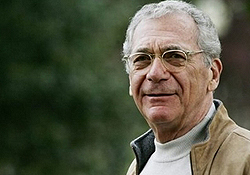
    Trained as an actor at Sanford Meisner’s famed Neighborhood Playhouse — the stomping grounds of Robert Duvall — Sydney Pollack connected to actors because he was one of them…and a damned fine one at that.

    In fact, his comedy “Tootsie” is not only the greatest American comedy ever made, it is also the greatest study of the art and craft of acting I’ve ever seen. The director, writers and star explored the depths to which an actor will go to get the role right, to find that all-important and essential truth. Without truth in a performance, there is nothing but failure.

    There is a moment in the film when Michael Dorsey, the actor who has become actress Dorothy Michaels to find work, is no longer Michael at all. Dorothy has become a living, breathing character in his life. Hoffman’s astounding performance is the finest work of his career, a jaw-dropping feat of art that is often overlooked (criminally) when the great film performances of all time are discussed. And of course holding the film together, the glue, the guiding hand, was Mr. Pollack, one of the great directors of the 1970s, 1980s and beyond.

    Though he lacked the box office breakthroughs of Francis Ford Coppola or Steven Spielberg, or the nasty edginess of Martin Scorsese, Pollack nonetheless was an artist, one of the few directors able to walk the line between making succesful mainstream films that worked on levels of commerce and artistry.His death at the age of 73 is one of the film world’s great losses, though he leaves behind a legacy that will be remembered for years after many of us have gone to that great screening room in the sky.
    (more…)

  • Huh?

    People are fascinating. We have a huge and complex capacity to be all kinds of things. And you look at someone like Condoleezza Rice and you see an example of just how far a person can stretch themselves. And I don’t mean that in a good or bad way, but she is an…oh God, I really want to get this right…she is an incredible example of discipline.

    Oy.  Still the worst casting decision of the film.

  • I want to say something about Sydney Pollack…

    …and I will.  When the time is right.  The irony is, of course, that his passing follows so closely behind that of his friend and colleague Anthony Minghella.  I hope they are at peace together, and however expected yesterday’s news might be, sadness is the overriding emotion at the moment.

    In the meantime, I’m compiling tribute quotes here at The Times.  Let me know if you guys stumble across a memoriam that ought to be represented.

    More to come…

  • Two things I like about ‘Indiana Jones and the Kingdom of the Crystal Skull’

    1) Cate Blanchett as Irina Spalko

    If only because it serves to remind us, after her criminally overlooked turn in “Bandits,” what an undervalued comedienne she is. (Don’t believe me about “Bandits?” Watch her first scene, where she’s getting down to Bonnie Tyler in the kitchen as she prepares a casserole, and ask yourself how many other actors could make so much out of so little scripted material.)

    Back to “Indy 4,” she’s the only actor in the whole cast who seems to have judged the right comic tone for her character. It may be bizarre, wigged-out camp, in her case, but that’s what the script tells her to do, and damn it if she doesn’t have fun channelling a thousand hokey “Ry-aw-shun” villainnesses from Hollywood’s B-movie back catalogue. After “Elizabeth: The Golden Age,” she seems to have established a nice line in (not quite) saving po-faced, overboiled schlock with stylish, balls-out burlesque. And all this from an actor equally capable of rendering a character’s crucial moral decision with a simple, silent glance. (If you haven’t seen “Heaven,” do so.) Mr Foote recently made a good case for Sean Penn as the greatest actor of this generation; my vote would go to Blanchett.

    2) Um… uh… no, actually there was just one thing

    I side with Kris on this one. The film’s an utter wash.  

  • Could two potentially great film scores get the AMPAS shaft this year?

    It’s a debate that never gets old regarding the music branch of the Academy of Motion Picture Arts and Sciences. When is it going to clean house regarding shady rules that seem to fly in the face of what the organization sets out to do each and every year: honor the best in cinematic achievement?
    The foreign film committee had a major shakeup last year, and promises of attention were made, but it’s high time the same happened with the musicians. One of the rules seems poised to become a serious talking point later this season, however.

    Within Rule 16B of the Academy’s eligibility guidelines — launched into infamy last year when the caca hit the fan regarding Jonny Greenwood’s “There Will Be Blood” score — you’ll find the key language:

    Only the principal composer(s) or songwriter(s) responsible for the conception and execution of the work as a whole shall be eligible for an award. This expressly excludes from eligibility…scores assembled from the music of more than one composer.

    Specifically, it’s Rule 16B-5f. And it will likely affect two promising works of film music composition this year.

    (more…)

  • Movies that Oscar missed

    As film junkies, we all know it happens. Usually every single year there are one or more films the Academy passes over for Best Picture consideration, in some cases because there are, after all, just five slots available, but in others because, well — they blew it.

    Like the rest of you, I sit and listen to the nominees announced live every January and have never had a year when I did not roll my head and ask to no one in particular, “Where is such and such or so and so?”

    I mean for me, the great honor is the nomination, because when “Kramer vs. Kramer” defeats “Apocalypse Now” for Best Picture, how can you possibly take the winners seriously? However, a nomination — that is decidedly different.

    Where was the Best Picture nod for John Ford’s masterful “The Searchers,” arguably the greatest American western ever made? And Alfred Hitchcock’s “Psycho,” which redefined the horror genre?

    Since 1980 there have been a number of truly brilliant films passed over, leaving this critic often shaking his head in disgust, though I get over quick enough to watch the damned awards…talk about hooked. But it amazes me how “The Empire Strikes Back” can be a better film than “Star Wars,” yet not be nominated in the big race. Ditto Brian De Palma’s “Blow Out,” possibly the finest film of his career, ignored in every category despite its artistic mastery. The very same year Milos Forman gave us “Ragtime,” a much stronger film than “Chariots of Fire,” which won the Oscar, or even “On Golden Pond,” one of the five nominees!

    (more…)

  • New poll

    In lieu of a decent talking point surrounding this year’s somewhat underwhelming Cannes fest, I thought I’d keep it simple this week and grab an assessment on this weekend’s blockbuster. Tell us where you stand in the new poll.

  • Moving away from movies for a bit…

    …some things live up to the expectation.

  • No surprises as Cannes jury surprises

    Well, I missed that one badly. As is so often the case, the Cannes jury threw a curveball, handing their top prize to a late-breaking film that had generated very few column inches. Admittedly, I should have paid more attention to “The Class,” French auteur Laurent Cantet’s school-based docudrama.
    I was a huge fan of Cantet’s 2001 film “Time Out,” an ingeniously constructed character study, and while his 2005 follow-up “Heading South” was a major disappointment, Cantet’s name on the competition list should have rung more bells – not least when the very warm reviews started rolling in yesterday. Variety called it “one of the most substantive and purely entertaining movies in competition at Cannes this year.”

    Congratulations to Cantet then, and to France, scoring their first home victory at Cannes since “Under Satan’s Sun” triumphed in 1987. The other awards threw up fewer surprises, with Benicio Del Toro taking Best Actor as I, and many others, predicted. Meanwhile, “Three Monkeys” and the Italian one-two punch of “Gomorra” and “Il Divo” all took home major silverware, if not necessarily in the categories that I anticipated.

    I must admit to being shocked that the widely beloved “Waltz With Bashir” went home empty-handed; an omission for which Sean Penn and fellow juror Natalie Portman seemed almost apologetic. No matter: Ari Folman’s animated war documentary leaves the festival with a dedicated following, and I’m certainly putting it on my Best Animated Feature shortlist.

    The full list of competition winners follows:

    Palme d’Or: “The Class”

    Grand Jury Prize: “Gomorra”

    (more…)

  • Cannes: uneducated guesses

    Well, it’s almost over. The competition films have all been screened, picked over and digested by the world’s critics, and now all that’s left to do is that finicky business of handing out some prizes. Sean Penn and his formidable jury (Marjane Satrapi, Alfonso Cuaron and Natalie Portman are just some of those involved) will be deliberating over a crop of films that has generally been deemed a solid selection, with few outright “Brown Bunny”-style disasters.

    (more…)

  • Where have you gone, Al Pacino?

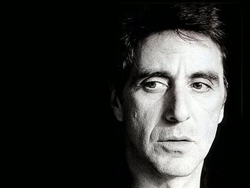
    It has been more than 30 years since Al Pacino gave his career-defining performance as cold blooded Michael Corleone in “The Godfather Part II.” He radiated quiet danger the moment he appeared on screen without ever raising his voice or allowing his mouth to wrap its way around words and spit them out like venom.


    While a one-two punch of “88 Minutes” and “Righteous Kill” slithers its way to theaters this year, audiences are reminded once again that one of the cinema’s all-time legends has immersed himself once again in either sub-par material or, as has become his cliche, the tendency to overreach and overact on his way to becoming a walking spoof of himself.

    There was a time when Pacino was thought of as one of the greatest American actors in movies…period. His work in the 1970s was nothing short of sublime, with strong performances in “The Godfather,” “Serpico,” “Scarecrow,” the aforementioned sequel to Coppola’s study of La Cosa Nostra and “Dog Day Afternoon.” In the latter he gave his most electrifying and properly energized portrayal.

    Along with many of the fresh-faced actors of the day, Pacino owned the decade. Sure he faltered with “Bobby Deerfield,” which meant he was not the type for romantic films…right? Or was this his limitations beginning to become apparent?

    (more…)

  • Rob Lowe commercial

    I keep seeing this Rob Lowe advertisement for Orange cellular service in the previews segment of films here in London, and I end up laughing my ass off each and every time. I had to share:

    httpv://youtube.com/watch?v=FsBDUe4UPd0

  • 10 things I hate about ‘Indiana Jones and the Kingdom of the Crystal Skull’

    1) Mac McHale
    In a long line of wonderful secondary characters — Sallah, Marcus Brody, Henry Jones Sr., Short Round — screenwriter David Koepp, and whoever might have made their mark on the screenplay prior, manages to crank out a pointless, unbelievably benign individual who sits in the stomach of the film like a glass of out-dated milk. It’s all the more painful that director Steven Spielberg chose Ray Winstone to portray McHale, forcing the audience to watch a truly great actor suffer under the burden of an under-written throwaway.

    2) The set pieces
    Spielberg is a natural with creating exciting, edge-of-your-seat action numbers, yet he lends a bloated effect to the film in his desire to take everything to 11. They appear to have been filmed at a theme park — and with terrible, seam-revealing CGI to boot! Speaking of which…

    3) The CGI
    A shame throughout, making the already clumsy action scenes all the more sore on the eyes. This is a breach of religion, if you ask me, especially when one considers Spielberg’s view on these tools throughout the series. Thank God for saviors like Christopher Nolan, who believe in the practicality of filmMAKING.

    (more…)

  • Which film will take the Palme d’Or?

    Wells is already speculating and Foote is ready to move on, but let’s think it out here. In a festival that has been a bit underwhelming to most, both artistically for the critics and fiscally for the buyers, someone’s still gotta win best in show.

    Matteo Garrone’s “Gomorra” and Nuri Bilge Ceylan’s “Three Monkeys” might be the safe guesses, as both were quite well-received. But the Palme has made a habit of being elusive to the films one would expect to claim it.

    Clint Eastwood’s “Changeling” enjoyed a pleasant love-fest for a time, before the director was roughed up by a colleague and then hit a wall of sorts with The New York Times.

    Then there are the fringe possibilities of Steven Soderbergh’s “Che” — mixed on receipt, but that hasn’t stopped efforts in the past — and “Synecdoche, New York” from Charlie Kaufman, which has the benefit of being the last film out of the gate.

    What’s it going to be?

    If I had to bet, I’d say “Three Monkeys.” If I ventured a guess in the midst of rampant unpredictability (which is Cannes in a nutshell), I’d say “Synecdoche, New York.”

    We’ll see how it pans out over the weekend.

  • A.O. Scott on ‘Che’ and ‘Synecdoche’

    Thankfully SOMEONE took some time to properly respond to Steven Soderbergh’s one-two punch of “The Argentine” and “Guerrilla” — “Che,” for the Cannes world premiere. I respect as much as anyone the need to get the reaction out there fast, but more than a few critics were a bit hasty in rounding up extended thoughts hours after the 6:30 screening Wednesday night.

    After all, the film’s first reaction came from Jeffrey Wells, who has paced himself yet and refrained from offering a full-blown review until the dust has at least settled somewhat.

    A.O. Scott’s piece in The New York Times is part-review, part-Cannes immersion study, and he ties his thoughts to a partial reaction to Charlie Kaufman’s “Synecdoche, New York.” He doesn’t venture solid opinions on either effort, though he does note that the filmmakers have perhaps raised the bar too high with their previous work to judge these films as anything other than a little disappointing.

    It is regardless an intriguing think piece presenting his American perspective on the global cinema 7-11 that is Cannes:

    This is one of the frustrations of Cannes, for American critics at least. We see lots of fascinating movies — not all good, but very few completely worthless — and then wonder if we, or our readers, will ever see them again. I’m not in the movie business (a mutually beneficial arrangement, believe me), and not inclined to speculate with someone else’s money. I do hope, however, that sometime in the near future I can take part in the long and contentious conversation that “Che” deserves, and also see how my own initial ambivalence about the film resolves itself.

    (Pull-quotes on “Che” and “Synecdoche, New York” after the jump.)

    (more…)

  • The soon-to-be extinct ‘Benjamin Button’ trailer…

    …looks positively AMAZING. Catch it while you can. I’m sure it’ll get yanked soon enough.

    The visual effects look so exquisite and seamless.  Director David Fincher has supposedly been pretty tight-lipped about his recipe in that arena for a while, but it looks to be a truly unique blend of CGI and makeup artistry.

    httpv://www.youtube.com/watch?v=yjnd0wsISY0

    Wow.

  • As Cannes winds down, TIFF looms…

    With Cannes on the downswing, it becomes time to to start making preparations for the annual Toronto International Film Festival, for which screening announcements begin next month. I have been covering Toronto for more than 15 years and can safely say it is Christmas to a film critic.

    Each September I move into the Delta Chelsea Hotel for the duration of the festival — it makes no sense to make the 90 minute drive home each night as the days begin at dawn and often tie into the following morning. My wife and girls make the drive into the the city for the weekend and swim while I screen. And if time permits, I take Sherri to a Gala screening at Roty Thomson Hall.

    Over the course of each festival I see between 30 and 50 films (50 being my personal high, in fact) and though it sounds like tons of fun, and I would not miss it for the world, it is exhausting to say the least.

    (more…)

  • Festival-goers file out of ‘Synecdoche’

    UPDATE (5:38 a.m.): Allan Hunter of Screen International has written the first full review out of the fest I’ve come across. He raves the effort as follows:

    Synecdoche is about one man’s lifelong struggle to understand the meaning of his existence. Unadventurous audiences may feel the film is a two hour struggle to understand the meaning of its intentions but as the story appears to move in ever decreasing circles, it remains incredibly engaging and ultimately very moving. Hoffman gives a bravura performance that provides the film with all the focus it requires, capturing everything about Caden that makes him immensely sympathetic and instantly recognizable as a symbol of everyone on planet earth who is…struggling with the challenges of being human.

    EARLIER: We should be hearing word in the next few hours on Charlie Kaufman’s directorial debut, “Synecdoche, New York,” starring Philip Seymour Hoffman and Samantha Morton — and one my most anticipated flicks of the Cannes fest this year.

    Here is Jeff Wells’ one-off, on his way to the post-screening goings-on:

    I’ve just emerged from the semi-nourishing, semi-tortured Fellini-esque Chinese box mindfuck-dreamscape that is Charlie Kaufman’s Synecdoche, New York…and the press conference is just starting. [Ten minutes later] Kaufman has just explained the title’s pronunciation: Syn-ECK-duh-kee. At least that’s settled.

    Mike Jones at Variety, meanwhile, had some fun yesterday with Croisette-goers about said pronunciation.

    More to come, I’m sure.