In Contention

Blog

  • Strike ‘9’

    I just caught wind that Focus Features’ animated endeavor “9” from writer/director Shane Acker (and based on his Academy Award-nominated short film) has been slated for 2009, removing it from the already thin slate of contenders in the animated feature category. Apparently, this has always been the case, so I’ve either been out to lunch, going on bad information or both. It happens.

    The studio still, presumably, has a horse in the race with Henry Selick’s Neil Gaiman adaptation “Coraline,” should it maintain a platform release pattern that puts in in U.S. cinemas by the end of the year. We’ll see.

  • Zimmer taking the Joker ‘punk?’

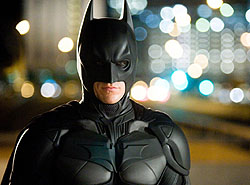
    Todd Martens, who always does a fine job of rounding up news and talking points regarding the year’s film music compositions (especially around the Oscar season), sat down recently with Hans Zimmer and James Newton Howard. The composing duo of “Batman Begins” and the upcoming “The Dark Knight” are enjoying a nice publicity push, including a press day last week in Los Angeles solely for the pair.

    Martens was able to listen to about 10 minutes of the new score (jealousy isn’t a strong enough adjective at the moment), and he managed to get some details on the way the two composers are splitting duties. It seems Zimmer is on Joker duties, while Howard is fleshing out the aural rhytms of Harvey Dent.

    Zimmer had some interesting things to say on his approach to the Caped Crusader’s latest foe:

    Yet some early signs show “The Dark Knight” departing at least a little bit from the more subtle tones of “Batman Begins”…the theme Zimmer wrote for the Joker, played in the film by the late Heath Ledger, is a damning piece of music. It’s an intense eight-minute piece that comes off like an orchestral interpretation of a something created by Trent Reznor’s Nine Inch Nails. Zimmer says the work is only two notes, but the two notes are twisted and manipulated into mimicking the sounds of thunder, razors and all sorts of clatter heard in alleyways probably better left unexplored.

    Though that description may not make it sound like music to the ears, it’s still immensely listenable. It plays out like something from a horror film, with many a shift in direction and a nod to “Psycho.” But all of it is tied together by a striking blow of strings that keep it from falling apart, and Zimmer said it bears a punk influence.

    Check out the rest. And here’s a glimpse of what might be some of the new score, by the way.

    Anticipation is killing me by the day on this.

  • Eastwood finds his ‘Human Factor’

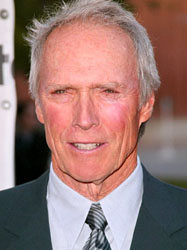
    Does Clint Eastwood ever sleep? With “Changeling” and “Gran Torino” set to keep his profile high in 2008, Variety reports that he’ll begin shooting his next film, “Human Factor,” in South Africa early next year.

    The project, based on John Carlin’s upcoming book “Playing the Enemy: Nelson Mandela and the Game That Made a Nation,” is a study of South Africa’s landmark 1995 home-turf victory in the Rugby World Cup; an event that symbolically consolidated a new era of hope for the country after its first democratic election in 1994. Key to the proceedings was recently-elected president Nelson Mandela, whose wholehearted endorsement of the Springbok rugby team went a long way towards breaking down racial barriers in the post-apartheid state.

    Morgan Freeman (did you really expect anyone else?) was drafted in to play Mandela some time ago. Now Matt Damon, after a long period of speculation, has finally been confirmed to play Francois Pienaar, the captain of the Springbok team. (The none-too-pretty Pienaar should be flattered with that casting – the two look about as alike as… oh, say, Nelson Mandela and Morgan Freeman. But I digress.)

    So far, so Hollywood. But as a South African myself, I must admit to having mixed feelings about the whole enterprise. As someone who remembers exactly where he was on the 24th of June 1995, when the Springboks squeaked past New Zealand 15-12 to claim the trophy, part of me is stunned and a little thrilled that the day that made such an impression on me, as a 12 year-old kid in Johannesburg, would capture the imagination of otherwise disinterested Hollywood execs. And if anyone in Tinseltown can handle the material without letting it slip into gloopy underdog sports-drama treacle, it’s probably latter-day Eastwood.

    (more…)

  • It is accomplished

    httpv://youtube.com/watch?v=Xxa0ihsoiYI

  • Battsek in the pink ‘un

    Flipping through the Financial Times earlier today (a British newspaper famous for the pink paper on which it is printed — “Give me a pink ‘un”), I came across a profile of Miramax honcho Daniel Battsek that made for a pleasant read amid all the TPG and Bernanke mumbo-jumbo.

    In a lot of ways the story is rather derivative and even stale. Nothing we’ve not read elsewhere, especially after an Oscar season that saw “No Country for Old Men,” “The Diving Bell and the Butterfly” and “There Will Be Blood” tear through with the media latching on for the ride.

    But Battsek is one of the good guys. Any ink, really, is good ink, considering what he’s done with the company in the wake of the brothers Weinstein. And hey, he’s a hell of a nice guy.  That’s reason enough for me to pass it along.

    Matthew Garrahan has the byline. Here’s a look:

    Making films that achieve critical and commercial success “is not rocket science…and it’s not as complicated as some people make out”. Still, it is not easy. “You have to be very sure of yourself when you acquire the material. You have to be very conscientious and detailed when you’re working with your filmmakers. And you have to find ways of being able to make [the film] as quickly as possible.”

    The physical process of making a film is not of great personal interest. “I’ve never had the movie-making bug. Sitting on a set watching a scene being filmed doesn’t turn me on at all. But I love being in a cinema watching a film. I love the creative side, working with filmmakers, writers, actors . . . and I love the production process.”

    The rest.

  • “Clobama”

    I hereby coin thee.

  • Have we finally put this thing to bed?

    From the Associated Press:

    Barack Obama effectively clinched the Democratic presidential nomination Tuesday, becoming the first black candidate to lead a major party into a campaign for the White House. Rival Hillary Rodham Clinton, meanwhile, signaled an interest in joining the ticket as running mate but stopped short of conceding to Obama or dropping out of the race.

    Obama arranged a victory celebration at the site of this summer’s Republican National Convention — an in-your-face gesture to Sen. John McCain, who will be his opponent in the race to become the nation’s 44th president.

    The 46-year-old Obama outlasted Clinton in a historic campaign that sparked record turnouts in primary after primary, yet exposed deep racial and gender divisions within the party.

    And CNN:

    Sen. Hillary Clinton on Tuesday told New York lawmakers she is open to being the running mate of Sen. Barack Obama, her rival for the Democratic presidential nomination, two of the lawmakers told CNN.

    Sen. Hillary Clinton trails Obama by 159 delegates and is 201 delegates shy of capturing the nomination.

    Rep. Charles Rangel, a senior member of the New York Democratic delegation, also told CNN, “I have reason to believe she is open to the [vice president] slot.”

    One of the sources added that former President Clinton has been privately pushing for a couple of weeks for his wife to be No. 2 on the ticket.

  • Cimino and Oscar

    Lots of talk about deserving (and undeserving) directors in the Oscar chatting this week. Let’s take it to specifics with one race that stood out to a few commenters.
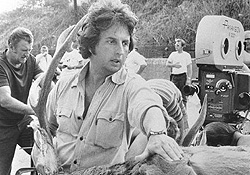
    It seemed in the spring of 1979, following the Oscar ceremony, there was a sense in the industry that if the Academy could have taken back their votes — which saw “The Deer Hunter” and director Michael Cimino winning for Best Picture and Best Director — they would have done so.

    The first screenings of “The Deer Hunter” had begun the summer before, when executives saw the film and were stunned by its raw, visceral power, leading to buzz within the business that a masterwork had been born. Execs at United Artists sought out Cimino and inked him to a contract to make a film before before the release of the Vietnam epic, a move they would live to regret.

    By the time the film was released in December of 1978, word of mouth was so strong Cimino seemed to be defying anyone to dislike the effort or say anything negative about it. Film critics awarded it best picture and director honors, except those in Los Angeles who gave “Coming Home” highest marks, while Cimino won the directing award. Nominated for nine Oscars, “The Deer Hunter” won five, adding Best Supporting Actor (Christopher Walken), Best Sound Mixing and Best Film Editing to the aforementioned Best Picture and Best Director trophies.

    (more…)

  • A ‘legendary’ profile

    I need to ring up John Campea, editor of The Movie Blog, and ask if this Legendary Characters feature is going to be an on-going thing. Whatever the case, Doug Nagy’s extended thoughts on Daniel Plainview add up to one of the more profound assessments of the character I’ve read at any outlet.

    Here’s the quote that sold me:

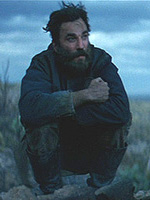
    As the movie begins, so it ends. With no opponents left to test him, and not a friend in the world, Plainview is left alone in a hole of his own creation.

    Check out the rest here.

    And for some humorous context, don’t forget to check out Doug’s expletive-filled review of “Enchanted.” Good for a laugh any day.

  • Great idea

    I was glad to see yesterday that Peter Bart has launched a daily blog at Variety. Hearing all those overblown and uneducated declarations that Bart “hates the internet” has been taxing in my time as an adjunct employee of the trade (and I’m the first to admit I’ve been one of the voices in the crowd in the past). But the truth is, Peter has always had a more progressive view of the Web than people seemed to think. That’s always the impression I got, in any case.
    This decision is a step in the right direction.

  • Four Girls in New York

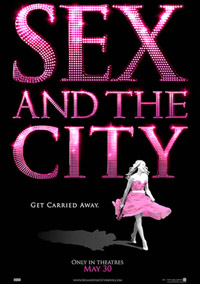
    Is there anything to say about this film “Sex and the City” that is driving women into movie houses all across the United States?

    According to box office reports this morning, the film made $55.7 million in 3,285 theaters. It generated a reputable $16,968 per screen average according to Nikki Finke. It dominated the Friday box office, but shriveled after that.

    Finke notes, “That’s exactly what Hollywood pros had been warning about: that ‘Sex And The City’ would be a one-day, and one-weekend, wonder with no legs.” Still, it remains the highest grossing R-rated comedy ever to open, and the fifth highest R-rated film ever to open. But as Finke notes, “The only female-driven movie to come close to SATC in box office was the “Hannah Montana” movie, but there’s no comparable R-rated chick flick.”

    There is something to this movie (just as there was with the HBO television program) that has to do with being true to yourself and true to your friends. No, I’m not about to defend “Sex and the City” as a timeless work of art; it’s not. And much to my twenty-three-year-old sister’s dismay, it’s not the finest film of 2008. Not even close.

    (more…)

  • Big ole’ poll this month

    Inspired by John’s recent post on Oscarless directors, I thought I’d leave it to the masses to decide which helmer deserves it most. I collected 16 names from the discussion for the sidebar poll, so tell us what you think.

  • Universal backlot fire

    By now you’ve read the news about portions of the Universal backlot going up in flames following an apparent propane explosion.
    This isn’t the first time, however. I ran across this at Anne Thompson’s blog:

    …a number of buildings on the Universal lot were destroyed by fire in 1990. Parts of the Universal tour were burned in a 1967 fire. Earlier this year, a March brush fire threatened the studio but was extinguished before it reached the lot.

    Just before I left for London I participated in the studio’s VIP Experience Tour for a Los Angeles Magazine article I was working on, and I have to say, it remains one of the best backlots and superlative tours in town. For education on the filmmaking process especially. I really hope this mess is sorted with minimal losses because that acreage collectively represents a gem of the San Fernando Valley.

  • Great Oscarless directors

    Alfred Hitchcock, Charlie Chaplin, Howard Hawks, Stanley Kubrick, Preston Sturges, Ernest Lubitsch, Hal Ashby, Alan J. Pakula, Sidney Lumet, Spike Lee, Paul Thomas Anderson.
    Collectively they represent some of the greatest directors in the history of the cinema, and together they share one rather unbelievable fact…not one of them is a Academy Award winner for Best Director.

    Each has the distinction of nominee, of course.  But to think that filmmakers such as James Cameron (The King of the World, remember?), Richard Attenborough, Ron Howard, Sir Carol Reed (for “Oliver,” man?), John G. Avilden, Michael Cimino, Robert Benton, Robert Redford, Robert Wise (for “The Sound of Music??”) and George Roy Hill, to name a few, have Oscars on their mantles and the giants above do not is simply insane to me.

    (more…)

  • The June Oscar update

    EDIT: Broken link now functioning. Apologies.

    I’ve done some chart management this month in the wake of the Cannes International Film Festival. Also, we’ve added pages for each of our contributors to offer up his predictions in various races. You’ll find them linked in the bios section.

    I’ll likely keep Oscar updates to a monthly basis until we sink our teeth into the season in September. For now, there isn’t a whole lot to discuss. So…enjoy.

  • 1976: a great year and Oscar blew it

    Continuing the conversation on great years for movies (1974 being my pick for the best), I thought I’d dig into a season rich with material that slipped through Oscar’s fingers.
    The American bicentennial year was loaded with wonderful films — ground-breaking works that stunned both audiences and critics with their mastery. Three of them were nominated for Best Picture, some of the others were not, yet the eventual winner was a low budget love story about a boxer that wanted to prove he wasn’t just another bum from the neighborhood.

    The true greats of 1976:

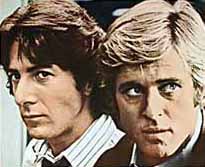
    “All the President’s Men”

    Alan J. Pakula’s superb adaptation of the Pulitzer Prize-winning book written by Bob Woodward and Carl Bernstein about their investigation of the Watergate burglary was born out of an astonishing script by William Goldman. Making sense of the politics within a dense book, incredibly detailed, Goldman’s work had the good sense to make the film a detective-like thriller with well-defined characters.

    This could have been a dull, political film made to exploit the happenings in the United States at the time, but Pakula instead made one of the great films about journalism in the days before the Internet and e-mail. Robert Redford bought the rights to the book and produced the film, starring as Woodward, with Dustin Hoffman as Bernstein, both giving exceptional performances, but it was Jason Robards who blew them off the screen with his excellent performance as the crusty, wise, and ultimately loyal Washing Post editor Ben Bradlee.

    (more…)

  • Waiting patiently…

    …for “Sex and the City” to just blow right the hell on over.

  • Why I will miss Sydney Pollack

    It has now been nearly four days since filmmaker Sydney Pollack passed away. The loss was not crippling for me, however, because of equal parts expectancy and, strangely, indifference.

    As fine a filmmaker as Pollack was, he was always something of an afterthought in my cinema-going experience.

    I want to be measured here, because the last thing I mean is disrespect. In fact, I’m aiming more toward appreciation of a sort of confident casualness that has been eradicated in this fresh new world of cock-sure filmmaking youths and the veterans who, at times, struggle to keep up, and at others, tap into their own former risk-taking ways to establish a new vision of the “old school.”

    Pollack was never about that. He seemed to make his way from film to film with grace and a willingness to take stock of the lessons that came. I never knew him — can’t offer any first hand accounts of exchange — but if anything about his May 26 death strikes a profound chord with me, it is to know that an ever agreeable constant has been removed from this business, this art form. Sometimes the disconnect of casual dependency can sting as much as the loss of the closest of comrades.

    (more…)