 There are few journalists with as sharp an understanding of the tunnel vision that affects award-season coverage as David Carr. So it’s with a guard of irony that, in yesterday’s ruminative NYT piece, he describes this year’s race as “somehow less frivolous than it has (been) in recent years.”
While he acknowledges the comparative slightness of the Oscars against such events as Obama’s inauguration and the global financial crisis, he feels that the awards, and more particularly, the films being awarded, have a clearer collective sense of purpose — and resonance — this year:
Consumers who are motivated by the laurels heaped on these films to plunk down increasingly scarce disposable income will leave the movie house with the message that circumstance is just that, and no match for the indomitability of human will. The films are built on individual successes — kids from the slums who better themselves, a television celebrity who finds his inner newsman, a newborn who overcomes old age and the midlife closeted man who steps into the light — that accrue to the greater good. That message, that darkness can be overcome by individuals working for the common good, is not so distant from the current collective impulse.
I think it’s an intelligent point, but a flawed one. Carr may refer to this year’s nominees as “the filmed stories that have captured the public’s attention,” but the fact is that, in at least two cases, they haven’t. Carr already marks “The Reader,” the gloomiest and lowest-grossing of the Best Picture nominees, as an exception to his argument, but “Frost/Nixon” hasn’t fared much better commercially. In his recent chat with Charlie Rose, David Denby astutely pointed out that Ron Howard’s film rather overstates the relevance of an event that amounts to little more than an interesting historical footnote — and its $12 million gross so far suggests the public agrees.
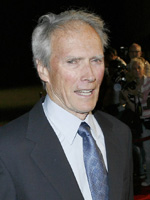 So Clint Eastwood arrived in town tonight without all the pizazz you might have expected, as I
 Everyone was so quick to pounce on the “Slumdog Millionaire” smear pieces of the week, yet
 Thanks to Nat Rogers at
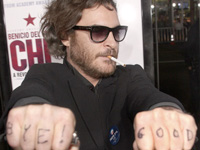
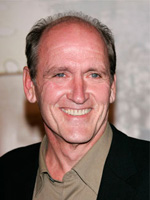 Unfortunately, “Happy-Go-Lucky” star couldn’t make it to tonight’s presentation of the Virtuoso Awards at the Lobero Theatre due to surgery recovery, but Viola Davis, Richard Jenkins, Rosemarie DeWitt, Melissa Leo and Michael Shannon were on hand to talk their roles in five of the most critically acclaimed films of the year. James Cromwell did the honor of presentation.
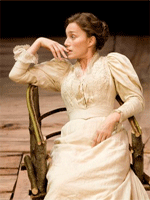 Jeff Wells has
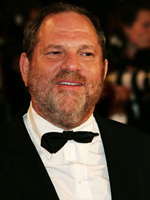 For all his marketing and campaigning genius, Harvey Weinstein’s tactics have become — well, have been — a bit thuggish. In Peter Biskind’s extraordinary book “Down and Dirty Pictures,” a stunning look at the independent film world in the late 1980s and all through the 1990s, we are made privy to many of Harvey’s tantrums, eyewitness accounts of his bullying behavior, and crazy belief that because he is rich, he can do whatever he wants. He can always buy his way out.
 Roger Ebert has yet to weigh in with his formal Oscar predictions, but for now, he’s trying something
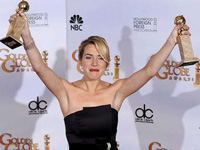
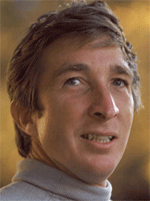 This may be a film site, but I cannot let the passing of John Updike go without comment. While he contributed little directly to the artform — and the two feature-length attempts at bringing his work to the screen were, to say the least, regrettable — but it’s impossible to underestimate his level of influence across media.
 Something of a slow day today at the festival — well, I purposely put the breaks on in favor of some quality time with you guys throughout the day and to put my feet up for a spell at the ole’ homestead.