In Contention

Blog

  • CANNES CHECK: ‘This Must Be the Place’

    The director: Paolo Sorrentino (Italy)

    The talent: Sean Penn (a Best Actor winner at Cannes back in 1997 for “She’s So Lovely”) pops up in his second film of the Competition, though this time in a clear lead role. Frances McDormand makes it two Oscar-winners on board, while the eccentric supporting cast includes Harry Dean Stanton, Judd Hirsch, Talking Heads frontman David Byrne (guess he sanctioned the film’s title, then) and Eve Hewson — the 19 year-old daughter of Bono.  Byrne also contributed the film’s score, with original songs by US folk star Will Oldham (aka Bonnie ‘Prince’ Billy). Overall, however, the crew remains heavily Italian; Sorrentino’s regular (and regularly flashy) cinematographer, Luca Bigazzi, is also on board.

    The pitch: Sorrentino’s first English-language feature — hardly a surprising move, given how his previous features toyed with Hollywood forms — sounds like a decidedly odd duck on paper. If you think the film’s various connections to rock royalty seem thematically related, you’d be right: Penn plays Cheyenne (!), a former Goth rock star living in wealthy retirement in Dublin, shaken out of his self-involved stupor by his estranged father’s death.

    (more…)

  • CANNES CHECK: ‘Michael’

    The director: Markus Schleinzer (Austria)

    The talent: An actor and accomplished casting director — whose credits in the latter field include several films by his compatriots Michael Haneke and Jessica Hausner — 39 year-old Schleinzer has cast his debut feature as writer-director with several actors he previously tapped for other directors’ films. Lead actor Michael Futih won’t be an especially familiar name to international audiences, while his young co-star David Rauchenberger is a newcomer. Overall, the film has less name appeal than of its Competition rivals, making it one of the lineup’s more intriguing prospects.

    The pitch: This may disappoint you, but Schleinzer’s debut isn’t an arthouse remake of Nora Ephron’s 1996 Travolta-as-angel romcom of the same title. Something rather more somber awaits. Only a one-line synopsis has been issued, describing the film as a study of “the last five months of 10-year-old Wolfgang and 35-year-old Michael’s involuntary life together.” That coy “involuntary” evidently refers to a kidnapping: the film is allegedly inspired by the real-life case of Natascha Kampusch, the Austrian girl abducted at the age of 10 and held captive for eight years. With Austria having been rocked both by this and the Josef Fritzl case in recent years, Schleinzer’s film looks likely to touch on a few nerves.

    (more…)

  • CANNES CHECK: ‘We Need to Talk About Kevin’

    The director: Lynne Ramsay (United Kingdom)

    The talent: Reigning arthouse-crossover queen Tilda Swinton leads the cast of Scottish director Ramsay’s third feature; filling the other two key roles are John C. Reilly, shifting gears from his recent run of comedy roles, and 18 year-old Ezra Miller, an effectively gangly presence in “Afterschool” and “City Island.”

    Ramsay adapted Lionel Shriver’s 2003 novel with British actor (and first-time writer) Rory Kinnear, while the film’s long list of producers and executive producers includes Steven Soderbergh and Luc (son of Nicolas) Roeg. Oscar-nominated DP Seamus McGarvey (“Atonement”) is on lensing duty, breaking Ramsay’s early-career partnership with Alwin Kuchler. Most excitingly of all, Radiohead guitarist Jonny Greenwood extends his select but impressive film-scoring CV (“There Will Be Blood,” “Norwegian Wood”).

    (more…)

  • CANNES CHECK: ‘We Have a Pope’

    The director: Nanni Moretti (Italy)

    The talent: As in most of his films, writer-director-producer Moretti also takes one of the leading roles, but the film is principally a showcase for 85 year-old French legend Michel Piccoli, playing the Pope of the title. A previous Best Actor winner at Cannes (for 1980’s “Leap Into the Void”) who has worked with everyone from Buñuel to Godard to Hitchcock, the veteran’s very name brings a kind of just-add-water authority to proceedings. Co-producer Domenico Procacci, meanwhile, has been behind a number of recent Italian crossover hits, including “Gomorrah” and “The Consequences of Love.”

    The pitch: “‘The King’s Speech’ goes to the Vatican!” is how many pundits responded to the synopsis for “We Have a Pope” (or “Habemus Papam,” to use its more evocative Latin title) — and glib as such comparisons tend to be, it’s easy to see where they’re coming from in this case. Moretti’s comedy-drama stars Piccoli as a frail cardinal facing a crisis of confidence when, against his wishes, he is elected Pope. Moretti plays the kindly speech therapist psychiatrist assigned to help him accept his responsibilities. The film has predictably aroused controversy within Italy’s Roman Catholic set, but it doesn’t appear to be particularly contentious material.

    (more…)

  • Tell us what you thought of ‘Thor’

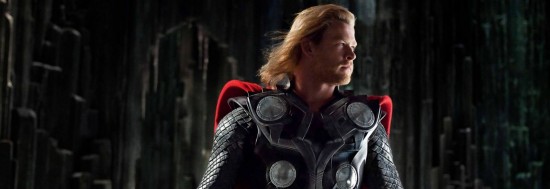
    I guess the summer movie season has officially kicked off (or did so last week, depending where you live) with the release of Kenneth Branagh’s take on Marvel’s “Thor.” For my money, it’s a pretty respectable start — an uneven but refreshingly uncynical popcorn adventure that announces a major star in the shape of Chris Hemsworth. You can read my full take on the film (seconded by Kris) here, but we want to know what you think. Have at it in the comments.

  • CANNES CHECK: ‘Hara-Kiri: Death of a Samurai’

    The director: Takashi Miike (Japan)

    The talent: Leading man Ebizô Ichikawa is a well-regarded Kabuki actor with a short screen résumé. International audiences are likelier to recognize his more senior co-star, Kôji Yakusho (“Shall We Dance,” “Babel”), who worked with Miike on the recent “13 Assassins” (currently in US theaters, reviewed here). Also returning from Miike’s last samurai epic is Oscar-winning producer Jeremy Thomas (“The Last Emperor”). He’s not the only Oscar-winning “Emperor” alumnus here: revered composer Ryuichi Sakamoto is on board. Finally, a note for trivia buffs: costume designer Kazuko Kurosawa is Akira’s daughter, so I’m guessing she knows her samurai.

    The pitch: After this year’s Berlinale effectively sanctioned the union of 3D and the arthouse, Cannes is following suit: Miike’s latest is the first 3D film to play in Competition. That gimmick aside, “Hara-Kiri” sounds classical enough. Based on a Yasuhiko Takiguchi novel that was previously filmed in 1962, the film centers on a failed samurai whose request to commit ritual suicide is dismissed by his commander — the starting point for a tangle of backstories leading to (what else?) “a tense showdown of vengeance.”

    (more…)

  • CANNES CHECK: ‘The Source’

    The director: Radu Mihăileanu (France)

    The talent: Two hotly-tipped young French actresses head up proceedings: Leïla Bekhti, who made an eye-catching breakthrough in “A Prophet,” and Hafsia Herzi, who won a slew of newcomer awards in 2007 for “The Secret of the Grain.” (Herzi looks to be one of the faces of this year’s Competition — she also has a prominent role in Bertrand Bonello’s brothel-set drama “House of Tolerance.”) Also in the cast, and perhaps a more familiar face to US viewers, is Hiam Abbass (“The Visitor”). The film’s army of producers, meanwhile, includes none other than Euro-blockbuster merchant Luc Besson.

    The pitch: With his cutesy 2010 crossover hit “The Concert” still fresh in our memories, Romanian-born Frenchman Mihăileanu returns with a comedy that appears cut from similar feelgood-sentimental cloth. Set in the present day, in parched North African village, the story centers on the community’s put-upon womenfolk: weary of daily treks to and from a mountaintop spring, the ladies declare a no-sex strike until their husbands bring running water to the village. Bekhti plays the group’s Norma Rae ringleader. The synopsis suggests a blend of farce and Up With People sincerity, though the line between feminism and sexism in such material can be a fine one.

    (more…)

  • CANNES CHECK: ‘The Tree of Life’

    The director: Terrence Malick (USA)

    The talent: Do you need reminding by this point? The Competition’s most high-profile film stars Brad Pitt, Sean Penn and the soon-to-be-ubiquitous Jessica Chastain; the name I’m most pleased to see in the supporting cast, meanwhile, is Irish stalwart Fiona Shaw.

    The technical crew is, obviously, first-class: DP Emmanuel Lubezki, Oscar-nominated for his work on Malick’s “The New World,” returns, as does the director’s career-long production designer Jack Fisk. Also returning from Malick’s last feature: editors Hank Corwin and Mark Yoshikawa (along with three others, including “City of God”‘s Daniel Rezende) and Oscar-nominated costume designer Jacqueline West. New to Team Malick is the industry’s current favorite composer, Alexandre Desplat.

    (more…)

  • CANNES CHECK: ‘Polisse’

    The director: Maïwenn (France)

    The talent: Actress-turned-writer-director Maïwenn Le Besco (who prefers going by her first name, and whom US viewers might remember as the blue-tentacled soprano from “The Fifth Element”) takes the lead role herself, starring opposite French rapper-turned-actor Joeystarr. Supporting them, a host of familiar French faces, including Nicolas Duvauchelle (“White Material”), Frédéric Pierrot (“I’ve Loved You So Long”) and Louis-Do de Lencquesaing (“The Father of My Children”). Among the below-the-line names is Oscar-winning composer Stephen Warbeck (“Shakespeare in Love”).

    The pitch: Maïwenn’s third feature as director appears to be equal parts romantic drama and socially conscious tract. She stars as a photojournalist assigned to document goings-on at the Paris police department’s Juvenile Protection Unit, where she falls in love with a sensitive, unorthodox cop; the official synopsis emphasises the former’s bourgeois background, which implies class difference could play a significant role in the relationship. The synopsis also stresses the gruelling day-to-day routine of policemen in the unit, which may or may not hint at a kind of urban docudrama treatment.

    (more…)

  • CANNES CHECK: ‘Sleeping Beauty’

    [Due to my usual sloppy planning, we’re doubling up on this series with two entries a day, so as to be finished in time for next week. Catch up with all the Cannes Check posts so far here.]
    The director: Julia Leigh (Australia)

    The talent: With novelist Leigh making her directorial debut here, the name being most prominently used to sell the film is that of Leigh’s mentor Jane Campion: though not actually a producer, the 1993 Palme d’Or champ is credited as “presenting” the film. Having replaced Mia Wasikowska, rising star Emily Browning heads the cast, fresh off (and hopefully with more success than) her lead turn in “Sucker Punch,” while followers of Australian cinema should recognize a number of faces in the supporting cast — notably Rachael Blake from “Lantana.” Below the line, DP Geoffrey Simpson is a veteran of Hollywood and Australian cinema, his diverse CV ranging from “Oscar and Lucinda” to, er, “Glitter.”

    (more…)

  • CANNES CHECK: ‘The Artist’

    After the announcement of 19 Competition titles at last month’s Cannes press conference, some insiders suggested that as many as three films could be added to the lineup before the festival kicks off — and through a kind of online Chinese-whispers game, that number became accepted as truth, without any such promise from Thierry Frémaux himself.

    As it turns out, we should have been wary. Just one film was added to the Competition this afternoon, bringing the total to a nice round 20, and that’s all she wrote. Forget any lingering hopes you had for Yorgos Lanthimos or Brillante Mendoza: the latecomer to the party is “The Artist.”

    The director: Michel Hazanavicius (France)

    The talent: Ever thought you’d see Missi Pyle ascending the Palais steps at a Cannes Competition premiere? Me neither, but she’s just one of the unexpected names attached to French farceur Hazanavicius’ fourth feature film.

    (more…)

  • CANNES CHECK: ‘Hanezu’

    The director: Naomi Kawase (Japan)

    The talent: Details on Kawase’s film are so thin on the ground that I can’t find so much as a DP credit. This much we know: Kawase wrote the screenplay from a novel by female Japanese novelist Masako Bando, and the film’s little-known stars are Tohta Komizu and Hako Oshima. I could add that Bando has odd views on cat murder, but that would just be filling space.

    The pitch: Announcing the selection of “Hanezu” at the press conference, festival director Thierry Frémaux described the film as one that tackles “the issue of the future of the globe, from a philosophical point of view.” The film’s cryptic official synopsis (peppered with helpful lines like “the mountains were an expression of human karma”) suggests an across-the-centuries study of Japan’s rural Hasuka region, landing upon two young protagonists in the present day, their story “representing the uncountable souls that have accumulated in this land.” I suppose it’ll add up when we see it, while the film’s environmental themes could prove timely in light of Japan’s recent misfortunes.

    (more…)

  • INTERVIEW: ‘The Double Hour’ director Giuseppe Capotondi

    With this year’s Cannes circus just a week away, now is as good a time as any to point out the strangely hobbled journey taken by so many festival films to our cinema screens. For all the concentrated media attention and occasional trophies lavished upon arthouse titles at Cannes, Sundance and the like, the festival itself is little more than a starting block in a long race for distribution — and “The Double Hour,” a wickedly splintered Italian thriller currently on limited release in the US, has been running it for a while.

    The debut feature of Giuseppe Capotondi, a director hitherto acclaimed for his commercial and music-video work, “The Double Hour” was one of the under-the-radar hits of the 2009 Venice Film Festival — the only title amid a lackluster slate of homegrown features to capture critics’ imaginations, it surprised many by landing the Best Actress award for striking Russian lead Ksenia Rappoport. Despite this success, it’s taken 18 months to reach American arthouses; in the UK, it still hovers in distribution limbo.

    The wait should have been shorter, not least because Capotondi’s film is anything but obscure in sensibility: a sharp, sexy hybrid genre piece generously bookmarked with cinematic references, it touches on heist thriller, psychological horror and romantic drama, all with equal panache.

    (more…)

  • OFF THE CARPET: Setting the field

    It’s a strange feeling writing about this kind of thing after last night’s news announcement. But that chapter is finally behind us, so behind us it shall remain.

    This is not an Oscar column (even though it’s labeled as such). This is not a predictions column. This isn’t even really a column. We should all continue steering clear of the “O” word until, at the very soonest, the other side of Cannes, when we could have a couple of contenders to pencil in on the radar.

    Guy will once again be covering the festivities along the Croisette this year. We’ll find out which filmmakers unveiling — from Terrence Malick to Pedro Almodóvar, Lynne Ramsay to Gus Van Sant — have what it takes. And even then, the life of a Cannes title can see ebbs and flows all the way into the season. Look for Guy’s festival coverage, already easing in with daily previews, to take off in earnest next Wednesday.

    In the meantime, I thought I’d go ahead and amass the usual throw-it-all-at-the-wall list of potential contenders for the upcoming awards season. It’s nothing you haven’t already seen or considered, I imagine.

    (more…)

  • CANNES CHECK: ‘Le Havre’

    The director: Aki Kaurismäki (Finland)

    The talent: Writer-director-producer Kaurismäki’s latest features a gaggle of names that should be familiar to his fans. Veteran French actor André Wilms, whose association with the filmmaker dates back to 1992’s “The Bohemian Life” (for which he won a European Film Award) takes the lead here, while other Kaurismäki alumni in the cast include New Wave icon Jean-Pierre Léaud and, of course, the director’s favorite actress Kati Outinen. His regular crew returns as well, notably his career-long DP Timo Salminen.

    The pitch: The Finnish auteur’s second French-language effort (and his first since 1992) is a comedy-drama set and filmed in the French port city that gives the film its title. That the name also translates as “the haven” is no coincidence: the film tells the story of an elderly boot polisher (Wilms) who takes an African refugee child under his wing. The premise seemingly lends itself to Kaurismäki’s usual brand of melancholy whimsy, though perhaps with a touch more sentiment than usual.

    (more…)

  • REVIEW: “Thor” (***)

    As superheroes go—and go they do, with alarming frequency, at the cape-wearers’ convention that the multiplex has become in recent years—Thor, or at least the Marvel-authored Artist Formerly Known As Norse God Thor, is more super than most. Where most beloved superheroes are humans (at least ostensibly so) who grow into their superhuman powers as a kind of parallel puberty, Thor needn’t waste time on any such learning curve.

    He is, to reappropriate a quote from “Almost Famous,” a Golden God—quite literally golden as played by aggressively blond Australian up-and-comer Chris Hemsworth—and as such, preternatural strength and ability are things to which he feels entitled, not enslaved. Marvel’s Thor may be as boyish as the gangly Peter Parker or the gizmo-rapt Bruce Wayne, but it’s a boyishness of lifelong petulance rather than golly-gee self-awe; he may be better than his superhero brethren, but he’s also harder to know.

    That obstacle of relatability is both a debit and a distinguishing asset in Kenneth Branagh’s poppy, spirited addition to the Marvel adaptation gallery, and something that ultimately cleaves the film in two. An odd couple of films jostles for space in Branagh’s surprisingly trim 114-minute package: one a dourly earnest celestial battle epic set in Thor’s mythical, CGI-built home realm of Asgard, the other a sweetly goofy alien comedy set in the decidedly unmagical realm of New Mexico.

    (more…)

  • CANNES CHECK: ‘The Kid With a Bike’

    The directors: Jean-Pierre and Luc Dardenne (Belgium)

    The talent: Dardennes regulars Jérémie Renier and Olivier Gourmet (who won Best Actor at Cannes for the brothers’ 2002 film “The Son”) return in supporting roles, but “The Kid With a Bike” is headlined by perhaps the most established star they’ve yet worked with: Cécile De France, the Belgian actress mainstream audiences will remember from her recent turn in Clint Eastwood’s “Hereafter.” Still, the directors’ proven knack with untested actors stands to continue: starring opposite De France is pre-teen newcomer Thomas Doret. Meanwhile, the Dardennes’ usual crew, including DP Alain Marcoen, is once more on board.

    The pitch: Abandoned by his father in a children’s home, 11 year-old Cyril (Doret) escapes and returns to an empty apartment; pursued by social workers, he seeks refuge in the arms of a stranger (De France) in a doctor’s waiting room. The synopsis and recently-released trailer suggest the blend of humanism and hard realism we’re accustomed to from the Belgian brothers, though perhaps less grim than some of their work. (The film’s reasonably upbeat shooting title was “Set Me Free!”)

    (more…)