In Contention

Blog

  • R.I.P. Steve “Air” McNair

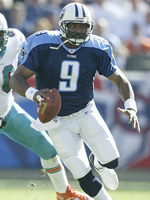
    Steve McNairThose who read regularly know I’m a big football fan, so I felt it necessary to point to the news, which fellow fans will surely have discovered by now or soon, that former NFL quarterback Steve McNair (Houston Oilers, Tennessee Titans, Baltimore Ravens) has been killed in Nashville. He was 36 years old. This is the only information we have so far:

    Former Titans quarterback Steve McNair has been killed. Police said McNair suffered a fatal gunshot wound to the head in downtown Nashville.

    The incident happened near 2nd South & Lea Avenue. A female victim was also found dead.

    According to Don Aaron with the Metro Nashville Police Department, no suspects have been taken into custody. Several people were being taken to police headquarters for questioning.

    Gone way too soon.  He never got the proper respect because he was unfortunately so injury prone, but I always thought him to be a considerable talent.  And he was mere inches away from a Super Bowl victory in 1999.  Maybe a win there would have changed things, but he finished his career in Baltimore and retired in April of 2008.  Very sad news.

  • Happy ID4

    One of the greatest teasers ever.  Knocked me on my ass back in the day.  Fire up the grill, throw back a cold one and watch the Fresh Prince make bitches out of some invading chumps.  Happy Independence Day.

  • My stance on foreign cinema

    Beauty and the BeastOn Independence Day, no less…

    There seems to a huge misconception on the site that I dislike foreign language films and know little about them. While it is no secret I love American cinema and praise it frequently, I do indeed believe great films are made around the globe, and try to see every one I can at the festivals I attend and the screenings I attend on a weekly basis. My love for foreign language cinema, admittedly, is not as deep as the one I have for American cinema (and remember, I am Canadian), but when I see a great one (which is often) I do indeed champion it.

    Foreign language films can be extraordinary experiences, though the acting styles differ, the cultures are often radically different, yet the storytelling techniques, for the most part, are the same, which is what makes cinema a universal language.

    If I recall, the first foreign language film I saw was “Beauty and the Beast,” which was a stunning work of art from French director Jean Cocteau that I saw as a child on a French TV station here in Canada. It was wildly imaginative, fantastical and stunning, a black and white beauty. I watched as many films on that station as I could, including “Breathless,” which I knew as a teenager was bold and brilliant, and “Jules and Jim” from Truffaut.

    (more…)

  • New Yorker semi-reviews ‘Julie & Julia,’ exalts Streep

    Meryl Streep in Julie & JuliaAs far as I know, Nora Ephron’s “Julie & Julia” is still under a reviewing embargo, but the New Yorker’s Ariel Levy has sneakily buried a brief, incisive critique of the film at the tail of a substantial profile of Ephron. (Thanks to Jeff Wells for pointing it out.) You’ll need a subscription to read the whole thing, but here are the juiciest bits on the film — which will no doubt please the numerous Streepophiles out there:

    The truth is, “Julie & Julia” is not a fair fight. For half he film we are in Paris with Julia Child played by Meryl Streep. It is pretty transcendent. For the other half, we are stuck in Long Island City, Queens, with the ‘lowly cubicle worker’ Julie Powell, a character who is immature, self-pitying, and frazzled (which is to say, an average human being). Powell is played by Amy Adams, who is a talented actress, but she is up against the queen herself.

    When Adams, as Julie, is on the screen, it necessarily means that Streep, as Julia, is not, and you come to resent her for this. It is possible that the film would not have worked if it were simply a biopic of Julia Child — that it derives its narrative thrust and commercial potential from the interplay between a young woman idolizing and relying upon Child in the more-or-less present and the splendid story of Julia Child’s past. Perhaps Child is able to emerge in this film as an almost mythical creature because she is presented in contrast to a mere mortal.

    But there may be another reason the Julia Child portions of “Julie & Julia” are so irresistably vivid and the Julie Powell bits feel a little flat. It is possible that Nora Ephron no longer understands half as well what it’s like to be ordinary as she understands being remarkable.

    (more…)

  • Statue of Liberty crown to re-open this holiday weekend

    For the first time since the September 11, 2001 terrorist attacks in New York, the National Park Service is opening the crown atop the Statue of Liberty for tourist visitation.  17 days ago, “Ghostbusters 2” celebrated its 20th anniversary.  Yes, I can bring anything around to movies.

  • WEEKLY WRAP: Academy expands, Malden passes

    Karl Malden and Claire Trevor at the 1951 Academy Awards• This week’s Off the Carpet column took a long, hard look at the ramifications of a 10-nominee Best Picture race.

    • As the popular game of expanding past fields to ten continued, we joined in the speculation.

    • Meanwhile, AMPAS added 134 members to its voting body, from Seth Rogen to Danny Boyle to Peter Gabriel.

    • And they furthered their controversial remodelling, scrapping all honorary awards from the Oscar telecast.

    • We bade a sad farewell to Oscar-winning actor and former AMPAS president Karl Malden.

    • In other disheartening news, Michael Bay’s “Transformers” sequel rocked the box office.

    • We championed “An Education” and its star Alfred Molina, while the film was the subject of this week’s Page to Screen column.

    • With “Public Enemies” on everyone’s mind this week, we counted down the best performances from Michael Mann films.

    • The Edinburgh Film Festival wrapped, handing its top award to Duncan Jones’s “Moon.”

  • Heart stop by window light

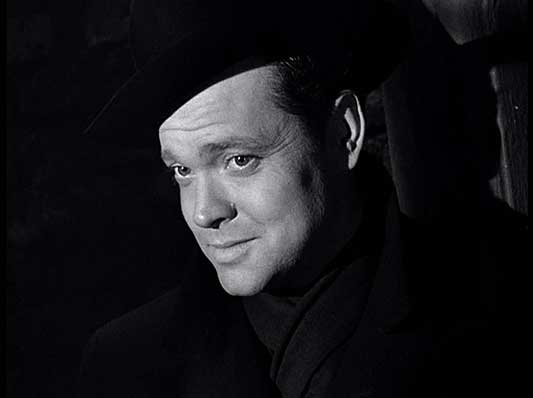
    I’m digging into March’s Criterion Blu-ray release of “The Third Man” (which largely ports over most of the 2007 Criterion double-dip), and I have to say, Orson Welles’s first appearance in the film, that knowing smile illuminated by window light, a Viennese woman barking at Joseph Cotton’s novelist-turned-gumshoe, is flat out one of the most arresting moments in cinema history.  I’ve never been much for Carol Reed’s seminal classic, but every moment Welles is on screen, I can’t look away.  It’s always been that way for me.

    Orson Welles in The Third Man

  • ACE: “AVID FTW”

    ACE/AVIDSorry, I couldn’t resist the anagram train on that headline, but this David Cohen story at Variety is interesting for us cinema tech hounds.  It seems the American Cinema Editors will be dishing out the first ever ACE Technical Excellence Award to Avid’s Media Composer software, amounting to”an unprecedented endorsement of a commercial product,” Cohen says.  Furthermore:

    ACE is voicing both appreciation for its close relations with Avid and frustration with what it perceives as snubs from Apple, maker of Final Cut Pro, Avid’s biggest rival.

    The subtext of the kudo announcement is also a message to producers: ACE’s members are frustrated about not having a choice of which tools they use, and they don’t like being forced to use alternatives to Avid.

    All this is coming at a time when ACE editors are feeling restive over job security in the wake of the production slowdown and changes in TV patterns and orders.

    It amounts to inside sniping more than an actual watershed moment for the craft as far as I’m concerned.  Cohen quotes ACE board member Harry B. Miller III as complaining that “Apple and Final Cut Pro doesn’t listen, doesn’t respond, doesn’t solicit [industry editors’] opinion.”  Let’s drag it out in public then, shall we?  Oy.

  • ‘Brothers’ trailer

    As someone who was never particularly taken with Susanne Bier’s popular 2004 melodrama “Brothers” — I find Bier’s work too patly earnest to repay real emotional investment — I approach Jim Sheridan’s long-delayed remake with a measure of caution.

    Judging from this just-released trailer, it seems to hew very close to the original, with added studio gloss and a gloopy background of Fray balladry that I hope isn’t in the film itself. On the plus side, Natalie Portman looks rather good, and needless to say, it’s a step up for Sheridan from the grim career nadir of “Get Rich or Die Tryin’.” (Uh, what isn’t?) Some might have Oscar-level expectations of this, given its December release date, but I’ll need to see the film to be convinced.

  • INTERVIEW: 20 questions with Denis Leary

    Denis LearyWe rarely cover television with any real focus around these parts, but as you’ve probably gathered from my sporadic posts on the matter, I’m really digging the new season of “Rescue Me.”  So it was a little difficult to pass up an opportunity to sit down with the film’s star and co-creator Denis Leary recently.

    With the Emmy nominations set to be unveiled next week (7/9), it seemed the perfect time to get together.  Leary was nominated for his performance as FDNY firefighter Tommy Gavin two years in a row in 2006 and 2007, but was unfortunately ignored last year.  Perhaps this new, electrifying season will put him back in the awards saddle as he seeks his first win in the category of Outstanding Lead Actor in a Drama Series.

    Leary, of course, got his first big break on MTV, where his chain-smoking, ranting misanthrope appealed to the pent-up angst of the network’s target audience.  From stand-up to film roles and finally a break-out FX series, now in its fifth season, Leary has continued to stretch himself both as a writer and an actor.  His most recent big screen appearance hit screens yesterday in the form of “Ice Age: Dawn of the Dinosaurs.”  Leary voices the sabertooth tiger Diego in the successful franchise.

    On a drizzly Santa Monica afternoon last month we met for lunch and discussed his versatile career, from his early years at Emerson College in Boston to his recently released best-selling comedy book, the edgeless MTV of today to his distant cousin Conan O’Brien’s assuming the “Tonight Show” throne on NBC late night.  Oh yeah, and plenty of football talk between fellow devotees, for all the gridiron fanatics out there.  There’s a little something for everybody…

    (more…)

  • Is the auteur a dying breed?

    Lars von TrierBy far the boldest, baldest expression of auteur identity I’ve seen in recent times came in the opening credits of Lars von Trier’s “Antichrist.” It’s a sequence that consists of precisely two emphatically scrawled title cards — “Lars von Trier” and “Antichrist” — in that order. No actors, no production credits, no “a film by,” nothing. Lars von Trier. Antichrist.

    It’s an insistent, slightly tongue-in-cheek declaration of full creative ownership — the film that follows is entirely the product of his own imagination, and all other collaborators are merely at the service of his vision. It may strike some as an arrogant, even hostile, approach, but it drives home the point that he’s one of the few contemporary filmmakers who can legitimately claim the title “auteur” — the term coined by New Wave doyen Francois Truffaut to assert the rise of directorial control in a previously producer-centered artform.

    How many directors in the current film lanscape can boast that kind of brand-name power? It’s a question raised by critic Kaleem Aftap in an interesting — and highly debatable — piece in today’s Independent, in which he argues that, in America at least, the notion of auteurism is on the way out:

    Films directed by Truffaut himself, Jean-Luc Godard, Martin Scorsese and Francis Ford Coppola (used to be) must-see events. At its height, the draw of the auteur was such that films by the Italian modernist Michelangelo Antonioni would regularly appear in the top 25 box-office hits of the year. The right director’s name on a poster was enough to sell tickets and what the directors would do next was something to be genuinely excited about. Now barely any film is sold on the director’s name alone.

    (more…)

  • Looking back at potential tens

    The Little MermaidOkay, the decision has been made and there is not a thing I can do about it, and let’s face it, even I am going to get bored bitching about it. So I went back 20 years to find films that might have been among the 10 nominees had they been doing this in 1988. It was an interesting experiment that perhaps makes it clear why the Academy had made the move.

    Attention is drawn to films that might otherwise might not have been seen or heard of by the average Joe on the street, and allows for box office hits to find Oscar attention with a Best Picture nomination. Sure, there would be years that the pickings might be slim, but that is the price of doing something like this, and at that point, is it not smart to look at the foreign language films or — to be a bit self-serving — Canadian work?

    Or would sequels such as the superb “The Empire Strikes Back” be nominated along with other good-to-excellent films? It would have been interesting. I did not go for five films each year, but mentioned those I think would have been cinches had there been 10 nominees.

    Here we go…

    (more…)

  • “Drowning out all birdsong.”

    Klaus Kinski in Fitzcaraldo

    A vision had seized hold of me, like the demented fury of a hound that has sunk its teeth into the leg of a deer carcass and is shaking and tugging at the downed game so frantically that the hunter gives up trying to calm him. It was the vision of a large steamship scaling a hill under its own steam, working its way up a steep slope in the jungle, while above this natural landscape, which shatters the weak and the strong with equal ferocity, soars the voice of Caruso, silencing all the pain and all the voices of the primeval forest and drowning out all birdsong.

    So begins this must-read excerpt from Werner Herzog’s on-set diaries — “Conquest of the Useless: Reflections form the making of Fitzcaraldo” — reprinted in part by The New York Times and on bookshelves now.  It’s a must-read for Herzog fanatics.  If you’ve never seen “Fitzcaraldo,” don’t just do so arbitrarily.  It’s certainly not as transporting as “Aguirre, the Wrath of God,” but like all Herzog films, it creates an atmosphere in your mind and takes you on a moody trip.  I’ve got to pick up this book, though.

    (more…)

  • 7/3 Web Round-up

    Sorority Row• A to Z on Michael Mann — all you needed to know about the director. [Empire]

    • Oscilloscope jumps on the video-on-demand bandwagon, partnering with Warner Digital Distribution. [indieWIRE]

    • The 10 sexiest gangster girlfriends of all time. [Film School Rejects]

    • Oh, by the way.  Weeks after outlets jumped the gun, David Carradine’s death has been ruled “not a suicide.” [The Guardian]

    • Patrick Goldstein talks to Michael Mann about the bank-robber technical adviser the director tapped for “Public Enemies.” [The Big Picture]

    • Eric D. Sneider is baffled by the juxtaposition of the “Sorority Row” trailer and prints of “The Hurt Locker.” [Cinematical]

    • Owen Gleiberman and Lisa Schwarzbaum talk about why they think “Public Enemies” misses the mark. [Entertainment Weekly]

  • Stunning new ‘Broken Embraces’ trailer

    The Guardian has exclusively debuted the brand new trailer for Pedro Almodovar’s “Broken Embraces,” and it’s a thing of considerable beauty.

    Mixed reviews be damned — the oil-painting saturated color of Rodrigo Prieto’s lensing (which weirdly reminds me of Vittorio Storaro’s work on Bertolucci’s “The Spider’s Stratagem”), the cannily cool choice of Cat Power on the soundtrack, not to mention the stylistics of Penelope Cruz’s headlong dive into fetishized femme fatale territory, all have my mouth positively watering. I’ll be seeing the film later this month, and that day can’t come too soon.

    The Guardian selfishly won’t let us embed the trailer, so watch it here. Now. We’ll post it here as soon as it becomes available.

  • ‘Five Minutes of Heaven’ trailer

    I offered some very brief notes a while back on Oliver Hirschbiegel’s excellent “Five Minutes of Heaven,” which premiered on television here in the UK, but will thankfully get the theatrical release (along with VOD) it deserves Stateside in August. Thank God for IFC. (More thoughts after the cut.)

    (more…)

  • ‘1939: Hollywood’s Greatest Year’

    Greta Garbo in NinotchkaTCM is showcasing the great productions of 1939 tonight, kicking it off a few hours ago with “The Wizard of Oz,” which followed a two-hour doc on the film.

    I wish I had gotten this post up earlier so as to give you the heads up, because I just clicked through the DVR and came across the documentary “1939: Hollywood’s Greatest Year,” which was presented as a world premiere amid the network’s night-long salute to the 70th anniversary of what is still considered in most circles to be the finest 12 months of cinematic output on these shores.

    You know the films: “Gone With the Wind,” “The Wizard of Oz,” “Stagecoach,” “Ninotchka,” “Mr. Smith Goes to Washington,” “Of Mice and Men,” “Goodbye, Mr. Chips,” “Gunga Din,” “Juarez,” “Wuthering Heights,” etc.  I really don’t think there’s ever been a more impressive line-up, and only 1999 has ever come close.  And what a year THAT was.

    (more…)

  • Brit critics cool on ‘Enemies’

    Marion Cotillard and Johnny Depp in Public EnemiesWith Stateside critics somewhat split on “Public Enemies,” I was interested to see what the UK reception for the film would be like. For all the brawny Americanness of his aesthetic, Michael Mann has many passionate apologists on these shores — he even received a BAFTA nod in 2005 for “Collateral” — perhaps to some degree because Britain is where he studied film and began his career.

    On this occasion, however, the limeys aren’t feeling the love, as the film has opened to a raft of disappointing notices from the major British broadsheets. Wendy Ide at the Times of London is harshest, calling the film “a bloody, muddy mess.” She’s no fan of the film’s digital aspects, perhaps rather naively complaining about the lack of studio sheen:

    Mann’s aim appears to be to develop a new, distinctive digital aesthetic. Which is admirable in theory, but Mann’s digital aesthetic seems to involve making the movie look as grimy and unpolished as possible. Post-production is for wimps. That irresistibly glossy, larger-than-life reality created by Hollywood movies is diminished here. The flat glare of the digital camera emphasises the artifice of the film-making process rather than bringing the hoped-for gritty authenticity to the story.

    (more…)